
Most people assume ‘premium’ on a coffee bag is just marketing spin. A fancy word to justify a higher price. But there’s actually a formal industry definition behind it, and the gap between real premium coffee and the supermarket version wearing that label is enormous. If you’ve ever wondered why two bags both labeled ‘premium’ taste completely different, the answer lies in a scoring system most consumers have never heard of. This guide breaks down what premium coffee actually means, how it’s grown and roasted, why ethics matter, and how you can use all of this to make better choices at home.
Table of Contents
- How the coffee industry defines premium
- From farm to cup: How premium coffee is produced
- Ethics and traceability: What matters beyond the cup
- Selecting and enjoying premium coffee at home
- Why ‘premium’ coffee matters more than marketing says
- Discover premium coffee with Adira
- Frequently asked questions
Key Takeaways
| Point | Details |
|---|---|
| Formal definition | Premium coffee is beans scoring 70–79 on the SCA’s 100-point scale, above commercial grade but below specialty. |
| Production quality | True premium coffee is grown at high altitudes, hand-picked, and carefully processed for complex flavors. |
| Ethical sourcing | Premium and specialty coffees are often more ethically sourced, but only specialty offers consistent traceability and fair trade. |
| What to look for | Check SCA score, roast date, and single origin details to ensure you’re getting genuine premium coffee. |
| Home brewing tips | Fresh grinding, proper storage, and the right brewing method bring out the best in premium beans. |
How the coffee industry defines premium
The coffee world has a grading system, and most drinkers have no idea it exists. The SCA coffee scoring system rates green (unroasted) coffee on a 100-point scale, evaluating attributes like aroma, flavor, aftertaste, acidity, body, balance, and uniformity. Where a coffee lands on that scale determines its official category.
Here’s how the tiers break down:
- Commercial grade: Below 70 points. This is your standard grocery store coffee, mass-produced and often blended from multiple low-quality sources.
- Premium grade: 70 to 79 points. Better than commercial, with noticeable flavor complexity, but still below the top tier.
- Specialty grade: 80 points and above. The gold standard, with strict defect limits, traceable origins, and peak flavor expression.
So when you see SCA coffee scoring referenced on a bag, it’s not decoration. It’s a real measurement. The problem is that premium coffee scoring 70-79 on the SCA scale is a precise definition, but the word ‘premium’ in marketing is used for everything from gas station coffee to artisan micro-roasts.
“Premium coffee occupies a specific, measurable space in the SCA grading system. It’s better than commodity, but it’s not specialty. Treating those two things as the same is where most consumers get misled.”
Here’s a quick comparison to make it visual:
| Category | SCA Score | Typical Source | Flavor Profile |
|---|---|---|---|
| Commercial | Below 70 | Mass-produced blends | Flat, bitter, inconsistent |
| Premium | 70–79 | Single or mixed origins | Cleaner, some complexity |
| Specialty | 80+ | Traceable single origins | Bright, nuanced, distinctive |
Understanding this table changes how you shop. A bag that says ‘premium roast’ with no SCA score, no origin info, and no roast date is almost certainly using the word loosely. Real premium coffee, by industry standards, should show its work.
It’s also worth noting that small batch roasting plays a significant role in whether a coffee actually reaches its scored potential. Even a 75-point bean can taste flat if it’s roasted in a 500-pound drum with dozens of other origins.
From farm to cup: How premium coffee is produced
Now that you know where premium sits in coffee grading, let’s see how it’s created, starting at the source.
The flavor in your cup starts long before roasting. High-altitude cultivation is one of the most important factors in producing premium and specialty-grade coffee. At elevations above 1,200 meters, cooler temperatures slow the ripening of coffee cherries. That slower development builds denser beans with more complex sugars, which translate directly into richer, more layered flavor.
Here’s a step-by-step look at how premium coffee goes from seed to bag:
- High-altitude growing: Farms above 1,200m produce denser, more flavorful beans due to slower cherry development.
- Selective hand-picking: Only ripe, red cherries are harvested. This takes more time and labor than strip-picking entire branches at once.
- Controlled processing: The method used to remove the fruit from the bean, washed (clean, bright flavors) or natural (fruity, complex), shapes the final cup profile.
- Careful drying: Beans are dried slowly and evenly, either on raised beds or patios, to preserve quality and prevent mold.
- Small-batch roasting: Smaller roast batches allow the roaster to monitor and adjust temperature curves for each specific origin, pulling out the best of what the bean has to offer.
Pro Tip: When you’re reading a coffee label, look for both the altitude and the processing method. A washed Ethiopian grown at 1,800m will taste completely different from a natural Brazilian at 900m, even if both are labeled ‘premium.’
The small-batch roasting step is where a lot of quality is either protected or lost. Large commercial roasters prioritize consistency across massive volumes, which means dialing back the roast to a safe, middle-ground profile. Small-batch roasters can afford to take more care, and the flavor difference is real. If you want to go deeper on roast development, our roasting tips break down exactly how roast level affects what ends up in your cup.
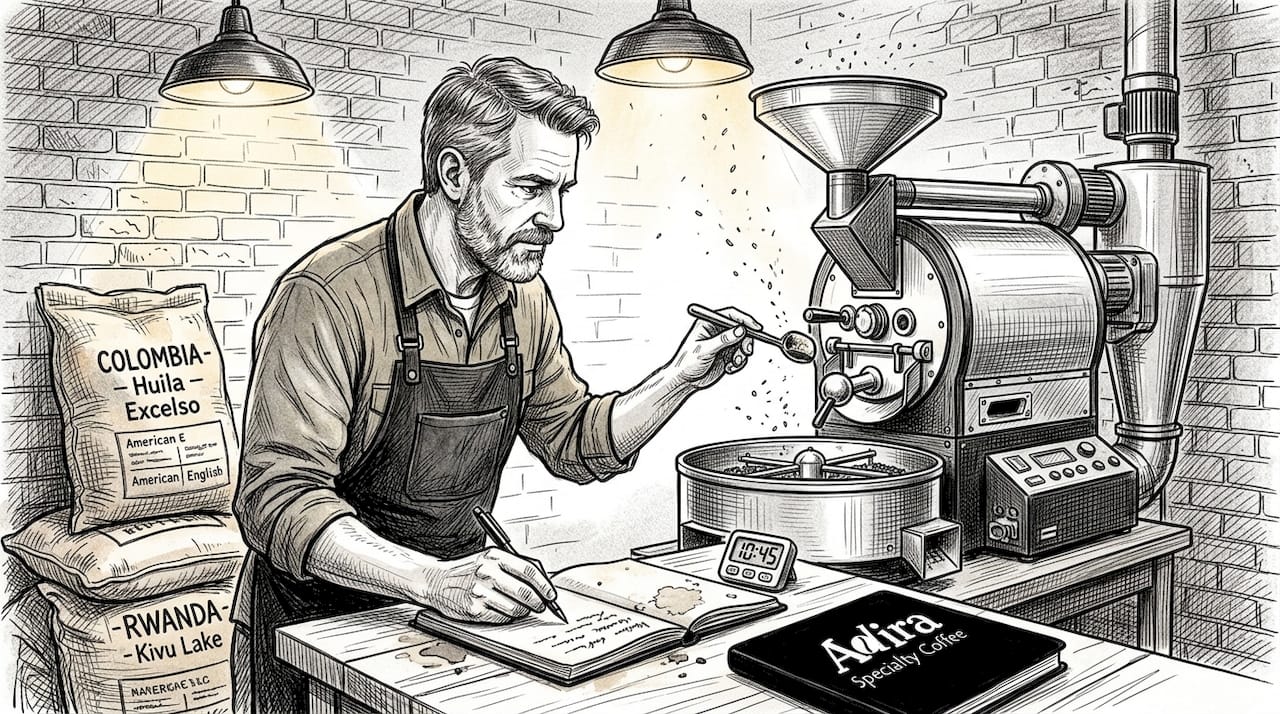
Statistic to know: Specialty coffee grown above 1,200m accounts for a significant portion of the world’s highest-scoring lots, with some of the most celebrated origins like Ethiopia and Colombia producing their best beans above 1,800m.
Ethics and traceability: What matters beyond the cup
While production is key, there’s a growing focus on ethics and transparency in the premium coffee world.
Flavor is only part of the story. Where your coffee comes from, and how the people who grew it were treated, is increasingly inseparable from quality. Ethical sourcing in premium coffee means being able to trace a bag back to a specific farm, cooperative, or region, and knowing that the farmer received a fair price for their work.
Here’s what ethical sourcing actually looks like in practice:
- Farm-level traceability: You can identify the exact farm or cooperative that grew the beans, not just the country.
- Fair pricing: Premium coffee farmers often receive 25 to 100% above commodity market rates when roasters buy direct or through transparent supply chains.
- Sustainable growing methods: Shade-grown farming, reduced chemical inputs, and water conservation are common in farms producing premium and specialty coffee.
- Direct trade relationships: Some roasters bypass commodity exchanges entirely, building long-term relationships with specific farms.
| Sourcing Model | Traceability | Farmer Pay | Environmental Care |
|---|---|---|---|
| Commodity | None | Commodity rate | Minimal |
| Certified (Fair Trade) | Limited | Slight premium | Variable |
| Direct/Transparent Trade | Farm-level | 25–100% above commodity | High |
It’s important to be honest here: not every coffee labeled ‘premium’ guarantees ethical sourcing. The word alone doesn’t carry that promise. Specialty-grade coffee, especially from roasters who publish their sourcing details, is far more likely to meet these standards. Look for traceable coffee delivery from roasters who name their farms and share pricing transparency.
Pro Tip: If a roaster can’t tell you which farm or region the coffee came from, that’s a signal. Transparency isn’t just a nice-to-have. It’s a quality indicator. Roasters who know their traceable farms almost always produce better coffee because they have a direct stake in maintaining quality at the source.
Selecting and enjoying premium coffee at home
Now that you know what sets premium coffee apart and why it matters, here’s how you can upgrade your coffee routine at home.
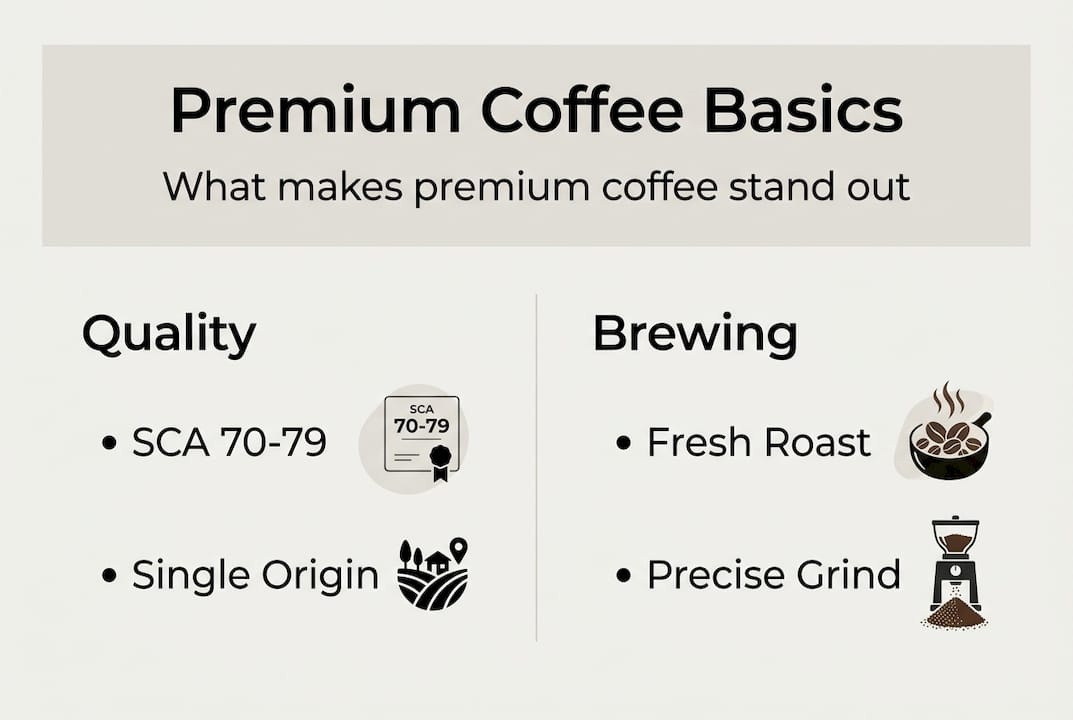
Buying better coffee starts with knowing what to look for on the bag. Here’s a practical checklist:
What to look for when buying:
- SCA score or grade listed (70+ for premium, 80+ for specialty)
- Single-origin with specific country, region, and ideally farm name
- Processing method noted (washed, natural, honey)
- Roast date visible, ideally within the last 30 days
- Roaster with a clear sourcing story
Home baristas should prioritize SCA scores, roast dates under 30 days, and clear origin and process information when selecting coffee. These three details alone will filter out most of the marketing noise.
For guidance on making the right choice for your brewing style, our guide on choosing coffee beans walks through how origin and roast level affect different brew methods.
Brewing premium coffee well at home:
- Grind fresh, grind right: Grind just before brewing. For espresso, go fine. For pour-over, go medium. Our grinding technique guide covers the exact settings for different methods.
- Use filtered water: Tap water with high mineral content or chlorine will flatten even the best beans.
- Match the recipe to the roast: Light roasts need slightly higher water temperatures (around 200°F) to extract fully. Dark roasts can go a bit cooler.
- Don’t rush the bloom: For pour-over and French press, let the coffee bloom (saturate with a small amount of water) for 30 to 45 seconds before the main pour.
Pro Tip: If you’re making espresso drinks at home, premium and specialty beans from washed origins tend to produce cleaner, more balanced shots. Natural-processed beans bring more body and sweetness, which works beautifully in milk-based drinks.
For a full breakdown by brew method, the home brewing guides at Adira cover everything from French press to AeroPress with specific recipes.
Common mistakes to avoid:
- Buying coffee with no roast date (freshness is non-negotiable)
- Storing beans in the freezer (unless in a vacuum-sealed bag for long-term storage)
- Using a blade grinder with premium beans (it creates uneven particle sizes that ruin extraction)
- Ignoring the processing method when choosing a brew recipe
Why ‘premium’ coffee matters more than marketing says
Here’s the uncomfortable truth: most people who drink ‘premium’ coffee have never actually tasted it by the industry’s definition. They’ve tasted clever packaging. The word has been stretched so far that it no longer carries reliable meaning on its own.
But that doesn’t mean premium coffee itself is a myth. It means you have to look past the label. When you seek out coffees with real SCA scores, clear origins, and honest roast dates, you’re not being a coffee snob. You’re just asking for what you’re paying for.
What changes when you make that shift is real. The flavor is more interesting. The sourcing is more transparent. And your purchase supports farmers who are actually being paid fairly rather than squeezed by commodity pricing. Chasing unlocking coffee flavor isn’t about status. It’s about getting the full experience from something you drink every single day.
Home baristas have more power in this market than they realize. Every bag you buy from a roaster who publishes farm names and SCA scores sends a signal. Quality and ethics in coffee aren’t separate conversations. They’re the same one.
Discover premium coffee with Adira
Ready to taste the difference for yourself? At Adira Coffee, we source directly from around 50 farms across Colombia, Ethiopia, Costa Rica, Guatemala, Brazil, and Sumatra, with full traceability and freshness you can verify by roast date.
Every bag is small-batch roasted in California and shipped at peak flavor. Whether you’re starting with a bright Colombia coffee or exploring a natural-processed Ethiopian, the quality difference is immediate. Browse coffee beans by origin, roast level, and process to find exactly what your palate is looking for. Adira Coffee makes it easy to put everything you’ve learned here into practice, one fresh bag at a time.
Frequently asked questions
What SCA score should premium coffee have?
Premium coffee scores 70–79 on the SCA 100-point scale, placing it above commercial grade but below the specialty threshold of 80 and above.
Is premium coffee always ethically sourced?
Not automatically. While many premium coffees are sourced responsibly, specialty coffee more consistently guarantees farm-level traceability, fair pricing, and sustainable growing practices.
How can I tell if coffee is really premium?
Check for an SCA score, a roast date within 30 days, and clear origin and processing details. Roast date under 30 days combined with transparent sourcing is the clearest sign of genuine quality.
Does premium mean the same as gourmet or specialty?
No. ‘Premium’ is a defined SCA tier at 70–79 points, ‘specialty’ requires 80 or above with stricter defect standards, and ‘gourmet’ has no formal industry definition at all.