
Many assume that larger roasting operations produce superior coffee quality due to advanced equipment and economies of scale. The reality challenges this belief: small batch roasting offers unmatched control over flavor development, freshness, and the ability to customize profiles for each unique bean origin. This guide explores what small batch roasting entails, how it enhances coffee flavor through precise technique, and why it matters for coffee enthusiasts seeking the ultimate specialty coffee experience.
Table of Contents
- Understanding Small Batch Roasting: Definition And Scale
- How Small Batch Roasting Enhances Coffee Flavor
- Common Roasting Defects In Small Batches And How To Avoid Them
- Customizing Roasting Profiles For Different Beans And Origins
- Discover Freshly Roasted Small Batch Coffees
- Frequently Asked Questions
Key takeaways
| Point | Details |
|---|---|
| Batch definition | Small batch roasting involves roasting 5 to 35 kg per cycle, allowing focused attention on each roast. |
| Flavor control | Precise temperature and timing create superior Maillard reactions and complex flavor profiles. |
| Quality management | Understanding defects like scorching ensures consistent, high-quality specialty coffee. |
| Profile customization | Small batches enable tailored roast curves for different bean origins and processing methods. |
| Freshness advantage | Roasting in small quantities delivers coffee at peak flavor directly to consumers. |
Understanding small batch roasting: definition and scale
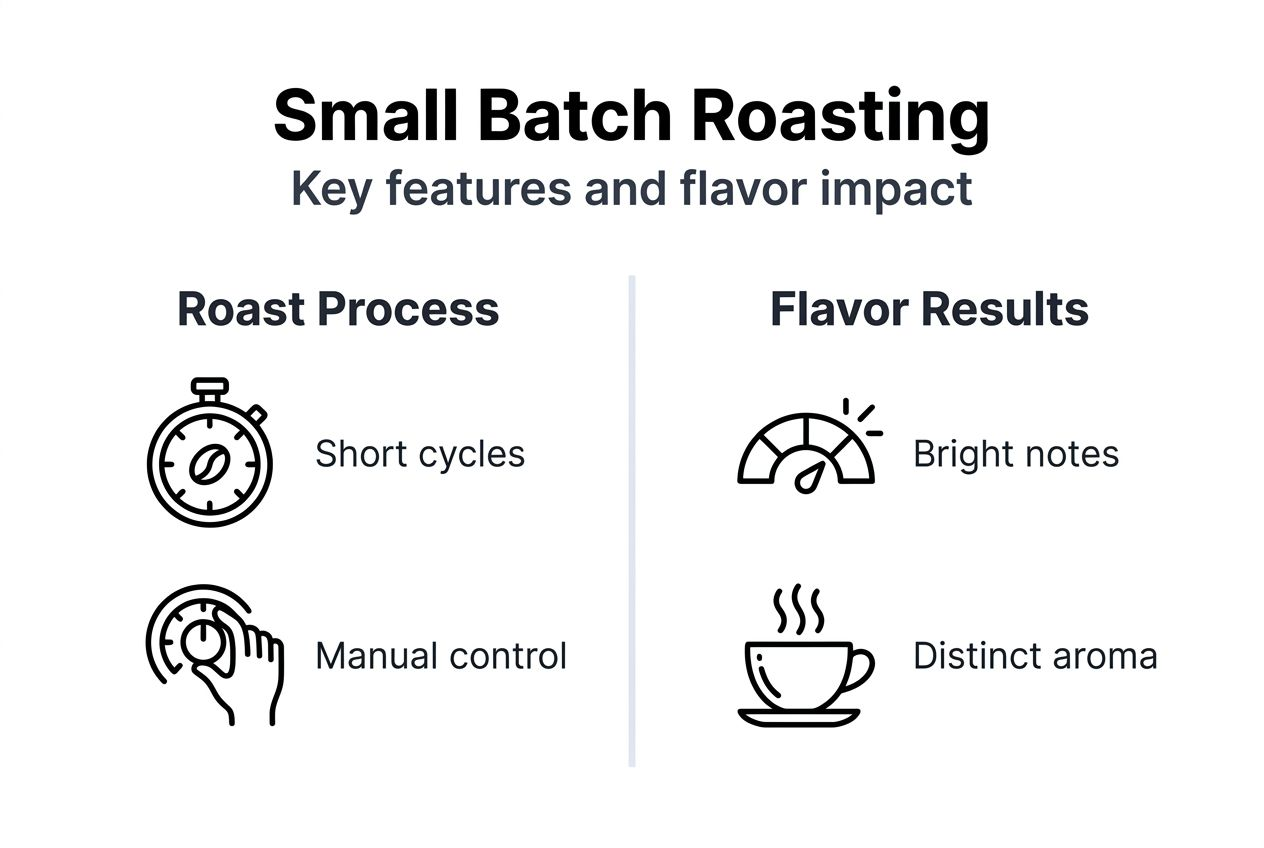
Micro roasters are classified as operations roasting fewer than 45,000 kg annually. This scale defines the small batch category, where roasters prioritize quality over volume. Within this framework, batch sizes typically range from 5 to 35 kilograms per roast cycle, depending on equipment capacity and business model.
Small batch roasters maintain drum fill levels between 40% and 75% to ensure even heat distribution throughout the beans. This careful capacity management prevents hot spots and promotes uniform roasting across the entire batch. Compared to large commercial operations processing hundreds of kilograms simultaneously, small batch setups offer roasters the flexibility to monitor and adjust variables in real time.
The advantages of working at this scale include:
- Enhanced freshness: Roasting smaller quantities means coffee reaches customers within days of roasting, not weeks.
- Precision control: Roasters can fine-tune time, temperature, and airflow for each specific batch.
- Origin specialization: Different beans receive customized treatment rather than generic roasting profiles.
- Quality focus: Attention to detail replaces automation, allowing roasters to catch and correct issues immediately.
- Direct relationships: Small roasters often maintain personal connections with coffee farms, ensuring ethical sourcing.
This operational scale creates opportunities to explore diverse brewing methods that showcase the nuanced flavors only achievable through meticulous small batch roasting. The investment in time and attention at this scale directly translates to superior cup quality that discerning coffee enthusiasts can taste with every sip.
How small batch roasting enhances coffee flavor
The Maillard reaction, a complex chemical process occurring between amino acids and reducing sugars, creates the distinctive flavors we associate with roasted coffee. Temperature and time heavily influence this crucial transformation. Small batch roasting provides the control necessary to optimize this reaction for each bean’s unique characteristics.
Precise process control leads to enhanced flavor profiles compared to large scale commercial roasting. During small batch roasting, operators closely monitor first crack, the audible popping sound indicating the beans have reached approximately 385°F to 400°F. This acoustic cue signals the beginning of rapid flavor development. Second crack, occurring around 435°F to 445°F, marks the transition toward darker roasts and requires even more careful attention to prevent over-roasting.
Controlled roasting variables impact coffee’s sensory qualities in specific ways:
- Aroma development: Proper heat application releases volatile compounds creating fruity, floral, or nutty aromatics without burning delicate oils.
- Acidity balance: Careful temperature ramping preserves bright, desirable acids while reducing harsh or sour notes.
- Body enhancement: Controlled roasting develops oils and soluble compounds that create pleasing mouthfeel and texture.
- Sweetness optimization: Gradual caramelization of sugars produces natural sweetness without bitter char flavors.
- Complexity layering: Incremental adjustments allow different flavor compounds to develop at their ideal rates, creating depth.
Improved consistency through small batch methods translates directly to higher cupping scores in professional evaluations. Specialty coffee graders assess attributes like clarity, balance, and aftertaste, all of which benefit from the precision small batch roasting offers.
Pro Tip: Make incremental temperature adjustments of just 5 to 10 degrees when refining profiles. Small changes significantly impact final flavor, and gradual testing helps you identify the sweet spot for each bean origin without wasting precious coffee.
Exploring different origins through personalized selection tools helps coffee enthusiasts appreciate how small batch roasting unlocks each bean’s full potential, revealing flavor characteristics that large scale operations simply cannot achieve.
Common roasting defects in small batches and how to avoid them
Understanding roasting defects remains crucial for producing consistently excellent coffee. Defects undermine quality and create off flavors that diminish the specialty coffee experience. Even skilled roasters encounter these challenges, making defect recognition and prevention essential knowledge.
Scorching occurs when beans contact overheated drum surfaces or experience rapid temperature increases. This defect creates burnt, harsh flavors and dark spots on individual beans. Common small batch roasting defects include:
- Scorching: Appears as dark burn marks on bean surfaces, caused by excessive heat or insufficient drum rotation, resulting in acrid, burnt flavors.
- Tipping: Shows as darkened, burnt spots on bean tips, typically from charging beans into an overly hot drum, creating bitter notes.
- Baked flavors: Develops from insufficient heat during development phase, producing flat, bread like flavors lacking complexity and brightness.
- Underdevelopment: Results from ending the roast too early, leaving grassy, vegetal flavors and preventing proper caramelization.
- Facing: Creates light colored patches on bean faces from uneven heat distribution, causing inconsistent extraction during brewing.
Balancing time, temperature, and airflow prevents most roasting defects. Success requires constant monitoring and willingness to make real-time adjustments based on visual and auditory cues throughout the roast cycle.
Maintain charge temperatures between 350°F and 400°F when loading green beans into the roaster. This range provides enough initial heat without shocking the beans. During the drying phase, which typically lasts 4 to 8 minutes, apply steady, moderate heat to remove moisture gradually. Rushing this stage often leads to tipping or scorching.
Airflow management prevents baking by ensuring adequate heat transfer throughout the roast. Insufficient airflow traps moisture and creates stagnant conditions, while excessive airflow can strip heat too quickly. Finding the optimal balance requires attention to your specific roaster’s characteristics and the bean density you’re working with.
For small batch roasters committed to quality, defect prevention starts with sourcing excellent green coffee beans and continues through every stage of the roasting process. Vigilance and systematic approaches to temperature management create the foundation for exceptional specialty coffee.
Customizing roasting profiles for different beans and origins
Small batch roasting makes profile customization practical and economically viable. Each coffee origin requires specific adjustments based on processing method, bean density, and moisture content. While large commercial roasters often apply generic profiles to maximize throughput, small batch operators can optimize each roast for the beans’ unique characteristics.
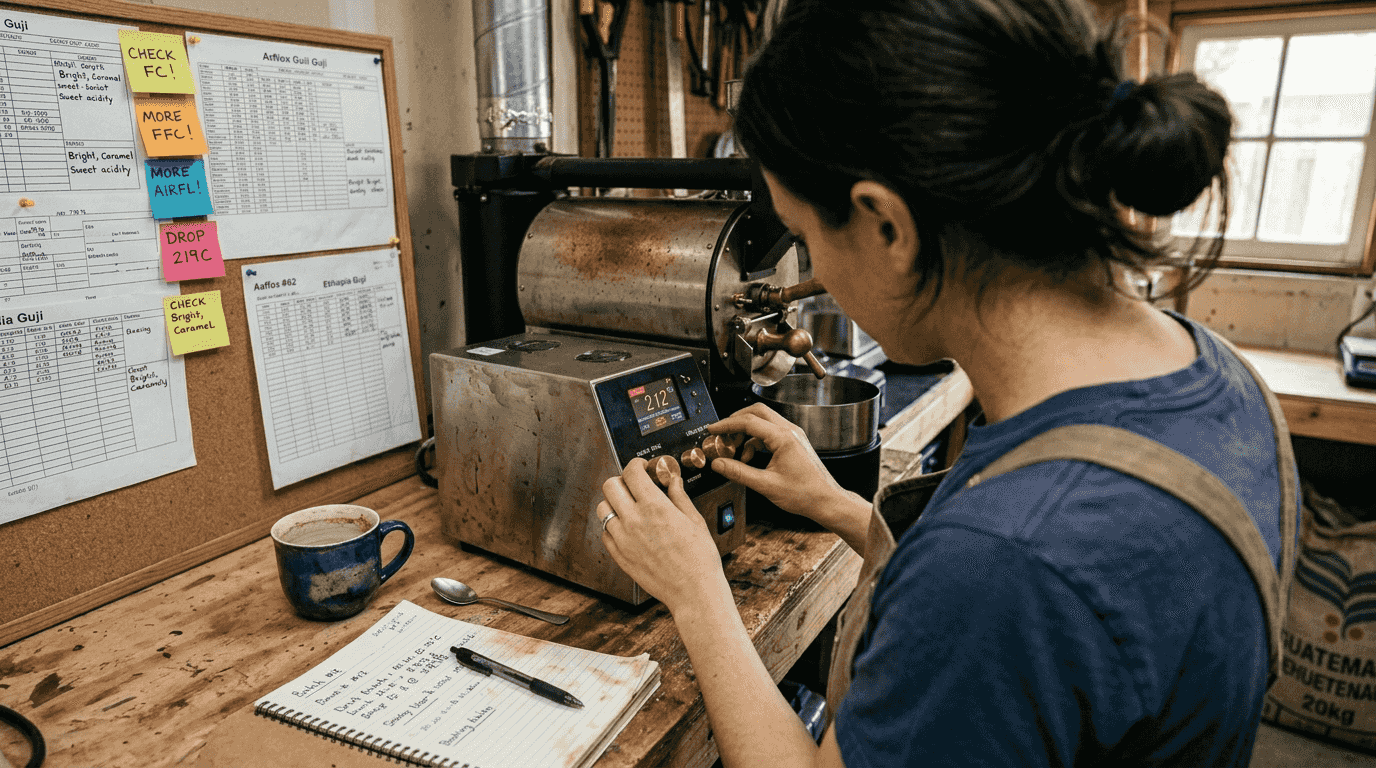
Profile development explores how time and temperature impact both physical bean changes and sensory properties. Colombian beans, for example, often respond well to moderate temperatures with extended development times that highlight their balanced sweetness and mild acidity. Costa Rican coffees, particularly those from high altitude regions, may benefit from slightly higher charge temperatures to penetrate their dense structure.
| Origin | Charge Temp | Drying Time | Development Time | Target Profile |
|---|---|---|---|---|
| Colombia | 375°F | 6 min | 2.5 min | Medium, balanced sweetness |
| Costa Rica | 385°F | 5.5 min | 2 min | Medium light, bright acidity |
| Ethiopia | 370°F | 6.5 min | 2 min | Light, floral and fruity |
| Brazil | 380°F | 5 min | 3 min | Medium dark, chocolate notes |
Bean density significantly influences heat penetration rates. High altitude beans grown in volcanic soils typically possess denser cellular structures requiring more aggressive initial heat and longer overall roast times. Lower altitude beans with more porous structures may need gentler treatment to avoid scorching.
Pro Tip: Record first crack timing and temperature for each origin. This data point serves as a reliable reference marker when developing new profiles. Consistency in reaching first crack at your target temperature indicates your roast curve matches the beans’ needs.
Repeating test roasts helps identify the optimal flavor profile for each batch. Roast the same beans at slightly different temperatures or with varied development time ratios. Cup each result systematically, noting differences in acidity, body, and flavor clarity. This iterative process reveals which approach unlocks the beans’ full potential.
Explore single origin offerings like Colombian coffee and Costa Rican coffee to experience how customized roasting profiles bring out distinct regional characteristics. Small batch roasting transforms good beans into exceptional coffee by honoring their individual nature rather than forcing them into standardized treatment.
Discover freshly roasted small batch coffees
Now that you understand how small batch roasting creates superior flavor through precise control and customization, experience these benefits firsthand. Adira Coffee specializes in small batch roasting, ensuring every bag reaches you at peak freshness within days of roasting. Each bean is carefully selected from trusted farms and roasted in small quantities to maximize flavor development.
Explore the complete collection featuring diverse origins from Colombia, Ethiopia, Costa Rica, Guatemala, Brazil, and Sumatra. Every offering showcases the distinctive characteristics that small batch roasting reveals. Whether you prefer bright, fruity Ethiopian coffees or rich, chocolatey Brazilian beans, you’ll taste the difference that freshness and attention to detail create.
Maximize your coffee experience at home by pairing quality beans with proper brewing techniques. Visit the brewing guides at Adira Coffee to learn methods that complement the complex flavors small batch roasting produces. From pour over to espresso, each brewing approach can highlight different aspects of your carefully roasted coffee.
Frequently asked questions
What exactly is small batch roasting?
Small batch roasting involves roasting coffee in quantities typically ranging from 5 to 35 kilograms per cycle. This scale allows roasters to closely monitor and control every variable during the roast, ensuring optimal flavor development for each specific bean origin and type.
How does small batch roasting differ from commercial roasting?
Commercial roasters process hundreds of kilograms simultaneously using automated systems and standardized profiles. Small batch roasters work with smaller quantities, enabling hands on adjustments throughout the roast cycle. This personalized approach creates superior flavor complexity, better consistency, and fresher coffee reaching consumers within days rather than weeks.
What are roasting defects and why do they matter?
Roasting defects like scorching, tipping, and underdevelopment create undesirable flavors that diminish coffee quality. Scorching produces burnt, harsh notes, while underdevelopment leaves grassy, vegetal flavors. These defects matter because they prevent coffee from reaching its full flavor potential, undermining the care taken in growing and processing the beans.
How often should small batch roasts be done for optimal freshness?
Coffee tastes best within 7 to 21 days after roasting, with peak flavor occurring around 3 to 14 days post roast depending on the roast level. Small batch roasters typically roast multiple times weekly to maintain continuous freshness, ensuring customers receive coffee still in its optimal flavor window.
Can home baristas practice small batch roasting?
Home roasting is absolutely suitable for enthusiasts willing to invest in proper equipment and education. Home roasters ranging from popcorn poppers to dedicated machines allow batches as small as 100 to 500 grams. Starting small helps you learn roasting fundamentals, develop palate sensitivity, and appreciate the skill professional small batch roasters bring to their craft.
What makes small batch roasted coffee worth the higher price?
Small batch coffee costs more due to labor intensity, smaller economies of scale, and premium green bean sourcing. However, you’re paying for superior freshness, customized roasting that maximizes each origin’s potential, and direct support of ethical, relationship based coffee sourcing. The flavor difference in your cup justifies the investment for those who value exceptional coffee experiences.