Signature Coffee Blend: What It Is and How to Choose One

A signature coffee blend is a roaster’s own recipe: two or more single-origin coffees combined in set proportions to taste the same, bag after bag. The best ones are built for a purpose (espresso, drip, cold brew) and roasted fresh, so the recipe actually reaches your cup. That is how we make ours at Adira: roasted after you order, shipped in 3 to 7 business days, in whole bean or ground for your brewer.
TL;DR
- A signature blend is a roaster’s repeatable recipe of single origins, designed so the result is greater than the sum of its parts.
- Blend names like house blend or breakfast blend have no standard definition in the US, so judge a bag by its roast date, components and flavor notes, not its label.
- For espresso, look for a chocolatey, big-bodied base; for drip, look for a clean, balanced cup. Medium roasts are the safest starting point for both.
- Freshness decides more than the name: buy roasted-to-order, rest the beans a few days, and store them sealed, cool and dark.
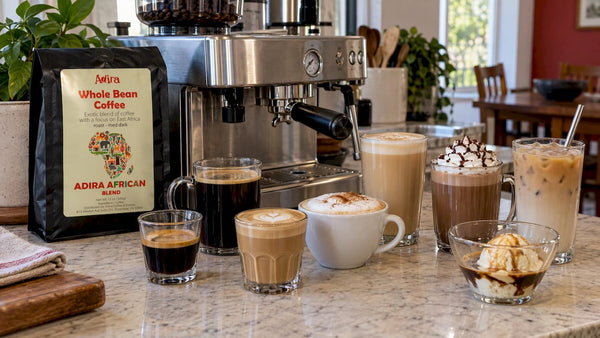
- Adira’s signature blends are Adira Blend, Love Blend, Ocean Blend, African Blend and Cold Brew, each with a starting recipe for the machine you own.
In this guide
What a signature blend actually is
A single origin comes from one place: a country, a region, sometimes a single farm. A blend combines two or more of those coffees. According to Nestlé Professional’s guide to creating a signature blend, blending different origins in different proportions produces a flavor profile you cannot repeat with a single origin alone, and the chosen coffees have to complement each other so the blend is greater than the sum of its parts.
“Signature” simply means the recipe belongs to one roaster. It is the roaster’s way of saying: this is the taste we stand behind, and it will taste the same next month. That consistency is the real product. A single origin changes with the harvest. A well-made blend lets the roaster swap components as seasons change while keeping the cup you love.
There is no regulated definition. Royal Coffee’s blending guide notes that no standard exists in the US for terms like house blend or breakfast blend. Many lean on coffees from Mexico down to Brazil, with East African or South Pacific coffees in smaller shares, and most blending professionals suggest two or three, at most four, components. So a short, readable ingredient list on the bag is a good sign.

Blend or single origin: which should you buy?
Neither is better. They do different jobs.
| Signature blend | Single origin | |
|---|---|---|
| Goal | Balance and repeatability | Showing off one place |
| Flavor | Layered: sweetness, body and brightness built together | Distinct, often more pronounced and changeable |
| Best for | Daily espresso, milk drinks, a drip pot you want to taste the same every morning | Pour-over, exploring, tasting what a region offers |
| Variation | Low: the recipe is the point | Higher: shifts with harvest |
The line is blurrier than it looks. Royal Coffee points out that many single origins are already blended upstream: cooperatives combine members’ harvests, and regional names like Colombia Medellin Supremo mix lots from many farms. That is fine, and it is the same logic a blend applies one level up.
If you are new to this, a blend is the easier way in. Our single origin flavor guide is a good next step once you want to taste a country on its own.
How roasters build a blend
Knowing the method helps you read a bag. The usual approach, as described by CoffeeReview.com, looks like this:
- Cup the candidates. Cupping is a formal tasting that scores aroma, acidity, body and flavor. The roaster decides what each coffee could add and what is missing.
- Roast each component on its own. Density, bean size and moisture change how a coffee takes heat, so each one needs its own roast to find its sweet spot. CoffeeReview’s Paul Massard roasts components slightly differently from how he would roast them as single origins so they extract at a similar rate.
- Blend after roasting. This keeps control of each component’s roast level.
- Adjust the ratios. Perfect Daily Grind quotes roaster Jen Apodaca suggesting a sweet base (Brazil, Mexico or Peru), a juicy mid-palate (Costa Rica, Colombia, Guatemala or Burundi) and light-roasted high notes (Kenya or Ethiopia), starting around 40/40/20 and tuning from there.
The result can surprise you. Massard’s blend of an Ethiopian and a Kenyan coffee turned two citric, stone-fruit-heavy coffees into a combination with lush tropical fruit notes. That is what blending is for.
It also explains why blends vary in quality. CoffeeReview describes a spectrum: some roasters blend carelessly to use up leftover stock, while the best start from a vision of a flavor and build toward it. You can tell the difference in the cup, and in how much a bag tells you about what is inside.
What to look for on the bag
Use this short checklist at the shelf or on a product page.
- Roast date. A roast date tells you far more than a best-by date. Roasted-to-order is the strongest version of this: ours is roasted only after your order, then shipped in 3 to 7 business days.
- Components. Named origins (Colombia, Ethiopia, Costa Rica) tell you more than a vague “premium Arabica.” Regions, cooperatives or farms tell you more still.
- Roast level. Medium roasts are a safe default. A peer-reviewed 2021 study of eight specialty Arabicas in the International Journal of Food Science found the medium roast matched the flavor attributes tasted at origin best under Italian espresso extraction.
- Flavor notes. Look for specific notes (chocolate, caramel, stone fruit) over generic words like smooth or bold.
- Whole bean. Whole beans hold their aroma longer than ground. If you do not own a grinder, ask for the coffee ground for your brewer.
- Quality tier. Specialty coffee is generally defined as scoring 80 or more on the Specialty Coffee Association’s 100-point scale, so a blend of specialty-grade components is a specialty blend, as Coffee Equipment Pros explains.
Our guide on choosing coffee beans goes deeper on the rest.
Choosing a blend for drip or espresso
The brewer matters because it changes what you taste.
Espresso and milk drinks
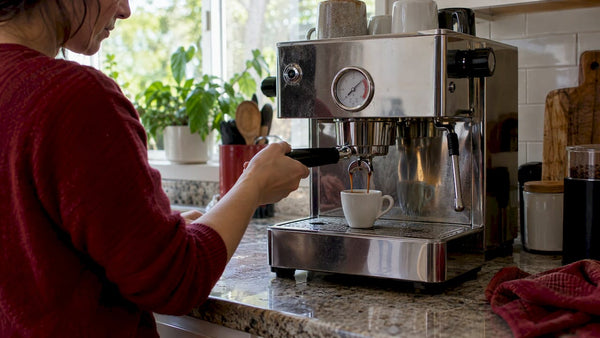
Espresso extraction is fast, and acidic, fruity flavors come out first. Clive Coffee’s roasting guide notes that this is why espresso can taste brighter or sourer, and why some roasters roast darker for espresso to soften acidity. A classic espresso blend therefore leans on a low-acid, big-bodied base, often a Central or South American coffee, with a smaller share of brighter coffees for complexity. If you want a rich, chocolatey everyday shot that stands up to milk, Adira Blend is our best-selling espresso and drip coffee. It suits Breville machines like the Barista Express, Pro and Bambino, De’Longhi Dedica and super-automatics.
For a deeper look at why origin shapes the shot, see our guide to how origin shapes espresso flavor, and if you like to experiment, our espresso blend recipes give you three starting points.
Drip, Moccamaster, French press and pour-over
Filter brewing is slower and more forgiving, so a balanced blend with sweetness up front and a gentle finish tends to please at the first sip and the last. Adira Blend does double duty here. For a lighter, fruitier cup in a V60 or Chemex, a blend with an East African component is the one to try: our African Blend is built for exactly that kind of brightness.

Cold brew and iced drinks
Long, cool extraction softens acidity and pulls out sweetness, so a blend made for it tastes smooth over ice. We have Cold Brew in the signature line for that reason.
A quick way to decide
| You make | Start with |
|---|---|
| Espresso, lattes, cappuccinos | Adira Blend |
| Everyday drip pot | Adira Blend |
| Bright pour-over or Chemex | African Blend |
| Something to share or gift | Love Blend |
| Iced and cold brew | Cold Brew |
| Curious about one country | A single origin |
Not sure? Adira has a 3-question coffee quiz, and every coffee comes with a starting recipe for the machine you already own, so you are not guessing at grind and dose on the first morning.
Freshness: the part the label does not fix
A great recipe in a stale bag is a bad cup. Roasted coffee releases gas for days after roasting, which is why espresso especially benefits from rest. Baristuno’s coffee guide suggests a few days for filter and roughly one to two weeks for espresso as trial windows, and notes that freshly roasted coffee should be kept sealed, cool and away from light and heat. If you want to freeze some for later, split it into small airtight portions and let a container warm up still sealed to limit condensation.
Two practical points follow:
- Because ours ships within days of roasting, the rest period starts while the bag is on its way. Our guide to resting coffee beans shows how long to wait for your brewer.
- Store the bag in a cool cupboard, sealed, and grind only what you brew. Our notes on how to store coffee beans cover the details.
This is also where supermarket blends lose. A bag sitting on a shelf for months, labelled only with a best-by date, gives you the name of a blend but not the freshness that makes a blend worth buying.
Order a signature blend from Adira
Our blends are roasted after you order and shipped in 3 to 7 business days, in whole bean or ground to suit your brewer, in 12 oz, 1 lb or 2 lb bags. Your first bag ships free with the code FIRSTBAG, and orders over $35 always ship free.

If coffee should just show up, Autopilot delivers every 2 weeks or every month with up to 15% off. The 1 lb bag is 12% off, about $1.21 a cup. Every Autopilot delivery ships free, and you can skip, pause or cancel anytime. The free Adira Club adds stamps with every bag, and 12 stamps bring a free bag. Browse the coffee blends or set up Autopilot.
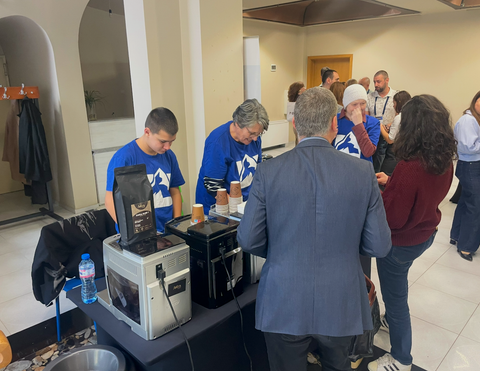
Every bag also does some good: $1 from each bag goes to young leaders in Bulgaria, for free coffee at their gatherings, practical teaching about business and money, and time spent with the next generation.
Our view on blends
We started Adira because we could not find a supermarket coffee worth a second cup. Coming from Bulgaria, we expected coffee to be an event, not a chore, and that is what we try to put in every bag.
We think a signature blend earns its name two ways. First, it is a recipe with a purpose: our espresso blend is made to taste rich and chocolatey in a machine at home, not just to look good on a label. Second, it arrives fresh. That is why we roast only after you order, and why every coffee comes with a starting recipe for the machine you own. A blend you cannot dial in is just a bag of beans.
We also like pairing blends with single origins from cooperatives and small farms. Drink the blend on weekdays, taste Ethiopia or Sumatra on a slow Saturday. And because every bag sends $1 to young leaders in Bulgaria, your everyday cup helps someone you will never meet.
Stefan
FAQ
What is the difference between a signature blend and a house blend?
Both are blends of several coffees. A signature blend is a roaster’s own named recipe, often built for a specific brew method or flavor. A house blend is typically the default offering, and neither term has a standard definition in the US, so read the origins, roast date and flavor notes.
Are blends lower quality than single origins?
No. Quality depends on the coffees used and how they are roasted. Specialty-grade coffees, scoring 80 or more on the Specialty Coffee Association’s scale, can be blended to make a specialty blend, and a careful roaster roasts each component to its best before combining them.
How long should I rest a blend after roasting?
Plan on a few days for drip and roughly one to two weeks for espresso, according to Baristuno’s guidance. Because Adira ships within days of roasting, much of that time passes before the bag reaches you, and our resting guide helps you time the first brew.
Can I use the same blend for espresso and drip?
Yes, if it is a balanced medium roast. Adira Blend is our best-selling espresso and drip coffee, and you can choose the grind for your brewer. Each bag comes with a starting recipe for your machine.
Sources
- Creating a signature blend for your coffee shop, Nestlé Professional
- What Is A Blend Of Coffee? Royal Coffee
- Blending Coffees: Craft, Intuition and Thematic Riffs, CoffeeReview.com
- A Roaster’s Guide to Creating Coffee Blends, Perfect Daily Grind
- Sensory profile of Italian Espresso brewed Arabica coffees, International Journal of Food Science
- The Art and Business of Coffee Blending, Coffee Equipment Pros
- How Roasting Affects Coffee Flavor & Taste, Clive Coffee
- How to choose coffee you’ll love: the complete coffee cheat sheet, Baristuno
Recommended
Brew it with the right coffee
The bag this guide was written around. Roasted after you order, shipped from California.
More to try
All coffee Dark roastLightDark
Adira Blend
Dark chocolate, Caramel, Roasted nuts
Invests in young leaders in Bulgaria
$24.99
 Medium-light roastLightDark
Love Blend
Milk chocolate, Caramel, Floral lift
Invests in young leaders in Bulgaria
$24.99
 Medium-dark roastLightDark
Ocean Blend
Cocoa, Soft caramel, Clean vanilla finish
Invests in young leaders in Bulgaria
$24.99
Never run out.
Never pay shipping.
Any Adira coffee with Monthly Sender: up to 15% off every delivery, free shipping every time, skip, pause or cancel whenever you like.
Set up Monthly Sender