
TL;DR:
- The origin of coffee beans influences more than 60 percent of espresso flavor, especially when concentrated. Blends provide consistency and stability in milk drinks, while single-origin beans offer unique, region-specific flavors. Understanding details like altitude and processing method helps predict how beans will behave and taste in espresso.
The role of origin in espresso is defined by how the geographical source of coffee beans directly determines flavor, body, and brewing behavior. Country, altitude, processing method, and varietal all shape what ends up in your cup. Country of origin provides roughly 60% of flavor prediction accuracy for coffee. That single fact means origin is the most powerful variable you can control before you even touch your grinder. Espresso makes this even more consequential because it concentrates flavor 5–10 times compared to other brewing methods. Every trait a bean carries from its home region gets amplified in the cup.
How does geographical origin influence espresso flavor profiles?
Origin is the clearest predictor of what your espresso will taste like. Regional flavor profiles follow consistent patterns that experienced baristas use as a starting point for every new bag they dial in.
The four major growing regions each deliver a distinct flavor signature:
- African origins (Ethiopia, Kenya, Rwanda): bright acidity, floral aromatics, berry and citrus notes. Ethiopian naturals are famous for blueberry and jasmine. In espresso, these traits intensify into something almost fruit-forward and wine-like.
- Central American origins (Costa Rica, Guatemala, Mexico): balanced sweetness, clean body, mild acidity. Costa Rican beans often show honey and stone fruit. They pull well as espresso and work in milk drinks without getting lost.
- South American origins (Colombia, Brazil): chocolate, caramel, and nutty notes with lower acidity. Colombian beans from cooperatives in Huila or Nariño tend to produce a smooth, sweet espresso with a long finish.
- Asian origins (Sumatra, Indonesia): earthy, full-bodied, low acidity with herbal and tobacco notes. Sumatran beans produce some of the heaviest, most viscous espresso shots you will ever pull.
Altitude adds another layer. High-altitude beans above 1,200 meters develop denser cellular structure. That density translates directly into a heavier, more viscous espresso shot with a thicker crema. Low-altitude beans are less dense and produce lighter-bodied shots with faster extraction. This is why two Colombian coffees from different elevations can taste completely different in the portafilter.
Soil composition and microclimate also matter. Volcanic soils in Costa Rica and Guatemala contribute mineral complexity. The wet, humid conditions in Sumatra encourage a wet-hulling process called Giling Basah, which strips the parchment early and creates that distinctive earthy, low-acid profile. These environmental factors are what specialty coffee professionals call terroir, borrowing the term from wine. You can read more about how terroir shapes flavor in espresso and filter coffee alike.
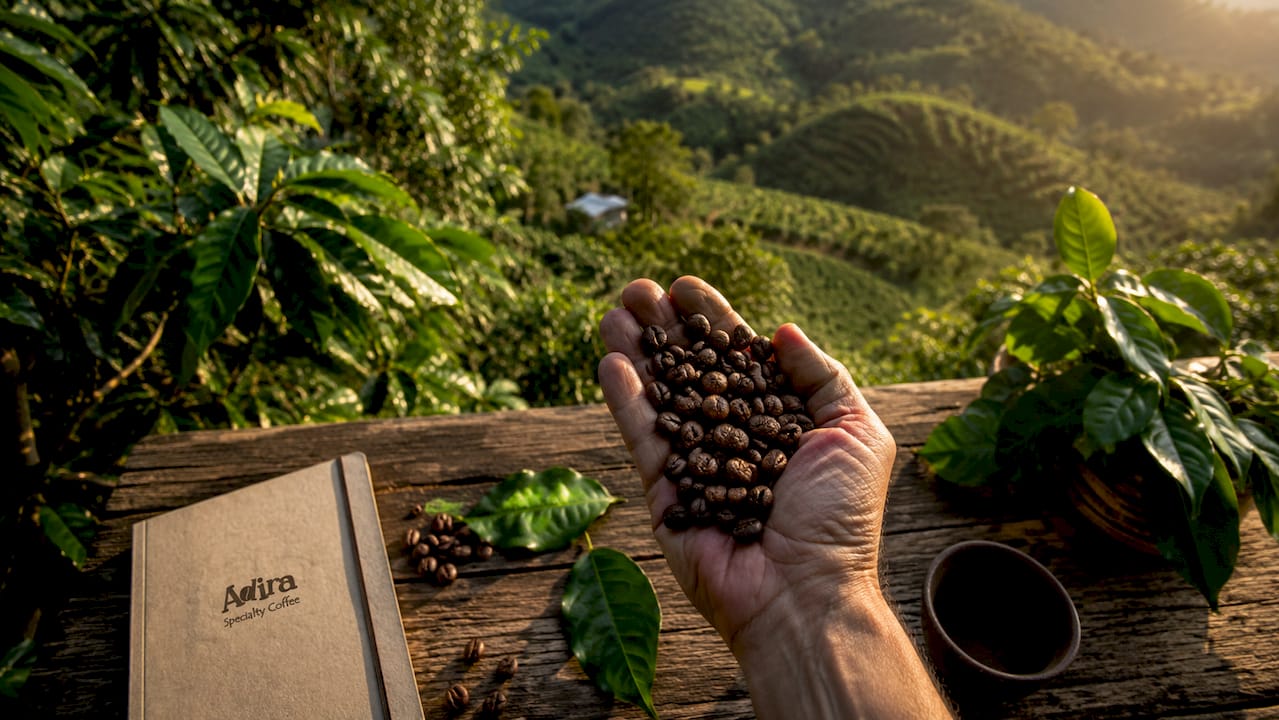
Pro Tip: When you open a new bag, smell the dry grounds before brewing. The aroma gives you a preview of the origin character. African beans smell floral and fruity. Sumatran beans smell earthy and woody. That preview tells you what to expect and how hard to dial in.
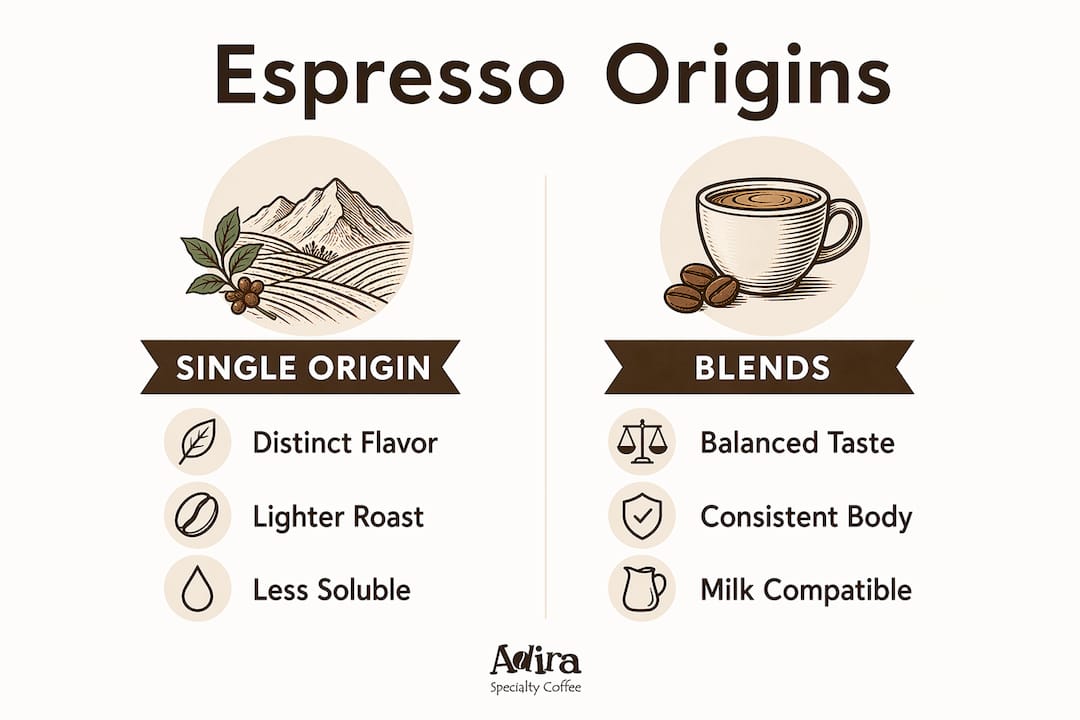
Single origin vs. blends: which works better for espresso?
Single-origin espresso and blended espresso solve different problems. Understanding the difference saves you time, money, and a lot of frustrating shots.
A single-origin coffee comes from one country, one farm, or one cooperative. A blend combines beans from two or more origins to achieve a target flavor profile. Neither is objectively better. They serve different purposes.
Espresso blends deliver more consistent body, crema, and milk compatibility than single origins. Roasters design blends specifically for espresso extraction, balancing solubility, acidity, and sweetness across multiple beans. A well-built blend like the Adira Blend pulls predictably across a wide range of grind settings and temperatures. That consistency is why blends dominate commercial espresso programs.
Single-origin espresso is harder to pull well. Single-origin beans are often roasted lighter and are less soluble, which means they require a finer grind, higher brew temperature, or longer pre-infusion than blends. The margin for error is narrower. A shot that is 2 seconds too short tastes sour and thin. A shot that runs 5 seconds too long tastes bitter and hollow.
| Factor | Single Origin | Blend |
|---|---|---|
| Flavor character | Distinct, origin-specific | Balanced, designed for consistency |
| Extraction difficulty | Higher, less forgiving | Lower, wider margin of error |
| Crema stability | Variable, often thinner | More consistent and stable |
| Milk drink compatibility | Can get lost in milk | Holds up well in lattes and cappuccinos |
| Best brewing method | Pour-over, AeroPress, espresso with skill | Espresso, milk-based drinks |
Matching origin profile to brewing method maximizes flavor. Single origins shine in pour-over because the gentler extraction preserves delicate floral and fruit notes. Blends shine in espresso because the concentrated extraction rewards their designed complexity.
Pro Tip: If you want to try single-origin espresso without the frustration, start with a washed Colombian or Costa Rican. These origins are forgiving enough to pull well without extreme adjustments, and they still deliver clear, distinct flavor.
How do processing methods affect espresso extraction?
Processing is the step between harvesting a coffee cherry and producing a green bean ready for roasting. The method used at origin changes the bean’s chemistry, and that chemistry changes how it behaves in your espresso machine.
Three processing methods dominate specialty coffee:
- Washed (wet) processing: The fruit is removed before drying. The result is a clean, bright cup where origin terroir comes through clearly. Washed Ethiopian or Colombian beans pull transparent, high-clarity espresso shots.
- Natural (dry) processing: The whole cherry dries with the fruit intact. Sugars ferment into the bean, creating intense fruit and wine-like flavors. Natural Ethiopians from Yirgacheffe or Sidama produce espresso with a thick, almost syrupy sweetness.
- Anaerobic processing: Beans ferment in sealed, oxygen-free tanks. Anaerobic processing intensifies flavors and can reduce clarity in espresso, creating unique but sometimes overwhelming profiles. A well-pulled anaerobic shot can taste like tropical fruit punch. A poorly pulled one tastes like fermented vinegar.
Bean density, which is tied to altitude and processing, directly affects grind size and extraction time. Dense, hard beans resist grinding and require a finer setting to expose enough surface area. Softer beans grind more easily and can over-extract quickly. Reading coffee origin labels gives you the origin, process, and roast level you need to predict these adjustments before pulling your first shot.
Roast level interacts with origin in ways that most home brewers underestimate. A light roast preserves origin character but makes extraction harder. A dark roast masks origin traits behind roast flavors like smoke and bittersweet chocolate. The relationship between roasting and origin determines how much of the bean’s terroir actually reaches your cup.
Practical tips for brewing espresso from different origins
Dialing in espresso from a new origin does not have to be a guessing game. A systematic approach gets you to a great shot faster.
- Read the bag first. Origin, process, and roast level tell you what adjustments to expect. A light-roasted, washed Ethiopian needs a finer grind and higher temperature than a medium-roasted Brazilian natural. Understanding origin and process before you brew cuts your dial-in time significantly.
- Start with dose and ratio. Use a 1:2 ratio as your baseline. Eighteen grams of coffee to 36 grams of liquid in 25–30 seconds covers most origins. Adjust from there based on taste.
- Adjust grind for solubility. Single-origin light roasts need a finer grind. Dark-roasted blends need a coarser grind. If your shot runs too fast and tastes sour, go finer. If it runs too slow and tastes bitter, go coarser.
- Match temperature to roast. Light roasts extract better at 93–94°C. Dark roasts extract well at 90–92°C. Most modern espresso machines let you set this precisely.
- Use blends for milk drinks. The consistency and crema stability of blends hold up under steamed milk. A delicate single-origin Ethiopian gets buried in a latte. Save it for a straight shot or a macchiato.
Common pitfalls with single-origin espresso include pulling shots too fast, using water that is too cool, and not allowing enough rest time after roasting. Most single-origin espressos need 10–14 days off roast before they pull cleanly. Fresh-roasted single origins off-gas aggressively and produce uneven, channeled shots.
Pro Tip: Keep a simple shot log. Write down origin, process, grind setting, dose, yield, and time for every new bag. After three or four shots, you will see a clear pattern and stop wasting coffee on bad pulls.
Key Takeaways
Origin is the single most powerful variable in espresso flavor, and understanding it lets you predict taste, adjust your brewing, and choose the right bean for every drink.
| Point | Details |
|---|---|
| Origin predicts flavor | Country of origin accounts for roughly 60% of flavor prediction accuracy in coffee. |
| Altitude drives body | Beans grown above 1,200 meters produce denser, more viscous espresso shots. |
| Processing changes extraction | Washed beans pull clean and bright; natural and anaerobic beans pull intense and complex. |
| Blends suit espresso best | Blends offer consistent crema, body, and milk compatibility that single origins rarely match. |
| Read the label before brewing | Origin, process, and roast level together predict the grind, temperature, and ratio adjustments you need. |
Why origin is the most underrated variable in your espresso setup
Most baristas obsess over grind size, pressure, and temperature. Those variables matter. But they are all downstream of origin. If you put a low-altitude, dark-roasted Sumatran bean through the same recipe as a high-altitude, light-roasted Ethiopian, you will not get two versions of the same espresso. You will get two completely different drinks.
What I have learned from sourcing and roasting beans from Colombia, Ethiopia, Costa Rica, Mexico, and Sumatra is that origin knowledge is the shortcut most home brewers never take. When you know a bean is a washed Colombian from 1,800 meters, you already know it will pull clean, extract evenly, and hold up in milk. You do not need to waste six shots figuring that out.
Single-origin espresso gets a reputation for being difficult, and that reputation is partly earned. Single-origin espressos require precise dialing-in because lighter roasts and harder beans leave less room for error. But the reward is a shot that tastes like a specific place on earth. An Ethiopian natural from Yirgacheffe pulled correctly does not just taste like coffee. It tastes like blueberries and jasmine and something you cannot quite name but cannot stop thinking about.
My honest advice: start with a well-built blend to build your technique, then use that foundation to explore single-origin coffees one at a time. Patience with origin exploration pays off in a way that chasing equipment upgrades never does.
— Stefan
Explore Adiracoffee’s single origins and blends for espresso
Adiracoffee roasts every bag to order in small batches in California, shipping within days of roasting so you get beans at peak flavor. Whether you want the clean sweetness of a Colombian single origin or the rich, consistent body of a purpose-built espresso blend, Adiracoffee sources directly from cooperatives and small farms in Colombia, Ethiopia, Costa Rica, Mexico, and Sumatra.

The Love Blend is built for espresso, delivering the crema stability and milk compatibility that blends do best. For origin exploration, the single-origin collection lets you taste the difference between a washed Ethiopian and a Sumatran natural side by side. Subscriptions save 10%, and US shipping is free over $35.
FAQ
What is the role of origin in espresso flavor?
Origin determines roughly 60% of a coffee’s flavor profile, including acidity, body, and aromatic character. Espresso amplifies these traits by concentrating flavor 5–10 times compared to other brewing methods.
Does altitude affect espresso body and texture?
Yes. Beans grown above 1,200 meters develop denser cellular structure, which produces heavier, more viscous espresso shots with thicker crema compared to low-altitude beans.
Are single-origin beans harder to use for espresso?
Single-origin beans are typically roasted lighter and are less soluble than blends, requiring finer grind settings, higher brew temperatures, and more precise dialing-in to extract well.
How does processing method change espresso taste?
Washed beans produce clean, bright espresso with clear origin character. Natural and anaerobic processed beans produce intense, fruit-forward flavors that can be complex but harder to balance in espresso.
Should I use a blend or single origin for milk-based espresso drinks?
Blends are the better choice for lattes, cappuccinos, and flat whites. Their designed consistency and crema stability hold up under steamed milk, while delicate single-origin notes often disappear.