
TL;DR:
- Coffee flavor varies greatly even within the same country due to processing and terroir differences. Understanding elevation, soil type, and processing methods reveals how each cup’s unique profile is shaped by producer choices. Modern trends emphasize individual farm practices over geographic origin, highlighting transparency and ethics in specialty coffee sourcing.
Ordering coffee by origin feels logical. Ethiopia for floral, Brazil for chocolate, Colombia for balanced brightness. But here’s what most enthusiasts discover eventually: two bags labeled “Ethiopia Yirgacheffe” can taste almost nothing alike. One arrives clean and citrusy, the other bursts with blueberry jam and stone fruit. The country didn’t change. The processing did. Understanding coffee origin differences means moving past the map and into the full story behind each cup, including how soil, altitude, processing, and producer decisions combine to shape every sip you take.
Table of Contents
- How coffee origin shapes flavor: Understanding terroir
- Beyond borders: How processing methods transform origin flavors
- Spotlight on origins: Comparing classic coffee regions
- Beyond the map: Why farm and producer matter more than ever
- How to choose: Matching coffee origins to your taste and values
- Why ‘origin’ is just the start: A new paradigm for coffee enthusiasts
- Discover ethically sourced coffee tailored to your taste
- Frequently asked questions
Key Takeaways
| Point | Details |
|---|---|
| Terroir sets the base | Altitude, soil, and climate combine to create the foundational flavors of each coffee origin. |
| Processing shapes flavor | How beans are processed after harvest can radically alter the taste, even within the same origin. |
| Producer and ethics matter | Increasingly, the farm and producer’s techniques, plus ethical transparency, trump geography alone for great coffee. |
| Match to your taste | Identify your preferred profile, then explore the origins, processes, and farms that best fit your palate and values. |
How coffee origin shapes flavor: Understanding terroir
Let’s start by revealing what truly makes each coffee origin unique beyond just country or region.
Terroir is a term borrowed from wine culture, and it fits coffee just as well. It describes the total environment in which a coffee plant grows: altitude, soil composition, rainfall patterns, temperature swings, and the microclimate of a specific hillside. Each of these variables leaves a fingerprint on the bean before it even reaches a roaster.
Higher altitude slows ripening, which increases bean density, sugar concentration, and organic acid development. The result is brighter acidity, more complexity, and a longer finish. Volcanic soils add a distinct mineral quality you can actually taste, while clay-heavy soils tend to produce a fuller body with nutty or earthy undertones. These aren’t abstractions. They show up clearly in a well-sourced, lightly roasted cup.
Key terroir factors and their flavor impact:
- Altitude (above 1,800 meters): Citrus, floral, and stone fruit notes with vibrant acidity
- Altitude (below 1,200 meters): Heavier body, muted acidity, earthier or nutty character
- Volcanic soil: Mineral brightness, clean finish
- Clay soil: Round mouthfeel, chocolate or walnut notes
- Microclimate: Controls moisture levels that affect fermentation on the cherry itself
“The mountain doesn’t just cool the air. It slows everything down, giving the cherry more time to concentrate its best qualities into the seed.” This is why Yirgacheffe coffees from Ethiopian highlands consistently outperform lower-grown lots in complexity.
Pro Tip: When reading a coffee label, don’t stop at the country. Look for altitude and region data. “Colombia” tells you little. “Huila, 1,900 meters” tells you a lot about what to expect in the cup.
Understanding farm practices and quality alongside terroir gives you the clearest picture of why one bag from a specific farm tastes dramatically different from another grown just a few valleys away.
Beyond borders: How processing methods transform origin flavors
Terroir sets the stage, but processing techniques create even wider differences within the same origin.
Once a coffee cherry is picked, the farmer faces a critical decision: how to remove the fruit from the seed. That choice shapes flavor as much as altitude does, sometimes more. The same varietal, grown on the same farm, processed three different ways, will taste like three completely different coffees. This is one of the most underappreciated facts in specialty coffee.
Here’s how the major processing methods affect flavor:
- Washed (wet) process: The fruit is removed before drying. The result is a clean, bright cup where terroir shines through without fruit interference. Expect pronounced acidity, clarity, and transparency of origin character.
- Natural (dry) process: Cherries dry whole, allowing the fruit sugars to ferment directly into the bean. This produces fruity, sweet, full-bodied cups. Think strawberry, blueberry, or mango notes.
- Honey process: A middle path. Some fruit mucilage is left on the bean during drying. The cup lands between washed and natural: syrupy sweetness with moderate acidity and body.
- Experimental methods (anaerobic, carbonic maceration): Controlled fermentation in oxygen-deprived environments creates entirely new flavor compounds, sometimes tasting more like kombucha or tropical wine than traditional coffee.
Processing differentiates same-origin flavors in ways that can make country of origin nearly irrelevant in a blind tasting. A natural Ethiopian and a washed Ethiopian are almost unrecognizable as siblings.
Understanding specialty roasting profiles further expands how these processing outcomes are preserved or transformed by heat, which is the next variable between farm and cup.
Pro Tip: If you love fruit-forward coffee, seek natural process beans from arid growing regions like Ethiopia’s Sidama or Yemen. Drier climates during the drying phase concentrate fruit flavors more intensely in the bean.
Spotlight on origins: Comparing classic coffee regions
Now, let’s translate terroir and process into real-world regions—where do your favorite cups come from?
Research consistently confirms that high-altitude coffees above 1,800 meters produce citrus and floral profiles, while lower altitude beans under 1,200 meters deliver heavier body and muted acidity. Knowing this, here’s how major producing regions compare:
| Origin | Typical altitude | Primary flavor notes | Common process | Ethical sourcing focus |
|---|---|---|---|---|
| Ethiopia | 1,800–2,200 m | Blueberry, jasmine, lemon | Natural, washed | Cooperative-based, women-led farms |
| Colombia | 1,500–2,000 m | Caramel, red fruit, citrus | Washed | Smallholder transparency |
| Brazil | 800–1,200 m | Chocolate, nut, low acid | Natural, pulped natural | Large estate, growing micro-lot |
| Costa Rica | 1,200–1,800 m | Brown sugar, citrus, honey | Honey, washed | Micro-mill revolution |
| Indonesia (Sumatra) | 1,000–1,500 m | Earthy, cedar, dark chocolate | Wet-hulled (Giling Basah) | Small cooperative farms |
The table makes clear that no single origin dominates every preference. Each brings something specific to the table.
Origins that excel for specific preferences:
- Fruit and floral notes: Ethiopia (natural or washed from Yirgacheffe or Sidama)
- Balanced acidity and sweetness: Colombia (washed from Huila or Nariño)
- Chocolate and nutty depth: Brazil (natural or pulped natural from Cerrado)
- Syrupy body with brightness: Costa Rica (honey process from Tarrazú)
- Bold, earthy intensity: Sumatra (wet-hulled from Aceh or Mandheling)
Explore coffee flavor profiles to find the specific tasting notes that match your palate before choosing a bag. If you pull espresso at home, the espresso bean origins guide connects these regions to how they extract under pressure. And if you’re new to single-origin buying, the single origin coffee guide explains exactly what that label means and why it matters for traceability.
Beyond the map: Why farm and producer matter more than ever
Origin still matters, but experts and enthusiasts are looking increasingly beyond borders to individual producers and their innovative approaches.
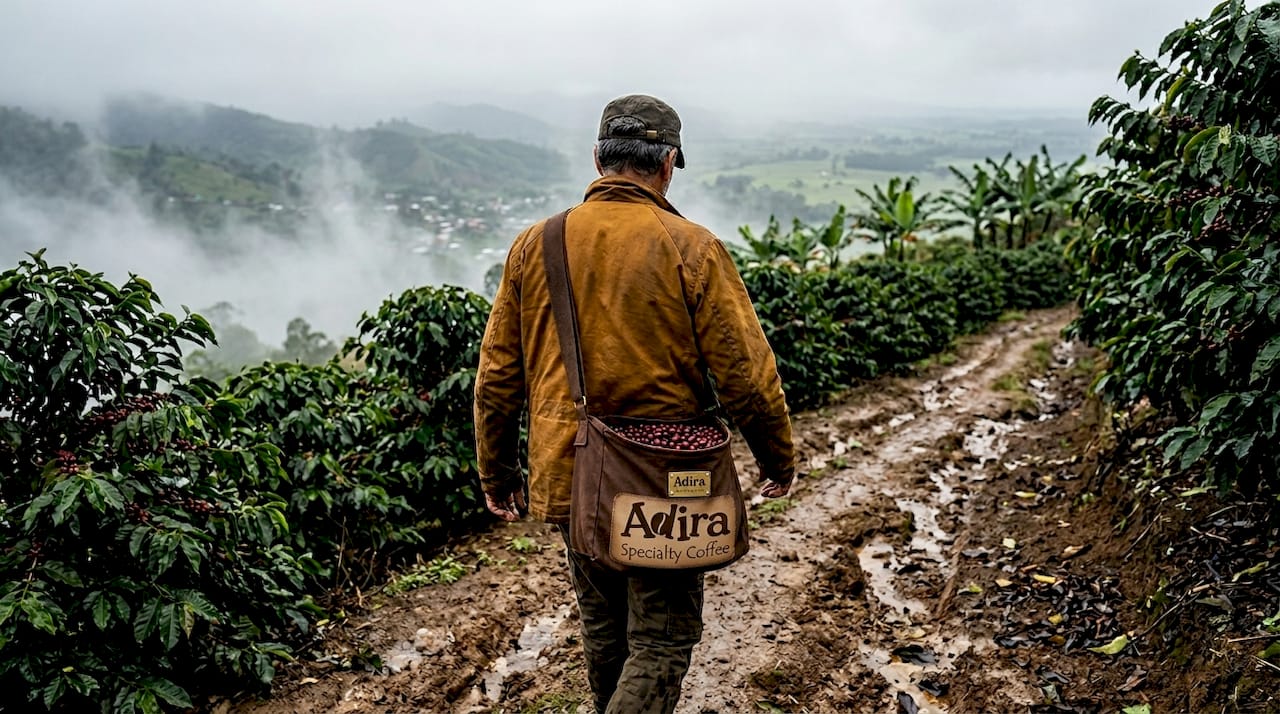
Something important has shifted in the specialty coffee world. A few years ago, a consumer might pick up an Ethiopian coffee and feel confident about what they’d get. Today, that same origin might arrive as a traditional natural, a washed micro-lot, or an anaerobic ferment with notes that don’t resemble any traditional Ethiopian profile. The producer made that happen, not the geography.
Experimental processing like anaerobic and carbonic maceration amplifies producer signature over pure origin, shifting consumer attention from country to farm identity. This is one of the most significant changes in how specialty coffee is marketed and consumed.
“The farm’s decision-making now shapes the cup as much as its coordinates on the map. We’re in an era of producer-driven coffee.”
Signs that you’re looking at a truly producer-focused specialty coffee:
- The label lists the farm or producer name, not just the country
- A specific lot or batch number appears on the bag
- Processing method is prominently featured alongside tasting notes
- The roaster provides direct trade or partnership details
- Certifications or farm visit photos are included in packaging or online
This transparency is what separates commodity coffee from genuinely differentiated specialty coffee. Knowing whose hands touched the cherries, how they were dried, and what fermentation approach was used gives you a real story behind the flavor.
Producer practices and flavor are now central to every informed purchasing decision. If you want to taste the full range of what a single country can produce, look for two or three lots from the same origin processed differently by different producers. The contrast will be eye-opening.
Pro Tip: When at a specialty café or shop, ask “who grew this?” alongside “where is it from?” The answer reveals whether the roaster is tracking quality all the way back to the producer or just buying based on country.
For those interested in experimental organic coffee, there are growing options that push the boundaries of what a single origin can taste like through innovative fermentation techniques.
Understanding the farm context also improves your brewing for best flavor, since knowing a coffee’s density and process helps you calibrate grind size and extraction temperature more precisely.
How to choose: Matching coffee origins to your taste and values
Armed with origin, process, and producer knowledge, here’s how to choose coffee for your palate and principles.
A structured approach helps you cut through the noise on any shelf or specialty website. Follow these steps:
- Identify your flavor preference. Do you love fruit and brightness, or do you prefer chocolate and body? Write it down before you shop.
- Match your preference to an origin and process pairing. Fruity and bright points to Ethiopian natural or Colombian washed. Chocolatey and heavy points to Brazilian natural.
- Check for producer transparency. Does the roaster list the farm, region, and process? If not, look for one that does.
- Evaluate the roast level. Light roasts preserve terroir and origin character. Darker roasts emphasize the roaster’s craft but can mask origin differences.
- Consider your brew method. Pour-over showcases washed coffees beautifully. French press suits natural process and Indonesian origins. Espresso benefits from Brazilian or Colombian blends with body.
| Flavor preference | Recommended origin | Best process | Roast level |
|---|---|---|---|
| Fruity and floral | Ethiopia | Natural or washed | Light |
| Bright and balanced | Colombia | Washed | Light to medium |
| Chocolate and nutty | Brazil | Natural or pulped natural | Medium |
| Syrupy and sweet | Costa Rica | Honey | Medium |
| Bold and earthy | Sumatra | Wet-hulled | Medium to dark |
Contrasting industry views reveal that while origin has traditionally served as a proxy for flavor, processing and producer identity now dominate how roasters communicate quality. Even robusta, long dismissed as inferior, is gaining recognition: premium robusta varieties from specific farms add meaningful body and crema to high-end blends without sacrificing quality.
Use the guide on choosing coffee beans to apply these frameworks to real buying decisions across roasters and origins.
Why ‘origin’ is just the start: A new paradigm for coffee enthusiasts
With these frameworks in mind, here’s what our experience and the latest research suggest about getting the most from coffee origin analysis.
Origin is a useful starting point. It is not a flavor guarantee. We’ve tasted Brazilian coffees that were bright and acidic, Ethiopian coffees that were heavy and muted, and Colombian lots that tasted like dessert wine. Every one of those surprises came down to a producer making intentional choices that departed from the regional norm.
The exciting shift happening right now is that experimental processing now forces a focus on individual producer signature over country of origin. This is genuinely good news for enthusiasts. It means the ceiling for flavor discovery is much higher than a world map ever suggested.
For ethically minded coffee drinkers, this matters practically. Knowing the country of origin isn’t enough to know whether the farm is paying fair wages, managing water responsibly, or investing in regenerative agriculture. Transparency about the producer, not just the flag, is the only real indicator of ethical sourcing.
Some of the most exciting coffees we’ve encountered come from producers who blend regional heritage with unexpected technique. A Costa Rican farm using anaerobic fermentation on a traditional Caturra varietal doesn’t fit neatly into any origin expectation. But it tastes extraordinary. That’s the sweet spot this new paradigm opens up.
Questions to ask at your local roaster for next-level coffee discoveries:
- “Can you tell me the name of the farm or producer?”
- “What processing method was used, and who made that decision?”
- “Does the roaster visit the farms directly, or work through importers?”
- “Is there a cupping note or green coffee spec sheet available?”
- “Does this producer experiment with fermentation or varietals?”
A deep dive on production will help you understand the full chain from cherry to cup, and why every link in that chain matters for both flavor and ethics.
Discover ethically sourced coffee tailored to your taste
If you want to try the ideas from this guide yourself, exploring curated, ethically sourced options is a rewarding next step.
At Adira Coffee, we work directly with around 50 farms across Colombia, Ethiopia, Costa Rica, Guatemala, Brazil, and Sumatra to bring you coffees that tell a complete story: origin, producer, process, and roast. Every bag we ship is small-batch roasted and sent at peak freshness so the terroir and processing decisions we’ve talked about in this guide actually reach your cup intact.
Our Colombian single origin showcases the washed brightness and caramel sweetness that makes the Huila region one of the world’s most celebrated. If you’re drawn to the honey process and balanced sweetness we covered, our Costa Rican coffee is a perfect entry point. Browse the full specialty coffee range to find coffees matched to your exact flavor profile, complete with farm transparency and process details for every listing.
Frequently asked questions
How does altitude affect coffee flavor?
Higher altitude coffees above 1,800 meters produce brighter acidity and floral complexity, while beans grown below 1,200 meters tend toward heavier body and muted, earthy character.
What’s the difference between washed and natural coffee?
Washed coffees are clean and acid-forward with clarity of origin character, while natural process beans are fruity, sweet, and full-bodied because the cherry dries intact around the seed.
Is country or producer more important when picking specialty coffee?
Experimental processing amplifies producer signature over pure origin, so for truly differentiated specialty coffee, the producer and their methods now matter as much as, or more than, the country name.
Does Robusta always mean lower quality in coffee blends?
Not always. Premium robusta from specific farms can add desirable body, crema, and caffeine intensity to high-end espresso blends without dragging quality down.
How do I know if my coffee is ethically sourced?
Look for roasters who list the farm name, producer, processing method, and sourcing relationship clearly on the bag or website, alongside any fair trade or direct trade certifications.
Recommended
- How Coffee Farms Define Flavor: Practices That Impact Quality – Adira Coffee US
- Espresso bean origins: flavor, farming, and global farms – Adira Coffee US
- Explore the Best Coffee Flavor Profiles for Every Taste – Adira Coffee US
- What is single origin coffee? A 2026 guide for enthusiasts – Adira Coffee US