
TL;DR:
- Coffee flavor begins with farm-level decisions about soil, altitude, and cultivation practices.
- Harvesting methods and timing greatly influence coffee quality, with selective hand-picking producing higher scores.
- Processing techniques like washed, natural, and honey significantly impact the final taste profile and complexity.
Most coffee lovers obsess over grind size, water temperature, and brew ratios. Those details matter. But the real story of what ends up in your cup starts thousands of miles away, on a hillside farm where decisions about soil, harvest timing, and processing were made months before your beans were roasted. The farm is where flavor is born, not just transported. Understanding what happens at origin changes how you shop for specialty coffee, how you taste it, and how much you appreciate the hands behind every bag. This guide breaks down the farm-level decisions that separate a forgettable cup from one that stops you mid-sip.
Table of Contents
- The foundation: Terroir and farm management
- Harvesting choices: Precision, timing, and quality scores
- Processing at the farm: Washed, natural, honey, and cup profiles
- Sustainability, certifications, and innovation on coffee farms
- A fresh perspective: Why coffee farms deserve as much credit as roasters
- Discover quality at the farm level
- Frequently asked questions
Key Takeaways
| Point | Details |
|---|---|
| Terroir is foundational | Farm altitude, soil, and climate set the baseline for coffee’s quality and flavor. |
| Precise harvesting matters | Hand-picking ripe cherries and well-timed harvests greatly improve specialty scores and reduce defects. |
| Processing shapes profiles | Washed, honey, and natural methods at the farm define a coffee’s clarity, sweetness, and body. |
| Sustainability drives value | Farms with certifications and innovative practices deliver consistent, premium flavor but often at higher cost. |
The foundation: Terroir and farm management
There is a reason wine lovers talk about terroir, and coffee deserves the same conversation. Terroir refers to the combination of altitude, soil composition, rainfall, temperature, and surrounding vegetation that gives a crop its unique character. In coffee, these variables do not just influence flavor subtly. They determine the entire chemical blueprint of the bean before anyone touches it.
Altitude is one of the most powerful levers. At higher elevations, cooler temperatures slow the maturation of coffee cherries, allowing more complex sugars and acids to develop. Higher altitudes above 1300m yield brighter acidity and greater flavor complexity, while volcanic soils enhance natural sweetness. This is why Ethiopian highland coffees and Colombian mountain-grown beans consistently score well in specialty evaluations. The influence of altitude and soil on cup quality is not a marketing claim. It is measurable chemistry.
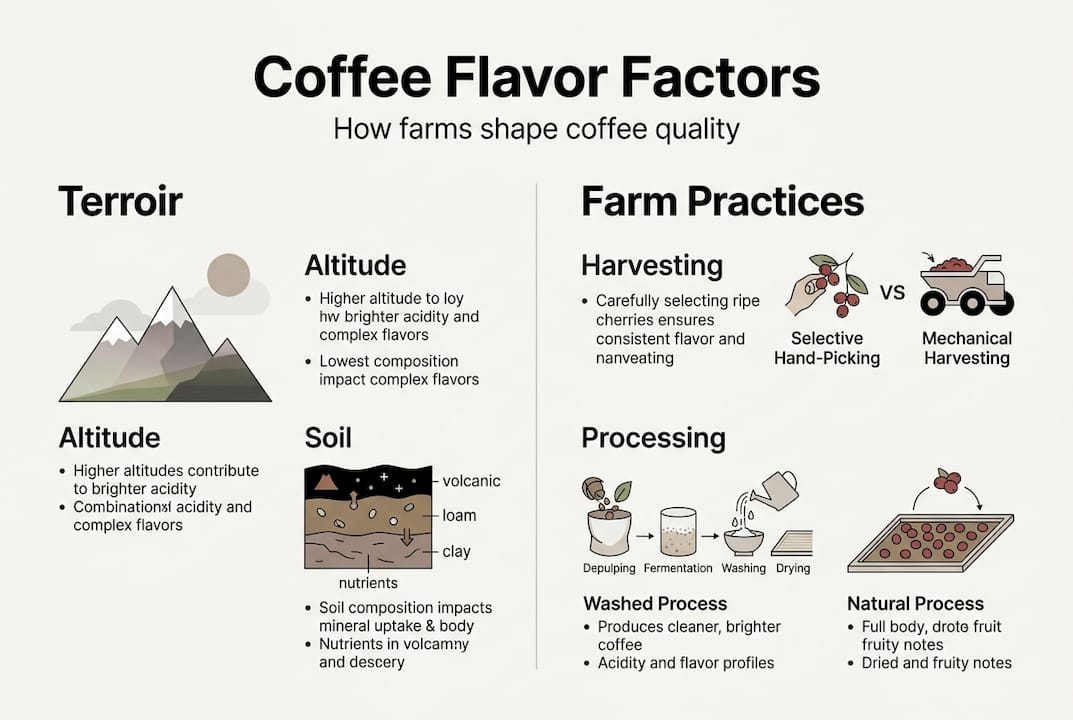
Beyond the land itself, how a farm is managed matters enormously. Shade-grown coffee, for example, slows cherry development further and encourages biodiversity that naturally suppresses pests. Farms that use balanced, organic fertilization build soil health over time, which feeds the plant more complex nutrients. The choice of coffee variety, whether Gesha, Bourbon, Typica, or a newer hybrid, also shapes flavor potential before a single cherry is picked. You can learn more about how these types of coffee beans translate to different flavor profiles.
Key farm management factors that shape quality:
- Altitude and microclimate stability
- Soil mineral content and drainage
- Shade canopy percentage and tree species
- Coffee variety and genetic lineage
- Fertilization approach (organic vs. synthetic)
- Water access and irrigation consistency
Pro Tip: When you see a coffee from a farm on volcanic soil in regions like Guatemala’s Acatenango or Sumatra’s Mandheling, that mineral-rich earth often translates directly into a more layered, sweeter cup. It is one reason volcanic-soil farms win a disproportionate share of specialty awards.
| Altitude range | Soil type | Typical flavor outcome |
|---|---|---|
| Below 1000m | Clay or sandy | Mild, low acidity, simple body |
| 1000m to 1300m | Loam or red clay | Balanced, medium complexity |
| Above 1300m | Volcanic or mineral-rich | Bright acidity, sweetness, complexity |
Exploring coffee farm flavor techniques can also help you apply this knowledge when you are brewing at home.
Harvesting choices: Precision, timing, and quality scores
With the farm’s environment set, the next make-or-break moment for quality is in the hands of the harvesters. Even the most perfectly grown cherry can be ruined by poor picking decisions. And the difference between methods is not marginal.
Selective hand-picking means workers move through the farm multiple times per season, choosing only cherries that have reached peak ripeness. Strip picking, by contrast, removes all cherries from a branch at once regardless of ripeness. It is faster and cheaper, but it mixes underripe, ripe, and overripe fruit into the same batch. The result is an inconsistent, often defect-heavy lot. Selective picking boosts quality scores by 1.28 points compared to strip picking, and delayed harvest until optimal ripeness reduces defect rates from 11% to 4%.
Timing adds another layer of complexity. Picking too early captures cherries before their sugars have fully developed, leading to grassy or astringent notes. Waiting too long introduces fermentation inside the fruit before processing even begins. The window for peak quality is narrow, and skilled farm workers learn to read subtle color and texture cues that no machine currently replicates reliably.
Farms that invest in trained pickers and multiple harvest passes consistently produce lots that score above 85 on the SCA scale. The labor cost is real, but so is the quality gap.
Step-by-step selective picking strategy used on top farms:
- Scout the farm block by block as cherries begin to color
- Mark sections by estimated ripeness date
- Begin first pass when 60% to 70% of cherries show deep red or yellow color
- Return every 7 to 10 days for subsequent passes
- Sort picked cherries immediately to remove any defects
- Deliver to the processing station within hours of picking
Pro Tip: When shopping for specialty coffee, look for bags that say “selectively hand-picked” or “multiple-pass harvest.” It signals the farm invested in quality at the source, not just at the roaster. More on why hand-picking vs strip-picking changes your cup is worth reading before your next purchase.
| Harvesting method | Average quality score | Defect rate |
|---|---|---|
| Selective hand-picking | 84 to 87 SCA | 4% |
| Strip picking | 78 to 82 SCA | 11% |
| Machine harvesting | 76 to 80 SCA | 13% to 18% |
Research on harvest timing and chlorogenic acid development also shows that optimal ripeness maximizes the antioxidant compounds that contribute to both flavor and body.
Processing at the farm: Washed, natural, honey, and cup profiles
After harvesting, the next fork in the road for quality is how beans are processed right at the farm. Processing is the stage where the coffee cherry’s fruit is removed from the seed, and the method chosen here shapes the final cup more dramatically than most people realize.
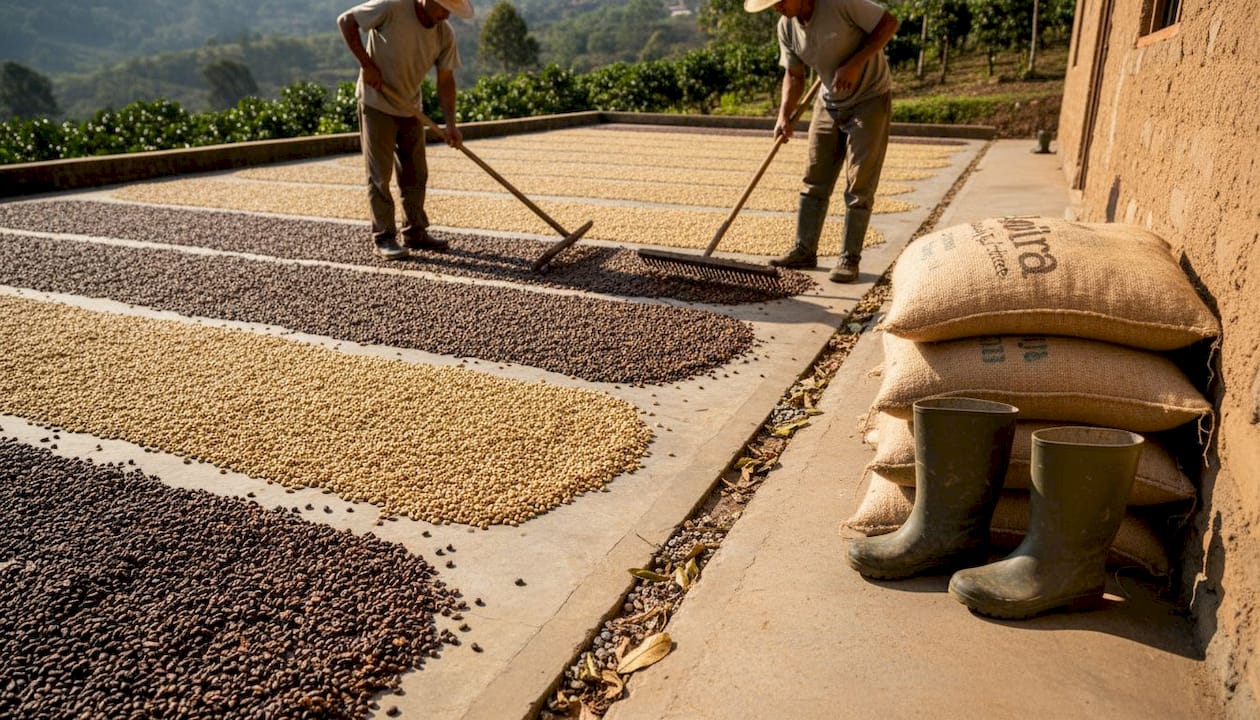
Washed processing removes all fruit before fermentation, leaving the bean to develop flavor primarily from its own chemistry. The result is a cleaner, brighter cup with more defined acidity. Natural processing dries the whole cherry intact, letting the fruit’s sugars ferment into the bean over weeks. This creates heavier body, pronounced sweetness, and sometimes fruity or winey complexity. Honey processing sits between the two, leaving varying amounts of fruit mucilage on the bean during drying. The balance of sweetness and clarity depends on how much mucilage remains.
Controlled fermentation increases desirable flavor compounds, and lots scoring above 80 on the SCA scale consistently reflect careful processing decisions. Farms experimenting with anaerobic fermentation or carbonic maceration are pushing this further, sometimes achieving flavors that seem almost impossible from a coffee bean.
How processing methods affect your cup:
- Washed: Bright acidity, clean finish, terroir-forward, lighter body
- Natural: Full body, berry or tropical fruit notes, higher sweetness, more variability
- Honey: Balanced acidity and sweetness, smooth body, approachable complexity
- Experimental fermentation: Intense, layered, sometimes polarizing, very high ceiling
One important nuance is that processing can either reveal or mask terroir. A well-executed washed lot from a high-altitude Ethiopian farm lets the soil and climate speak clearly. A poorly controlled natural process can overwhelm those same qualities with fermentation off-notes. Knowing the specialty coffee processing methods used on your beans helps you set expectations and taste with more intention.
You can check the label or the roaster’s tasting notes for processing information. Most specialty roasters include it because it genuinely changes how you brew and what you taste. A deeper look at the full processing method guide is useful if you want to connect processing to brewing parameters.
Sustainability, certifications, and innovation on coffee farms
Once farm-level quality is established, the story continues with how sustainability and innovation shape your specialty experience. Certifications like Rainforest Alliance, USDA Organic, and Fair Trade are not just marketing labels. They represent specific practices that affect how a farm operates, how workers are treated, and how consistently quality is maintained season after season.
Agroforestry, the practice of growing coffee under a canopy of native trees, is one of the most impactful sustainable methods. It protects soil from erosion, regulates temperature, and creates habitat for birds that naturally control pests. Farms using agroforestry often produce more consistent lots because the microclimate is more stable. Certifications and sustainable practices ensure consistent quality but also increase costs, and innovative varietals and processing approaches are what drive premium pricing in today’s specialty market.
Pro Tip: You can often taste the difference in coffees from farms that hold certifications and invest in innovation. The flavor tends to be more consistent across harvests, and the complexity is higher because the farm ecosystem is healthier.
Top innovative farm strategies (with honest trade-offs):
- Anaerobic fermentation: High reward, high risk of off-flavors if not controlled
- Gesha and rare varietal cultivation: Exceptional cup quality, very low yield
- Precision irrigation systems: Improves consistency, significant upfront cost
- Biodynamic farming: Builds long-term soil health, slow to show results
- Direct-trade partnerships: Funds quality investment, requires trust and transparency
For context on how these practices translate to what you find in the bag, measuring and comparing farm quality gives you a practical framework. Brazilian specialty production in regions like Minas Gerais also shows how large-scale farms can achieve premium microlot quality through targeted labor investment and processing innovation.
A fresh perspective: Why coffee farms deserve as much credit as roasters
Here is something the specialty coffee industry does not say loudly enough: roasters can only work with what farms give them. The most talented roaster in the world cannot create complexity that was not already present in the green bean. Yet the conversation around specialty coffee almost always centers on the roaster’s craft, the roasting profile, the resting period, the packaging design.
We have tasted the same truth repeatedly at Adira. A microlot from a small Colombian farm experimenting with extended honey processing arrived with so much natural sweetness and layered fruit character that the roast almost needed to get out of the way. The farmer made that cup. The roaster revealed it.
The uncomfortable reality is that most coffee lovers have never heard the name of the farm behind their favorite bag. They know the roaster. They might know the country. But the farmer who chose the variety, managed the soil, and hand-sorted every cherry? Anonymous. That needs to change. True specialty appreciation means innovation on coffee farms is something you actively seek out and reward with your purchasing choices. When you buy from a roaster who names their farms and pays above market, you are funding the next exceptional harvest.
Discover quality at the farm level
Ready to taste the difference that comes from world-class coffee farms? At Adira Coffee, we source directly from around 50 farms across Colombia, Ethiopia, Costa Rica, Guatemala, Brazil, and Sumatra. Every farm we work with practices selective harvesting and thoughtful processing, and we roast in small batches to preserve what those farmers worked so hard to create.
Our Colombia single-origin is a direct example of high-altitude terroir and careful washed processing coming together in a bright, complex cup. The Ethiopia Natural shows what a well-managed natural process can do with exceptional fruit. If you want to explore more specialty coffees sourced with this level of farm-level intention, our full range is waiting for you.
Frequently asked questions
What is the biggest factor at coffee farms influencing bean quality?
Altitude and soil type set the foundational chemistry and flavor potential of the bean before any other process begins. Higher altitudes above 1300m consistently produce greater complexity and brighter acidity.
How do washed, honey, and natural processing differ in taste?
Washed coffees are cleaner and brighter, naturals are sweeter with heavier body, and honey processed beans offer a balanced middle ground. The processing method chosen at the farm shapes this before roasting even begins.
Why are sustainably grown coffees often more expensive?
Sustainability requires additional labor, land management, and certification costs that raise the price of production. As noted in recent industry research, certifications and sustainable practices increase costs while ensuring more consistent quality across harvests.
Does hand-picking really affect coffee taste?
Yes, significantly. Selective picking boosts quality scores by 1.28 points compared to strip picking and cuts defect rates from 11% to 4%, which directly translates to a cleaner, more flavorful cup.
Recommended
- Expert coffee brewing tips for better flavor at home – Adira Coffee US
- Why freshness matters in coffee: flavor and quality – Adira Coffee US
- Identifying quality coffee beans: a connoisseur’s guide – Adira Coffee US
- Coffee blends: Master flavors & brewing techniques – Adira Coffee US
- Specialty Grade Beans: Impact on Eco-Conscious Coffee Lovers – EcoVibe Roast