
TL;DR:
- Great coffee depends on controlling variables like brew ratio, grind size, water quality, and temperature.
- Pour-over offers precise control for clarity, especially with lighter roasts, while immersion methods like French Press add body.
- Consistent, small adjustments and good technique are key to improving at-home coffee brewing.
Getting café-level flavor at home isn’t about buying the most expensive machine. It’s about understanding the variables that actually shape your cup: brew ratio, grind size, water quality, and method. Most home baristas focus on one thing and wonder why results are inconsistent. The truth is, great coffee comes from controlling several small factors together, not obsessing over just one. This guide walks you through the science-backed techniques, expert-ranked brewing methods, and practical adjustments that turn your morning routine into something genuinely exciting.
Table of Contents
- Mastering the basics: The Golden Cup standard and key variables
- Pour-over: Precision for clarity and nuance
- Immersion methods: Richness, body, and versatility
- Tailoring your technique: Grind, water, and beans for your best cup
- A Californian home barista’s take: Forget perfection, embrace playful experimentation
- Brew better coffee with ethically sourced Adira beans
- Frequently asked questions
Key Takeaways
| Point | Details |
|---|---|
| Use the right ratio | Weigh both coffee and water for repeatable, balanced brews every time. |
| Choose your brewing method | Opt for pour-over for bright clarity or immersion for rich, bold flavor depending on your taste. |
| Fine-tune your grind | Adjust grind size to match your method, helping highlight key flavors in specialty beans. |
| Experiment with confidence | Small, systematic changes—one variable at a time—help you dial in your perfect cup. |
Mastering the basics: The Golden Cup standard and key variables
Before you experiment with fancy equipment or exotic origins, you need a repeatable baseline. Without one, you’re guessing. The SCA Golden Cup standards give you exactly that: a 1:15 to 1:17 coffee-to-water ratio by weight, with specific targets for total dissolved solids (TDS) and extraction yield. These aren’t arbitrary numbers. They represent the sweet spot where most people experience balanced flavor, neither too weak nor too bitter.
Extraction yield is the percentage of your coffee grounds that actually dissolves into the water. Too low, and you get sour, thin coffee. Too high, and bitterness takes over. The SCA Golden Cup ratio of 1:15 to 1:17 is your starting point, not your finish line. From there, small tweaks in grind size or water temperature move you toward your personal ideal.
James Hoffmann, one of the world’s most respected coffee educators, argues that weighing doses and using filtered water matters more than any single piece of gear. Clean equipment is equally critical. Oils and residue from previous brews go stale fast and muddy your flavor. If you want to keep your equipment clean, it makes a bigger difference than most people expect.
Here are the core variables every home barista should track:
- Brew ratio: Start at 1:15 (stronger) or 1:17 (lighter) and adjust from there
- Water temperature: 195°F to 205°F is the standard range for most methods
- Grind size: Coarser for immersion, finer for pressure-based methods
- Water quality: Filtered water removes chlorine and off flavors
- Equipment cleanliness: Rinse and clean after every session
| Variable | Effect on cup | Common mistake |
|---|---|---|
| Brew ratio | Strength and balance | Eyeballing instead of weighing |
| Grind size | Extraction speed | Using the wrong size for the method |
| Water temp | Flavor development | Boiling water (too hot) |
| Water quality | Clarity and taste | Using unfiltered tap water |
| Equipment cleanliness | Freshness | Skipping rinse between brews |
Pro Tip: A digital scale that measures to 0.1 grams is the single most impactful upgrade for any home setup. Weigh both your beans and your water every time.
Exploring different brewing methods for home baristas and pairing them with solid grind size tips will accelerate your learning faster than any other approach. With the core variables in mind, let’s examine leading manual brewing methods and how they shape your cup.
Pour-over: Precision for clarity and nuance
Pour-over is the method most specialty coffee experts reach for when they want to taste what a bean is actually doing. It gives you direct control over every variable: water temperature, flow rate, agitation, and timing. That control translates into a cup with remarkable clarity and brightness, especially with lighter roasts.
Expert rankings from CNET place pour-over at the top for control and flavor clarity, with a gooseneck kettle and bloom pour listed as key recommendations. The gooseneck spout isn’t just aesthetic. It lets you pour slowly and precisely, which matters a lot when you’re trying to saturate grounds evenly.
Pour-over excels for lighter roasts and nuanced flavors, letting the bean’s natural character come through without interference.
Here’s a step-by-step routine for precise home brewing with a pour-over dripper:
- Heat your water to 200°F to 205°F. Just off the boil works if you don’t have a temperature-controlled kettle.
- Rinse your paper filter with hot water to remove papery taste and preheat the dripper.
- Add your grounds at a medium-fine grind. A 1:15 ratio is a solid starting point.
- Bloom the grounds by pouring twice the weight of coffee in water. Wait 30 to 45 seconds. This releases CO2 trapped in fresh beans and prepares the grounds for even extraction.
- Pour in slow, steady circles starting from the center and moving outward. Avoid pouring directly on the filter walls.
- Complete your pours in 2 to 3 stages, finishing around the 3-minute mark for most drippers.
The bloom step is often skipped, but it’s one of the most impactful parts of the process. Fresh beans release a lot of CO2, and if you don’t let it escape first, it creates uneven extraction. When choosing beans for pour-over, look for light to medium roasts from origins like Ethiopia or Colombia. Their floral and fruity notes shine through this method in a way they simply can’t in a drip machine.
Subtle flow rate changes also matter. Pouring faster creates turbulence and more agitation, which can increase extraction slightly. Pouring slower gives the water more contact time with the grounds. Small adjustments here let you dial in flavor without changing your ratio or grind. While pour-over prizes bright, tea-like clarity, other methods create contrasting flavor profiles worth exploring.
Immersion methods: Richness, body, and versatility
If pour-over is about precision and clarity, immersion brewing is about depth and texture. French Press and AeroPress both work by steeping grounds in water, which pulls out more oils and produces a heavier mouthfeel. This isn’t better or worse than pour-over. It’s a different experience entirely, and one that suits certain beans and moods perfectly.
French Press is the classic immersion method. Its metal filter allows oils and fine particles to pass through into the cup, which is exactly what gives it that rich, velvety body. French Press delivers body and richness that paper-filtered methods simply can’t replicate. Use a medium-coarse grind, steep for 4 minutes, and press slowly to avoid agitating the grounds at the bottom.
AeroPress is the wild card. It’s technically an immersion brewer, but it also uses a small amount of pressure during the plunge. This makes it versatile for immersion and pressure brewing, quick, and incredibly portable. You can run ratios from 1:13 for a concentrated shot-style brew to 1:16 for something closer to a standard cup. Medium-fine grind works well as a starting point, and the inverted method (flipping the AeroPress before pressing) gives you more control over steep time.
Here’s a quick comparison to help you choose:
| Method | Body | Clarity | Effort | Ideal roast | Brew time |
|---|---|---|---|---|---|
| Pour-over | Light to medium | High | Moderate | Light to medium | 3 to 4 min |
| French Press | Full | Low | Low | Medium to dark | 4 to 5 min |
| AeroPress | Medium to full | Medium | Low | Any | 1 to 2 min |
For master blends and brewing with dark roasts or blends, French Press and AeroPress are your best friends. They complement bold, chocolatey profiles without washing out the depth.
Pro Tip: When using French Press, press the plunger slowly over 20 to 30 seconds. Rushing it stirs up sediment and makes the cup gritty. With AeroPress, try the inverted method for a richer, more controlled extraction.
Now that you’ve seen how methods affect the cup, let’s learn how to tailor your brewing to the beans you love.
Tailoring your technique: Grind, water, and beans for your best cup
Your grinder matters more than your brewer. A blade grinder chops beans unevenly, creating a mix of fine dust and large chunks that extract at different rates. The result is a cup that’s simultaneously bitter and sour. A burr grinder crushes beans to a uniform size, giving you consistent extraction every time. When you optimize your grind, everything else in your process becomes more predictable.
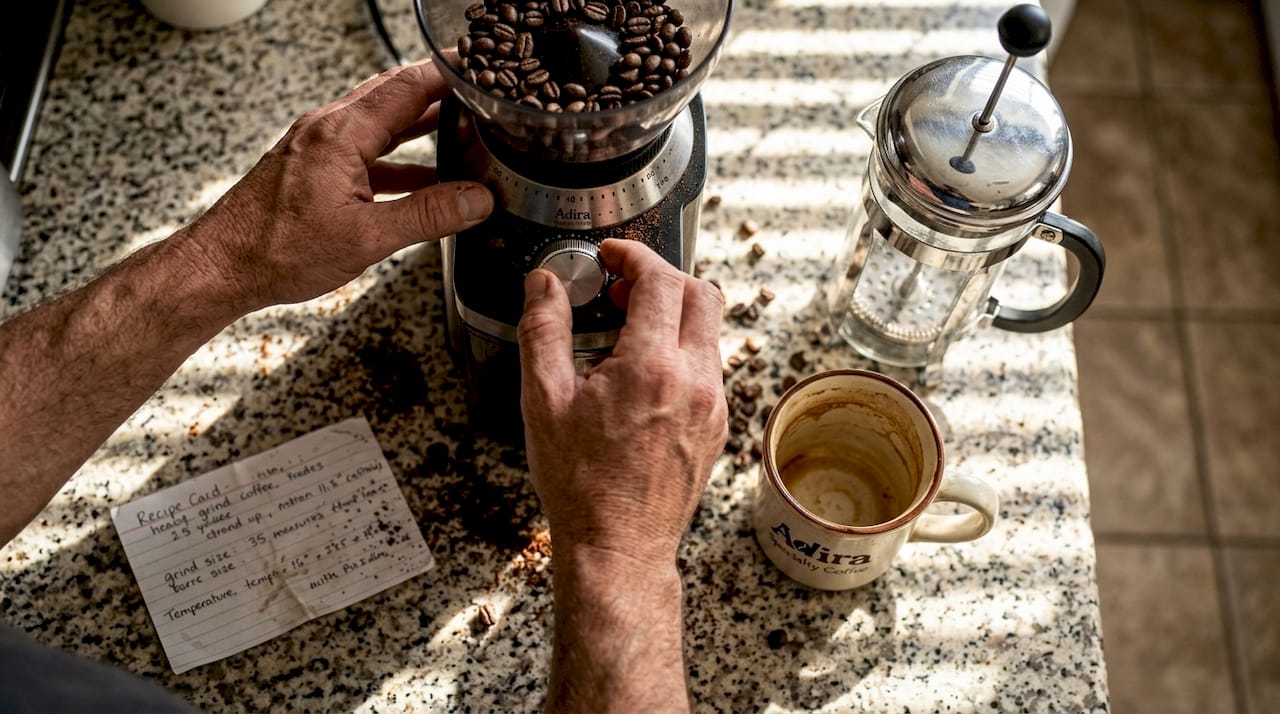
Water quality is the second most overlooked variable. Tap water in many California cities contains chlorine and minerals that interfere with flavor. Filtered water removes those off notes and lets the bean’s natural character come through. You don’t need a fancy filtration system. A simple pitcher filter makes a noticeable difference.
Bean selection ties everything together. Freshness is non-negotiable. Coffee peaks in flavor within 2 to 4 weeks of roasting and declines quickly after that. Look for a roast date on the bag, not just a best-by date. Ethical sourcing also matters, not just for values but for quality. Farms that are paid fairly invest in better growing and processing practices, which shows up in your cup.
The SCA extraction yield target of 18 to 22% is your flavor benchmark. Under-extracted coffee tastes sour and hollow. Over-extracted coffee tastes harsh and dry. Here’s how to dial in systematically:
- Start with a baseline ratio of 1:15 and your method’s recommended grind size.
- Taste your brew and identify what’s off. Sour means under-extracted. Bitter means over-extracted.
- Adjust one variable at a time. If it’s sour, grind finer or brew hotter. If it’s bitter, grind coarser or lower your temperature.
- Record your changes in a simple notebook or phone note.
- Repeat until the cup tastes balanced and clean.
This systematic approach, as Hoffmann recommends adjusting one variable at a time, is what separates home baristas who improve from those who stay stuck. Pair this method with good coffee roasting tips to understand how roast level affects your starting point. If you love bold cups, check out specific tips for dark roasts to get the most from those profiles.
A Californian home barista’s take: Forget perfection, embrace playful experimentation
Here’s the uncomfortable truth about chasing café-level coffee at home: the cafes you love aren’t perfect either. They have bad days, inconsistent baristas, and equipment that drifts out of calibration. What makes a great cup isn’t perfection. It’s curiosity paired with consistency.
We’ve seen home baristas spend weeks obsessing over a single variable, convinced that one tweak will unlock everything. It rarely works that way. What actually moves the needle is making small, repeatable changes and paying attention to what you taste. Not what a recipe says you should taste. What you actually enjoy.
Your best cup is personal. Maybe you love a slightly under-extracted pour-over that tastes bright and almost tea-like. Maybe you want a French Press so thick it coats the back of your spoon. Neither is wrong. The goal is to know what you want and build toward it intentionally.
Share your results with other coffee lovers. The California specialty coffee community is generous with knowledge. When you’re ready to explore your own signature style, discovering your signature coffee is a great place to start that conversation.
Brew better coffee with ethically sourced Adira beans
All the technique in the world only goes so far if your beans aren’t fresh. At Adira Coffee, we small-batch roast every order so your coffee arrives at peak flavor, not sitting in a warehouse for months.
Our Colombia single origin is a beautiful match for pour-over, with bright acidity and stone fruit notes that shine in a well-executed brew. For immersion methods, our Ethiopia Natural beans deliver a rich, berry-forward cup that rewards a slow French Press steep. We work with around 50 farms across Colombia, Ethiopia, Costa Rica, Guatemala, Brazil, and Sumatra, so there’s always a new origin to experiment with. Visit Adira Coffee to find the beans that match your method and taste.
Frequently asked questions
What is the ideal coffee-to-water ratio for home brewing?
Experts recommend a 1:15 to 1:17 ratio by weight for balanced flavor, with 1:15 producing a stronger cup and 1:17 a lighter one.
Which brewing method highlights light or specialty coffee best?
Pour-over is top-rated for clarity and nuance with light roasts, letting floral and fruity notes come through without interference.
How do I get a richer body and mouthfeel in my coffee?
French Press is your best option because its metal filter retains oils that paper filters strip out, creating a fuller, heavier texture.
How does grind size affect my coffee?
Grind size directly controls extraction speed. Matching grind size to your method is one of the fastest ways to fix flavor problems without changing anything else.