
Your morning espresso tastes bitter and stale despite using fresh beans. The culprit is likely a neglected espresso machine harboring rancid coffee oils and mineral deposits that ruin extraction and clog components. Regular cleaning transforms flavor quality and extends machine lifespan, preventing costly repairs from scale buildup and residue accumulation. This guide delivers step-by-step methods for backflushing, descaling, and routine maintenance to keep your machine performing optimally and your espresso tasting exceptional.
Table of Contents
- What You Need: Tools And Preparations For Cleaning Your Espresso Machine
- How To Backflush Your Espresso Machine Correctly
- Descaling Your Espresso Machine: Keeping Mineral Scale At Bay
- Routine Cleaning: Steam Wand, Portafilter, And Group Head Maintenance
- Verifying Cleaning Effectiveness And Troubleshooting Common Mistakes
- Enhance Your Espresso Experience With Adira Coffee
- FAQ
Key takeaways
| Point | Details |
|---|---|
| Backflushing removes oils | Regular backflushing every 2-4 weeks clears coffee residue that creates bitter, rancid flavors and prevents machine failures. |
| Descaling frequency varies | Hard water areas require descaling every 2-3 months, while soft water areas can extend to 4-6 months based on mineral content. |
| Use proper cleaning agents | Cleaning tablets target coffee oils weekly, while descalers remove mineral scale monthly to protect internal components. |
| Steam wand needs daily care | Purge and wipe the steam wand immediately after each use to prevent milk residue clogs and bacterial growth. |
| Monthly deep cleaning essential | Comprehensive monthly maintenance combining backflushing, descaling, and component cleaning ensures long-term performance and flavor quality. |
What you need: tools and preparations for cleaning your espresso machine
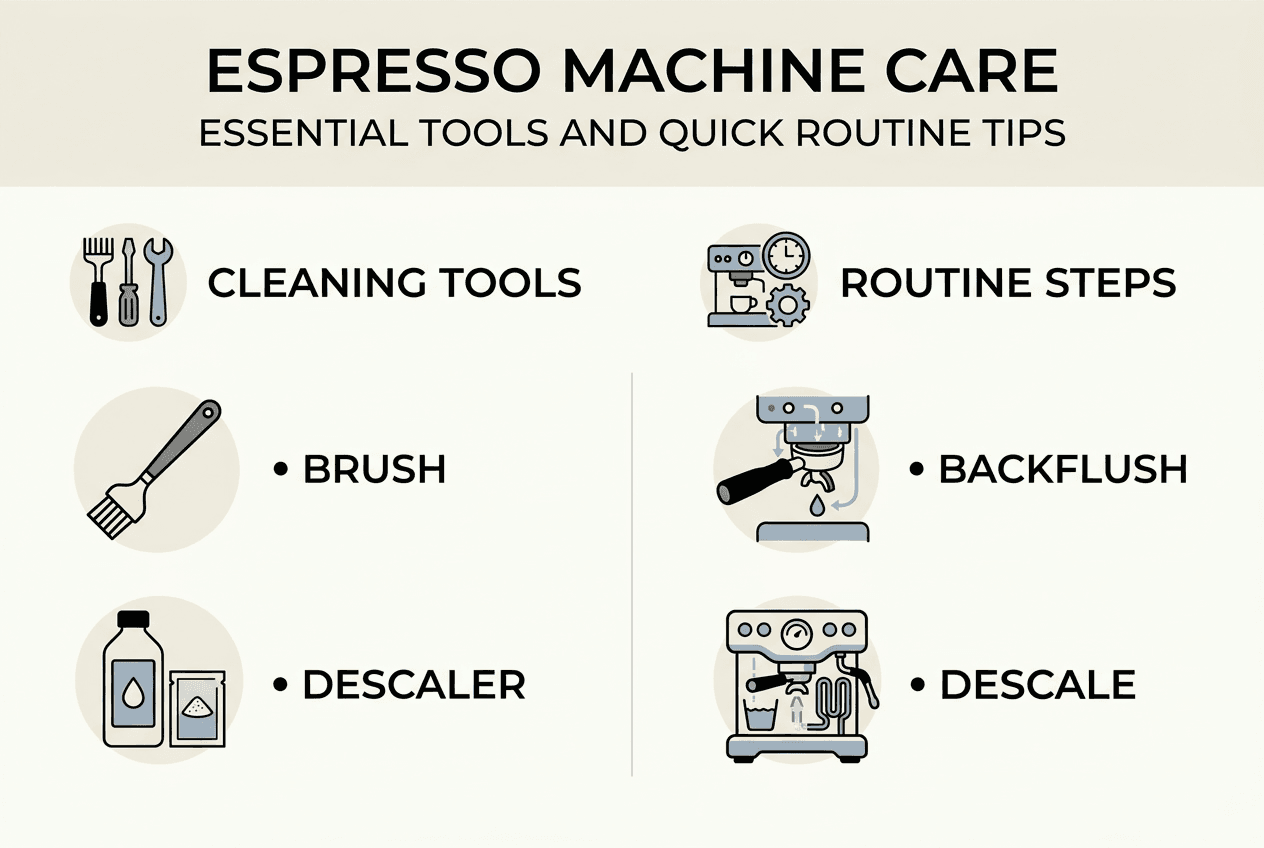
Gathering the right tools and cleaning agents before starting prevents damage and ensures thorough cleaning. Using the correct cleaning products is crucial to avoid damaging components, so invest in manufacturer-approved solutions designed specifically for espresso machines. Quality cleaning supplies protect your investment and deliver superior results compared to improvised alternatives.
Essential cleaning products include backflush detergent formulated to dissolve coffee oils, descaling solution that safely removes mineral deposits, and cleaning tablets for weekly group head maintenance. A blind filter basket creates the pressure needed for effective backflushing, while a TDS meter measures water hardness to determine your descaling schedule. Microfiber cloths prevent scratches during wiping, and a small brush reaches tight spaces around the group head and portafilter.
Prepare your workspace by clearing counter space and placing towels underneath to catch drips. Unplug the machine before deep cleaning to prevent accidents. Check your water quality, as filtered water dramatically reduces mineral buildup and extends the time between descaling sessions. Hard water accelerates scale formation, requiring more frequent maintenance cycles.
| Tool/Product | Purpose | Frequency |
|---|---|---|
| Backflush detergent | Removes coffee oils from group head | Every 2-4 weeks |
| Descaling solution | Eliminates mineral scale buildup | Every 2-6 months |
| Cleaning tablets | Cleans portafilter and basket | Weekly |
| Blind filter basket | Creates pressure for backflushing | As needed |
| TDS meter | Measures water hardness | Monthly testing |
Explore brewing guides to understand how water quality and machine cleanliness impact extraction and flavor development in your espresso shots.
How to backflush your espresso machine correctly
Backflushing pushes pressurized water backward through the brewing pathway, dislodging accumulated coffee oils and micro-grounds that create bitter, rancid flavors. Regular backflushing significantly reduces coffee oil buildup and improves espresso taste, making this the most impactful cleaning task for flavor quality. Backflushing removes built-up coffee oils and debris from group heads and brewing pathways, preventing the stale, oxidized taste that ruins otherwise perfect beans.
Follow this process for effective backflushing:
- Remove the portafilter and replace the regular filter basket with a blind basket that has no holes.
- Add one teaspoon of espresso machine detergent to the blind basket and lock the portafilter into the group head.
- Start a brewing cycle and let it run for 10 seconds, then stop and wait 10 seconds for pressure to release.
- Repeat this cycle 5-6 times until the detergent fully dissolves and flushes through the system.
- Remove the blind basket, rinse thoroughly, and run 3-4 blank cycles with just water to eliminate all detergent residue.
- Repeat the entire process for each group head if you have a multi-group machine.
Backflush frequency depends on usage intensity and coffee beans characteristics. Home machines pulling 2-3 shots daily need backflushing every 2-4 weeks, while heavy users or those brewing darker roasts should increase to weekly sessions. Darker roasts produce more oils that accumulate faster, requiring more aggressive maintenance schedules.
Pro Tip: Backflush immediately if you notice slower flow rates, increased extraction times, or any off-flavors in your espresso, as these signal oil buildup affecting brew pressure and taste.
Consult this detailed backflushing guide for machine-specific variations and troubleshooting tips that address common backflushing challenges.
Descaling your espresso machine: keeping mineral scale at bay
Mineral scale from hard water accumulates inside boilers, heating elements, and water pathways, restricting flow and causing temperature instability that ruins extraction. Scale buildup leads to espresso machine failures and costly repairs; regular descaling prevents this by dissolving calcium and magnesium deposits before they damage components. Descaling frequency depends on water hardness, with harder areas requiring more frequent descaling to maintain optimal performance.
| Water Hardness | TDS Reading | Descaling Frequency |
|---|---|---|
| Soft water | Below 100 ppm | Every 4-6 months |
| Moderate water | 100-200 ppm | Every 3-4 months |
| Hard water | Above 200 ppm | Every 2-3 months |
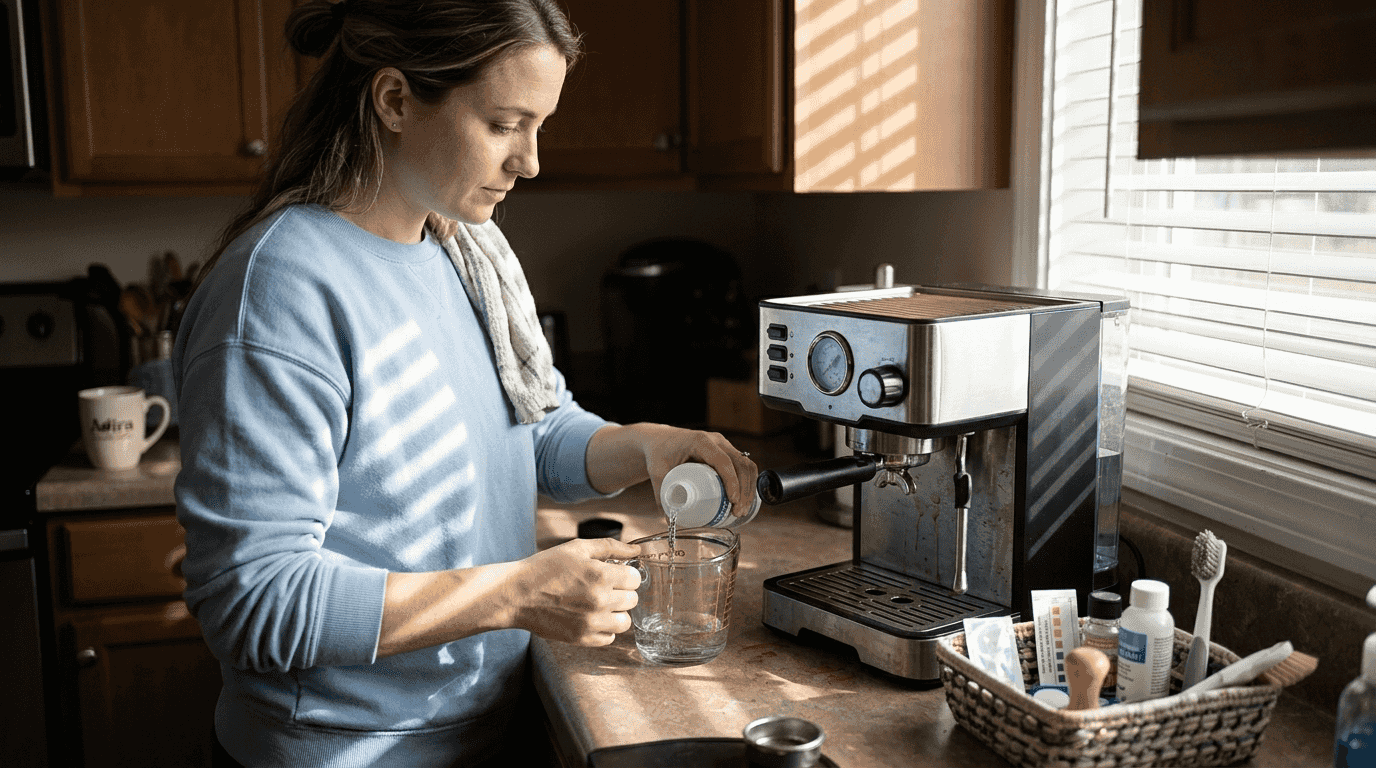
Use only manufacturer-approved descaling solutions formulated for espresso machines. Citric acid-based descalers work safely on most machines, while proprietary solutions match specific manufacturer specifications. Avoid vinegar, which leaves residual flavors and can damage gaskets and seals over time.
Descaling process:
- Empty the water reservoir and fill with descaling solution mixed according to package directions.
- Run half the solution through the group head in short bursts, allowing it to sit for 15 minutes.
- Run the remaining solution through the steam wand, then let the machine rest for 30 minutes.
- Flush the entire system with fresh water, running at least two full reservoirs through all pathways.
- Taste-test the water from the group head to ensure no descaler residue remains.
Pro Tip: Measure your tap water hardness with a TDS meter monthly to adjust your descaling schedule based on actual mineral content rather than guessing, preventing both under-maintenance and unnecessary descaling.
Reference brewing guides to understand how water chemistry affects not just machine health but also extraction efficiency and flavor balance in your espresso.
Routine cleaning: steam wand, portafilter, and group head maintenance
Daily and weekly cleaning of high-contact components prevents residue accumulation that affects both performance and hygiene. Cleaning prevents buildup of coffee oils, milk residue, and mineral scale that clog machines and ruin flavors, making routine maintenance essential for consistent espresso quality. These quick tasks take minutes but deliver substantial improvements in taste and machine longevity.
Steam wand care after every use:
- Purge steam immediately after frothing milk to clear internal residue before it hardens.
- Wipe the exterior with a damp cloth to remove milk film that becomes bacterial breeding grounds.
- Soak the wand tip in warm water for 10 minutes if milk has already dried and clogged the holes.
- Run a brief steam burst to verify clear flow and prevent tomorrow’s frustration.
Weekly group head and portafilter cleaning:
- Dissolve one cleaning tablet in hot water and soak the portafilter basket for 20 minutes to remove embedded oils.
- Scrub the group head gasket with a dedicated brush to eliminate coffee residue trapped in the rubber seal.
- Wipe the shower screen with a microfiber cloth to clear grounds and oils affecting water distribution.
- Run a blank shot without coffee to flush loose particles from the dispersion screen and group head.
Cleaning tablets differ from descalers by targeting organic coffee oils rather than inorganic mineral deposits. Tablets contain alkaline detergents that break down lipids and proteins, while descalers use acids to dissolve calcium and magnesium. Using the wrong product for the task delivers poor results and potentially damages components.
Pro Tip: Perform a blank shot at the end of each brewing session to flush fresh grounds and oils before they oxidize overnight, maintaining cleaner pathways and better-tasting morning espresso.
Explore options to find your coffee that matches your newly cleaned machine’s capabilities, maximizing flavor clarity and extraction quality.
Verifying cleaning effectiveness and troubleshooting common mistakes
Successful cleaning produces visible and tastable improvements that confirm your maintenance efforts worked. Consistent espresso flow without channeling or spurting indicates clear pathways and proper pressure. A spotless group head with no brown residue on the gasket or screen shows effective oil removal. Most importantly, your espresso tastes clean and vibrant without bitter, rancid, or metallic notes that signal contamination.
Common cleaning mistakes compromise results:
- Using table salt instead of proper detergent damages seals and leaves residue that affects taste.
- Skipping backflushing between descaling sessions allows oil buildup to continue affecting flavor.
- Applying harsh household chemicals corrodes internal components and voids warranties.
- Rushing the rinse cycle leaves detergent or descaler residue that contaminates subsequent shots.
Troubleshooting persistent issues after cleaning requires systematic diagnosis. Slow espresso flow despite cleaning suggests scale in the boiler or pump requiring professional descaling. Bitter taste continuing after backflushing indicates the need for cleaning tablet treatment or shower screen replacement. Clogged steam wand holes need soaking in descaling solution or careful clearing with a fine needle.
Skipping maintenance like backflushing is linked to nearly 90% of machine failures, making regular cleaning the single most important factor in espresso machine longevity and reliability.
Verify water quality improvements by comparing TDS readings before and after installing filtration. Test espresso flavor by brewing identical shots with the same beans before and after cleaning to isolate the maintenance impact. Document your cleaning schedule to identify patterns between maintenance intervals and performance changes.
Learn more about choosing coffee beans that showcase the flavor clarity your freshly cleaned machine now delivers.
Enhance your espresso experience with Adira Coffee
Your meticulously maintained espresso machine deserves equally exceptional coffee beans to showcase its restored capabilities. Adira Coffee delivers freshly roasted, ethically sourced beans from renowned origins including Colombia, Ethiopia, Costa Rica, Guatemala, Brazil, and Sumatra, all roasted in small batches to peak flavor. Pairing proper machine maintenance with quality beans transforms your home espresso from acceptable to extraordinary.
Explore the coffee beans collection to find single-origin and blend options that match your taste preferences and extraction style. Reference brewing guides for techniques that maximize flavor from your clean machine and fresh beans. Visit Adira Coffee homepage to discover the complete range of specialty coffee offerings designed for discerning home baristas.
FAQ
How often should I backflush my home espresso machine?
Backflush every 2-4 weeks for home machines pulling 2-3 shots daily to maintain optimal flavor and prevent oil accumulation. Increase frequency to weekly if you brew darker roasts or pull 5 or more shots daily, as heavier use accelerates residue buildup. Monitor your espresso taste and flow rate as indicators that backflushing is overdue.
What’s the difference between cleaning tablets and descaling solutions?
Cleaning tablets remove coffee oils using alkaline detergents and should be used every 1-2 weeks for portafilter and group head maintenance. Descalers eliminate mineral scale with acidic compounds and are used every 2-6 months depending on water hardness. Using tablets for descaling or descaler for oil removal delivers poor results because each targets different contaminants.
How can I tell if my espresso machine needs descaling?
Signs include bitter, metallic taste, slow espresso flow, weak steam pressure, and erratic pressure gauges indicating restricted water pathways. Chalky or mineral flavors in your espresso signal scale affecting extraction temperature and chemistry. Longer heat-up times and inconsistent brewing temperatures also indicate scale buildup in the boiler requiring immediate descaling.
Can I use household products like vinegar or salt for cleaning?
Avoid household products for espresso machine cleaning, as using salt instead of cleaner is a misconception; harsh chemicals can damage your machine by corroding seals and metal components. Use only manufacturer-approved cleaning agents formulated specifically for espresso machines to protect your investment. Vinegar leaves residual flavors and can degrade gaskets, while salt provides no cleaning benefit and risks component damage.