

TL;DR:
- Home coffee quality depends more on bean freshness and grind consistency than on brewing equipment.
- Espresso offers intense flavor and high caffeine concentration but requires precise technique.
- Pour-over methods like V60 provide clarity and control, highlighting bean origin and processing.
California’s home coffee scene has never been more serious. Enthusiasts are sourcing single-origin beans, investing in quality grinders, and chasing extraction precision that rivals their favorite local café. But with so many advanced brewing methods available, choosing the right one for your setup, your beans, and your flavor goals can feel genuinely overwhelming. This guide breaks down the key criteria for evaluating brewing methods, then compares espresso, pour-over, and French press side by side using real extraction data. By the end, you’ll know exactly which method fits your palate and your routine.
Table of Contents
- Key criteria for selecting a brewing method
- Espresso: The powerhouse of extraction and intensity
- Manual pour-over and V60: Precision for the purist
- French press and immersion: Balanced extraction and body
- Why your brewing method is only half the story
- Find your perfect brewing match and beans
- Frequently asked questions
Key Takeaways
| Point | Details |
|---|---|
| Extraction yield matters | Different methods deliver unique extraction yields impacting caffeine and flavor intensity. |
| Precision enhances flavor | Controlling variables like water temperature and grind size unlocks richer specialty coffee results. |
| Method affects clarity | Pour-over methods highlight nuanced flavors, while immersion styles produce full-bodied coffee. |
| Equipment shapes experience | Selecting suitable tools and beans makes advanced brewing techniques accessible at home. |
Key criteria for selecting a brewing method
Choosing a brewing method isn’t just about preference. It directly shapes flavor clarity, caffeine strength, extraction yield, and how forgiving the process is when you’re rushing through a weekday morning. Understanding the variables before you commit to a method saves you time, money, and a lot of mediocre cups.
Here are the core factors worth evaluating:
- Flavor clarity: Some methods highlight delicate floral and fruit notes; others produce a heavier, oil-rich body.
- Extraction yield: The percentage of soluble compounds pulled from your grounds. Higher isn’t always better; it depends on the roast and bean origin.
- Caffeine output: Water temperature is a major driver here. Higher temperatures increase caffeine extraction, with measurements at 90°C reaching 210mg/L in controlled studies.
- Consistency: Can you replicate the same result cup after cup? Some methods reward precision; others are more forgiving.
- Equipment cost: Entry-level pour-over setups cost under $50. A quality espresso machine can run $500 to $2,000 or more.
- Brew time: French press takes about four minutes. Espresso pulls in under 30 seconds. Pour-over sits in the middle at three to five minutes.
Water temperature, grind size, and brew time interact constantly. A coarser grind slows extraction; a finer grind speeds it up and intensifies flavor but risks bitterness if you overshoot. Getting a feel for these relationships is what separates home baristas from casual coffee drinkers.
When you’re starting to dial in a new method, understanding choosing coffee beans for that specific technique makes a real difference. A bright Ethiopian natural, for example, behaves very differently in a French press versus a V60.
Pro Tip: Use a digital scale for every brew. Measuring both coffee and water by weight instead of volume eliminates one of the biggest sources of inconsistency. Even a 1-gram difference in your dose can shift the flavor noticeably. Pair your scale with a timer and you’ve already closed the gap between good and great. Our brewing guides cover exact ratios for each method.
Espresso: The powerhouse of extraction and intensity
With the selection framework set, let’s see how individual methods stack up, starting with espresso.
Espresso forces hot water through finely ground coffee at roughly 9 bars of pressure in about 25 to 30 seconds. That pressure extracts a concentrated shot with layers of flavor that no other method replicates. It’s intense, rich, and loaded with caffeine relative to its small volume.
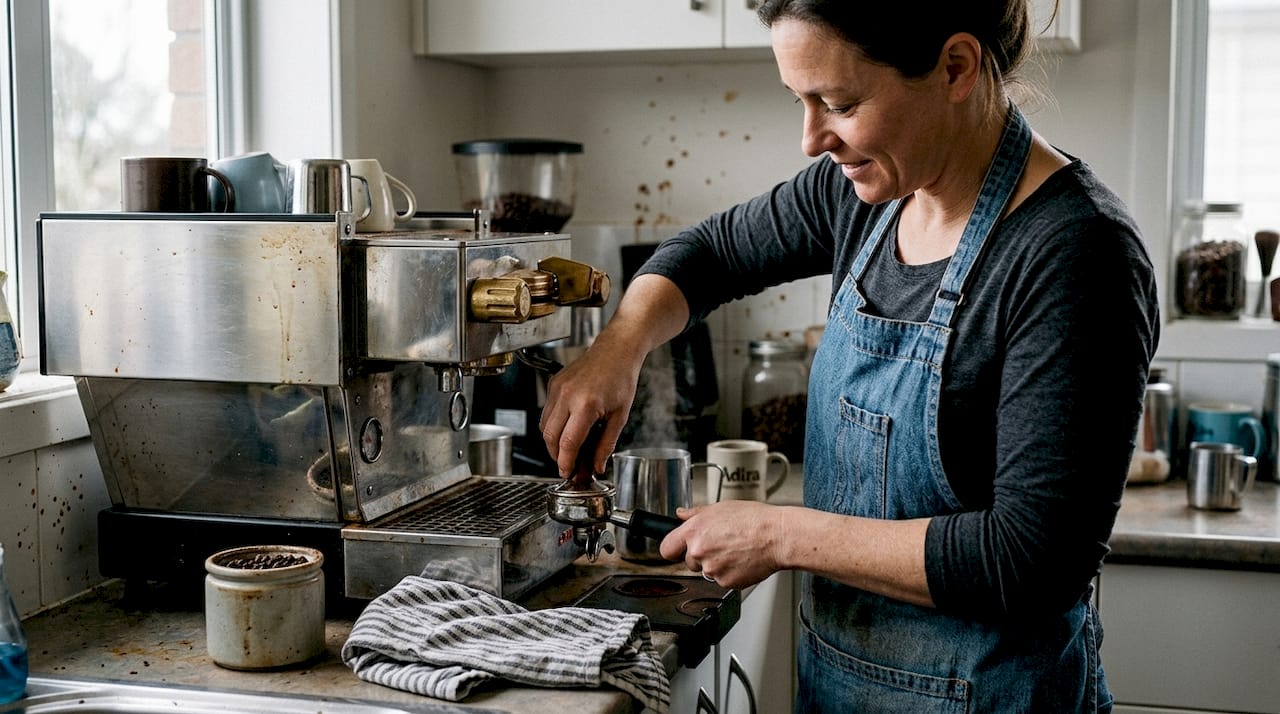
From a data standpoint, espresso leads the pack. Espresso yields 11.65% extraction with a TDS (total dissolved solids) of 3.65%, the highest among major home brewing methods. That TDS number reflects how much dissolved coffee material ends up in your cup, which is why espresso tastes so dense and syrupy compared to drip coffee.
Key advantages of espresso at home:
- Flavor complexity: Pressure extraction pulls compounds that other methods can’t reach, creating crema (the golden foam on top) packed with aromatic oils.
- Versatility: One shot becomes a latte, cappuccino, Americano, or cortado. No other method gives you this range.
- Speed: Once dialed in, you can pull a quality shot in under a minute.
- Caffeine efficiency: High concentration per ounce makes espresso the most caffeine-dense option by volume.
The tradeoff is skill and equipment. Espresso is unforgiving. Grind size, tamp pressure, dose weight, and water temperature all need to be calibrated together. A grind that’s even slightly too coarse produces a thin, sour shot. Too fine and you get a bitter, channeled mess.
Understanding grinding for espresso is genuinely the most important skill to develop before worrying about anything else. A $200 grinder paired with a mid-range machine will outperform a $2,000 machine paired with a cheap blade grinder every single time.
For specialty beans from Colombia or Ethiopia, espresso can be a revelation. The pressure amplifies sweetness and body in ways that feel almost theatrical. Explore espresso variations to see how different origins translate across drink formats.
Pro Tip: Tamp with consistent, level pressure every time, around 30 pounds of force. Uneven tamping creates channels where water rushes through unevenly, ruining extraction. A calibrated tamper removes the guesswork entirely.
Manual pour-over and V60: Precision for the purist
After understanding espresso’s power, let’s move to pour-over methods prized for their subtlety and control.
Pour-over brewing is about patience and intention. You control every variable manually: water temperature, pour rate, bloom time, and total brew time. The V60, developed by Hario in Japan, is the most popular pour-over device among specialty coffee enthusiasts because its ridged cone and wide angle give you exceptional control over flow rate.
Scientifically, the V60 produces high mineral content but lower yield at 16.11% compared to French press and espresso. That lower yield isn’t a flaw. It’s actually what gives pour-over its characteristic clarity. You get brightness, defined acidity, and delicate aromatics that immersion methods tend to muddy.
Here’s how the V60 compares to other common manual brewers:
| Method | Extraction yield | Flavor profile | Caffeine level | Skill required |
|---|---|---|---|---|
| V60 pour-over | 16.11% | Bright, clean, mineral | Moderate | High |
| Chemex | ~15-17% | Smooth, clean | Moderate | Medium |
| Kalita Wave | ~17-18% | Balanced, sweet | Moderate | Medium |
| AeroPress | ~15-18% | Versatile, full | Moderate-high | Medium |
Pour-over shines brightest with single-origin beans from high-altitude farms. A washed Ethiopian Yirgacheffe brewed in a V60 at 93°C will express jasmine, bergamot, and lemon in a way that no other method can. It’s not an exaggeration to say that pour-over is the best format for tasting what a specific farm and processing method actually produce.
The learning curve is real. You need a gooseneck kettle for precise water control, a scale, a timer, and a consistent pouring technique. For guidance on dialing in your process, precise pour-over brewing walks through the full technique step by step.
For anyone serious about exploring origin-driven flavors, pour-over techniques are worth mastering. The investment in skill pays off every single morning.
French press and immersion: Balanced extraction and body
Pour-over is a favorite of many purists, but immersion methods like French press deliver an entirely different experience. Here’s why.
In immersion brewing, grounds sit fully submerged in water for the entire brew time. This produces even, consistent extraction across all the particles, which is why French press coffee feels so balanced and full-bodied. There’s no channeling, no uneven flow rate, just steady contact between water and coffee.
The numbers back this up. French press yields 18 to 19% extraction, among the highest of any home method. That high yield produces robust, complex flavor with natural oils intact, since no paper filter strips them away.
Here’s a quick comparison of extraction variables across the three main methods:
| Method | Extraction yield | TDS | Brew time | Grind size | Forgiving? |
|---|---|---|---|---|---|
| Espresso | 11.65% | 3.65% | 25-30 sec | Extra fine | Low |
| V60 pour-over | 16.11% | ~1.2-1.4% | 3-4 min | Medium-fine | Medium |
| French press | 18-19% | ~0.9-1.1% | 4 min | Coarse | High |
French press works especially well with medium to dark roasts and blends. The heavier body complements the caramel, chocolate, and nutty notes common in Brazilian and Sumatran beans. Understanding coffee roasting knowledge helps you match roast profiles to the right brewing method.
Key advantages of French press:
- Simplicity: No filters to buy, no gooseneck kettle required, no complicated technique.
- Full body: Natural oils stay in the cup, producing richness that paper-filtered methods can’t match.
- Scalability: Easily brew two to eight cups at once without adjusting your technique.
- Forgiving: Small errors in grind size or temperature have less impact than with espresso.
Pro Tip: After pouring hot water over your grounds, give them a gentle stir to ensure all the coffee is saturated. Then place the lid on (plunger up) and steep for exactly four minutes before pressing slowly. Rushing the plunge or over-steeping both lead to bitterness. Explore immersion brewing techniques for more detailed guidance.
Why your brewing method is only half the story
After comparing techniques side by side, here’s the thing most brewing content won’t tell you: the method is not the primary driver of cup quality. We’ve seen home baristas with $1,500 espresso setups producing cups that taste flat and lifeless, while someone with a $30 French press and freshly roasted beans produces something genuinely memorable.
Bean freshness and grind consistency are the two variables that matter most, and they’re the ones most enthusiasts underinvest in. Coffee stales fast. Within two weeks of roast, volatile aromatics begin to dissipate noticeably. Using beans that are three months old with a V60 will never outperform fresh beans in a French press.
Water quality is the silent factor in California home brewing. Tap water in many California cities carries chlorine and mineral imbalances that suppress flavor. Filtered water at the right mineral content (around 150 ppm total dissolved solids) makes a measurable difference across every method. Solid home coffee roasting tips and attention to grinding for flavor will always outperform chasing the latest brewing gadget.
Invest in fresh beans first. Upgrade your grinder second. Then optimize your method.
Find your perfect brewing match and beans
Ready to put advanced methods to work? The right beans make every technique perform better, and that’s exactly where Adira Coffee comes in.
At Adira Coffee, we source small-batch specialty beans from around 50 farms across Colombia, Ethiopia, Costa Rica, Guatemala, Brazil, and Sumatra, roasted fresh and shipped at peak flavor. Whether you’re pulling espresso shots or perfecting your V60 bloom, the right origin matters. Our Colombia beans are a standout choice for both pour-over clarity and espresso richness. Browse our full selection of freshly roasted coffee beans and pair them with our brewing guides to get the most out of every method you try.
Frequently asked questions
Which brewing method yields the highest caffeine for home coffee?
Espresso yields the highest caffeine concentration among common home methods, with an 11.65% extraction yield and 3.65% TDS, making it the most caffeine-dense option by volume.
How do temperature and grind size affect coffee extraction?
Higher water temperatures increase caffeine extraction, reaching 210mg/L at 90°C; finer grinds yield more intense flavor but risk overextraction and bitterness if brew time isn’t adjusted accordingly.
Is French press best for beginners or advanced home brewers?
French press works well for both groups. Its 18 to 19% extraction yield is forgiving for beginners while still offering enough variable control for advanced brewers to experiment with steep time, temperature, and grind.
What’s the difference between V60 and traditional pour-over?
The V60’s angled cone and spiral ridges give you more flow-rate control and produce a mineral-rich, cleaner cup at 16.11% yield, while flat-bottom pour-overs typically extract slightly more and produce a more balanced, less bright flavor.