
Dark roast coffee has a reputation problem. Most people assume bold means bitter, and bitter means bad. But that assumption misses the entire point of a well-crafted dark roast. When roasted with precision and brewed correctly, dark roast can offer layers of chocolate, caramel, and smoke that rival any lighter cup. In this guide, we’ll break down what dark roast actually is, how it’s made, where the best beans come from, and exactly how to brew it so every cup hits its full potential.
Table of Contents
- What defines dark roast coffee?
- How does the roast process create dark coffee?
- Flavor notes, body, acidity, and bitterness of dark roasts
- Origins and varieties: Where do the best dark roasts come from?
- Brewing dark roast coffee: Methods and expert tips
- Experience dark roast coffee at its best
- Frequently asked questions
Key Takeaways
| Point | Details |
|---|---|
| Bold flavor profile | Dark roast coffee delivers rich, chocolatey, and smoky notes with low acidity. |
| Roasting technique matters | Careful roasting and stopping before over-roast prevent excessive bitterness. |
| Best origins | Sumatra and Indonesia beans excel in dark roasts for their robust character. |
| Brewing precision | Optimal flavor comes from correct grind size, lower water temperature, and shorter extraction times. |
| Freshness is key | Choose freshly roasted beans to enjoy the full complexity of dark roast coffee. |
What defines dark roast coffee?
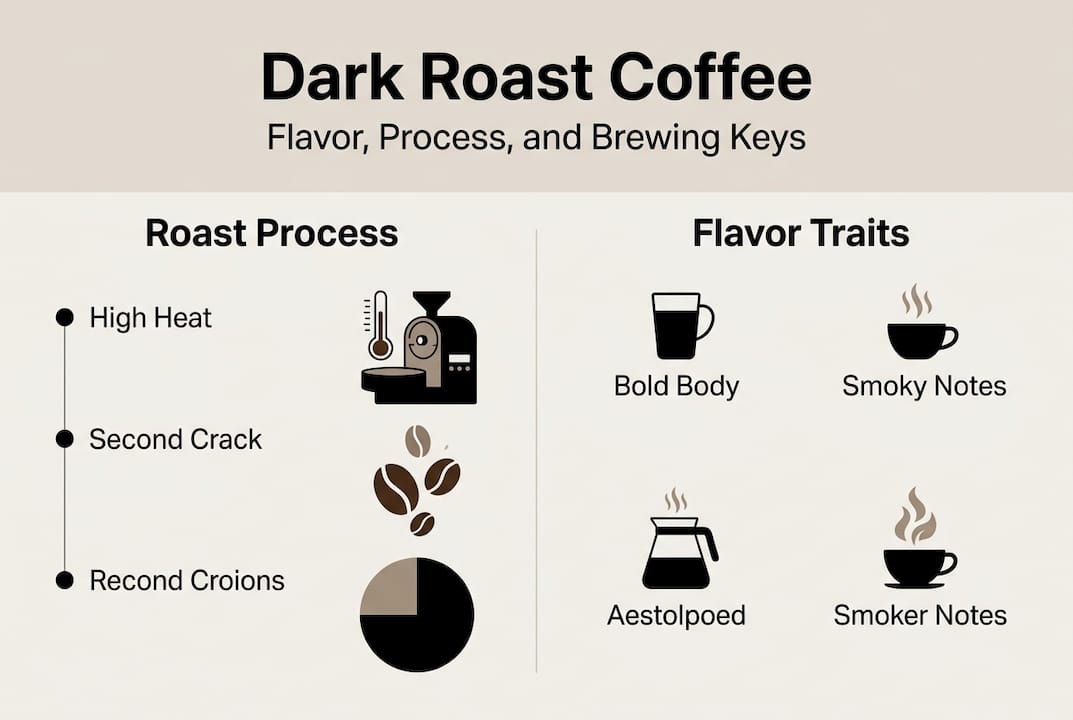
Dark roast is not just “coffee cooked longer.” It’s a specific roast level defined by temperature, timing, and a series of physical and chemical changes inside the bean. Roasters push green coffee beans to 440 to 465°F, taking them past what’s called the second crack, a loud, rapid popping sound that signals the bean’s cell structure is breaking down. The result is a dark brown to near-black bean with an oily surface and a slightly larger size from expansion.
At this stage, the bean’s original origin flavors, the bright fruit notes of an Ethiopian or the floral hints of a Costa Rican, largely fade. What takes over are roast-driven flavors: dark chocolate, toasted nuts, caramel, and sometimes a pleasant smokiness. Understanding roast profile basics helps you see why this transformation is a feature, not a flaw.
About 28% of US coffee drinkers prefer dark roast, making it one of the most popular roast categories in the country. That’s a lot of people who know what they like. If you’ve been comparing medium vs. dark roast and haven’t settled on a preference yet, the breakdown below will help.
Classic dark roast styles at a glance:
- Vienna roast: The lightest of the dark styles. Bittersweet chocolate notes, moderate oil on the surface, still some origin character.
- French roast: Deeper, smokier, with a heavier body. Most origin flavors are gone. Very oily beans.
- Italian roast: The darkest of the three. Intense, almost charred flavor. Used heavily in traditional espresso blends.
| Roast style | Temperature range | Surface appearance | Dominant flavor |
|---|---|---|---|
| Vienna | 430 to 445°F | Slight oil | Bittersweet chocolate |
| French | 446 to 457°F | Oily | Smoky, bold |
| Italian | 458 to 465°F | Very oily | Charred, intense |
For a deeper look at how roast level benchmarks are defined across the industry, the differences between these styles become even more fascinating.
How does the roast process create dark coffee?
Roasting transforms a raw green bean into something drinkable through heat, time, and chemistry. The full process typically runs 10 to 20 minutes, and every minute matters. Two critical moments define the journey: the first crack, where beans release steam and expand, and the second crack, where the cell walls fracture and oils migrate to the surface.
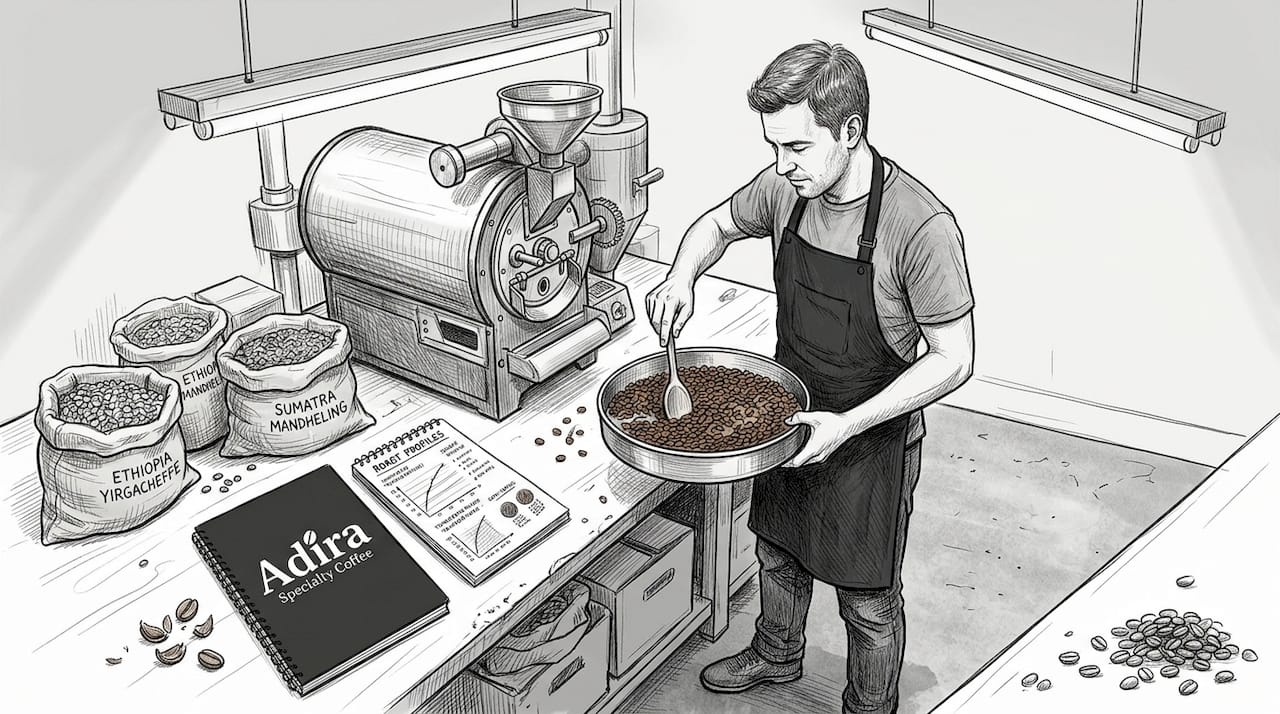
For dark roast, the roaster pushes well past the first crack and into or through the second. This extended exposure to high heat drives two key reactions: the Maillard reaction, which creates hundreds of flavor compounds including those chocolate and toasted notes, and caramelization of the bean’s sugars. Extended high-heat roasting produces bold, developed flavors, but it also accelerates oil oxidation once the bean leaves the roaster.
Step-by-step dark roast profile:
- Drying phase (0 to 5 min): Green beans lose moisture. Color shifts from green to yellow.
- Browning phase (5 to 8 min): Maillard reactions begin. Grassy smells give way to bread-like aromas.
- First crack (8 to 10 min): Beans pop audibly. Light to medium roast territory begins here.
- Development phase (10 to 14 min): Roaster controls the rate of temperature rise carefully.
- Second crack (14 to 17 min): Cell walls break. Dark roast begins. Oils emerge on the surface.
- Drop point (17 to 20 min): Roaster pulls beans at the exact moment the desired flavor is locked in.
| Factor | Medium roast | Dark roast |
|---|---|---|
| End temperature | 400 to 430°F | 440 to 465°F |
| Second crack | Not reached | Reached or passed |
| Bean surface | Dry to slight oil | Oily |
| Flavor profile | Balanced, some origin | Roast-forward, bold |
Pro Tip: Dark roast beans are porous and their oils oxidize fast. Roasting in small batches and buying freshly roasted beans makes a dramatic difference in flavor. Stale dark roast tastes flat and harsh, while fresh dark roast tastes rich and complex. When choosing beans, always check the roast date, not the expiration date.
The roast process explained in detail shows just how much precision goes into every batch.
Flavor notes, body, acidity, and bitterness of dark roasts
Here’s where dark roast gets interesting. The flavor isn’t just “strong.” A well-roasted dark coffee delivers a specific, layered experience that lighter roasts simply can’t replicate. Roast-forward notes dominate, including dark chocolate truffle, toasted walnut, caramelized sugar, and a whisper of smoke, while careful roasting keeps harsh bitterness away.
Classic dark roast tasting notes:
- Dark chocolate and cocoa
- Caramelized sugar and molasses
- Toasted nuts (walnut, hazelnut)
- Smoky or woody undertones
- Occasionally: dried fruit or spice (in well-sourced beans)
The body, meaning the weight and texture of the coffee in your mouth, is noticeably fuller in dark roasts. Think of it like the difference between skim milk and whole milk. That heavier mouthfeel comes from the breakdown of cellulose in the bean during extended roasting.
Acidity drops significantly in dark roasts, which is why many people with sensitive stomachs actually prefer them. But bitterness is a different story. Two compounds drive bitterness in coffee: lactones, which create a pleasant, mild bitterness, and phenylindanes, which form later in the roast and create a harsh, lingering bite. The best dark roasts stop just before phenylindanes dominate.
“The difference between a great dark roast and a bad one comes down to a matter of seconds. Stop the roast at the right moment and you get complexity. Push too far and you get ash.” — Specialty roaster perspective
Pro Tip: If you want outstanding dark roast character with earthy, bold depth, look for Indonesian or Sumatra origins. Their naturally low acidity and dense bean structure hold up beautifully under high heat. Use our find your coffee tool to match your flavor preferences to the right origin. And if you’re unsure about freshness, whole bean freshness is the single biggest factor in getting that flavor right.
Origins and varieties: Where do the best dark roasts come from?
Origin matters less at dark roast levels than at light roast, but it still shapes the final cup. Think of it this way: the roast is the loudest voice in the room, but origin is the accent. Two beans roasted identically to French roast will still taste different if one came from Sumatra and the other from Colombia.
Indonesian and Sumatra coffees excel as dark roasts, offering earthy, bold notes that feel almost savory. Central American beans from Guatemala or Costa Rica bring a nutty sweetness that balances the roast’s intensity. African origins like Ethiopia tend to lose their famous floral and fruit notes at dark roast levels, but they retain a full, satisfying body.
Top origins for dark roast:
- Sumatra: Earthy, bold, low acidity, syrupy body. A natural fit for dark roasting.
- Guatemala: Nutty, chocolatey, slightly sweet. Holds up well to high heat.
- Colombia: Balanced, smooth, caramel notes that deepen beautifully when roasted dark.
- Brazil: Nutty, mild, low acidity. A classic base for dark espresso blends.
- Ethiopia: Fruit notes fade, but body and depth remain impressive.
| Region | Flavor traits at dark roast | Ethical highlight |
|---|---|---|
| Sumatra | Earthy, bold, low acid | Smallholder farm cooperatives |
| Guatemala | Nutty, sweet, chocolatey | Fair trade certified farms |
| Colombia | Smooth, caramel, balanced | Direct trade, altitude-grown |
| Brazil | Mild, nutty, full body | Rainforest Alliance partners |
| Ethiopia | Full body, subtle fruit | Women-led farming cooperatives |
Specialty sourcing matters here. When a roaster works directly with farms, they can select beans specifically suited to dark roasting, dense, low-defect, and harvested at peak ripeness. Learn more about why ethically sourced beans produce better cups, and explore single-origin options if you want to taste how origin still shapes a dark roast.
Brewing dark roast coffee: Methods and expert tips
You’ve picked a great bean. Now don’t ruin it with the wrong brew method. Dark roasts are more porous than lighter roasts, which means they extract faster. That’s both a gift and a trap. Get it right and you get a rich, smooth cup. Push too hard and bitterness takes over fast.
Use coarser grinds, lower water temps around 195 to 200°F, and shorter extraction times to prevent bitterness. The best methods for dark roast are French press, espresso, drip, and pour-over, each with slightly different parameters.
Recommended brew settings for dark roast:
- French press: Coarse grind, 195°F water, 3.5 to 4 minute steep. Use a 1:15 coffee-to-water ratio. This method highlights body and richness.
- Espresso: Fine grind, 195 to 200°F, 25 to 30 second extraction. Dark roast pulls sweet and bold without going bitter.
- Drip/auto-drip: Medium-coarse grind, standard 1:16 ratio, 195°F water. Reliable and forgiving for everyday brewing.
- Pour-over: Medium-coarse grind, 195°F water, 3 to 3.5 minute total brew time. Slower pour helps control extraction.
- Cold brew: Coarse grind, cold water, 12 to 18 hour steep. Dark roast cold brew is naturally smooth and chocolatey with almost zero bitterness.
Pro Tip: If your dark roast tastes bitter, the fix is usually simple: grind coarser or reduce brew time by 30 seconds. Dark roast extracts faster than you expect. For help dialing in your grind size for dark roast, small adjustments make a big difference. And if you haven’t tried cold brew with dark roast, it’s one of the smoothest ways to experience the full flavor without any edge. Start with choosing the right beans and the rest follows naturally.
Experience dark roast coffee at its best
Now that you understand the nuances and craft behind dark roast coffee, you’re ready to taste the difference that freshness, ethical sourcing, and small-batch roasting actually make in the cup. At Adira Coffee, we roast in small batches and ship directly to you so the beans arrive at peak flavor, not weeks after roasting.
Our shop coffee beans collection includes single-origin and blend options roasted specifically to bring out the best in dark roast profiles. The Colombia dark roast delivers smooth caramel depth, while the Costa Rica dark roast brings a nutty sweetness that’s hard to put down. Every bean we source comes from one of roughly 50 farms we work with directly across Colombia, Ethiopia, Costa Rica, Guatemala, Brazil, and Sumatra. Use what you’ve learned here to brew with confidence and taste the difference a well-sourced, freshly roasted dark roast can make.
Frequently asked questions
Does dark roast coffee have more caffeine than lighter roasts?
Despite common belief, dark roast has slightly less caffeine by volume than lighter roasts because the extended roasting process burns off some caffeine content along with bean density.
Why do dark roasts taste bitter or burnt sometimes?
Harsh bitterness comes from phenylindane formation during over-roasting, or from brewing with water that’s too hot or an extraction time that’s too long.
What are the healthiest ways to enjoy dark roast coffee?
Choose freshly roasted beans to preserve beneficial oils, brew at 195 to 200°F to reduce bitter compounds, and skip the added sugars when you can.
Which brewing method highlights dark roast flavor best?
French press and espresso best showcase dark roast’s full body and bold flavor because both methods allow the coffee’s natural oils to remain in the cup.