

Many coffee drinkers assume pre-ground coffee retains freshness just like whole beans. This couldn’t be further from the truth. Whole bean coffee preserves volatile oils and aromatic compounds far longer than ground coffee, delivering superior flavor and aroma with every brew. The difference isn’t subtle. When you grind beans just before brewing, you unlock a depth of taste that pre-ground coffee simply cannot match. This guide explains the science behind whole bean superiority, the practical benefits of grinding fresh, and how to choose and store beans for maximum flavor in your home brewing routine.
Table of Contents
- How Whole Bean Coffee Preserves Freshness And Aroma
- Benefits Of Grinding Whole Bean Coffee Just Before Brewing
- Weighing The Trade-Offs: Convenience Versus Superior Flavor
- How To Store Whole Bean Coffee For Lasting Freshness
- Find Premium Whole Bean Coffee At Adira Coffee
- Frequently Asked Questions
Key takeaways
| Point | Details |
|---|---|
| Whole beans protect flavor | Intact beans shield volatile oils from oxidation far longer than ground coffee |
| Grinding timing matters | Freshly ground coffee preserves maximum aroma and antioxidants for richer taste |
| Storage extends freshness | Proper airtight storage in cool, dark places keeps whole beans fresh for months |
| Convenience versus quality | Pre-ground offers speed but whole bean delivers superior flavor and health benefits |
| Grinder investment pays off | A quality grinder unlocks the full potential of premium whole bean coffee |
How whole bean coffee preserves freshness and aroma
The moment coffee beans are roasted, they begin releasing carbon dioxide and volatile compounds that create the flavors and aromas you love. Whole bean coffee retains volatile compounds longer than ground coffee, leading to fresher and bolder taste. The protective outer shell of intact beans acts as a natural barrier, slowing the escape of these precious oils and gases.
Grinding coffee dramatically increases surface area exposed to oxygen. A single whole bean might have a few square millimeters of surface area, but grind that same bean and you create hundreds of tiny particles with exponentially more exposure. This accelerated contact with air triggers rapid oxidation, breaking down the delicate compounds that give coffee its character. Within 15 minutes of grinding, you’ve already lost a noticeable portion of aromatic intensity.
Methanethiol decrease corresponds to aroma loss in roasted coffee beans. This sulfur compound, along with other low boiling volatiles, evaporates quickly once beans are ground. These molecules are responsible for the bright, complex notes that distinguish exceptional coffee from mediocre brews. Whole beans trap these compounds inside their cellular structure until the moment you grind coffee beans for perfect flavor.
Proper storage matters for both whole and ground coffee, but whole beans have an inherent advantage. Even in less than ideal conditions, intact beans maintain their quality longer because oxidation happens primarily at the surface. Ground coffee, with its massive surface area, degrades rapidly regardless of storage method.
Key factors affecting whole bean freshness:
- Roast date determines initial freshness window
- Bean density and oil content influence degradation rate
- Storage conditions either preserve or accelerate staling
- Grind timing makes the difference between good and exceptional coffee
The difference between whole bean and pre-ground coffee is like comparing fresh herbs to dried ones. Both work, but only one delivers the full aromatic experience nature intended.
When you buy whole beans and grind just before brewing, you’re essentially hitting pause on the staling process. Those volatile compounds remain locked inside the bean structure, waiting to be released at the optimal moment. This preservation isn’t just about aroma. The oils that carry flavor compounds also contain antioxidants and beneficial bioactive substances that degrade when exposed to oxygen.
Benefits of grinding whole bean coffee just before brewing
Timing is everything in coffee preparation. Grinding just before brewing preserves oils and aromas, delivering a richer, more nuanced cup. The moment grinding occurs, a countdown begins. Aromatic compounds start evaporating, oils begin oxidizing, and the coffee’s flavor profile shifts from vibrant to flat.
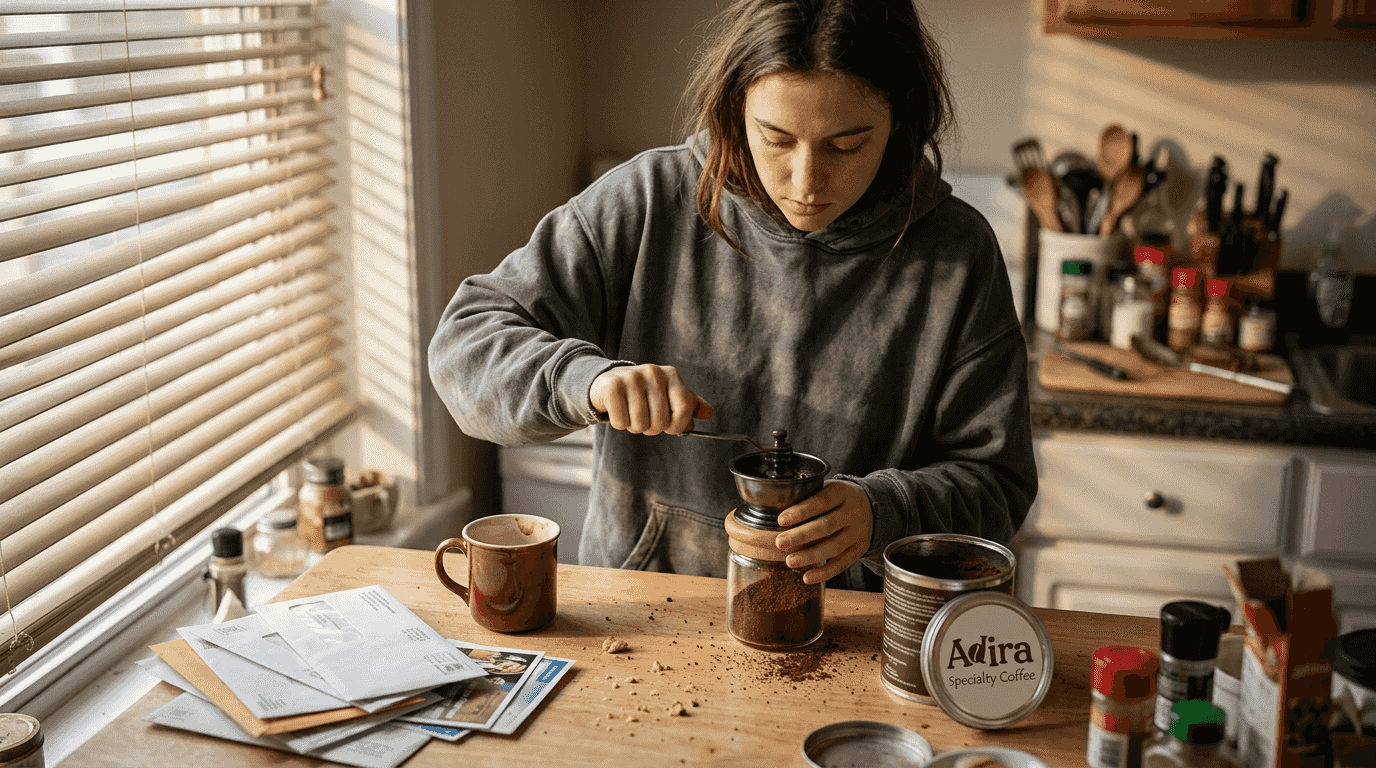
Oxygen is coffee’s enemy after grinding. The same air that keeps you alive attacks the delicate molecules in ground coffee, breaking them down through oxidation. This process happens fast. Pre-ground coffee sitting on a shelf for weeks has lost most of its aromatic complexity before it ever touches water. Freshly ground beans, by contrast, release their full spectrum of flavors into your cup.
The flavor difference between fresh ground and pre-ground coffee is dramatic. Fresh grinding unlocks layers of taste that pre-ground simply cannot deliver. You’ll notice brighter acidity, clearer fruit notes, deeper chocolate tones, and a fuller body. These aren’t subtle improvements. They’re the difference between drinking coffee and experiencing coffee.
Grinding whole beans preserves antioxidants better than buying pre-ground. Chlorogenic acids and other beneficial compounds degrade when exposed to oxygen over time. By grinding only what you need for each brew, you maximize the health benefits alongside the flavor advantages.
Steps to optimize fresh grinding:
- Measure whole beans for your intended brew size
- Grind immediately before adding water to coffee maker
- Use appropriate grind size for your brewing method
- Brew within 2 minutes of grinding for peak freshness
- Clean grinder regularly to prevent stale oil buildup
Grind size matters as much as timing. Different brewing methods extract compounds at different rates, requiring specific particle sizes. Espresso needs fine grounds to create proper resistance, while French press demands coarse grounds to prevent over-extraction. When you grind coffee beans for perfect flavor, matching grind size to method ensures optimal extraction of desirable compounds while minimizing bitterness.
Pro Tip: Invest in a burr grinder rather than a blade grinder for consistent particle size. Uniform grounds extract evenly, producing balanced flavor without the bitter notes that come from uneven extraction.
The antioxidant preservation benefit extends beyond health. These compounds contribute to coffee’s complexity and mouthfeel. Degraded antioxidants mean flatter taste and thinner body. Fresh grinding maintains the chemical integrity that makes specialty coffee special.
Many coffee lovers resist grinding fresh because it seems inconvenient. The reality is that grinding takes 30 seconds and transforms your coffee experience. Once you taste the difference, pre-ground coffee feels like a compromise you’re no longer willing to make. The coffee beans collection at specialty roasters offers endless variety, but only fresh grinding unlocks each origin’s unique character.
Weighing the trade-offs: convenience versus superior flavor
Choosing between whole bean and ground coffee involves balancing freshness against convenience. Pre-ground coffee wins on speed. Open the bag, scoop grounds, add water, done. No grinder to clean, no extra equipment needed, no morning routine disruption. For busy mornings or office settings, this simplicity has real appeal.
Whole bean coffee demands more from you. You need a grinder, which means another appliance on your counter and another item to clean. Grinding adds 30 to 60 seconds to your morning routine. You’ll need to learn proper grind settings for different brewing methods. These barriers keep many coffee drinkers stuck with pre-ground despite knowing whole bean tastes better.
The flavor gap between fresh ground and pre-ground widens over time. Pre-ground coffee might taste acceptable on day one, but by week two it’s noticeably flat. Whole beans maintain quality for weeks or months when stored properly, delivering consistent flavor every time you grind fresh.
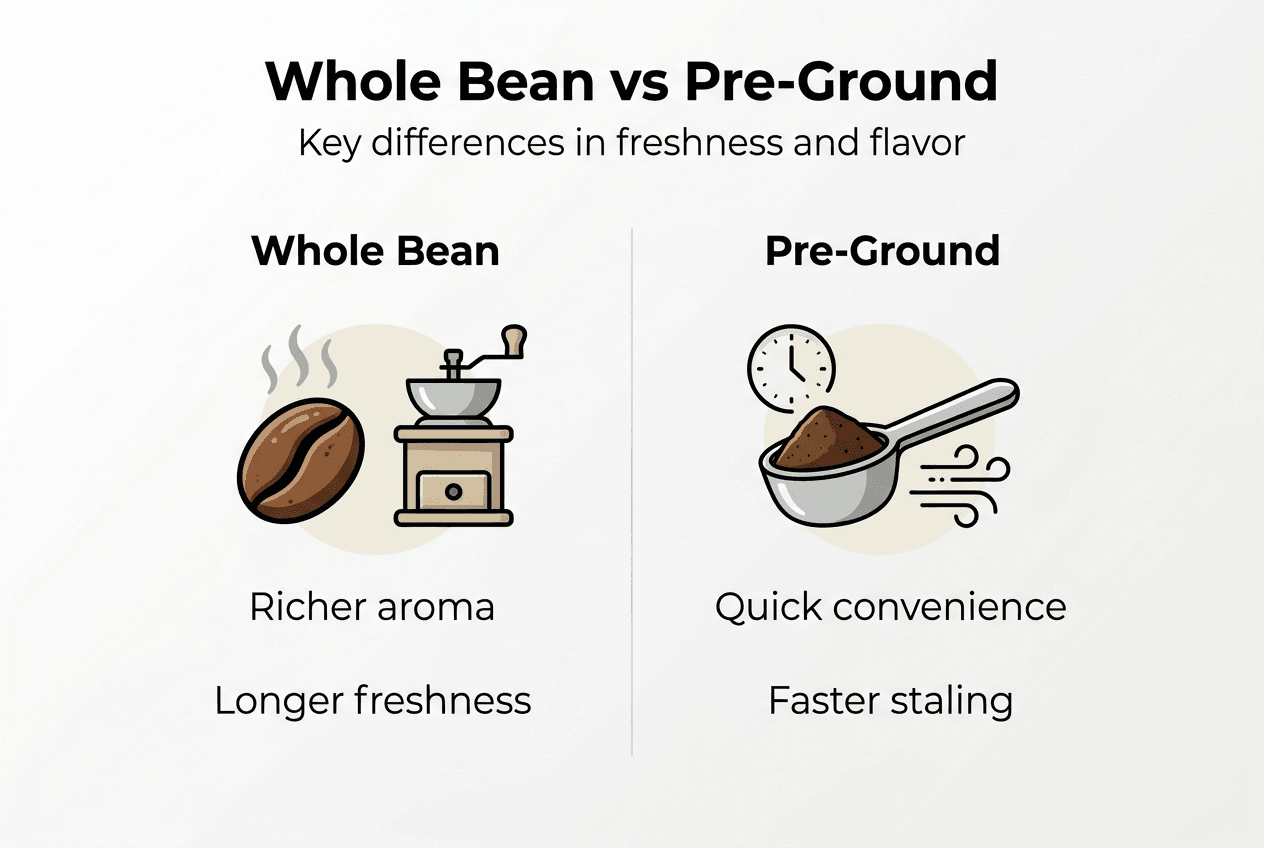
| Factor | Whole Bean Coffee | Pre-Ground Coffee |
|---|---|---|
| Flavor quality | Superior, complex, vibrant | Good initially, degrades quickly |
| Aroma intensity | Maximum when freshly ground | Fades within days of opening |
| Preparation time | Adds 30-60 seconds for grinding | Immediate, no extra steps |
| Equipment needed | Requires grinder investment | No additional tools |
| Shelf life | 1-2 months opened, 6+ sealed | 1-2 weeks for best flavor |
| Cost per pound | Often higher for specialty beans | Lower upfront, less value long-term |
Your lifestyle and priorities determine the right choice. If you value convenience above all else and drink coffee primarily for caffeine, pre-ground works fine. If you care about flavor, aroma, and the sensory experience of exceptional coffee, whole bean is non-negotiable.
Consider these factors when choosing:
- How much you value flavor complexity versus speed
- Whether you have counter space for a grinder
- Your willingness to learn grinding techniques
- How quickly you consume coffee after opening
- Budget for initial grinder investment versus ongoing quality
The grinder investment pays for itself through better coffee and reduced waste. When whole beans stay fresh longer, you throw away less stale coffee. You also gain flexibility to choose coffee beans for perfect brew based on mood, experimenting with different origins and roast levels.
Some coffee drinkers split the difference, using pre-ground for rushed weekday mornings and whole bean for leisurely weekend brewing. This compromise acknowledges reality while preserving the option for exceptional coffee when time allows. There’s no shame in pragmatism, but once you experience truly fresh coffee, the convenience of pre-ground feels less compelling.
How to store whole bean coffee for lasting freshness
Even the finest whole beans lose quality without proper storage. Storing coffee sealed away from light, heat, and air helps preserve antioxidants and bioactive compounds. The goal is minimizing exposure to the four enemies of coffee freshness: oxygen, light, heat, and moisture.
Airtight containers are essential. Once you open a bag of coffee, oxygen begins its destructive work. Transfer beans to a container with a tight seal that prevents air circulation. Glass jars with rubber gasket lids work well, as do dedicated coffee canisters with one-way valves that allow carbon dioxide to escape while blocking oxygen entry.
Location matters as much as container choice. Store coffee in a cool, dark, dry place like a pantry or cabinet away from the stove. Heat accelerates staling by speeding up chemical reactions that break down flavor compounds. Light, especially sunlight, degrades coffee through photochemical reactions. Even ambient kitchen light can harm beans over time.
Avoid the refrigerator or freezer for daily use coffee. These environments introduce moisture and odor absorption risks that outweigh any preservation benefits. Coffee is hygroscopic, meaning it absorbs moisture and smells from its surroundings. Your beans will pick up flavors from whatever else lives in your fridge, ruining their taste.
Oxygen exposure drives flavor degradation during coffee storage. Free radicals form when oxygen reacts with coffee oils, creating off flavors and destroying aromatic compounds. This process happens slowly in whole beans but accelerates dramatically once grinding occurs.
Storage timeline for optimal freshness:
- Sealed bag: 6+ months from roast date
- Opened bag, whole beans: 1-2 months
- Opened bag, ground coffee: 1-2 weeks
- Freshly ground coffee: 15-30 minutes before noticeable degradation
Pro Tip: Buy coffee in quantities you’ll consume within 2-4 weeks of opening. Smaller, more frequent purchases ensure you’re always brewing fresh beans rather than struggling to finish a large bag before it goes stale.
Some coffee enthusiasts freeze beans for long-term storage, which can work if done correctly. Divide beans into single-use portions in airtight bags, removing as much air as possible. Freeze these portions and thaw only what you need, grinding immediately after thawing. Never refreeze coffee or expose frozen beans to temperature fluctuations.
The coffee beans collection from specialty roasters often includes roast dates on packaging. Use these dates to track freshness and plan consumption. Coffee peaks 3-14 days after roasting, then gradually declines. Buying from roasters who ship immediately after roasting ensures you receive beans at their prime.
Grind only what you need for immediate brewing, never in bulk. Some people grind a week’s worth of coffee to save time, but this defeats the purpose of buying whole beans. Those pre-ground portions lose freshness just as quickly as store-bought ground coffee. The convenience isn’t worth the flavor sacrifice.
Find premium whole bean coffee at Adira Coffee
Now that you understand why whole bean coffee delivers superior flavor and freshness, it’s time to experience the difference yourself. Adira Coffee sources premium beans from over 50 farms across Colombia, Ethiopia, Costa Rica, Guatemala, Brazil, and Sumatra, roasting in small batches to ensure peak flavor reaches your cup.
Every bag in the premium coffee beans collection is roasted fresh to order and shipped at the optimal moment for maximum flavor. Whether you prefer the bright, fruity notes of Colombia single origin coffee or the balanced complexity of Ocean Blend coffee, you’ll taste the difference that ethical sourcing and expert roasting make. Explore the collection today and discover why coffee lovers who prioritize quality choose whole beans over pre-ground every time.
Frequently asked questions
Is whole bean coffee healthier than pre-ground?
Whole bean coffee preserves antioxidants better than pre-ground because grinding accelerates oxidation that breaks down beneficial compounds. Chlorogenic acids and other bioactive substances remain more stable in intact beans. Grinding just before brewing maximizes both flavor and health benefits.
How long do whole coffee beans stay fresh after opening?
Whole beans maintain good quality for 1-2 months after opening when stored in an airtight container away from light and heat. Pre-ground coffee loses freshness within 1-2 weeks. Sealed bags of whole beans can last 6+ months from the roast date if kept in optimal conditions.
What type of grinder should I buy for whole bean coffee?
Burr grinders produce uniform particle size for even extraction and superior flavor. Blade grinders are cheaper but create inconsistent grounds that extract unevenly, causing bitter or weak coffee. Invest in a quality burr grinder to fully unlock the potential of premium whole beans.
Do different coffee origins taste better as whole beans?
All coffee origins benefit from whole bean freshness, but single origin beans showcase their unique characteristics most clearly when ground fresh. Ethiopian beans reveal their floral and fruity notes, while Colombian beans express balanced sweetness and brightness. Fresh grinding lets each origin’s terroir shine through without the muting effect of oxidation.