
Most coffee labeled “fresh” sits on shelves for weeks or months before reaching your cup. True freshness requires beans roasted within days of brewing, not weeks. Local California roasters deliver coffee at peak flavor while supporting ethical sourcing and community businesses. This article reveals why buying local roasted coffee transforms your daily brew and benefits everyone involved in the coffee supply chain.
Table of Contents
- Key takeaways
- Understanding coffee freshness: why local matters
- Ethical sourcing and community impact of local roasted coffee
- Comparing local roasted coffee to mass-produced alternatives
- How to choose and enjoy local roasted coffee in California
- Discover ethically sourced fresh coffee from Adira Coffee
- FAQ
Key Takeaways
| Point | Details |
|---|---|
| Freshness window | Freshness hinges on roasting within days of brewing, with peak flavor 4 to 14 days after roasting, and local California roasters help preserve that window. |
| Ethical sourcing | Direct trade relationships help ensure fair compensation for farmers and support transparent ethical practices. |
| Local economy impact | Purchasing local roasted coffee keeps money in the community and supports jobs across the supply chain. |
| Tariffs and costs | Tariffs raise costs for small roasters, impacting pricing while trying to maintain quality and ethics. |
Understanding coffee freshness: why local matters
Coffee flavor peaks between 4 and 14 days after roasting, when aromatic compounds reach optimal balance. Local California roasters can deliver beans within this critical window, preserving the nuanced profiles that make specialty coffee exceptional. Scientific insights on coffee flavor maturation show that while some coffees benefit from brief maturation, timing matters enormously for flavor quality.
Mass-produced coffee often ships immediately after roasting or sits in warehouses for weeks before distribution. This timing destroys the delicate aromatics that define high-quality coffee. By the time supermarket beans reach consumers, they’ve lost the brightness, complexity, and depth that coffee enthusiasts seek. Local roasters eliminate this problem by controlling the entire timeline from roasting to delivery.
Buying whole bean coffee ensures fresher, richer flavor compared to pre-ground alternatives. Whole beans protect aromatic oils from oxidation until you’re ready to brew. The moment you grind coffee, flavor compounds begin degrading rapidly. Local roasters understand this science and optimize every step to preserve quality.
Pro Tip: Grind your beans immediately before brewing to maximize flavor retention. Even perfectly fresh beans lose their aromatic punch within 15 minutes of grinding. Investing in a quality grinder and learning how to grind coffee beans for perfect flavor transforms your coffee experience more than any other single factor.
Freshness considerations for local roasted coffee:
- Roast date visibility allows you to verify beans arrive within the optimal flavor window
- Smaller production batches ensure faster turnover and consistent freshness
- Direct-to-consumer shipping reduces warehouse storage time
- Local pickup options eliminate shipping delays entirely
- Transparent sourcing information builds trust in quality standards
Ethical sourcing and community impact of local roasted coffee
Local California roasters frequently engage in direct trade relationships with coffee farmers, bypassing exploitative commodity markets. These partnerships ensure farmers receive fair compensation while roasters secure access to exceptional beans. Direct trade creates accountability throughout the supply chain, allowing roasters to verify sustainable farming practices and ethical labor conditions firsthand.
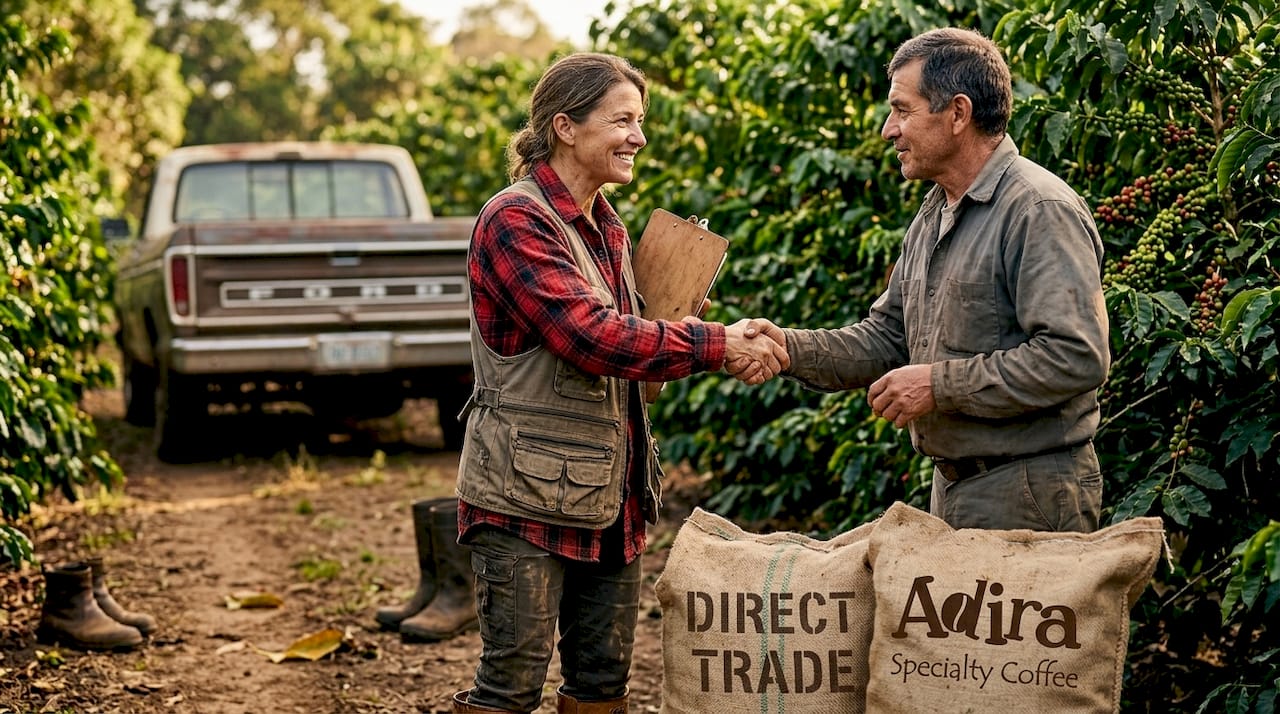
Supporting local coffee businesses strengthens California’s economy by keeping revenue within communities. Every dollar spent at a local roaster circulates through the regional economy multiple times, supporting jobs, services, and infrastructure. This economic multiplier effect benefits everyone from baristas to delivery drivers to the farmers who supply the beans.
Small batch roasting minimizes waste while maximizing quality control. Local roasters can adjust profiles for individual bean origins, highlight seasonal offerings, and respond quickly to customer preferences. This flexibility allows them to showcase small batch roasting techniques that would be impossible at industrial scale.
Tariffs and cost hikes have created challenges for local roasters committed to quality and ethics, forcing difficult decisions about pricing while maintaining standards.
Tariffs impact California coffee roasters disproportionately compared to massive chains with global supply networks. Local businesses absorb these costs while competing against corporations that leverage economies of scale. The price difference reflects genuine operational realities, not inflated margins.
Consumers increasingly prioritize transparent and sustainable coffee supply chains. Surveys show that coffee drinkers will pay premium prices for verified ethical sourcing, especially when they can trace beans to specific farms or cooperatives. Local roasters excel at providing this transparency because their smaller scale allows detailed storytelling about each origin.
Ethical considerations when choosing local roasted coffee:
- Direct trade relationships ensure fair farmer compensation
- Transparent sourcing allows verification of sustainability claims
- Community investment supports local jobs and economic development
- Environmental impact decreases through reduced shipping distances
- Quality focus over volume maximizes value for everyone involved
Learning how to choose coffee beans empowers you to make informed decisions aligned with your values. Understanding origin characteristics, processing methods, and roast profiles helps you select beans that deliver both exceptional flavor and ethical peace of mind.
Comparing local roasted coffee to mass-produced alternatives
The differences between local and mass-produced coffee extend far beyond simple freshness timelines. Local roasters deliver beans within days of roasting, while supermarket coffee may sit for months before purchase. This timeline gap creates fundamental quality differences that no amount of packaging can overcome.
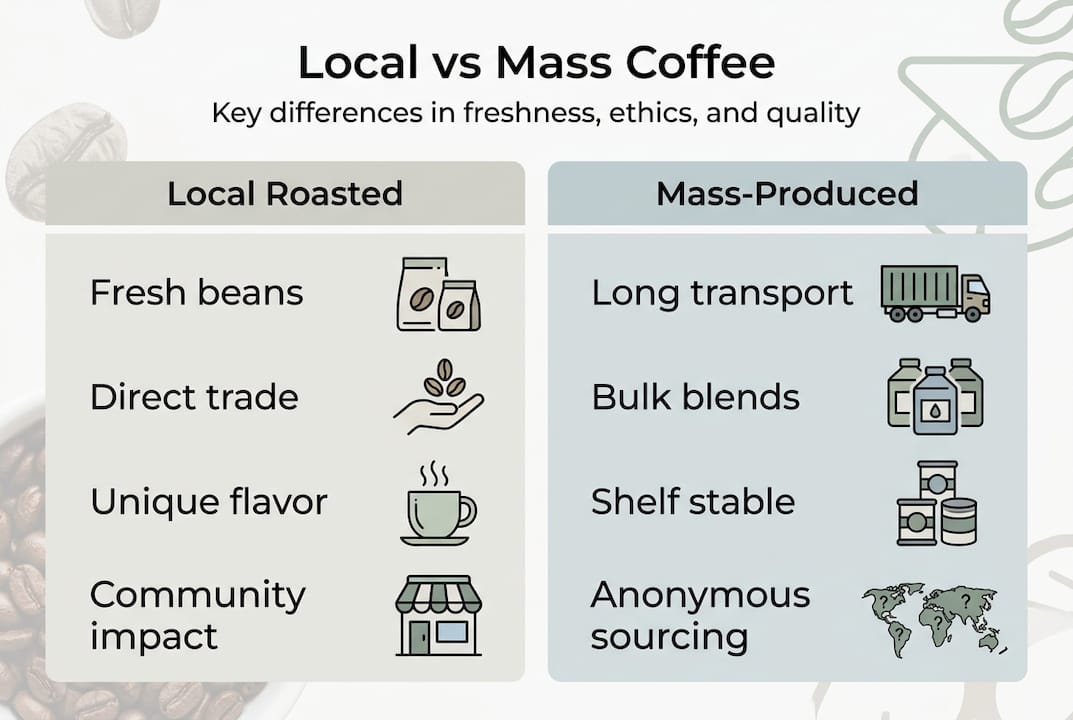
| Factor | Local Roasted Coffee | Mass-Produced Coffee |
|---|---|---|
| Freshness window | 4-14 days from roast to cup | 30-180+ days from roast to cup |
| Typical price per pound | $16-24 | $8-14 |
| Batch size | 5-50 pounds | 500-5000+ pounds |
| Sourcing transparency | Direct trade with farm visibility | Commodity market blends |
| Quality control | Individual batch testing | Statistical sampling |
| Environmental impact | Reduced shipping, local operations | Global supply chains |
Price differences reflect real cost structures, not arbitrary markup. Tariffs create cost hikes that hit small roasters harder than multinational corporations. Local businesses pay higher per-unit costs for green beans, equipment, labor, and facilities. These expenses translate to retail prices that accurately reflect the true cost of quality coffee.
Quality differences stem from fundamental roasting philosophy. Mass producers optimize for consistency and shelf stability across millions of pounds annually. Local roasters optimize for peak flavor in small batches, adjusting profiles to highlight each origin’s unique characteristics. This approach requires more skill, time, and attention but delivers superior results.
Ethical impact separates local and mass production most dramatically. Direct trade relationships allow local roasters to verify farming practices, labor conditions, and environmental stewardship. Commodity market coffee provides no such visibility, making ethical claims impossible to verify. The supply chain opacity of mass production enables exploitation that conscious consumers want to avoid.
Pro Tip: Prioritize beans labeled single origin or small batch for quality assurance. These designations indicate roasters focused on showcasing specific flavor profiles rather than blending away defects. Single origin coffees from reputable local roasters consistently outperform mass-market alternatives.
Key comparison points for informed purchasing:
- Freshness guarantees matter more than packaging claims
- Price reflects true costs of ethical sourcing and quality focus
- Batch size directly impacts flavor complexity and consistency
- Sourcing transparency enables values-aligned purchasing decisions
- Local economic impact multiplies community benefits
Buying whole bean coffee from local roasters maximizes both quality and ethical impact. The combination of optimal freshness, transparent sourcing, and community support creates value that extends far beyond the cup. Understanding small batch roasting helps you appreciate the craftsmanship behind every bag.
How to choose and enjoy local roasted coffee in California
Finding exceptional local roasted coffee requires knowing what to look for and where to search. California hosts dozens of outstanding roasters committed to freshness, quality, and ethical sourcing. The key is identifying roasters whose values and flavor profiles align with your preferences.
Steps to order from local California roasters:
- Research roasters in your area through online directories, coffee forums, and local recommendations
- Check roaster websites for sourcing information, roast date policies, and origin details
- Start with sample sizes or variety packs to explore different origins and roast levels
- Verify roast dates on packaging to ensure beans arrive within the optimal freshness window
- Subscribe to regular deliveries if you find a roaster whose quality consistently meets your standards
- Provide feedback to roasters about flavor preferences to help them recommend suitable options
Roast date visibility is the single most important indicator of a quality-focused roaster. Reputable local businesses prominently display roasting dates on every bag, allowing you to verify freshness before purchase. If a roaster hides or omits roast dates, that’s a red flag indicating they prioritize shelf life over peak flavor.
Storage practices determine how long your coffee maintains its quality after purchase. Store beans in an airtight container away from light, heat, and moisture. Never refrigerate or freeze coffee, as temperature fluctuations introduce condensation that degrades flavor. Properly stored beans from local roasters stay delicious for two to three weeks, though they taste best within the first 10 days.
Brewing methods should match your coffee’s characteristics. Light roasts from Ethiopian or Kenyan origins shine in pour-over preparations that highlight their bright, fruity notes. Medium roasts from Colombian or Central American beans excel in drip coffee or French press. Dark roasts work beautifully for espresso-based drinks where body and chocolate notes take center stage.
Exploring single origin and blend options expands your coffee horizons. Single origins like Ethiopia Natural or Colombia showcase specific terroir and processing methods. Blends like Ocean Blend combine complementary origins for balanced, approachable flavor profiles. Local roasters excel at both categories.
Learning how to choose coffee beans for your perfect brew involves understanding origin characteristics, processing methods, and roast levels. This knowledge transforms coffee shopping from guesswork into informed decision making that consistently delivers satisfaction.
Practical tips for maximizing local coffee enjoyment:
- Buy only what you’ll consume within two weeks to maintain peak freshness
- Experiment with different origins to discover your flavor preferences
- Adjust grind size and brewing parameters to highlight each coffee’s strengths
- Support roasters who share detailed sourcing and roasting information
- Join local coffee communities to learn from experienced enthusiasts
Discover ethically sourced fresh coffee from Adira Coffee
If you’re ready to experience the difference that freshly roasted, ethically sourced coffee makes, Adira Coffee delivers exactly what California coffee lovers seek. Founded by Stefan Nedelchev, Adira Coffee works directly with approximately 50 farms across Colombia, Ethiopia, Costa Rica, Guatemala, Brazil, and Sumatra to source exceptional beans roasted at peak freshness.
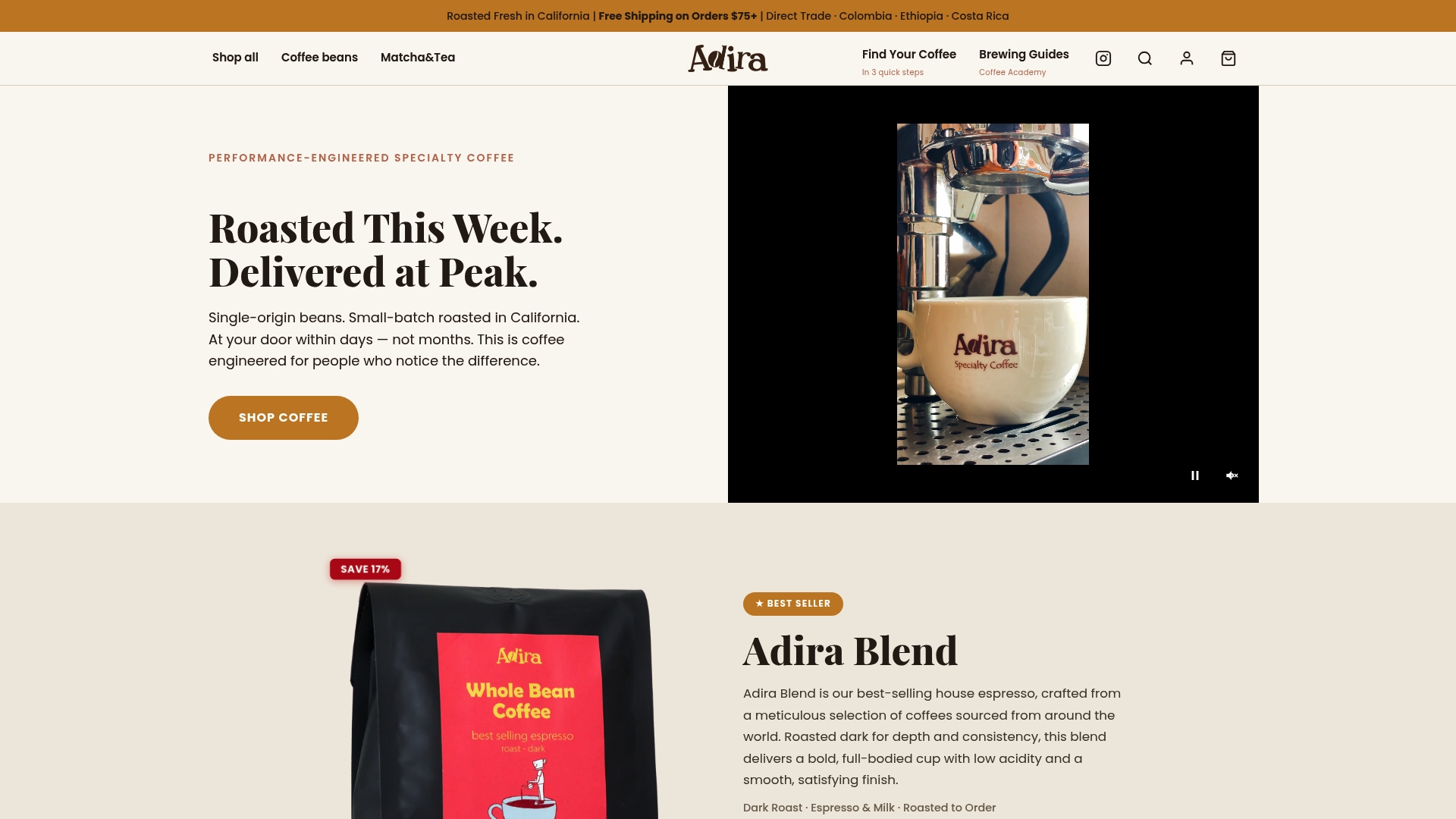
The coffee beans collection offers diverse options from bright, fruity single origins to balanced, approachable blends. Every bag ships within days of roasting, ensuring you receive coffee at its flavor peak. Popular options like Ocean Blend showcase the craftsmanship and attention to detail that defines small batch roasting. Ordering online provides convenient access to specialty coffee that supports ethical sourcing and California’s local coffee community.
FAQ
What does ‘local roasted’ mean for coffee quality?
Local roasted means coffee roasted near the consumer, ensuring delivery within the ideal 4-14 day freshness window for peak flavor. This proximity allows roasters to optimize timing between roasting and brewing, preserving the aromatic compounds that define exceptional coffee. Locally roasted coffee consistently shows better flavor complexity than beans roasted far away and shipped long distances.
Are locally roasted coffees more expensive than mass-produced ones?
Yes, local roasted coffees typically cost more due to tariffs, smaller production scale, and ethical sourcing commitments. The higher price reflects fresher, higher quality coffee and supports sustainable local businesses rather than global commodity chains. This price difference represents genuine value in flavor quality, ethical impact, and community support rather than inflated margins.
How can I identify ethically sourced local coffee?
Look for roasters that emphasize direct trade relationships, transparency about sourcing practices, and detailed origin information. Certifications can help, but direct trade often provides stronger ethical guarantees than third-party labels. Small batch roasting is frequently associated with higher ethical standards because smaller operations can maintain closer relationships with farming partners and verify conditions firsthand.
What brewing methods best showcase local roasted coffee?
Pour-over, French press, and espresso techniques highlight the nuanced flavors of fresh, local roasts by giving you control over extraction variables. Each method emphasizes different characteristics, so match your brewing approach to the coffee’s roast level and origin. Proper grind size and brewing temperature are essential for unlocking peak taste, so learning how to grind coffee beans for your chosen method makes a dramatic difference in cup quality.