

Many coffee lovers believe darker roasts deliver stronger flavor or more caffeine, but that’s a myth. The real key to unlocking your ideal cup lies in understanding coffee roast profiles, the precise temperature and time curves that shape every bean’s character. This guide explains what roast profiles are, how they influence flavor and aroma, and how you can use this knowledge to match beans with your preferred brewing methods. Whether you’re exploring light, fruity notes or rich, smoky depths, mastering roast profiles transforms your home brewing experience.
Table of Contents
- What Is A Coffee Roast Profile? Defining The Basics
- How Different Roast Profiles Impact Coffee Flavor And Aroma
- Techniques For Creating And Reading Roast Profiles At Home
- Matching Roast Profiles With Brewing Methods For Optimal Flavor
- Enhance Your Coffee Experience With Adira Coffee
- Frequently Asked Questions
Key takeaways
| Point | Details |
|---|---|
| Roast profile definition | A roast profile is the temperature and time curve applied during coffee roasting to develop specific flavors. |
| Flavor impact | Light roasts preserve origin acidity and brightness, medium roasts balance sweetness and body, dark roasts emphasize smoky and bitter notes. |
| Home application | Tracking roast time, temperature, and crack sounds helps home roasters create consistent flavor profiles. |
| Brewing optimization | Matching roast profiles to brewing methods like espresso, pour-over, or French press enhances extraction and taste. |
| Experimentation value | Small adjustments in roast parameters and grind size let you fine-tune coffee to your exact preferences. |
What is a coffee roast profile? Defining the basics
A coffee roast profile consists of temperature and time settings controlling the roasting stages that develop flavor in green coffee beans. Think of it as a recipe: just as baking a cake requires precise oven temperature and duration, roasting coffee demands careful control of heat application and timing to coax out desired characteristics. The profile maps how beans progress from raw to roasted, capturing every thermal change along the way.
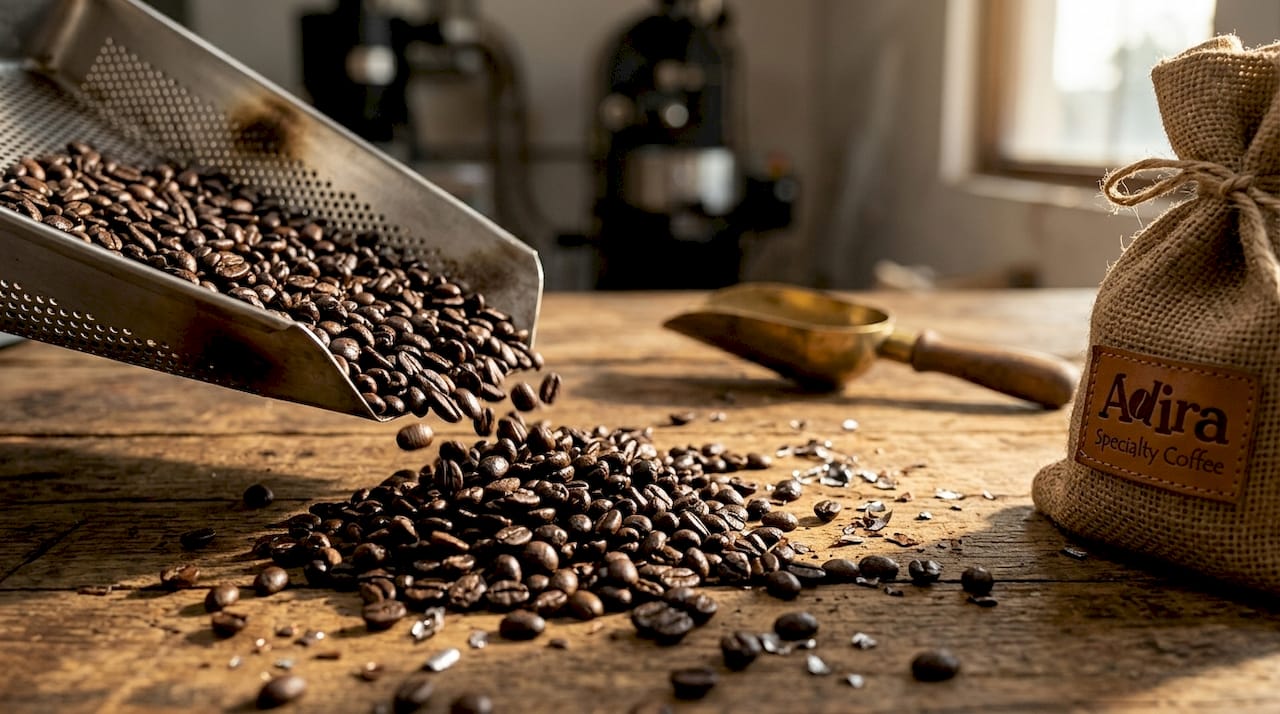
Roasting unfolds in distinct stages that transform bean chemistry and unlock flavors. The drying phase removes moisture, preparing beans for chemical reactions. Next, the Maillard reaction kicks in, creating hundreds of flavor compounds as sugars and amino acids interact under heat. This stage builds complexity, sweetness, and color. First crack follows, an audible popping sound signaling that beans expand and release steam as internal pressure builds. Development time, the period after first crack, determines final roast level and flavor balance. Extending development time deepens body and reduces acidity, while shorter times preserve brightness and origin character.
Roasters control several variables to shape profiles and achieve specific outcomes:
- Heat application rate: how quickly temperature rises during roasting
- Development time: duration between first crack and the end of roasting
- Rate of rise: the speed of temperature increase at different roasting stages
- Airflow: affects heat transfer and smoke removal during roasting
- Batch size: influences heat distribution and consistency across beans
Understanding these fundamentals empowers you to interpret roast profiles on coffee labels or experiment with home roasting. When you see terms like “extended development” or “fast rate of rise,” you’ll know exactly how those choices influenced the cup in your hand. Mastering this knowledge bridges the gap between casual coffee drinker and informed enthusiast who can choose beans that match your perfect brew preferences.
How different roast profiles impact coffee flavor and aroma
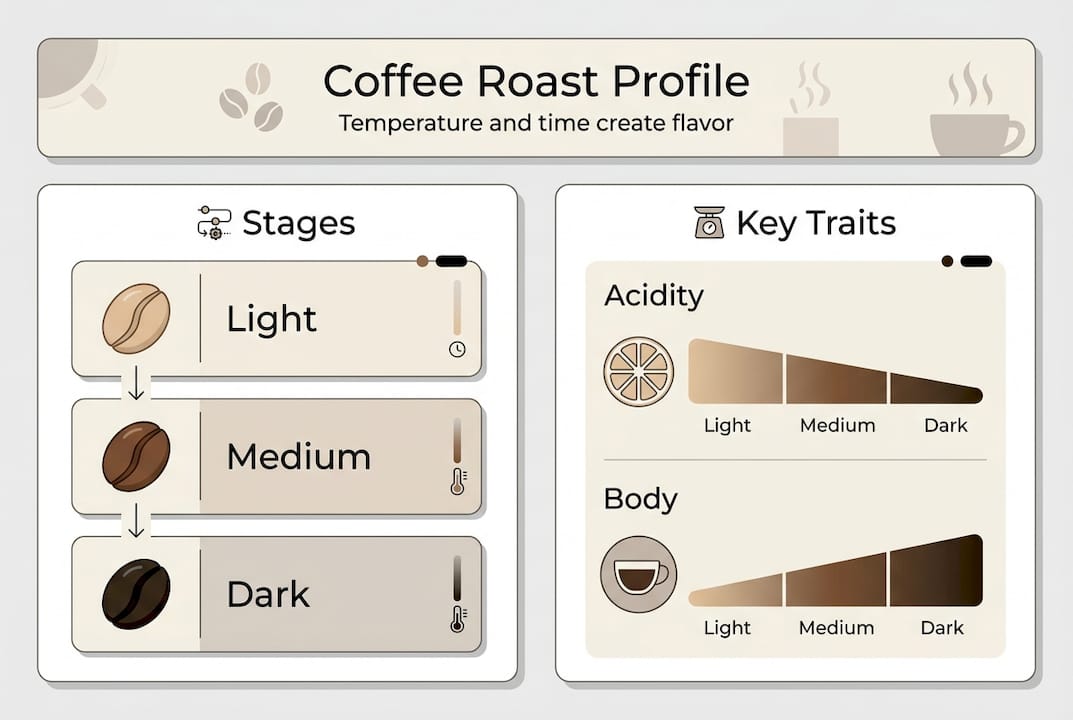
Light roasts preserve origin flavors and acidity, while dark roasts develop deeper bitters and smoky notes. Light roast profiles stop shortly after first crack, typically between 385°F and 410°F, locking in the bean’s inherent characteristics. You’ll taste bright, fruity, and floral notes with pronounced acidity that dances on your palate. These roasts showcase terroir, the unique flavor fingerprint of the farm and processing method. Ethiopian beans might burst with blueberry and jasmine, while Kenyan coffees deliver grapefruit and black currant complexity.
Medium roasts strike a balance, extending development time to around 410°F to 430°F. Acidity mellows but remains present, body fills out with more weight and texture, and sweetness emerges as caramelization begins. You’ll notice chocolate, nut, and caramel flavors blending with origin notes. This profile appeals to those who want complexity without the sharpness of light roasts or the intensity of dark roasts. Colombian and Brazilian beans shine here, offering smooth, approachable cups that work well across brewing methods.
Dark roasts push past second crack, reaching 435°F to 480°F, where roast character dominates origin traits. Acidity fades significantly, body becomes heavy and oily, and flavors turn smoky, bitter, and robust. Expect notes of dark chocolate, tobacco, and charred wood. Many assume darker means stronger or more caffeine, but that’s incorrect. Roasting actually burns off caffeine slightly, and perceived strength comes from bold, bitter flavors, not caffeine content. Dark roasts suit those who prefer intensity over nuance.
| Roast Profile | Temperature Range | Acidity | Body | Flavor Notes |
|---|---|---|---|---|
| Light | 385°F to 410°F | High | Light | Fruity, floral, bright |
| Medium | 410°F to 430°F | Moderate | Medium | Chocolate, caramel, balanced |
| Dark | 435°F to 480°F | Low | Heavy | Smoky, bitter, robust |
Aroma evolves dramatically across profiles. Light roasts release fragrant, tea-like aromas with hints of citrus and flowers. Medium roasts smell sweet and nutty, like freshly baked cookies. Dark roasts emit bold, smoky scents reminiscent of campfires or dark chocolate. These changes occur because volatile aromatic compounds form and degrade at different temperatures, creating distinct sensory experiences.
Pro Tip: Match roast profiles with your preferred flavors to enhance enjoyment. If you love bright, complex cups, stick with light roasts from origins like Ethiopia or Kenya. Prefer smooth, sweet coffee? Medium roasts from Central America deliver every time. Crave bold intensity? Dark roasts from Sumatra or Brazil won’t disappoint. Experimenting with profiles from the same origin reveals how roasting transforms a single bean into multiple flavor experiences.
Techniques for creating and reading roast profiles at home
Home roasters can use temperature logs and color change to develop consistent roast profiles for preferred flavors. Creating your own profiles requires tracking time and temperature throughout the roast, then adjusting variables based on results. Start with a simple home roaster or even a popcorn popper, which provides enough control for beginners. Invest in a digital thermometer with a probe to monitor bean temperature in real time, and keep a notebook or spreadsheet to log each roast.
Follow these steps to build your first roast profile:
- Preheat your roaster to the starting temperature, typically around 350°F to 400°F depending on your equipment.
- Add green beans and start your timer immediately, noting the initial temperature drop as cool beans absorb heat.
- Record temperature every 30 seconds, observing color changes from green to yellow to tan to brown.
- Listen for first crack, usually occurring between 385°F and 410°F, and note the exact time and temperature.
- Decide your target roast level and stop roasting at the appropriate temperature, then cool beans rapidly to halt development.
- Taste the coffee after 24 hours rest, evaluate flavor, and adjust your next roast based on results.
Observing first and second crack provides crucial feedback without fancy equipment. First crack sounds like popcorn popping, signaling that beans have reached light roast territory. Stopping here preserves acidity and origin character. Second crack, a quieter, faster crackling, indicates the onset of dark roast development. Roasting beyond this point risks burnt, ashy flavors. Use these auditory cues to guide progression when temperature monitoring isn’t precise.
Color charts and roast logs help classify roast levels and maintain consistency. Compare your cooled beans to a standardized color chart, available online or through roasting suppliers, to determine whether you’ve achieved light, medium, or dark. Record this information alongside time, temperature, and tasting notes. Over multiple roasts, patterns emerge: you’ll see that extending development time by 30 seconds deepens body, or raising heat application rate brightens acidity. This data-driven approach transforms guesswork into repeatable success.
When buying commercial coffee, reading roast profile information on labels or websites reveals how beans were treated beyond simple light or dark classifications. Look for details like “development time: 90 seconds” or “roasted to 420°F.” These specifics tell you whether the roaster prioritized acidity, sweetness, or body. Some specialty roasters publish full roast curves, showing temperature over time graphically. This transparency helps you predict flavor and choose beans aligned with your preferences.
Pro Tip: Adjust grind size based on roast profile for best extraction. Light roasts are denser and require finer grinds to extract fully, while dark roasts are more porous and extract quickly, demanding coarser grinds. Dialing in grind size alongside roast profile optimization ensures you’re not undermining careful roasting with poor brewing execution.
Matching roast profiles with brewing methods for optimal flavor
Choosing the right roast profile for your brew method enhances extraction and flavor clarity. Different brewing techniques extract compounds at varying rates and efficiencies, making roast selection critical. Espresso, with its high pressure and short contact time, demands different profiles than slow, immersive methods like French press. Understanding these pairings elevates your coffee from good to exceptional.
Espresso thrives on medium to medium-dark roasts that balance acidity with rich body. Lighter roasts can taste sour under espresso’s intense extraction, as high pressure amplifies acidity without enough time to develop sweetness. Darker roasts risk bitterness and harshness, overwhelming the palate. Medium roasts hit the sweet spot, offering complexity, crema, and a satisfying finish. Adjust your grind fine and aim for 25 to 30 second extraction times to pull balanced shots.
Pour-over methods like V60 or Chemex shine with light to medium roasts that highlight clarity and origin character. The slower, gentler extraction draws out delicate flavors without overextracting bitter compounds. Use a medium-fine grind and control water temperature around 195°F to 205°F to coax out floral, fruity notes. These profiles reward patience and precision, delivering clean, vibrant cups that showcase the roaster’s skill and the bean’s terroir.
French press suits medium to dark roasts with fuller body and lower acidity. The immersion method extracts oils and solids that paper filters remove, creating a rich, textured mouthfeel. Darker roasts amplify this effect, delivering bold, satisfying coffee. Use a coarse grind to prevent over-extraction and muddy flavors, and steep for four minutes before pressing. This combination produces a robust cup that feels substantial and warming.
Cold brew benefits from medium to dark roasts that provide sweetness and smoothness over extended steeping times. The cold water extraction process takes 12 to 24 hours, pulling out different compounds than hot brewing. Lighter roasts can taste thin or grassy, lacking the depth cold brew enthusiasts crave. Medium to dark profiles contribute chocolate, caramel, and nutty flavors that shine when served over ice or diluted with milk.
| Brew Method | Best Roast Profile | Grind Size | Flavor Highlights |
|---|---|---|---|
| Espresso | Medium to medium-dark | Fine | Balanced, rich, creamy |
| Pour-over | Light to medium | Medium-fine | Bright, clean, complex |
| French press | Medium to dark | Coarse | Full-bodied, robust, textured |
| Cold brew | Medium to dark | Coarse | Sweet, smooth, chocolatey |
Consider these factors when pairing roast with brewing:
- Extraction time: shorter methods need roasts that deliver flavor quickly, longer methods allow gentler profiles to shine
- Water temperature: higher temps extract more aggressively, favoring lighter roasts that need coaxing
- Filter type: paper filters remove oils, highlighting clarity in lighter roasts; metal filters retain oils, enhancing body in darker roasts
- Personal preference: your taste ultimately guides choices, so experiment to find your ideal combinations
Pro Tip: Experiment with small adjustments to roast and brew parameters for flavor tuning. If your light roast pour-over tastes too sour, try raising water temperature by 5°F or grinding slightly finer to increase extraction. If your dark roast French press turns bitter, coarsen the grind or reduce steep time by 30 seconds. These micro-adjustments reveal how roast profile and brewing technique interact, giving you precise control over your cup’s final character.
Enhance your coffee experience with Adira Coffee
Now that you understand how roast profiles shape flavor, it’s time to explore beans crafted with expertise and care. Adira Coffee offers a curated selection of freshly roasted, ethically sourced beans across light, medium, and dark profiles, each designed to deliver peak flavor directly to your home. Whether you’re chasing bright Ethiopian florals or smooth Colombian chocolate, our coffee beans collection provides options tailored to your brewing preferences and taste.
Try our popular Ocean Blend, a medium roast that balances sweetness, body, and acidity for versatile brewing across methods. We work with around 50 farms in renowned origins like Ethiopia, Costa Rica, Guatemala, Brazil, and Sumatra, ensuring every batch reflects the best of its terroir. Small-batch roasting guarantees freshness, and our commitment to quality means you’ll taste the difference in every cup. Explore resources and expert guidance on Adira Coffee to refine your home brewing and discover your perfect roast profile match.
Frequently asked questions
What is the difference between roast profile and roast level?
Roast profile refers to the temperature and time curve applied during the roasting process, mapping how heat develops flavor at each stage. Roast level describes the final darkness or lightness of the beans, categorized as light, medium, or dark. Profiles capture the journey, levels capture the destination. Reading commercial roast profiles helps you understand bean treatment beyond simple color classifications.
Can I change the flavor of coffee by adjusting the roast profile at home?
Yes, adjusting roast parameters like heat application rate and development time tailors acidity, body, and aroma to your preferences. Start with small batch roasting to experiment safely without wasting large quantities of beans. Record and compare roast logs for each attempt, noting how changes in time or temperature shift flavor. This iterative process builds skill and consistency, letting you dial in profiles that match your ideal cup.
Which roast profile is best for espresso brewing?
Medium to medium-dark roast profiles balance acidity and body essential for espresso extraction. Lighter roasts can produce sour shots due to insufficient sweetness development under high pressure, while darker roasts risk harsh bitterness. Medium profiles provide complexity, crema, and a satisfying finish that espresso enthusiasts crave. Roast profile also influences grind size and extraction time, so fine-tune these variables together for optimal results.
How do I know if a roast profile matches my brewing method?
Match roast profiles to brewing methods by considering extraction time, water temperature, and filter type. Espresso and pour-over benefit from different profiles due to their contrasting extraction speeds and pressures. Taste your coffee and adjust: if it’s too sour, try a darker roast or finer grind; if it’s too bitter, go lighter or coarser. Experimentation reveals which combinations deliver the flavors you enjoy most, building intuition over time.