
TL;DR:
- Thoughtfully crafted coffee blends offer complex, balanced flavors that single origin coffees can’t achieve alone.
- Roasters create blends through precise sourcing, roasting, and testing to ensure consistency and optimal flavor profiles.
- For home brewers, selecting and brewing blends based on brewing method and freshness enhances the drinking experience.
Many coffee aficionados assume blends are the industry’s shortcut, a way to hide inferior beans behind a clever label. That assumption couldn’t be further from the truth. A thoughtfully crafted blend is one of the most sophisticated expressions of a roaster’s skill, combining beans from multiple origins to achieve something no single farm can deliver alone: perfect balance, repeatable consistency, and layered complexity. In this guide, we’ll walk through exactly what coffee blends are, how they’re made, why roasters love them, and how you can select and brew them at home to get the most out of every cup.
Table of Contents
- What is a coffee blend?
- How are coffee blends created?
- Why do roasters blend coffee? Balancing flavor and consistency
- How to select and brew coffee blends at home
- The real advantage of blends: Experience over purity
- Discover and experiment with premium coffee blends
- Frequently asked questions
Key Takeaways
| Point | Details |
|---|---|
| Definition of blends | A coffee blend is a mixture of coffees from different origins combined for balanced flavor and consistency. |
| Blending techniques matter | Pre-roast and post-roast methods produce distinct flavor outcomes, impacting your final cup. |
| Purpose of blends | Blends deliver reliable, complex profiles that adapt to different brewing styles and personal tastes. |
| Home brewing best practices | Choose blends based on your flavor preference, brew method, and always store beans properly for peak freshness. |
What is a coffee blend?
Let’s clear up the terminology first. A coffee blend is a mixture of two or more coffees from different origins, regions, farms, or processing methods, combined to create a balanced, consistent, and complex flavor profile. That’s the working definition, but the real story is in the intention behind it.
Unlike single origin coffee, which celebrates the distinct character of one place, a blend is about synthesis. It’s the roaster asking: what if the bright citrus acidity of an Ethiopian Yirgacheffe met the chocolatey body of a Brazilian Cerrado? The answer is often something neither coffee could achieve on its own.
Blend ratios are where the craft gets precise. Common ratios include:
| Ratio | Use case | Effect |
|---|---|---|
| 50/50 | Balanced espresso | Equal body and brightness |
| 60/40 | Milk-based drinks | Dominant base with accent notes |
| 70/30 | Specialty filter | Strong character, subtle complexity |
| 80/20 | Signature blends | Bold primary, nuanced finish |
Roasters choose these ratios deliberately, testing dozens of combinations before landing on the final formula. The goal is always to hit a specific flavor target, whether that’s a smooth everyday drinker or a complex espresso that cuts through steamed milk.
Here’s why blends are crafted in the first place:
- Consistency: Seasonal crops change. Blending allows roasters to swap in comparable origins when one harvest underperforms.
- Complexity: Layering origins creates flavor depth that a single farm rarely achieves.
- Versatility: Blends are engineered to perform across brewing methods, from espresso to pour-over.
- Specialty drinks: A blend designed for milk-based drinks needs to hold its own against dairy or plant-based alternatives.
- Accessibility: A well-balanced blend is forgiving, making it easier for home brewers to get a great result.
Blends also allow roasters to balance the three pillars of a great cup: acidity, body, and aroma. A high-acid Ethiopian bean paired with a low-acid, full-bodied Sumatran creates a cup that’s neither too bright nor too flat. That’s not compromise. That’s engineering.
How are coffee blends created?
The craftsmanship behind a great blend is more involved than most people realize. It starts long before anyone touches a roaster.
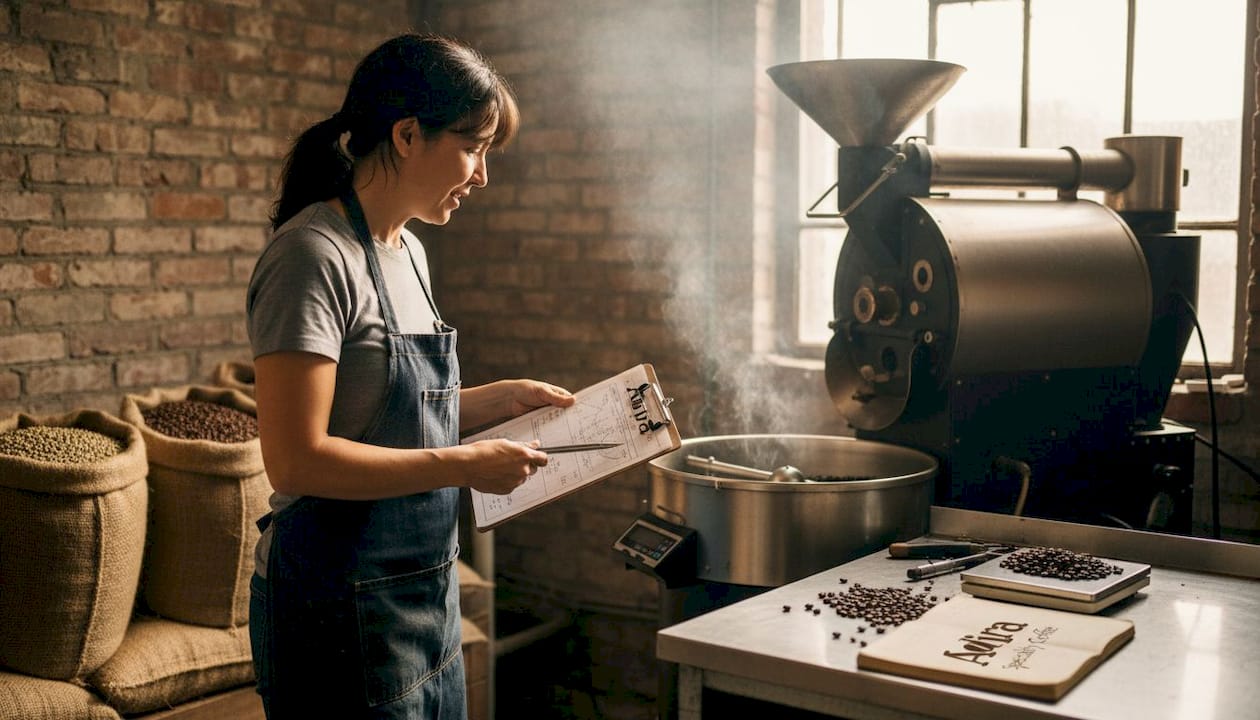
Step 1: Sourcing. Roasters identify beans with complementary flavor profiles. This means understanding each origin’s character deeply, knowing that a Colombian bean from Huila will bring caramel sweetness, while a Costa Rican from Tarrazú adds clean brightness.
Step 2: Roasting. This is where the two main methodologies split. Post-roast blending preserves individual optimal roasts while pre-roast (green blending) offers a uniform roast but less flexibility. In practice, most specialty roasters prefer post-roast blending because each bean can be roasted to its ideal level before being combined.
Step 3: Blending. Once roasted, beans are combined in measured ratios and mixed carefully to ensure even distribution without damaging the roast.
Step 4: Quality testing. Every batch is cupped (tasted using a standardized tasting method) against the target flavor profile. Adjustments are made to ratios before the blend is approved for release.
| Method | Pros | Cons |
|---|---|---|
| Pre-roast blending | Uniform roast, simpler process | Less control over individual beans |
| Post-roast blending | Optimized per bean, more nuanced | More time-intensive, higher cost |
For home baristas experimenting with choosing coffee beans from different origins, the same logic applies. You can buy two single origins you love and blend them at home. When doing so, mix gently in a sealed container rather than shaking vigorously. This protects the roast surface and prevents uneven grinding coffee beans later.
Pro Tip: When blending at home, start with a 70/30 ratio favoring your preferred base bean. Adjust in 10% increments across several brews until you find the sweet spot. Keep notes on each ratio so you can replicate your favorite.
The ratio-testing process is iterative. Professional blenders may cup 20 or more variations before settling on the final formula. That level of rigor is what separates a memorable blend from a forgettable one.
Why do roasters blend coffee? Balancing flavor and consistency
Roasters don’t blend coffee just because they can. They blend because it solves real problems and creates real opportunities.
The most practical motivation is seasonal variability. Coffee is an agricultural product. A drought in Colombia or an early harvest in Ethiopia can shift a bean’s flavor dramatically from one year to the next. A blend gives roasters the flexibility to adjust sourcing without disrupting the cup you’ve come to rely on. That consistency is especially valuable for cafes and home brewers who’ve dialed in a specific recipe.
Beyond logistics, blends are crafted to create balanced, consistent, and complex profiles, often more versatile and reliable than single origin coffees. Here’s what roasters are specifically targeting:
- Acidity: Bright, fruity acids from East African origins add liveliness.
- Sweetness: Central and South American beans contribute caramel and brown sugar notes.
- Body: Indonesian origins like Sumatra add weight and earthiness.
- Aroma: Floral and citrus aromatics often come from high-altitude Ethiopian and Colombian beans.
“The best blends feel inevitable, like every component was always meant to be together. That’s not luck. It’s hundreds of hours of tasting.”
For espresso specifically, blending is almost essential. A straight single origin espresso can be polarizing, too acidic, too floral, or too thin for milk drinks. A well-designed espresso blend holds up under pressure, literally, and delivers the sweetness and body that make a flat white sing.
Our Love Blend is a great example of this philosophy in action, built for richness and balance across brewing methods. The Ocean Blend takes a different approach, leaning into brightness and clarity for those who prefer a cleaner, more vibrant cup.
Pro Tip: To keep a blend consistent year-round, professional roasters maintain detailed tasting notes for each component origin and cup every new lot against the established blend benchmark before approving it for use.
For home brewers, understanding what roasters are trying to achieve helps you make smarter choices. When you read a blend’s tasting notes, you’re reading the roaster’s intent. Match that intent to your brewing method for the best result. Check out these coffee roasting tips to sharpen your palate further.
How to select and brew coffee blends at home
Knowing what blends are and why they exist is only half the equation. The other half is putting that knowledge to work in your kitchen.
Blends are mixed to offer balanced, complex profiles, suitable for a variety of brewing methods, which means your selection process should start with how you brew, not just what you like.
How to select, store, grind, and brew a coffee blend:
- Identify your brewing method first. Espresso blends are roasted darker for pressure extraction. Filter blends tend toward medium roasts that highlight clarity and sweetness.
- Read the tasting notes. Look for descriptors that match your preferences. If you love chocolate and nuts, seek out blends featuring Brazilian or Guatemalan components. If you want brightness, look for Ethiopian or Colombian origins in the mix.
- Check the roast date. Freshness matters enormously. Aim for beans roasted within the past two to four weeks for peak flavor. Understanding coffee bean types helps you know what freshness looks like per origin.
- Store correctly. Keep beans in an airtight container, away from heat, light, and moisture. Avoid the freezer unless you’re storing long-term and won’t be opening the container repeatedly.
- Grind fresh, every time. Pre-ground blends lose volatile aromatics quickly. Grind just before brewing for the fullest flavor.
- Dial in your ratio. Start with the roaster’s recommended dose, typically 1:15 to 1:17 coffee to water for filter, and adjust from there.
Common mistakes to avoid: brewing blends too hot (above 205°F extracts bitterness faster), grinding too coarse for espresso, or using stale water that muffles the blend’s complexity.
Pro Tip: If a blend tastes flat or one-dimensional, try dropping your water temperature by 3 to 5 degrees before adjusting your grind. Temperature changes often reveal hidden sweetness in blends with complex component profiles.
Not sure where to start? Use a tool like finding your perfect blend to match your preferences to a specific profile. And if you want to go deeper on how roast level shapes the final cup, the guide on coffee roast profiles is worth your time.
The real advantage of blends: Experience over purity
Here’s a perspective you won’t often hear in specialty coffee circles: the obsession with single origin can actually hold you back.
Single origin coffees are extraordinary showcases of place and process. But they’re also uncompromising. If a particular lot runs acidic or thin, there’s no correcting it without losing the point. For everyday brewing, that rigidity can be frustrating.
Blends, by contrast, are designed with the drinker in mind. They’re forgiving, consistent, and often more enjoyable across a wider range of brewing conditions. We’ve run informal blind tastings at Adira Coffee where a well-crafted blend outperformed three celebrated single origins in overall satisfaction scores. Not because the single origins were inferior, but because the blend was built for balance in a way they simply weren’t.
The real sophistication in coffee isn’t choosing one over the other. It’s knowing when each serves you better. Explore the single origin vs. blends conversation with fresh eyes, and you might find that blends are where your best daily cup lives.
Discover and experiment with premium coffee blends
You now have the framework to think about blends the way a roaster does: with intention, curiosity, and a clear sense of what you’re chasing in the cup. At Adira Coffee, every blend we craft starts with ethically sourced beans from our network of around 50 farms across Colombia, Ethiopia, Costa Rica, Guatemala, Brazil, and Sumatra.
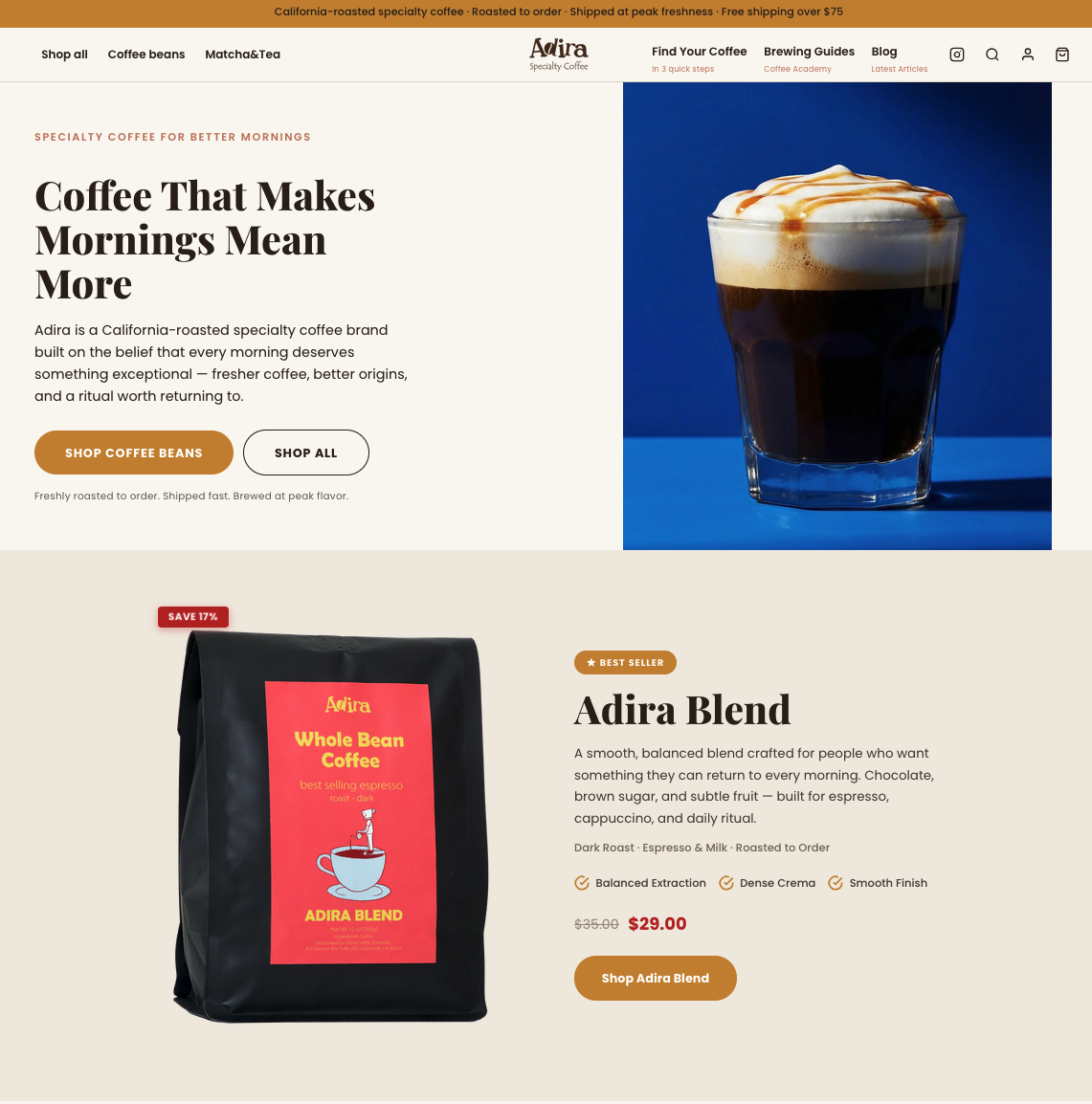
We small-batch roast each component to its ideal level before blending, so what reaches you is always at peak freshness. Whether you’re drawn to the rich, balanced character of our Ocean Blend or want to browse our full range, you can shop coffee blends and find a profile that fits your brewing style and flavor preferences. Great blends are waiting. All you have to do is brew.
Frequently asked questions
Is a coffee blend lower quality than single origin?
Not at all. Well-crafted blends are designed for complexity and consistency, sometimes outperforming single origin coffees in balance and reliability, especially for everyday brewing.
How many types of coffee are usually in a blend?
Most blends use two to five origins, with ratios like 50/50 or 60/40 chosen deliberately to hit a specific flavor target.
Does the blending method affect coffee taste?
Yes. Pre-roast blending creates a uniform taste while post-roast blending lets each component’s best qualities come through independently before being combined.
What’s the best way to store coffee blends?
Store blends in an airtight container at room temperature, away from light and heat. Avoid repeated freezing and thawing, as moisture exposure degrades flavor quickly.