
Most coffee lovers assume the freshest possible coffee is always the best coffee. Crack open a bag straight from the roaster, brew immediately, and you’re golden, right? Not exactly. Freshness in specialty coffee is genuinely nuanced, and the science behind it challenges some deeply held assumptions. Understanding how freshness works, what degrades it, and when coffee actually hits its peak can transform the way you buy, store, and brew. This article walks through the chemistry, the research, and the practical steps that make a real difference in your cup.
Table of Contents
- What does freshness mean in coffee?
- The science behind degrading flavor: Oxygen, time, and temperature
- Debunking ‘the fresher, the better’: Insights from scientific studies
- Degassing and the perfect ‘freshness window’
- How to maximize coffee freshness at home
- Explore freshness-first coffee from Adira
- Frequently asked questions
Key Takeaways
| Point | Details |
|---|---|
| Freshness is nuanced | The best coffee isn’t always the newest but falls within a carefully timed flavor window. |
| Enemies of coffee quality | Oxygen, moisture, temperature, and time all accelerate staling and aroma loss. |
| Peak flavor window | Most coffees taste best between a few days and two weeks after roasting. |
| Home freshness tips | Store in airtight bags, keep cool and dark, and grind just before brewing for maximum flavor. |
What does freshness mean in coffee?
When coffee professionals talk about freshness, they’re not just talking about the roast date on the bag. They’re talking about the preservation of volatile aromatic compounds, the organic molecules responsible for the complex, layered flavors you taste in a well-sourced, well-roasted bean. These compounds are fragile. They begin breaking down the moment roasting ends.
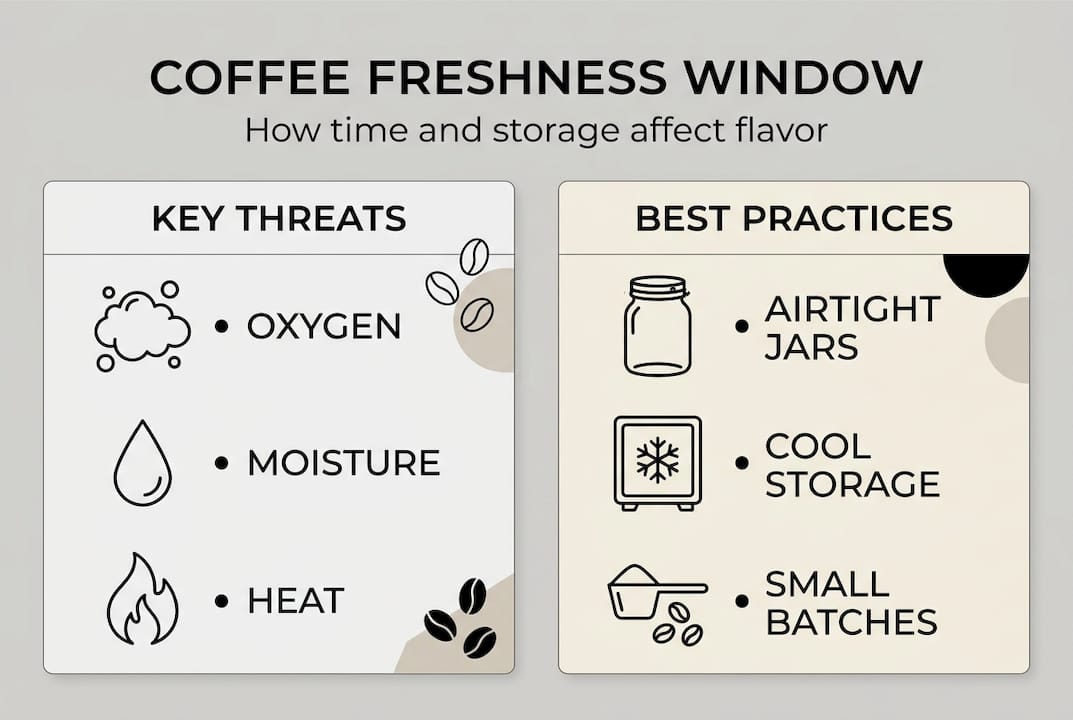
Several forces work against freshness simultaneously:
- Oxygen reacts with aromatic compounds through oxidation, stripping away brightness and depth
- Moisture catalyzes unwanted chemical reactions that produce flat, stale flavors
- Temperature accelerates every degradation process, including both degassing and oxidation
- Time compounds all of the above, even under ideal conditions
As the Specialty Coffee Association notes, staling involves complex chemistry driven by oxidation, moisture, and time working together. This means freshness isn’t a single variable you can control with one fix. It’s a system.
“Freshness is not a moment. It’s a window. And that window is shaped by everything that happens to the bean from the second it leaves the roaster.”
Understanding whole bean coffee freshness starts with recognizing that the bean’s structure itself acts as a natural barrier against staling. Once you grind it, that protection disappears fast.
The science behind degrading flavor: Oxygen, time, and temperature
Let’s get specific. Oxygen is the primary villain in coffee staling. When oxygen molecules contact the aromatic compounds in roasted coffee, they trigger oxidation reactions that destroy the very compounds responsible for fruity, floral, and complex flavor notes. This process starts immediately after roasting and accelerates every time you open the bag.
Moisture is the second major threat. Even small amounts of ambient humidity can trigger hydrolysis reactions inside the bean, breaking down flavor-active compounds and producing off-notes. This is why storing coffee near a stove or in a humid kitchen is a bad idea.
Temperature is the multiplier. According to SCA research on staling rates, a 10°C temperature rise can double how quickly coffee loses its freshness. That’s a dramatic effect from what seems like a minor environmental change.
| Factor | Primary effect | Speed of impact |
|---|---|---|
| Oxygen | Oxidizes aromatics | Fast (minutes to hours) |
| Moisture | Triggers hydrolysis | Moderate (hours to days) |
| Temperature | Accelerates all reactions | Immediate multiplier |
| Time | Compounds all degradation | Gradual but cumulative |
For those who care about coffee delivery freshness, this table explains why shipping conditions matter as much as roast date. A bag roasted three days ago but stored in a warm warehouse may taste older than a bag roasted a week ago and kept cool and sealed.
Key insight: Temperature control is the single most underrated factor in home coffee storage. Most people focus on airtight containers but leave their coffee on a warm countertop.
Debunking ‘the fresher, the better’: Insights from scientific studies
Here’s where things get interesting. If freshness degrades over time, surely the freshest coffee is always the best? Research says otherwise.
A peer-reviewed study on sensory quality and consumer preference found that while most tasters could distinguish fresh from older coffee in triangle taste tests, there was no statistically significant preference for the fresher sample. Some tasters actually preferred the smoother, more integrated flavor profile of coffee that had rested for a period after roasting.
This finding aligns with what experienced roasters have known for years. Coffee brewed within 24 hours of roasting can taste sharp, unbalanced, and gassy. The CO₂ still escaping from the bean interferes with extraction and mutes the more delicate flavor notes.
“The goal isn’t the freshest coffee. The goal is coffee at its best. Those are not always the same thing.”
Here’s a practical comparison of how flavor evolves post-roast:
| Days post-roast | Flavor profile | Best for |
|---|---|---|
| 0 to 2 days | Sharp, gassy, uneven | Not recommended |
| 3 to 7 days | Bright, developing complexity | Filter/pour-over |
| 7 to 14 days | Balanced, full flavor | Espresso and filter |
| 14 to 30 days | Mellowing, smoother | Espresso, milk drinks |
| 30+ days | Fading, flat notes | Consume quickly |
When choosing coffee beans, look for a roast date rather than a “best by” date. A roast date gives you control over where you are in that window.
Pro Tip: If you’re brewing espresso, try resting your beans for 7 to 10 days post-roast before pulling your first shot. The reduction in CO₂ leads to more consistent extraction and noticeably better crema.
The concept of local roast freshness matters here too. Buying from a roaster who ships within days of roasting gives you the ability to time your window intentionally, rather than guessing where a supermarket bag sits in its lifecycle. Whether you prefer a medium roast guide style or something darker, understanding coffee roast profiles helps you predict how quickly each roast level will move through its freshness window.
Degassing and the perfect ‘freshness window’
Degassing is the process by which roasted coffee releases CO₂ and other volatile gases produced during roasting. It’s not a flaw. It’s a natural and necessary part of the coffee’s post-roast development. But timing your brew around it is critical.
According to SCA research on degassing, too little or too much degassing disrupts both brewing consistency and flavor development. Brew too early and the escaping CO₂ creates uneven extraction. Wait too long and the aromatics you want have already dissipated.
Here’s how to identify and work within the ideal freshness window:
- Check the roast date. Always start your count from the roast date, not the purchase date.
- Wait at least 3 days for filter coffee. This allows initial rapid degassing to settle.
- Wait 5 to 10 days for espresso. Espresso is more sensitive to CO₂ interference during extraction.
- Watch for bloom behavior. When you pour hot water over your grounds, a healthy bloom (the rise of the coffee bed) signals active degassing. A flat bloom means the coffee is past its prime.
- Taste for balance. Peak window coffee tastes balanced, not sharp or flat. Aroma should be vivid when you open the bag.
Pro Tip: Store your freshly roasted bag sealed until you’re ready to enter the window. Opening the bag starts the clock on oxygen exposure. If your bag has a one-way valve, use it. That valve lets CO₂ escape without letting oxygen in.
Understanding the coffee roasting process helps you appreciate why this window exists. The Maillard reaction and caramelization during roasting create hundreds of volatile compounds, and they don’t all stabilize at the same rate. For those curious about going deeper, home coffee roasting tips can give you even more control over where your beans start their freshness journey.
How to maximize coffee freshness at home
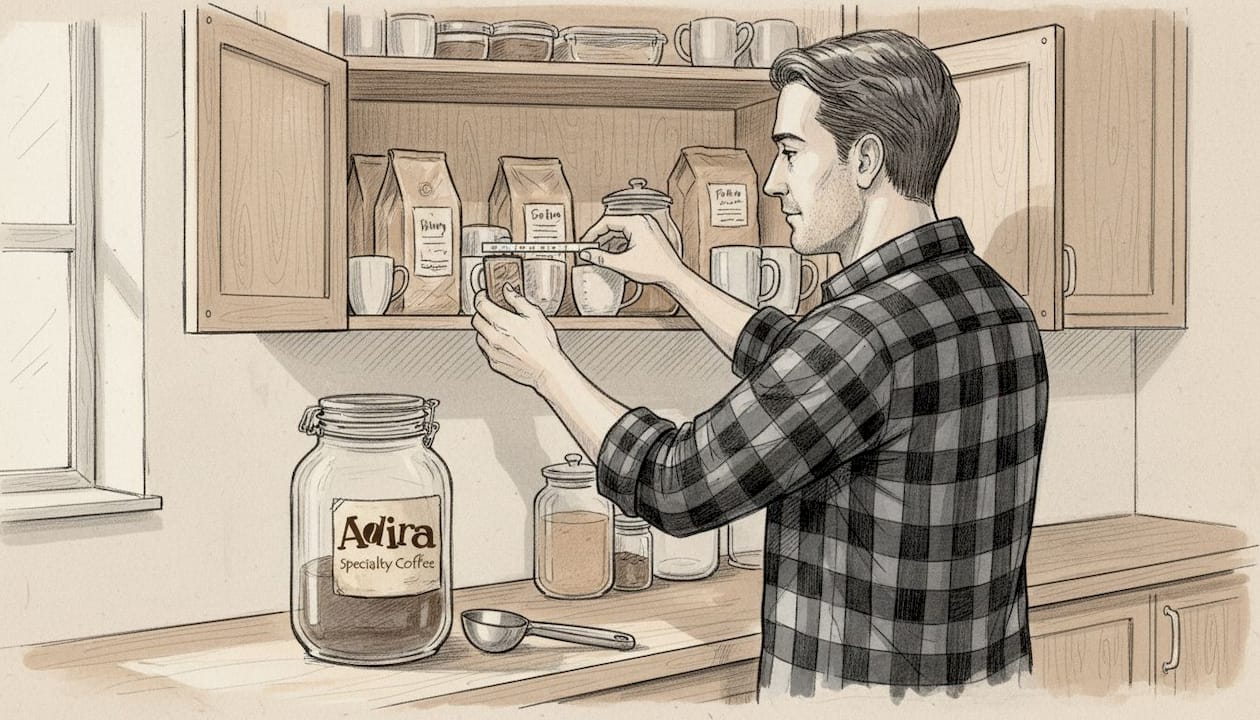
Knowing the science is one thing. Applying it daily is another. Here are the practices that make the biggest difference:
- Use airtight, valve-sealed bags or containers. One-way valve bags are ideal because they allow CO₂ to escape without admitting oxygen. Ceramic or stainless canisters with airtight lids work well for daily use.
- Keep coffee in a cool, dark place. A pantry or cabinet away from heat sources is ideal. Avoid countertops near the stove or windows.
- Skip the fridge and freezer for daily use. Condensation from temperature cycling introduces moisture, which accelerates staling. Freezing works only if you freeze in single-use portions and never refreeze.
- Grind just before brewing. The advantages of whole beans are significant. Grinding increases surface area dramatically, and packaging and proper storage can only do so much once the bean is broken down.
- Buy in smaller batches. A 250g bag consumed within two weeks beats a 1kg bag that sits open for two months.
Pro Tip: If you buy in bulk, divide your beans into smaller airtight portions immediately after opening. Keep one portion accessible and store the rest sealed. This limits how often the main supply is exposed to air.
The benefits of small batch roasting align perfectly with this approach. Smaller roast runs mean beans spend less time in inventory before reaching you, which means you start your freshness window earlier. Pair that with proper coffee grinding technique and you’re extracting the most from every bag.
Explore freshness-first coffee from Adira
At Adira Coffee, freshness isn’t a marketing claim. It’s the foundation of everything we do. We roast in small batches and ship directly to you, so your coffee arrives within days of leaving the roaster, not weeks.
We source from around 50 farms across Colombia, Ethiopia, Costa Rica, Guatemala, Brazil, and Sumatra, and every origin is selected with flavor at peak freshness in mind. When you order from Adira Coffee, you know exactly when your beans were roasted, giving you full control over your freshness window. Whether you’re pulling espresso shots or brewing a slow pour-over on a Sunday morning, you deserve coffee that’s timed to perform at its best. Browse our current offerings and experience what freshness-first roasting actually tastes like.
Frequently asked questions
How long does coffee stay fresh after roasting?
Most coffees reach peak flavor within 3 to 14 days post-roast and can remain enjoyable for 4 to 6 weeks with proper storage in a sealed, cool environment.
Does grinding coffee accelerate staling?
Yes. Grinding dramatically increases surface area, making flavor loss up to ten times faster compared to whole beans. Always grind immediately before brewing.
Is older coffee ever preferable for certain brew methods?
Some espresso enthusiasts prefer rested beans for smoother flavor and better crema. Research confirms no strong preference for fresh over matured coffee within reasonable timeframes, making the freshness window more important than absolute freshness.
What is the best storage method to maintain coffee freshness?
Airtight, valve or vacuum-sealed packaging stored in a cool, dry, dark place offers the longest preservation window and best flavor retention over time.