
TL;DR:
- Specialty coffee is scored 80 or higher on the SCA cupping protocol, evaluated by certified Q Graders.
- Quality attributes assessed include aroma, flavor, acidity, body, and overall balance during cupping.
- Traceability, ethical sourcing, and understanding origin details enhance the appreciation of true specialty coffee.
Less than 10% of global coffee production ever earns the label “specialty,” yet coffee shops and grocery shelves are packed with bags claiming premium quality. That gap between marketing language and actual standards is where most coffee lovers get lost. Specialty coffee isn’t a vibe or a price point. It’s a measurable, globally recognized classification built on rigorous scoring, defect analysis, and traceability. If you’ve ever wondered what separates a truly exceptional cup from an expensive-but-ordinary one, this guide breaks down the science, the scoring, and the real-world value of specialty coffee from bean to brew.
Table of Contents
- How specialty coffee is defined and scored
- Key attributes judged during specialty coffee cupping
- How green coffee defects impact specialty status
- Beyond the score: Traceability, ethics, and new assessment methods
- A fresh perspective: Why true specialty coffee is rarer and more rewarding than you think
- Ready to experience world-class specialty coffee at home?
- Frequently asked questions
Key Takeaways
| Point | Details |
|---|---|
| Strict scoring standards | Specialty coffee must score 80 points or higher on expert-graded criteria. |
| Defect-free beans required | Green coffee for specialty must have no primary defects, ensuring top taste and aroma. |
| Traceable and ethical sourcing | Specialty coffee values transparency in origin and support for farmers. |
| Not all specialty is equal | Low-80s specialty coffees may taste ordinary—look for higher scores and detailed sourcing. |
| Freshness and brewing matter | Enjoy specialty coffee best within weeks of roasting using precise brewing methods. |
How specialty coffee is defined and scored
With the rarity of true specialty coffee in mind, let’s break down what it actually means to be “specialty” by international standards.
Specialty coffee has a precise, non-negotiable definition. Specialty coffee scores 80 or higher out of 100 on the Specialty Coffee Association (SCA) cupping protocol, evaluated by certified Q Graders. That’s the floor. There’s no wiggle room, no brand exceptions, and no marketing shortcut that substitutes for it.
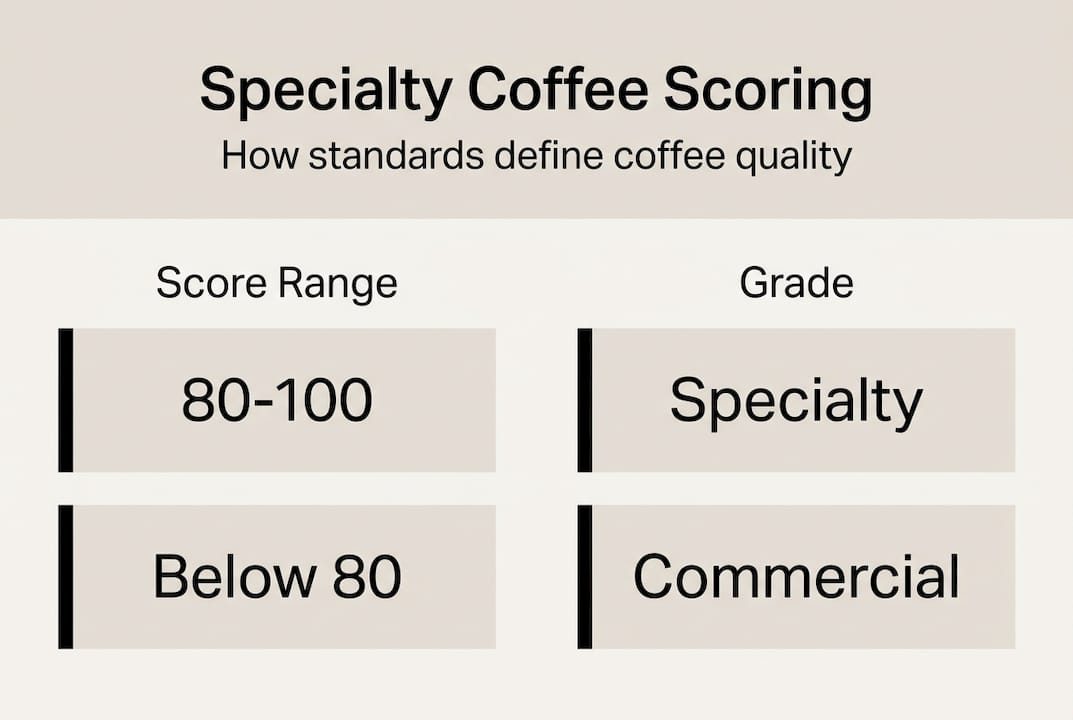
The SCA cupping protocol is a standardized tasting method where coffee is brewed in controlled conditions and evaluated across multiple sensory attributes. The SCA scoring system breaks the 100-point scale into tiers: 80 to 84.99 is “very good,” 85 to 89.99 is “excellent,” and 90 and above is “outstanding.” Most commercially available specialty coffee sits in that 84 to 87 range.
Who does the scoring matters just as much as the score itself. Q Graders are licensed professionals who pass a rigorous 20-test certification covering defect identification, triangulation exercises, and cupping calibration. It’s one of the hardest sensory certifications in the food industry, with a significant failure rate. This is what makes the grading credible.
Specialty coffee score tiers:
| Score range | Classification | What it signals |
|---|---|---|
| Below 80 | Commercial grade | Mass market, blended, inconsistent |
| 80 to 84.99 | Very good specialty | Qualifies, but may lack complexity |
| 85 to 89.99 | Excellent specialty | Clear origin character, high quality |
| 90+ | Outstanding specialty | Rare, exceptional, collector-level |
When you’re identifying quality coffee beans, understanding this tier system helps you set realistic expectations. A bag labeled specialty that scored 81 is technically correct, but it’s a very different experience from an 88-point single origin from Ethiopia.
Key facts about specialty coffee classification:
- Only 5 to 10% of global production qualifies as specialty grade
- Scoring must be done by certified Q Graders, not brand representatives
- The coffee must also pass a green (unroasted) defect exam
- Both flavor quality and physical bean quality must meet the threshold
Understanding premium coffee definitions helps clarify why “premium” and “gourmet” labels mean nothing without an actual SCA score behind them.
Key attributes judged during specialty coffee cupping
Once you know how coffee is scored, it’s essential to understand the qualities experts judge during cupping.
Cupping evaluates 10 distinct attributes: fragrance/aroma, flavor, aftertaste, acidity, body, balance, uniformity, clean cup, sweetness, and overall impression. Each attribute is scored individually, and the final number is a composite of all ten. No single attribute can carry a weak score elsewhere.
Here’s what each attribute actually measures and why it matters:
- Fragrance/Aroma: The smell of dry grounds and wet coffee. It signals origin character and roast quality.
- Flavor: The core taste experience, covering the full range from fruity to nutty to floral.
- Aftertaste: How long and pleasantly the flavor lingers after swallowing. Short or harsh aftertaste pulls the score down.
- Acidity: Brightness and liveliness in the cup. Good acidity feels crisp, not sharp or sour.
- Body: The weight and texture of coffee on your palate. Think of the difference between skim milk and whole milk.
- Balance: How well all attributes work together without one overpowering another.
- Uniformity: Consistency across multiple cups brewed from the same sample.
- Clean cup: Absence of off-flavors or fermentation taints.
- Sweetness: Natural sweetness from well-developed sugars in the bean, not added.
- Overall: The Q Grader’s holistic impression, accounting for anything not captured elsewhere.
The Q Grader certification program trains professionals to score each attribute with precision and repeatability. Two Q Graders evaluating the same coffee should land within a point or two of each other.
Knowing the types of coffee beans helps you predict which attributes will shine. Ethiopian naturals tend to score high on sweetness and aroma. Colombian washed coffees often excel in balance and clean cup.
Pro Tip: If you want to train your palate at home, focus on acidity and sweetness first. These two attributes are most noticeable when you brew specialty coffee at home using fresh, light-roasted beans. A well-dialed coffee roast profile preserves these delicate qualities better than darker roasts.
How green coffee defects impact specialty status
The final cup depends on defect-free beans. Let’s see how grading starts with green, unroasted coffee.
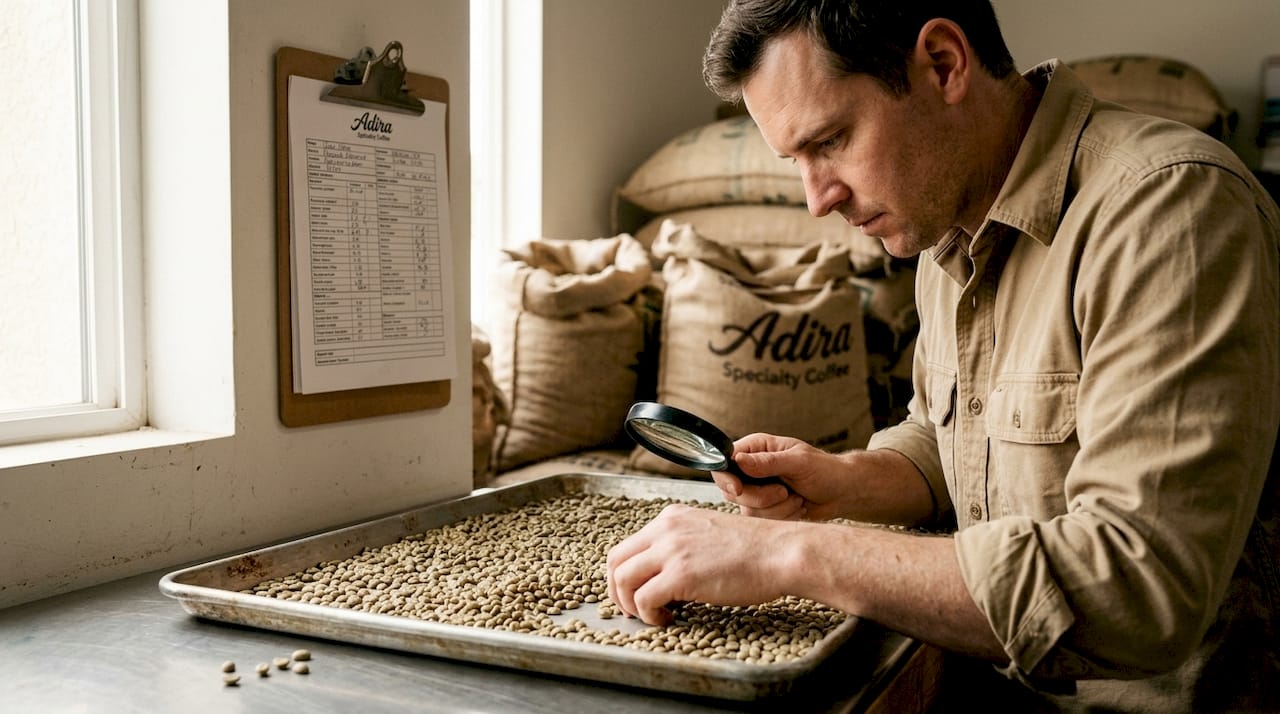
Before any cupping happens, specialty coffee must pass a physical defect exam. Specialty grade 1 requires zero primary defects and no more than 5 full defect equivalents in a 350-gram sample. This is a strict standard that most commercial coffee fails immediately.
Defects fall into two categories. Primary defects are severe faults that ruin entire cups. Secondary defects are less catastrophic but still reduce quality and consistency.
“A single full black bean, caused by overripe or diseased cherries, counts as one full primary defect and can taint every cup it touches. Specialty grade tolerates zero of these.”
Defects that instantly disqualify coffee from specialty status:
- Full black beans (over-fermented or diseased)
- Full sour beans (bacterial fermentation)
- Dried cherry or pod (processing failure)
- Fungus damage
- Foreign matter (sticks, stones, husks)
Common secondary defects include quakers (underdeveloped beans that roast unevenly), insect damage, and partial sourness. These don’t automatically disqualify a batch but quickly add up to the 5-defect limit.
Here’s how Q Graders run a standard 350-gram defect exam:
- Weigh out exactly 350 grams of green coffee
- Spread beans on a flat, well-lit surface
- Sort and identify each defect by type
- Assign full defect equivalents based on severity and quantity
- Total the count and compare against specialty grade thresholds
This is why freshly sourced, ethically farmed coffee tends to have fewer defects. Careful harvesting, selective picking, and proper processing at the farm level reduce defect rates significantly before the coffee ever reaches a grader.
When choosing coffee beans for home brewing, look for roasters who share green coffee sourcing details. Roasters who know their farms know their defect rates. That transparency is itself a quality signal. You can also learn more about common coffee defects to sharpen your eye when evaluating beans.
Beyond the score: Traceability, ethics, and new assessment methods
With defect-free beans and high flavor scores, specialty’s story doesn’t end there. Ethics and traceability complete the picture.
Specialty coffee stands apart through traceability, ethical sourcing, high-altitude Arabica cultivation, selective hand-harvesting, and a focus on terroir (the unique flavor character a specific place gives to its crops). These aren’t bonus features. They’re part of what defines the category.
In 2024 and 2025, the SCA introduced a major shift in how coffee is assessed. The Coffee Value Assessment (CVA) adds descriptive, affective, and extrinsic factors alongside traditional cupping scores. This means a coffee’s story, sustainability practices, and buyer perception now formally factor into quality evaluation, not just flavor.
For home brewers and enthusiasts, this evolution matters. It validates what many of us already feel: that knowing where your coffee came from makes it taste better. That’s not just psychology. It’s the industry recognizing that quality is contextual.
Markers of true specialty coffee worth looking for as a consumer:
- Farm or cooperative name on the bag
- Harvest season or crop year listed
- Roast date (not just a best-by date)
- Processing method (washed, natural, honey)
- Altitude and region of origin
- Importer or direct trade relationship noted
Exploring single origin coffee is one of the best ways to experience traceability firsthand. When you know the farm, the altitude, and the harvest season, the cup tells a complete story.
Pro Tip: Fresh specialty coffee brewed 2 to 4 weeks after roast reveals its true origin flavor best. CO2 is still releasing in that window, and the volatile aromatics that define origin character are at their peak. After 6 weeks, even a great 88-point coffee starts tasting flat. Use the find your coffee tool to match origin profiles to your flavor preferences.
A fresh perspective: Why true specialty coffee is rarer and more rewarding than you think
Now that you understand the science and art of specialty grading, let’s reconsider what that label truly means for coffee lovers.
Here’s something the industry doesn’t say loudly enough: not every bag that says “specialty” will blow your mind. Coffees scoring in the low 80s technically qualify, but they may lack the complexity and layered character that makes specialty worth the price premium. Technically correct isn’t the same as genuinely exceptional.
Most enthusiasts focus on the score and miss the bigger picture. The real rewards of specialty coffee come from understanding seasonality, building a relationship with a roaster who sources directly, and adjusting your brew method to match the bean’s character. An 86-point Colombian washed coffee brewed as a pour-over at the right temperature is a completely different experience than the same coffee pulled as a rushed espresso.
We’ve tasted enough coffees at Adira to know that the connection between sourcing and flavor is real and measurable. Beans from farms we’ve visited, where we know the processing method and the harvest conditions, consistently outperform anonymous specialty lots at similar score ranges.
Pro Tip: Ask your roaster for the farm name, the roast date, and the processing method before you buy. If they can’t answer all three, the “specialty” label on that bag is doing a lot of heavy lifting.
Ready to experience world-class specialty coffee at home?
If you’re inspired to taste the difference, here’s how to bring world-class specialty to your own cup.
At Adira Coffee, every bag we roast starts with beans that meet specialty grade standards and comes with the sourcing story to back it up. We work directly with around 50 farms across Colombia, Ethiopia, Costa Rica, Guatemala, Brazil, and Sumatra, so you always know where your coffee comes from.
Browse our full selection of specialty coffee beans and filter by origin, roast level, and flavor profile to find your perfect match. If you want to start with something extraordinary, our Ethiopia Natural is a standout for sweetness and aroma, or try the Ocean Blend for a balanced, approachable everyday cup. Every order ships fresh, roasted to order, so the coffee arrives at peak flavor.
Frequently asked questions
How is specialty coffee different from premium or gourmet coffee?
Specialty coffee must score 80+ on strict SCA protocols and pass a defect exam, while “premium” and “gourmet” are unregulated marketing terms with no set quality criteria.
Can a coffee labeled “specialty” taste ordinary?
Yes. Coffees in the low 80s range technically qualify as specialty but may lack the complexity and nuanced flavors that enthusiasts expect from the category.
What does traceability mean in specialty coffee?
Traceability in specialty coffee means the farm, cooperative, processing method, and harvest details are documented and shared, supporting both quality accountability and ethical sourcing.
How should I best enjoy specialty coffee at home?
Brew freshly roasted beans within 2 to 4 weeks of the roast date, using a pour-over or similar method with light-roasted beans, to highlight the unique origin flavors at their peak.