
TL;DR:
- Coffee flavor is influenced by geography, processing, and bean species, shaping taste profiles.
- Regional profiles include fruity Ethiopia, nutty Brazil, and full-bodied Sumatra, each with distinct notes.
- Choosing your ideal coffee depends on personal taste, brewing method, and understanding Arabica versus Robusta.
Choosing coffee by flavor can feel like standing in front of a restaurant menu written in a language you almost speak. You recognize words like “fruity” and “bold,” but what do they actually mean for what ends up in your cup? Here’s the thing: once you understand how geography, growing conditions, and bean type shape taste, everything clicks. Flavor profiles vary by growing region due to terroir, which includes soil, altitude, and climate. This guide walks you through how to read, compare, and choose coffee profiles so every bag you buy feels intentional, not accidental.
Table of Contents
- How to evaluate coffee flavor profiles
- Regional coffee profiles: Tastes from around the world
- Arabica vs. Robusta: Comparing flavor styles
- How to choose your best flavor profile
- A fresh perspective on exploring coffee flavor profiles
- Discover your next favorite coffee with Adira
- Frequently asked questions
Key Takeaways
| Point | Details |
|---|---|
| Taste varies by region | Different growing regions produce distinct flavor notes from floral and fruity to nutty and earthy. |
| Species impact flavor | Arabica and Robusta coffees offer unique taste experiences for every coffee lover. |
| SCA scores drive quality | Specialty coffee is scored for flavor complexity, but personal preference should guide your choice. |
| Experiment to find your favorite | Sampling coffees from various regions is the best way to discover your ideal flavor profile. |
How to evaluate coffee flavor profiles
A coffee flavor profile is essentially the full sensory picture of a coffee from first sniff to final sip. It covers four main dimensions: aroma (what you smell before and during brewing), acidity (the brightness or tartness on your palate), body (how thick or thin the coffee feels in your mouth), and finish (the taste that lingers after you swallow). Together, these dimensions tell you more about a coffee than any single descriptor like “dark” or “smooth” ever could.
When professionals evaluate coffee, they rely on the Specialty Coffee Association scoring framework. SCA scores categorize specialty coffee quality through a structured cupping process, assigning points across attributes like sweetness, uniformity, and balance. A score of 80 or above qualifies a coffee as specialty grade. Understanding this system helps you see why identifying quality coffee beans matters so much when sourcing from specific regions.
Here are the main flavor and aroma categories you will encounter when tasting specialty coffee:
- Fruity: Berries, citrus, stone fruit, tropical notes
- Floral: Jasmine, rose, lavender, hibiscus
- Nutty and chocolatey: Almond, hazelnut, dark chocolate, caramel
- Spicy and earthy: Cedar, tobacco, mushroom, leather
- Sweet: Brown sugar, honey, vanilla, molasses
These categories align closely with what buyers, roasters, and importers use to communicate about coffee lots. The more fluent you become in this language, the easier it is to predict whether a new coffee will excite your palate or disappoint it. Exploring specialty coffee standards gives you a stronger foundation for this kind of assessment.
Pro Tip: Brew two single-origin coffees from different regions side by side using the same method. The contrast makes subtle differences in acidity and body much easier to detect than tasting one coffee alone.
Regional coffee profiles: Tastes from around the world
Every coffee-growing region has a flavor personality shaped by its terroir. Soil mineral content, rainfall patterns, altitude, and post-harvest processing all leave fingerprints in the cup. The result is that flavor profiles vary by region: Ethiopia leans toward blueberry, citrus, and floral; Brazil toward nutty and chocolate; Kenya toward orange and blackcurrant; Sumatra toward spicy and earthy.
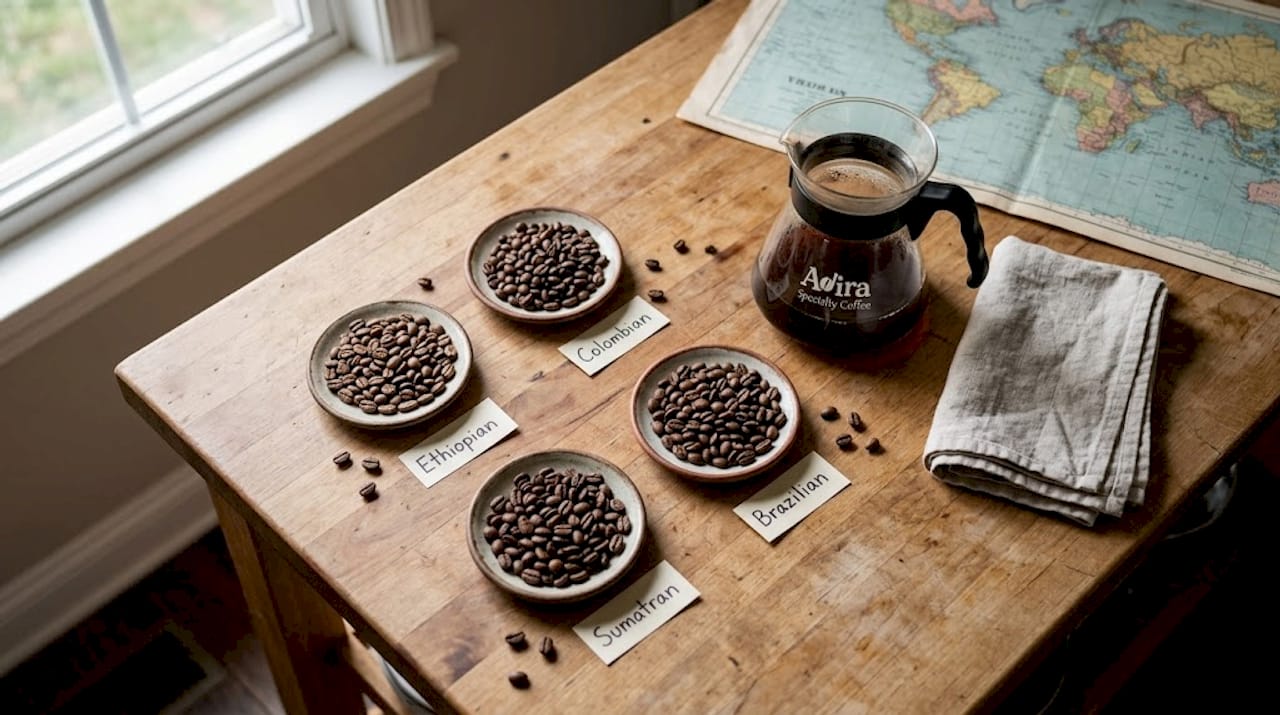
Here is a quick comparison of five major coffee origins:
| Origin | Flavor notes | Acidity | Body |
|---|---|---|---|
| Ethiopia | Blueberry, citrus, jasmine | High | Light to medium |
| Kenya | Blackcurrant, orange, tomato | Very high | Full |
| Colombia | Caramel, red apple, hazelnut | Medium | Medium |
| Brazil | Chocolate, almond, low fruit | Low | Heavy |
| Sumatra | Earthy, cedar, dark chocolate | Low | Very full |
Each of these origins attracts a different type of coffee lover. Ethiopian naturals often captivate people who enjoy wine or fruit-forward teas. Brazilian coffees appeal to espresso drinkers who want body and sweetness without sharp acidity. Exploring global coffee origins reveals just how wide the flavor spectrum really is.
Signature tasting notes by region:
- Ethiopia: Wild blueberry, lemon zest, rose water, bergamot
- Kenya: Grapefruit, blackberry, savory tomato
- Colombia: Milk chocolate, green apple, brown sugar
- Brazil: Walnut, baker’s cocoa, vanilla
- Sumatra: Wet earth, cedar, dark molasses
A coffee needs an SCA score of 80 or above to be classified as specialty grade, meaning the flavor complexity you read in those descriptors is verified, not marketing language.
Pro Tip: If you crave intensely fruity coffee, seek out natural-processed coffees from Ethiopia. The natural process, where the fruit dries around the bean, amplifies berry and stone fruit notes dramatically. You can explore Colombian coffee flavors as a gentler, balanced contrast.
Arabica vs. Robusta: Comparing flavor styles
Beyond regional origin, the species of bean fundamentally changes what ends up in your cup. Arabica and Robusta are the two dominant species, and they taste nothing alike.
Arabica accounts for the majority of specialty coffee. It grows at higher altitudes, matures more slowly, and develops complex sugars that translate into sweet, fruity, and acidic cups. You will often find notes of fruit, floral, and milk chocolate in well-grown Arabicas. Robusta, on the other hand, grows at lower elevations, has more caffeine, and produces a heavier, more bitter cup with earthy and cocoa notes.
New Robusta flavor research developed a detailed sensory lexicon using 103 descriptors from 67 samples and 49 trained graders, identifying roasted, sweet, fruity, and cocoa as core flavor clusters. This matters because it signals that Robusta is far more nuanced than its “cheap filler” reputation suggests.
| Attribute | Arabica | Robusta |
|---|---|---|
| Flavor notes | Fruity, floral, sweet | Earthy, cocoa, bitter |
| Body | Medium | Heavy |
| Acidity | Medium to high | Low |
| Caffeine | Lower | Higher |
| Complexity | High | Developing |
When to choose one over the other:
- Choose Arabica when you want nuance, brightness, and a variety of flavor notes to explore
- Choose Robusta when you want a bold, high-caffeine cup or a thick espresso base with a dense crema
- Choose a blend when you want both body and complexity in one cup
“Body and strength are not the same thing. Robusta brings physical weight to the cup. Arabica brings flavor architecture. The most interesting coffees often live at the intersection.”
Learning about types of coffee beans helps you make smarter choices as you narrow down what excites you, and using a tool like find your coffee can accelerate that discovery.
How to choose your best flavor profile
Knowing the landscape is one thing. Picking your coffee with confidence is another. A clear framework makes this much less overwhelming and a lot more fun.
Flavor preferences determine the ideal coffee region and bean selection, which means starting with your own palate is the smartest first move.
- Identify your core taste preference. Do you gravitate toward sweet and chocolatey, bright and fruity, bold and earthy, or soft and balanced? Your answer points you toward a region and processing style.
- Consider your brewing method. Pour-over and Chemex highlight acidity and floral notes, which favors Ethiopia or Kenya. Espresso and French press reward body and sweetness, which favors Brazil or Sumatra.
- Choose your origin. Match the flavor notes from the regional table to what excites your palate. Start with one region and get to know it well before moving on.
- Decide on species. If you want complexity and brightness, start with Arabica. If you want strength and density, explore specialty Robusta or blends.
- Revisit your preferences. Palates change. A coffee you dismissed six months ago might be exactly what you crave today.
Aligning flavor type to classic preferences:
- Chocolatey and nutty: Go for Brazil or Guatemala
- Bright and fruity: Go for Ethiopia natural or Kenya
- Earthy and full-bodied: Go for Sumatra
- Balanced and approachable: Go for Colombia or Costa Rica
Understanding coffee farm practices reveals how processing decisions at the source shape these flavor categories before the coffee even reaches a roaster.
Pro Tip: Order sample sizes or small bags from several single-origin coffees, brew them using the same method on the same day, and take brief notes. Three tastings is usually enough to identify patterns in what you love.
A fresh perspective on exploring coffee flavor profiles
Here is something worth saying out loud: the boundary between “premium” Arabica and “basic” Robusta is disappearing, and that is genuinely exciting. For years, specialty coffee culture treated Robusta as a shortcut, a cheap way to add caffeine and crema without adding character. That framing is outdated.
Climate change is already forcing coffee farmers to experiment with more heat-tolerant varieties, and expanding Robusta through a specialty lens is becoming a serious conversation in coffee circles. The flavor lexicon for Robusta now rivals Arabica in complexity. That changes the game for anyone paying attention.
At Adira, we think the more interesting question is not “what scores highest?” but “what surprises you?” The evolving specialty standards conversation is worth following, but never let a score replace your own reaction to a cup. The best coffee for you is the one that makes you pause mid-sip. Flavor discovery is an ongoing process, not a destination, and the most rewarding exploration happens when you let curiosity lead.
Discover your next favorite coffee with Adira
Ready to taste the difference that origin and sourcing make? At Adira Coffee, every bag is roasted in small batches and shipped at peak freshness so the flavor notes you read about actually land in your cup.
If you loved the fruity and floral profiles from this guide, start with our Ethiopian natural coffee, which delivers wild berry and citrus in every brew. For a smooth, caramel-forward balance, our Colombian specialty coffee is a great match. And if you want bright acidity with a clean finish, the Costa Rican single-origin is worth exploring. We work directly with around 50 farms across renowned origins so you can taste what great sourcing actually means.
Frequently asked questions
What factors influence a coffee’s flavor profile?
A coffee’s flavor is shaped by its origin, bean variety, processing method (washed, natural, or honey), and roast level. Terroir including soil and altitude creates the flavor foundation before roasting even begins.
How do I identify my preferred coffee flavor profile?
Taste coffees from three or four different regions and note which descriptors excite you most, whether that is fruity, nutty, chocolatey, or earthy. Your pattern of reactions over several sessions is more reliable than any single tasting.
Does specialty coffee always taste better than regular coffee?
Specialty coffee is typically more complex and traceable due to strict quality controls, and SCA scores categorize that quality objectively. That said, personal preference is always the final judge.
Are Arabica or Robusta beans better for strong flavor?
Robusta beans are stronger, more bitter, and higher in caffeine, while Arabica is known for sweetness and layered complexity. “Strong” depends on whether you mean intensity or depth, because they deliver very different experiences.
Recommended
- Explore the main types of coffee beans for every taste – Adira Coffee US
- Roasting Profiles: How They Transform Specialty Coffee – Adira Coffee US
- What is coffee roast profile? A 2026 guide for enthusiasts – Adira Coffee US
- Find Your Coffee – Adira Coffee US
- 7 Flavored Coffee Advantages Every Eco Drinker Should Know – EcoVibe Roast