
TL;DR:
- The origin of coffee significantly influences its flavor, processing method, and ethical sourcing standards. Exploring diverse regions like Ethiopia, Kenya, Sumatra, and emerging countries reveals unique taste profiles and sustainability benefits. Balancing personal taste preferences with ethical considerations helps enthusiasts select the best coffee for their palate and values.
Walking into a specialty coffee shop or browsing online, you’re hit with dozens of origins, each promising something extraordinary. Ethiopia. Kenya. Sumatra. Colombia. The list keeps growing, and picking one that delivers both exceptional flavor and ethical sourcing can feel genuinely overwhelming. But here’s the thing: the origin of your coffee shapes everything from the first aroma to the final sip. Understanding how geography, processing, and farming practices converge gives you a real edge when building your coffee repertoire. This guide cuts through the noise and gives you a clear path to discovering origins that will genuinely excite you.
Table of Contents
- How to choose coffee origins to try
- Top coffee origins to try for an exceptional cup
- Flavor and origin comparison table
- Single origin or blend: What should you try?
- Why your next favorite coffee might surprise you
- Experience exceptional coffee origins with Adira Coffee
- Frequently asked questions
Key Takeaways
| Point | Details |
|---|---|
| Origins shape flavor | The region and processing method deeply influence every cup’s aroma and taste. |
| Ethics matter | Certified or direct-trade coffees support both quality and sustainability. |
| No single ‘best’ | Exploring different origins is key because taste preferences are personal. |
| Emerging regions excite | New coffee producers and rare varieties offer adventurous options for enthusiasts. |
| Choose for your method | Pairing brewing style with origin enhances the coffee experience. |
How to choose coffee origins to try
Before you spend money on a bag you might not love, it helps to know what actually separates one origin from another. The answer isn’t just geography. It’s a mix of flavor mechanics, processing choices, altitude, and farming values that create a complete picture.
Flavor profile and processing methods
The way coffee is processed after harvest has an enormous impact on what ends up in your cup. Washed coffees produce clean, bright acidity, as seen in Colombia and Kenya, while natural and anaerobic methods create the fruity intensity you find in Ethiopian lots. Wet-hulled processing, unique to Sumatra, produces that earthy, full-bodied character that loyal fans can’t get enough of. Altitude plays a big role too: beans grown above 1,500 meters tend to develop more acidity, complexity, and nuanced sweetness because the slower maturation allows sugars and acids to develop more fully.
Key criteria to evaluate before buying:
- Acidity: Do you prefer a bright, citrusy cup or something low-key and smooth?
- Body: Light and tea-like? Heavy and syrupy? This narrows your origin choices significantly.
- Processing method: Washed for clarity, natural for fruitiness, wet-hulled for earth.
- Altitude: Higher grown often means more complexity.
- Brewing compatibility: Some origins shine as pour-overs; others perform best in French press or espresso.
Ethics and certifications
Sourcing ethics are no longer optional for serious coffee drinkers. Fair Trade, Organic, Rainforest Alliance, and Regenerative Organic certifications signal that farms meet standards for fair pay, environmental responsibility, and long-term sustainability. Direct trade relationships, where roasters work face-to-face with farmers, often deliver even higher quality and greater transparency than third-party certification alone. When you prioritize certified or direct trade coffees, you’re voting for a supply chain that rewards farmers fairly and protects ecosystems.
Pro Tip: When you’re just starting to explore origins, try choosing coffee beans based on your primary brewing method first, then layer in flavor preferences from there. This prevents the frustration of buying a delicate Ethiopian natural for a Moka pot and wondering why it tastes flat.
With these selection criteria in mind, let’s explore the most intriguing coffee origins and what makes each one stand out.
Top coffee origins to try for an exceptional cup
The world’s finest coffee regions each bring something genuinely irreplaceable to the table. Here’s a deep look at the origins that consistently reward curious drinkers, and the ones that deserve more of your attention.
Ethiopia
Ethiopia is coffee’s ancestral homeland, and it still produces some of the most remarkable flavor diversity on the planet. Yirgacheffe beans bring jasmine, bergamot, and citrus notes in a delicate, tea-like body. Sidama lots lean into berry sweetness with a clean, lingering finish. Harrar, grown in the eastern highlands, offers wine-like fermented fruit that polarizes and captivates. All three regions share a bright acidity that makes Ethiopian coffee particularly spectacular as a pour-over or Chemex brew. The aromatics bloom beautifully with a slower brew method that lets every layer open up.
Kenya
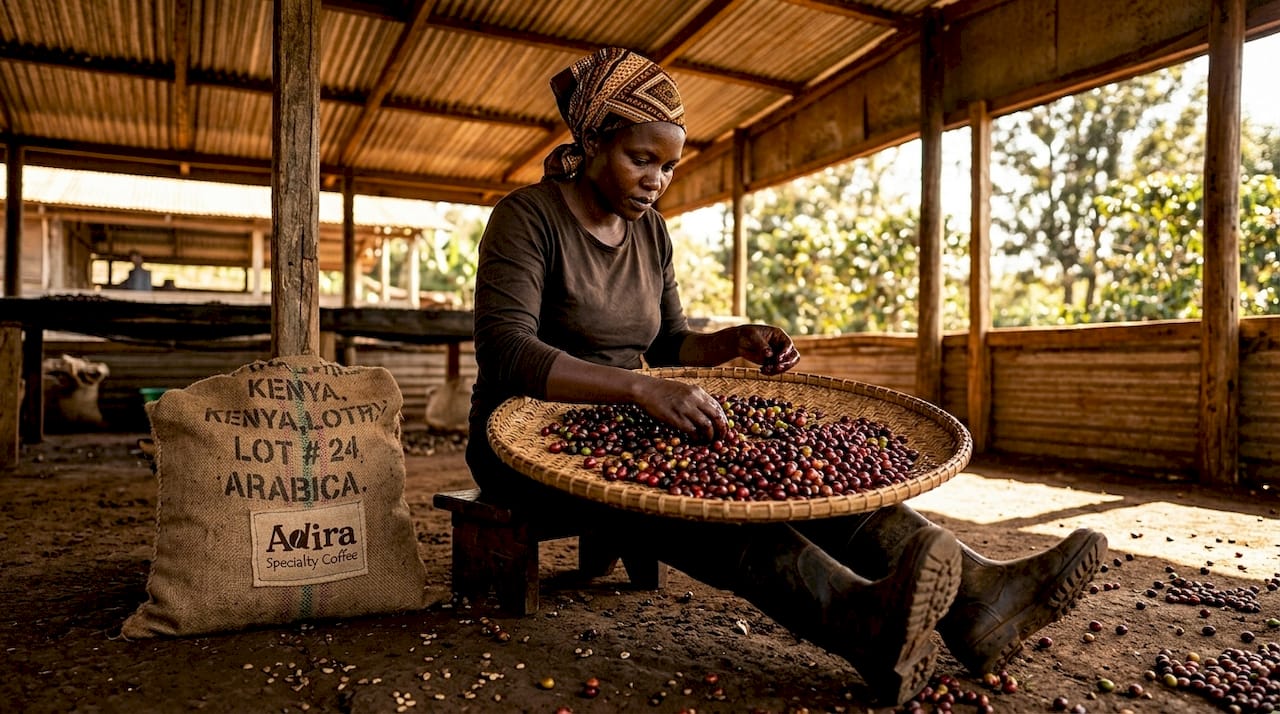
Kenya is the overachiever of the coffee world. Kenya AA-grade beans deliver wine-like acidity, with notes of blackcurrant, grapefruit, and tomato supported by a full, satisfying body. These flavors are partly the result of Kenya’s double-washing process, which strips away fruit skin and mucilage meticulously, and partly the volcanic red soil of the Central Highlands. Kenyan coffee is priced at a premium for a reason: the flavor complexity per cup is exceptional. It works beautifully as an espresso for those who want acidity and depth in a concentrated format, or as a pour-over for the full aromatic experience.
Sumatra
If Ethiopia is the bright-eyed dreamer, Sumatra is the wise elder. Sumatra Mandheling beans go through wet-hulled processing, locally called Giling Basah, which strips the parchment while the bean is still at high moisture content. This produces a distinctively earthy, low-acid, full-bodied cup with notes of dark chocolate, tobacco, and cedar. It’s a coffee that shrugs off milk and cream instead of being buried by them. French press and cold brew methods suit Sumatran beans perfectly, letting that deep body come through without over-extracting the earthier compounds.
Colombia and Central America
Colombia earns its crowd-favorite status through sheer consistency. The washed processing method, combined with altitudes between 1,500 and 2,000 meters, produces a balanced, medium-bodied cup with caramel sweetness, mild citrus, and a clean finish. It’s the coffee origin that rarely offends and frequently delights. Guatemala and Costa Rica add a nutty, sweet complexity with notes of brown sugar, almond, and bright stone fruit. These top coffee growing regions represent the “gateway drug” of specialty coffee: approachable enough for everyday brewing, complex enough to keep experienced palates interested.
Emerging origins: Thailand, Sri Lanka, and Liberica
Here’s where things get genuinely exciting. Most coffee lovers overlook Asia’s emerging specialty scene, but that’s changing fast. Thailand and Sri Lanka are producing beans that compete at specialty grade, driven by younger farmers experimenting with processing methods borrowed from established origins. And then there’s Liberica, a distinct coffee bean type so rare that most drinkers have never encountered it. When Liberica lots score in the 90s, which does happen, the flavor profile is unlike anything Arabica or Robusta can offer: floral, smoky, almost woody. These origins reward the adventurous.
“There is no single best coffee origin. What counts as exceptional is shaped entirely by your palate. Africa delivers brightness and florals. Colombia and Central America give you balance and sweetness. Asia brings depth and earth. The best strategy is intentional exploration across all three.” — coffeefuze.com
Ethical highlights by origin:
- Ethiopia: Look for cooperatives and washing stations with Fair Trade or direct trade agreements.
- Kenya: Many top lots come from small-holder farmer cooperatives certified by the Kenya Coffee Cooperative.
- Sumatra: Seek Organic certifications to ensure sustainable land practices in high-deforestation risk zones.
- Colombia: Direct trade relationships offer the most traceability and fair pricing for farmers.
Pro Tip: If you want to understand how espresso bean origins shape the flavor of your shot, pull the same espresso recipe with a Colombian and a Kenyan bean side by side. The difference will permanently change how you think about origin selection.
Having explored individual origins, let’s compare their profiles side by side to simplify your decision.
Flavor and origin comparison table
This quick-reference table gives you the most important facts at a glance so you can match your next purchase to exactly what you’re looking for.
| Origin | Processing method | Key flavor notes | Best brew method | Ethical highlight |
|---|---|---|---|---|
| Ethiopia | Natural / washed | Jasmine, bergamot, berry, citrus | Pour-over, Chemex | Cooperative direct trade |
| Kenya | Double-washed | Blackcurrant, grapefruit, tomato | Espresso, pour-over | Small-holder cooperatives |
| Sumatra | Wet-hulled | Dark chocolate, tobacco, cedar | French press, cold brew | Organic certifications |
| Colombia | Washed | Caramel, mild citrus, clean | Drip, espresso, any | Direct trade, Rainforest Alliance |
| Guatemala | Washed | Brown sugar, almond, stone fruit | Drip, pour-over | Fair Trade cooperatives |
| Costa Rica | Washed / honey | Honey, red apple, bright acidity | Pour-over, drip | Micro-mills, sustainable farms |
| Thailand | Washed / natural | Floral, tropical fruit, light body | Pour-over | Emerging specialty |
| Liberica | Natural | Smoky, floral, woody | French press | Rare, limited supply |
The key takeaway: washed processing delivers clean, bright acidity across Colombia and Kenya, while natural and wet-hulled methods push into richer, more complex territory. If you’re working with a specific brew method, let that column guide your first pick. From there, let taste preferences and ethical priorities narrow your final choice. Digging deeper into coffee flavor profiles can help you match origins to your existing taste preferences with more precision.
With this side-by-side view in mind, let’s answer when to try single origins versus thoughtfully crafted blends.
Single origin or blend: What should you try?
This is one of the most common questions from coffee lovers moving beyond their default grocery store bag, and the answer depends entirely on what you want from your morning cup.
When single-origin makes sense:
- You want to taste a specific region’s character without interference.
- You’re brewing pour-over or Chemex, where clarity and nuance matter most.
- You’re curious about traceability: who grew this, on which farm, at what altitude.
- You’re exploring how different origins respond to the same brew recipe.
When a blend is the smarter choice:
- You drink milk-based drinks like lattes or flat whites, where a blend holds up better to milk sweetness.
- You want consistency across every bag you buy, regardless of seasonal harvest variation.
- You’re pulling espresso at home and need a forgiving recipe that doesn’t fall apart with slight grind adjustments.
- You want a well-rounded daily driver that doesn’t require much thinking.
As coffee experts consistently note, single-origin coffees excel for exploration, while blends deliver consistency. Both approaches have real value, and the most experienced drinkers keep both in rotation. The single origin coffee guide covers this topic in more depth if you want to go further. Alternatively, a well-designed Love Blend can demonstrate exactly how different origins complement each other when combined thoughtfully.
Pro Tip: Buy a single-origin Ethiopian and a balanced blend at the same time. Brew both as a pour-over on the same morning and take notes. The contrast teaches you more about flavor and origin than any article can.
Now that you know your options, here’s our expert perspective and what most articles won’t tell you about the search for world-class coffee origins.
Why your next favorite coffee might surprise you
Here’s an opinion you don’t hear often enough: the coffee world’s obsession with Ethiopia, Kenya, and Colombia is real, deserved, and also slightly limiting. Those origins are exceptional. We work with farms from several of them. But the most exciting thing happening in specialty coffee right now isn’t happening in those places.
The specialty coffee boom in countries like Thailand is evidence of a real structural shift. Climate change is shrinking the traditional Bean Belt, the narrow equatorial band where coffee has historically grown. This is creating pressure, but also opportunity. Farmers in higher-altitude pockets of Thailand and Sri Lanka are finding that their microclimates can produce beans that score at specialty grade. Some Liberica lots have hit 92 points. The flavor experiences are genuinely unlike anything a classic origin offers.
The deeper point is this: if you approach origin exploration with a fixed hierarchy, Ethiopia at the top, Sumatra for heavy days, Colombia as the default, you’ll miss the coffees that could actually change your perspective. The best way to understand how farming practices define flavor is to try coffees from farms you’ve never heard of.
Ethically, the case for exploring emerging origins is even stronger. Your purchase directly supports farmers who are building specialty infrastructure from scratch, often without the established cooperative systems that Kenya and Ethiopia benefit from. That’s a meaningful impact that goes beyond the cup.
The conventional wisdom about “best” origins exists because those origins are reliably excellent. But reliability is different from revelation. Give yourself permission to be wrong about what you think you prefer. The best cup you’ve ever had probably hasn’t found you yet.
Experience exceptional coffee origins with Adira Coffee
If this exploration has you ready to taste rather than just read, that’s exactly where we want to help. At Adira Coffee, we source directly from about 50 farms across the origins we’ve covered here, and we roast in small batches in California so every bag ships at peak freshness.
Our Colombian single origin is a perfect starting point: bright, balanced, and sourced with full traceability from farms we know by name. If you’re drawn to Central America’s honey-sweet complexity, our Costa Rican coffee delivers exactly that. Every origin we carry meets our ethical sourcing standards, covering fair pay, sustainable farming, and transparency at the farm level. Head to Adira Coffee to explore the full lineup and find the origin that speaks to what you love in a cup.
Frequently asked questions
What is the difference between single-origin and blend coffee?
Single-origin coffee comes from one region or farm, showcasing its unique and traceable flavor character, while a blend combines beans from multiple origins to achieve balanced consistency across every bag.
Which coffee origin is best for beginners to try first?
Colombia and Central American origins are ideal starting points because their balanced, approachable profiles suit most palates and brew methods without requiring much adjustment.
How do ethical certifications impact coffee quality?
Certifications like Fair Trade and Organic confirm responsible sourcing and fair pay for farmers, though they reflect supply chain ethics rather than a guaranteed improvement in cup flavor.
Are emerging regions like Thailand or Sri Lanka worth trying?
Yes. These origins are now producing specialty-grade beans that offer genuinely unique flavor profiles not found in classic growing regions, making them exciting finds for adventurous drinkers.
Does altitude really affect coffee flavor?
Absolutely. Beans grown above 1,500 meters develop more slowly, which concentrates sugars and acids, resulting in brighter acidity, greater complexity, and more nuanced sweetness in the final cup.
Recommended
- Explore the Best Coffee Flavor Profiles for Every Taste – Adira Coffee US
- How Coffee Farms Define Flavor: Practices That Impact Quality – Adira Coffee US
- Espresso bean origins: flavor, farming, and global farms – Adira Coffee US
- Peak Flavor Coffee: Optimal Timing for Specialty Brews – Adira Coffee US
- How to select coffee beans for great home brewing flavor – Tri Crow Coffee