
TL;DR:
- Peak flavor in coffee occurs when beans have released most CO2, typically days 7-14 after roasting.
- Storage, roast level, and tasting help identify the optimal time to brew for the best flavor.
- Brewing outside the peak window results in uneven extraction, flat taste, or overly harsh flavors.
Most people assume the freshest coffee is the best coffee. Pull a bag off the roaster, grind it immediately, and you should get the most vibrant cup possible, right? Not quite. Peak flavor coffee refers to the optimal period after roasting when beans deliver the most balanced, aromatic, and flavorful cup, and that window rarely opens on day one. Understanding when your beans are truly ready, and how to brew within that window, is what separates a good cup from an exceptional one. We’ll cover what peak flavor means, how long it lasts by roast type, how it affects your brewing, and what you can do at home to consistently catch your beans at their best.
Table of Contents
- What is peak flavor coffee?
- How long is the peak flavor window?
- Why does peak flavor matter for brewing?
- How to identify and preserve peak flavor at home
- A fresh perspective: What most guides get wrong about peak flavor
- Explore peak flavor with Adira Coffee
- Frequently asked questions
Key Takeaways
| Point | Details |
|---|---|
| Peak flavor window | Coffee is most balanced and aromatic 7-14 days post-roast, not immediately after roasting. |
| Timing matters | Brewing during the peak window delivers superior extraction, flavor, and aroma. |
| Roast level effects | Dark, medium, and light roasts have different peak windows and flavor longevity. |
| Storage tips | Keep beans airtight, cool, and away from light to maximize peak flavor. |
| Taste experimentation | Cupping your coffee across the first two weeks post-roast helps you discover your personal flavor sweet spot. |
What is peak flavor coffee?
Peak flavor isn’t a buzzword. It’s a real, measurable phase in a coffee bean’s post-roast life where everything clicks: aroma, sweetness, acidity, and body hit their collective high point. Before that window opens, the beans are still too volatile. After it closes, slow chemical decay sets in.
The reason just-roasted beans aren’t always ideal comes down to a process called degassing. Immediately after roasting, beans release CO2, a byproduct of the roasting reaction. This gas escapes from the bean’s cell structure and, when you try to brew before it’s mostly gone, it physically repels water. The result is uneven saturation, a bloated brew bed, and flavors that taste sharp or hollow rather than clean and developed.
Once degassing slows, flavor compounds become accessible and stable. Peak flavor is the optimal period after roasting when beans deliver the most flavor, usually once CO2 degassing is complete and before oxidation dulls aromatics. Think of it like a fruit ripening. Unripe fruit is technically fresh but not enjoyable. Overripe fruit was once perfect but is now past its moment. Coffee follows the same arc.
Flavor development across the first two weeks post-roast follows a distinct curve. Early days bring bright but sometimes harsh notes. The middle period delivers layered complexity. The tail end starts to flatten as oxygen slowly breaks down the volatile compounds responsible for aroma and sweetness. You can learn more about how farms define coffee flavor at the source level, which puts this post-roast chemistry in fuller context.
Here are the main chemical stages that influence where your coffee lands on the flavor curve:
- CO2 saturation phase (days 1-3): High gas pressure disrupts extraction and mutes flavor clarity
- Degassing plateau (days 4-7): Gas release slows, allowing water to access flavor compounds more evenly
- Peak expression (days 7-14): Volatile aromatics are stable, oils are intact, sweetness and acidity are balanced
- Oxidation onset (days 14-30+): Oxygen exposure breaks down aromatic compounds, flavor becomes flat and papery
- Stale phase (30+ days): Muted, one-dimensional cup with little complexity remaining
Tracking where your beans sit on this coffee freshness curve is one of the simplest upgrades you can make to your home brewing. The impact on freshness and coffee flavor quality is significant enough that even small timing adjustments produce noticeable results.
“Beans freshly roasted are exciting, but patience brings out the true depth and complexity of your cup.”
How long is the peak flavor window?
With a scientific foundation set, it’s important to pin down when coffee is at its absolute best. The answer isn’t the same for every bag, because roast level dramatically changes how quickly beans move through the flavor curve.
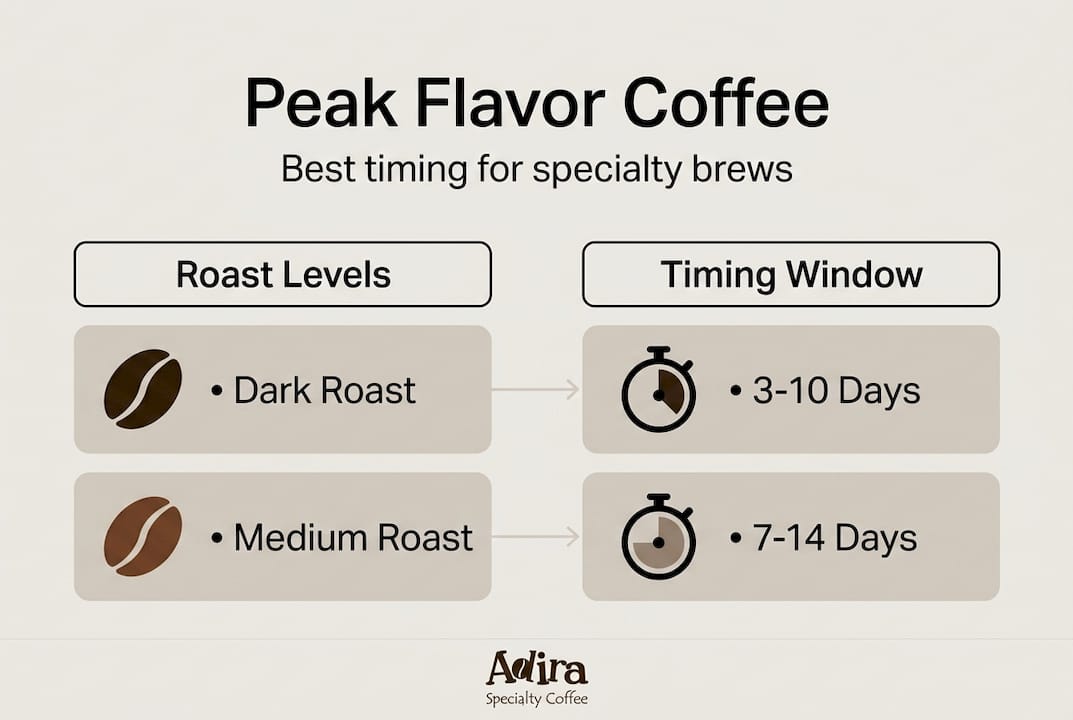
Dark roasts go through more intense heat, which accelerates the breakdown of cell structure and speeds up both degassing and oxidation. They hit their peak faster and fall off quicker. Light roasts are denser, retain more of their original chemical complexity, and take longer to fully degas. They reward patience more than dark roasts do.
| Roast level | Peak flavor window | Notes |
|---|---|---|
| Dark roast | Days 3-10 post-roast | Fast degassing, shorter window |
| Medium roast | Days 5-14 post-roast | Balanced window, most forgiving |
| Light roast | Days 7-21 post-roast | Slower degassing, longer window |
According to peak flavor data, dark roasts peak between days 3 and 10, mediums between 5 and 14, and light roasts between 7 and 21 days after roasting. The general consensus for specialty coffee places most peak windows between 7 and 21 days, though many roasters and baristas put the sweet spot firmly at days 7 to 14 for the majority of single origins and blends.
Key stat: For most specialty coffees, days 7-14 post-roast represent the highest probability window for peak flavor expression.
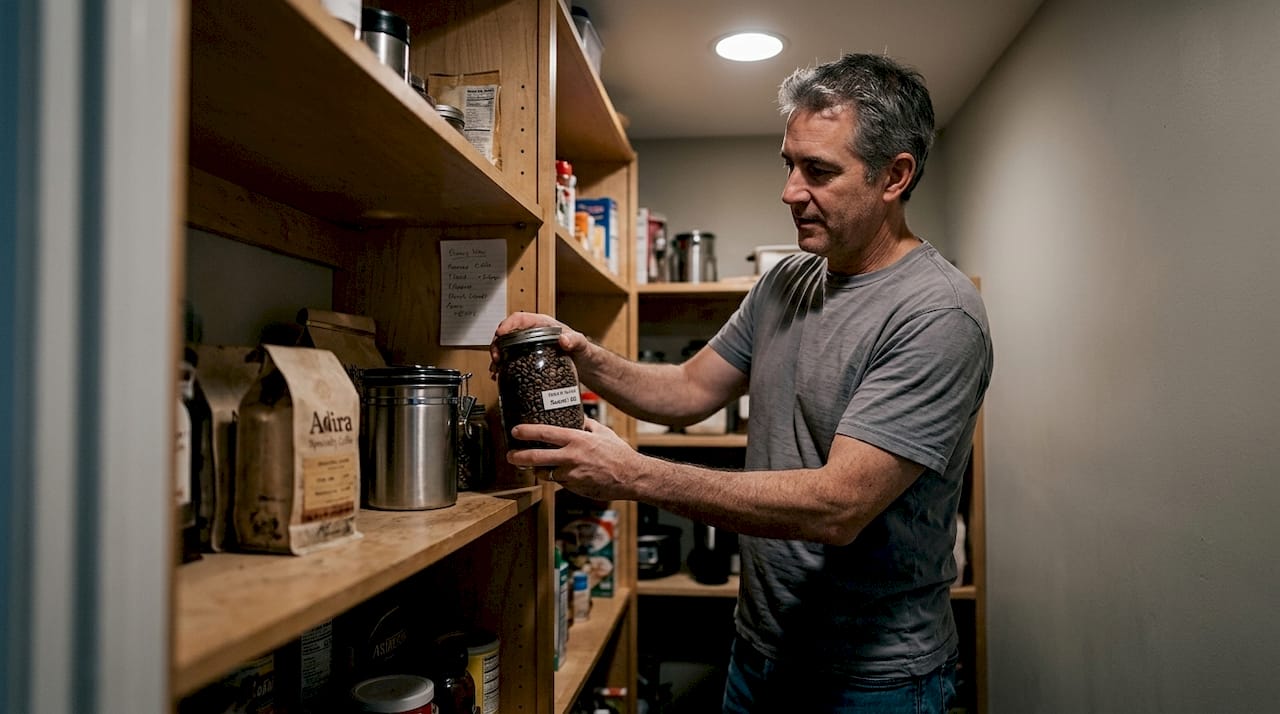
Storage conditions push or compress this window. Beans kept in an airtight container away from heat and light will hold their peak longer than beans left in an open bag near a warm stovetop. Some specialty roasters and home enthusiasts report beans staying vibrant for close to 30 days under truly ideal storage, though this is the exception rather than the rule.
One thing worth challenging: the “best by” date on supermarket bags tells you almost nothing useful. Those dates are often set 12 months out from roasting and measure shelf stability, not flavor quality. Always use the roast date as your reference. If there’s no roast date on the bag, that’s already a red flag.
For dark roast flavor tips and a detailed medium roast guide, understanding your specific roast type makes timing much more intuitive. You can also check out how long coffee stays fresh for a broader look at freshness variables.
Why does peak flavor matter for brewing?
Knowing the timing, let’s see why brewing at peak makes such a difference in the cup. It comes down to extraction: how evenly and completely water pulls flavor compounds from the ground coffee.
Beans outside their peak create real problems. Too-fresh coffee releases CO2 during brewing, which pushes water away from grounds unevenly. In espresso, too-fresh beans cause channeling and excess bloom, making it nearly impossible to dial in a consistent shot. In filter brewing, you get an exaggerated bloom that can leave some grounds under-extracted. Over-aged beans have the opposite problem: their cell walls are weakened and they extract too quickly, producing thin, bitter cups with no aromatic lift.
Here’s how brewing outcomes shift based on where your beans sit:
| Timing | Espresso result | Filter result |
|---|---|---|
| Too fresh (days 1-3) | Gassy, channeled, inconsistent | Over-bloomed, uneven saturation |
| At peak (days 7-14) | Stable, layered, dialed-in | Clean, balanced, nuanced |
| Past peak (30+ days) | Flat, thin, no crema | Dull, muted, one-note |
Here are three ways peak flavor specifically changes your brewing experience:
- Espresso extraction stability: Peak-window beans give you consistent flow rate and pressure, making grind adjustments meaningful rather than chasing a moving target caused by excess gas.
- Filter clarity and sweetness: Water moves through properly degassed grounds evenly, pulling sweetness and acidity in proportion rather than over-extracting some areas and under-extracting others.
- Grind consistency: Peak beans grind more predictably. Too-fresh beans can behave differently under the burrs due to internal gas pressure, while stale beans crumble inconsistently.
The SCA extraction standards define target extraction yield at 18-22% and total dissolved solids at 1.15-1.35%, but these benchmarks assume properly aged beans. Beans outside the peak window make hitting those targets much harder regardless of your technique.
Pro Tip: If you can’t wait for full degassing on espresso, use pre-infusion. A 5-10 second low-pressure pre-infusion lets gas escape before full extraction pressure kicks in, which softens the impact of brewing too-fresh beans.
For choosing beans for peak flavor and grinding for best flavor, both choices compound the benefits of good timing. You can also read more about extraction explained to see how chemistry connects to cup quality.
How to identify and preserve peak flavor at home
Fine-tuning brewing is important, but equally crucial is knowing how to make the most of peak flavor at home. The first step is reading the bag correctly. Look for a roast date printed clearly, not just a “best by” date. Count forward from there using your roast type as a guide.
Here are the signs that tell you where your beans stand:
- In peak: Strong bloom when you pour hot water, vibrant aroma when you open the bag, sweet and complex flavor with clear acidity and finish
- Pre-peak: Aggressive bubbling during bloom, slightly harsh or sharp flavor, notes that don’t quite resolve
- Past peak: Little to no bloom, flat or papery aroma, muted flavor with no distinct finish, possible rancid or cardboard-like notes
Storage matters as much as timing. The enemies of peak flavor are air, heat, and light. Keep your beans in an airtight container, away from direct sunlight, and at room temperature or slightly below. Avoid the refrigerator: condensation cycles damage the beans’ surface and accelerate staling. A ceramic or stainless canister with a one-way valve is ideal.
Why does pre-ground coffee stale faster? Ground coffee has dramatically more surface area exposed to oxygen. Where a whole bean might hold its peak for 10-14 days, ground coffee can go flat in 20-30 minutes if left open. Whole bean coffee is always superior for this reason, and you can dive deeper into storing coffee beans for a complete approach.
Pro Tip: Buy in smaller quantities every 1-2 weeks rather than stocking up. Open only what you’ll use in the next few days and grind right before brewing. This single habit keeps you in the peak window consistently without any other changes.
The “best by” myth on supermarket bags is worth repeating: those dates assume the bag is sealed and stored perfectly. They tell you the product is safe, not that it tastes good. For specialty coffee, roast date and freshness are the only real indicators of quality. Learning to identify fresh coffee by sensory cues is faster and more reliable than reading any printed label.
A fresh perspective: What most guides get wrong about peak flavor
Most peak flavor guides hand you a date range and call it done. Days 7-14, and you’re good. But exact peak varies by bean, processing method, and storage conditions, which means no universal date applies to every bag you’ll ever buy.
A naturally processed Ethiopia behaves differently than a washed Guatemala even if both are medium roasts with the same roast date. Home humidity, container quality, and even how often you open the bag shift the timeline. Treating peak flavor as a fixed window means you’ll sometimes miss it entirely while feeling confident you haven’t.
The real approach is tasting, not calculating. Brew a small cup every other day starting around day 5. Notice when sweetness sharpens, when the finish lengthens, when aromas come into focus. That’s your peak, for that specific bag, in your specific environment. No guide can give you that. Only your palate can.
Pro Tip: Keep a simple cupping log. Note the roast date, your brewing method, and a few flavor impressions every other day for the first two weeks. After a few bags, you’ll spot patterns specific to your storage habits and taste preferences. This is how real enthusiasts dial in their sweet spot, not by following a formula.
Holding whole bean coffee for better flavor until the right moment and tasting with intention gives you far more control than any chart.
Explore peak flavor with Adira Coffee
Ready to experiment with your own peak flavor experience? Here’s where to start.
At Adira Coffee, every bag ships with a clear roast date so you know exactly where you stand on the flavor curve. We roast in small batches to order, which means your Adira Coffee beans arrive with the full peak window ahead of you, not behind you. That’s not a coincidence. It’s the whole point.
If you want to taste what a true peak flavor experience feels like, start with our Ethiopia Natural beans, which express stunning fruit-forward complexity right in that 7-14 day sweet spot. Or try the Ocean Blend for a balanced, crowd-pleasing cup that rewards you across a generous flavor window. Either way, you’ll have everything you need to put what you’ve learned into practice, starting with genuinely fresh coffee.
Frequently asked questions
How do I know when my coffee has reached peak flavor?
Check the roast date and start tasting between days 5 and 14. A balanced, vibrant cup with clear sweetness, distinct aroma, and a clean finish signals you’ve hit the peak window.
Does peak flavor differ for dark, medium, and light roasts?
Yes. Dark roasts peak earliest at days 3-10, mediums fall between 5-14 days, and light roasts take the longest with a window of 7-21 days due to slower degassing.
Can I store coffee longer to extend its peak?
Airtight, cool, dark storage can help, but oxidation still degrades flavor meaningfully after about 2-3 weeks. Storage slows the process but doesn’t stop it.
What happens if I brew coffee that is too fresh?
Excess CO2 still in the bean causes aggressive bloom and uneven extraction. Degassing issues show up as channeling in espresso and inconsistent saturation in filter brewing.
Why does my coffee taste flat after a month?
After 3-4 weeks, oxidation dulls aromatics and breaks down the volatile compounds responsible for sweetness and complexity, leaving a muted, one-dimensional cup with little finish.
Recommended
- Expert coffee brewing tips for better flavor at home – Adira Coffee US
- How to brew specialty coffee at home: a precise guide – Adira Coffee US
- How to choose coffee beans for the perfect brew in 2026 – Adira Coffee US
- Coffee blends: Master flavors & brewing techniques – Adira Coffee US
- Coffee Making – Autoryzowany dystrybutor i serwis Jura Wrocław