
TL;DR:
- Proper storage in airtight, opaque containers extends coffee freshness by protecting against oxygen, light, heat, and moisture.
- Vacuum-sealed jars significantly improve flavor retention, keeping beans fresh 3 to 6 times longer.
- Avoid fridge storage and pre-ground coffee to prevent flavor loss and oxidation, ensuring a vibrant brew.
You buy a beautiful bag of single-origin Ethiopian beans, crack it open, and the aroma is incredible. Then two weeks later, you brew a cup and it tastes flat. Dull. Like a shadow of what it was. That experience is frustrating, especially when you paid good money for specialty coffee. The truth is, even the best beans in the world go stale fast if you store them wrong. This guide walks you through exactly what kills freshness, what gear you actually need, and a clear step-by-step process for both daily and long-term storage so every cup tastes the way it should.
Table of Contents
- Understand what ruins coffee freshness
- Gather the right storage tools and containers
- Step-by-step: How to store coffee beans for short and long term
- Troubleshooting: Avoid these common storage mistakes
- Why bean storage is the home barista’s secret weapon
- Discover exceptional beans and perfect your coffee journey
- Frequently asked questions
Key Takeaways
| Point | Details |
|---|---|
| Fight coffee’s biggest enemies | Oxygen, light, heat, and moisture are the main threats to fresh, flavorful beans. |
| Pick the right container | Airtight, opaque, and vacuum-sealed containers offer the best protection for your coffee. |
| Only buy what you need | Purchase small quantities—enough for 1-2 weeks—to keep your coffee tasting great. |
| Freeze for long-term | Portioned and vacuum-sealed freezer storage is best for keeping beans fresh over months. |
| Skip the fridge | Avoid refrigeration as it adds unwanted moisture and odors to the beans. |
Understand what ruins coffee freshness
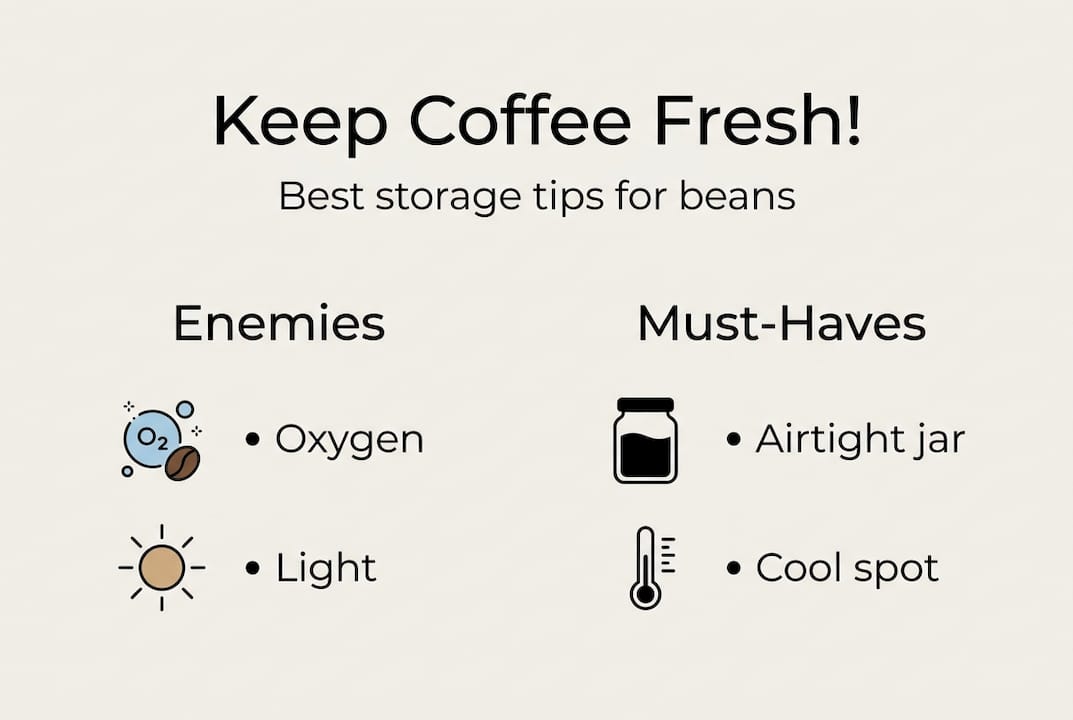
Before you invest in any container or change any habit, it helps to understand what you’re fighting against. The four main enemies of coffee bean freshness are oxygen, light, heat, and moisture. Each one attacks your beans differently, but the damage compounds fast when more than one is present at the same time.
Oxygen triggers oxidation, which breaks down the aromatic compounds responsible for the bright, complex notes in specialty coffee. The moment you open a bag, the clock starts ticking. Light, especially UV light, accelerates the same chemical breakdown. Clear glass jars on a sunny counter look pretty, but they’re quietly destroying your beans. Heat speeds up every degradation reaction, which is why storing beans near your stove or on top of the fridge is a bad idea. Moisture is arguably the sneakiest enemy because it causes beans to absorb odors and triggers surface oxidation that ruins flavor before you even notice.
The numbers here are striking. Proper storage extends flavor retention 300 to 400%, while improper storage loses 60% of aromatics in just 2 weeks. That’s not a small margin. That’s the difference between a vibrant, layered cup and something that tastes like cardboard.
Understanding freshness matters in coffee at a chemical level helps you make smarter decisions every time you buy or store beans.
| Enemy | Primary damage | Speed of impact |
|---|---|---|
| Oxygen | Oxidizes aromatics | Fast (hours to days) |
| Light | Breaks down flavor compounds | Moderate (days) |
| Heat | Accelerates all degradation | Fast (hours) |
| Moisture | Absorbs odors, surface oxidation | Fast (hours to days) |
Here are a few common misconceptions that trip up even experienced home baristas:
- The fridge keeps beans fresh (it actually introduces moisture and odors)
- Clear glass jars are fine if they’re airtight (UV light still penetrates)
- Buying in bulk saves money and freshness (bulk means more exposure over time)
- Vacuum bags are only for long-term storage (they help even for weekly use)
- Ground coffee stores just as well as whole beans (surface area dramatically increases oxidation)
“The biggest mistake isn’t what container you use. It’s assuming the bag you bought the beans in is good enough once it’s been opened.”
Now that you know why flavor fades, let’s figure out what you actually need to keep beans tasting their best.
Gather the right storage tools and containers
Understanding the risks, let’s gather the most effective storage tools to shield your coffee from harm. Not every container is created equal, and the difference between a mediocre jar and the right one is measurable in flavor.
Store coffee beans in an airtight, opaque container at room temperature in a cool, dark place. That single sentence rules out most of the containers sitting in the average kitchen. Clear glass jars fail the UV test. Loosely sealed tins fail the airtight test. Original retail bags fail both once opened.
The gold standard is a vacuum-sealed container. Vacuum-sealed jars remove up to 95% of oxygen, extending freshness 3 to 6 times compared to standard airtight containers. That’s a significant upgrade from a standard canister, and the price difference is usually under $30.
| Container type | Oxygen protection | UV protection | Ease of use |
|---|---|---|---|
| Vacuum-sealed jar | Excellent | Good (opaque models) | Moderate |
| Airtight opaque bin | Good | Excellent | Easy |
| Original retail bag (resealed) | Fair | Fair | Easy |
| Clear glass jar | Good | Poor | Easy |
For placement, think cool, dark, and stable. A cabinet away from the stove, a pantry shelf, or a drawer all work well. Avoid spots that experience temperature swings, like near a window or above an appliance that generates heat.
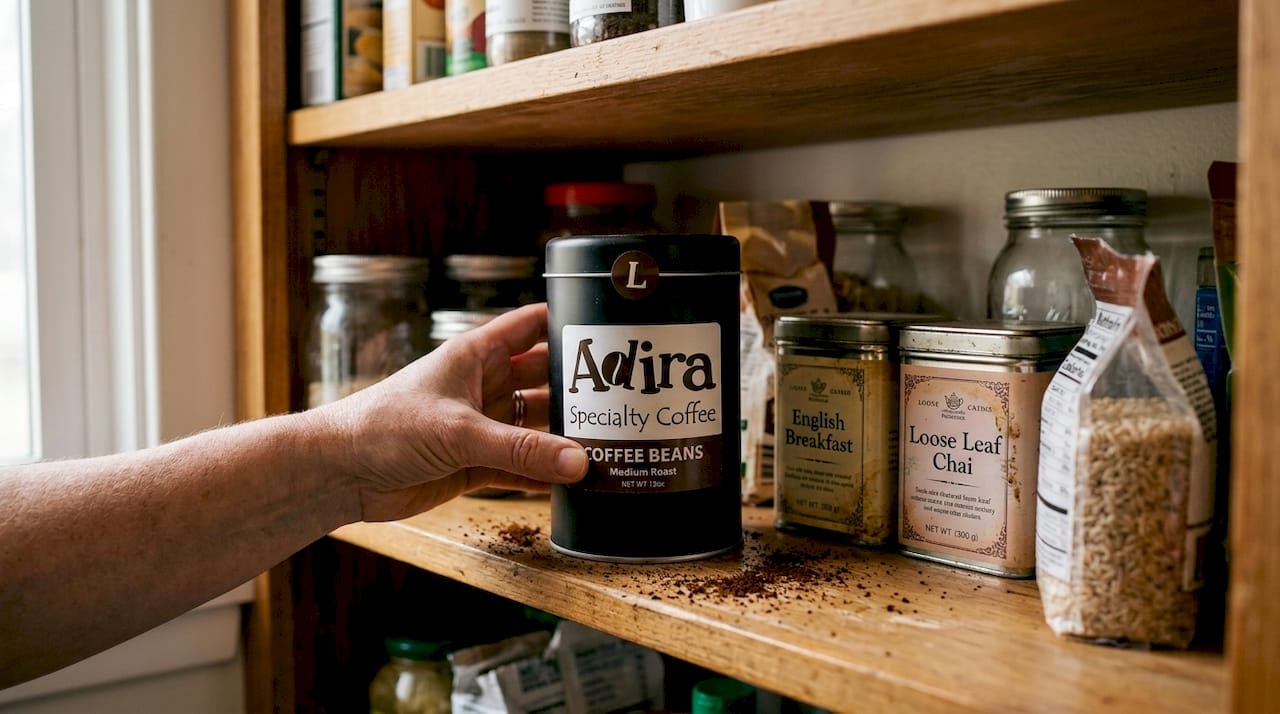
Pro Tip: Portion your beans into smaller batches before sealing. Every time you open a container, you expose the remaining beans to oxygen. If you buy 12 ounces, split it into three 4-ounce portions. Open one at a time and keep the rest sealed.
Beyond the main container, a few extra tools make a real difference:
- A digital scale for consistent dosing
- A dedicated coffee scoop to avoid cross-contamination
- Small resealable bags or mini vacuum pouches for freezer portions
- A marker to label roast dates on each bag
Knowing the whole bean coffee benefits reinforces why your container choice matters so much. Whole beans have far less surface area exposed to oxygen than pre-ground coffee, so protecting that intact bean is worth every bit of effort. If you’re curious about how different origins respond to storage, exploring the main types of coffee beans can help you tailor your approach.
Step-by-step: How to store coffee beans for short and long term
With your gear ready, here’s exactly how to prep your beans for both daily joy and long-term reserves.
Short-term storage (daily use, up to 2 weeks)
- Buy only 1 to 2 weeks’ supply and stick to whole beans. Grinding fresh before each brew preserves far more flavor.
- Transfer beans into your airtight opaque container within 24 hours of opening the retail bag.
- If your beans were roasted within the last 48 hours, leave the container slightly cracked or use a one-way valve bag for the first day. Freshly roasted beans release CO2 (a process called degassing), and trapping that gas can affect flavor.
- Seal the container firmly and place it in your cool, dark spot.
- Grind only what you need right before brewing. Never grind in advance and store ground coffee.
Long-term storage (more than 1 month)
- Portion beans into single-use quantities, typically 2 to 4 ounces per bag depending on how much you brew.
- Freeze portioned beans in single-use airtight bags and never refreeze once thawed.
- Label each bag with the roast date and the origin so you use them in order.
- When you’re ready to use a frozen portion, remove it from the freezer and let it thaw completely at room temperature before opening. This prevents condensation from forming on the beans.
- Once thawed, transfer to your daily container and treat it like a fresh bag.
Pro Tip: Allow freshly roasted beans to degas for 2 to 5 days before vacuum-sealing for long-term storage. Sealing too early traps CO2 and can create pressure that compromises the seal.
Properly stored beans retain flavor up to 4 times longer than beans left in an open or poorly sealed container. That means a bag you’d normally finish in 10 days can stay vibrant for weeks when handled correctly. If you want to pair good storage with smart buying habits, check out our guide on choosing coffee beans and consider coffee delivery options that bring freshly roasted beans to your door on a schedule that matches your consumption.
Troubleshooting: Avoid these common storage mistakes
Knowing what to do leads to great coffee, but avoiding what not to do can prevent heartbreak. Here’s what to watch for.
Even with the best intentions, small habits can quietly ruin your beans. Here are five mistakes that show up constantly:
- Storing in the fridge: The refrigerator introduces moisture and odors that beans absorb readily. Your coffee ends up tasting like last night’s leftovers.
- Using clear containers: Any UV exposure degrades flavor compounds. Opaque is non-negotiable.
- Leaving the bag open between uses: Even 10 minutes of air exposure adds up over days.
- Buying too much at once: A 5-pound bag sounds economical, but if it takes you two months to finish, the last half will taste nothing like the first.
- Pre-grinding and storing: Ground coffee loses aromatics dramatically faster than whole beans.
The red flags that tell you something went wrong: your coffee smells musty or faintly like something else in your kitchen, the flavor is flat with no brightness or sweetness, or the beans look slightly oily and clumped (a sign of moisture exposure).
“There’s a real debate about the fridge among roasters. Some suggest a cool, stable temperature in a sealed jar could work, but the majority reject it because no home fridge is truly moisture-free or odor-neutral.”
If you’ve already made one of these mistakes, here’s how to recover. Taste the beans before assuming they’re ruined. Sometimes mild staleness is still drinkable with a slightly coarser grind and a longer brew time. If the flavor is genuinely off, use those beans for cold brew, which is more forgiving with older coffee. Then start fresh with a new bag and better habits. Pairing better storage with better brewing technique makes a huge difference. Our guide on how to brew specialty coffee at home and our tips on grinding coffee beans can help you get the most out of every bag.
Why bean storage is the home barista’s secret weapon
Here’s something most coffee content won’t tell you: obsessing over your grinder or your pour-over technique while ignoring storage is like tuning a race car and then leaving it out in the rain. The equipment matters, but the foundation matters more.
We’ve seen customers upgrade to a $300 burr grinder and still complain their coffee tastes flat. Nine times out of ten, the problem is a bag sitting open on the counter for three weeks. Storage isn’t glamorous. It doesn’t make for exciting gear photos. But it is the single most impactful variable in your daily cup quality.
The real shift happens when you start thinking about small batch roasting and freshness as a system. Buy less, more often. Store with intention. Rotate your stock. A $15 vacuum jar and a consistent habit of portioning will do more for your coffee than most upgrades people spend hundreds on. Start there, and the improvement will be immediate and obvious.
Discover exceptional beans and perfect your coffee journey
You now have everything you need to protect your beans from the moment they arrive to the last scoop in the bag. But great storage only works when the beans themselves are worth protecting.
At Adira Coffee, every bag ships freshly roasted from our small-batch facility in California, sourced from around 50 farms across Colombia, Ethiopia, Costa Rica, Guatemala, Brazil, and Sumatra. That freshness is built in from the start. Explore our full range of Adira coffee beans and find your next favorite, or try our Colombia specialty coffee for a bright, well-balanced cup that rewards proper storage with every brew. Subscribe for regular delivery and never run low on fresh beans again.
Frequently asked questions
Do coffee beans go bad if stored in the fridge?
Storing beans in the fridge exposes them to moisture and odors that quickly ruin flavor. Airtight room temperature storage in a cool, dark cabinet is the better choice.
Can I freeze coffee beans for long-term storage?
Yes, freezing works well if you portion beans into single-use airtight bags and thaw each portion only once at room temperature to prevent condensation.
How long do coffee beans stay fresh after roasting?
Beans are best used 2 to 14 days post-roast after the degassing period ends. Lighter roasts tend to stale faster than darker ones.
Is the original coffee bag good enough for storage?
Valve bags resealed tightly are acceptable short-term, but transferring to an airtight opaque container will keep your beans noticeably fresher over time.
What’s the number one mistake home baristas make storing coffee?
Leaving beans in clear containers exposed to light and air causes rapid loss of aromatics. Switching to an opaque, airtight container is the fastest fix with the biggest payoff.