
TL;DR:
- Water quality influences espresso flavor, extraction efficiency, and machine durability through its mineral content, pH, and total dissolved solids. Maintaining water within the SCA targets of 75–250 ppm TDS, 50–175 ppm hardness, and pH 6.5–7.5 ensures balanced extraction and reduces scaling issues. Regular testing and proper treatment help home baristas optimize water chemistry for consistent, high-quality espresso.
Water quality in espresso is defined by its mineral content, pH, and total dissolved solids, and these factors determine both the flavor in your cup and the lifespan of your machine. Water makes up over 90% of every espresso shot. That means the minerals dissolved in it are active chemical participants in extraction, not passive bystanders. The role of water quality in espresso is so significant that shot quality can shift noticeably even when your beans, grind, and dose stay exactly the same. The Specialty Coffee Association (SCA) has established measurable benchmarks for espresso water, giving home baristas a clear target to aim for.
What are the ideal water parameters for espresso?
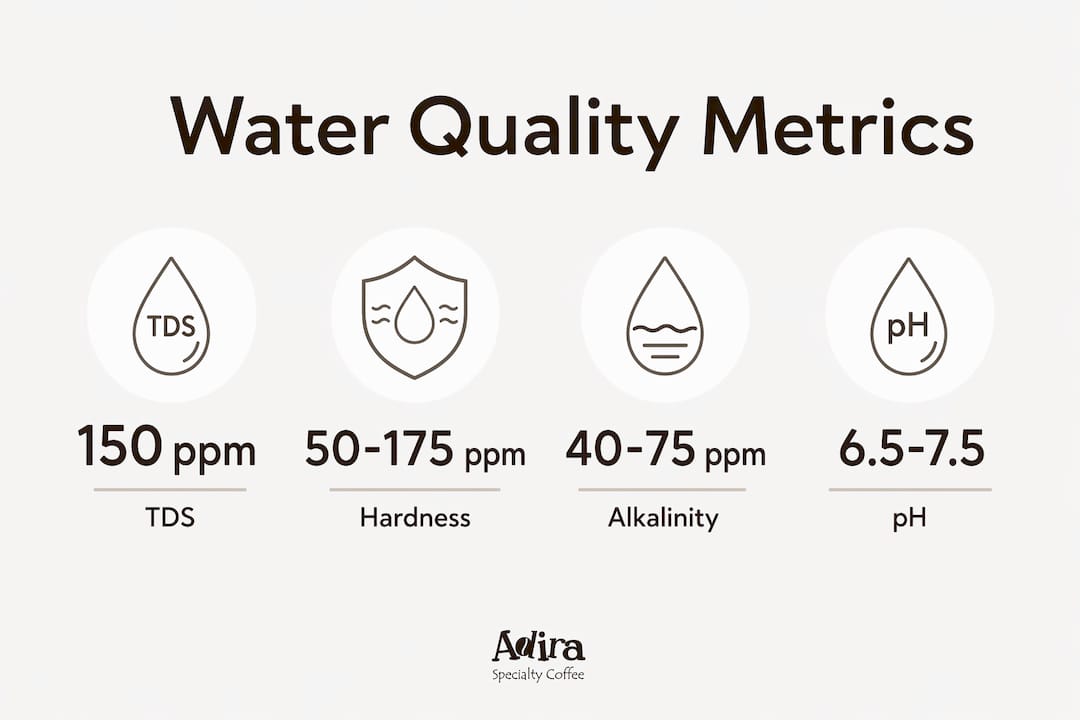
The SCA defines ideal espresso water with four measurable parameters: total dissolved solids (TDS) between 75–250 ppm with a target of 150 ppm, total hardness between 50–175 ppm, alkalinity between 40–75 ppm, and pH between 6.5–7.5. These numbers are not arbitrary. Each one controls a different aspect of how water interacts with ground coffee during extraction.
TDS measures the total concentration of dissolved minerals and compounds. Water at 150 ppm TDS carries enough mineral content to pull flavor compounds from the coffee without overwhelming the cup with mineral taste. Hardness refers specifically to calcium and magnesium concentrations. Alkalinity measures bicarbonate levels, which buffer the natural acids in coffee. pH tells you whether the water leans acidic or alkaline, and neutral water in the 6.5–7.5 range keeps extraction balanced.
| Parameter | Recommended Range | Target |
|---|---|---|
| Total Dissolved Solids (TDS) | 75–250 ppm | 150 ppm |
| Total Hardness | 50–175 ppm | ~100 ppm |
| Alkalinity | 40–75 ppm | ~50 ppm |
| pH | 6.5–7.5 | 7.0 |
Pro Tip: Buy an inexpensive TDS meter and a drop titration kit to test your tap water before making any changes. Knowing your baseline saves you from guessing and lets you make targeted adjustments.
Calcium and magnesium both contribute to hardness but behave differently in the cup. Magnesium enhances aromatic and fruity notes. Calcium builds body and mouthfeel. The best espresso water contains a balance of both, sitting comfortably within the SCA hardness range.
How does water chemistry impact espresso flavor and extraction?
Mineral content directly controls which flavor compounds extract from coffee grounds and how they register on your palate. Water that falls outside the SCA parameters produces predictable, repeatable flavor defects. Understanding the mechanism helps you diagnose problems fast.
Water hardness below 50 ppm causes espresso to taste flat or sour. Very soft water lacks the mineral charge needed to pull sweetness and body from the grounds, leaving behind a thin, acidic shot. On the other end, hardness above 200 ppm combined with high alkalinity produces muted, chalky flavors. The minerals overwhelm the coffee’s natural brightness and coat the palate with a dull, heavy finish.
Magnesium plays a specific and often underestimated role. Magnesium extracts fruity, vibrant flavor compounds more efficiently than calcium and does not contribute to aggressive limescale buildup in boilers. If your espresso tastes dull despite good beans, low magnesium is a likely culprit. Calcium, by contrast, builds the round, full mouthfeel that makes espresso feel satisfying rather than watery.
Alkalinity controls how your espresso handles acidity. Bicarbonates buffer the acids in coffee during extraction. Too much bicarbonate mutes brightness and flattens the cup. Too little leaves acidity sharp, unstable, and harsh on the palate.
“Water chemistry is not a background variable in espresso. It is the medium through which every flavor compound travels from the grounds to your cup. Change the water, and you change the coffee, even if nothing else moves.”
Common flavor defects linked to water imbalances include:
- Sour, thin shots: water hardness below 50 ppm, insufficient mineral content for full extraction
- Flat, muted shots: alkalinity above 75 ppm, bicarbonates suppressing natural coffee acidity
- Chalky, heavy finish: hardness above 200 ppm combined with high alkalinity
- Harsh, unstable acidity: alkalinity below 40 ppm, no buffering capacity for coffee acids
- Dull aromatics: low magnesium content, limiting extraction of fruity and floral compounds
For a deeper look at how these defects connect to other brewing variables, the espresso flavor troubleshooting guide from Adiracoffee covers the full picture.
In what ways does water quality affect espresso machine maintenance?
Limescale is the direct result of calcium and magnesium bicarbonates precipitating out of water when it heats up inside your machine. Every shot you pull deposits a thin layer of scale on heating elements, boiler walls, and group head components. Over time, that layer grows thick enough to cause real problems.
Scale buildup forces the heating element to work 15–25% harder to reach brewing temperature. That extra strain causes temperature fluctuations during extraction, which undermines shot consistency regardless of how well you dial in your grind or dose. A machine running with heavy scale cannot hold stable temperature, and unstable temperature means unpredictable espresso.
The practical signs of scale accumulation are easy to spot once you know what to look for:
- Longer heat-up times before the machine reaches brewing temperature
- Inconsistent shot timing even with a fixed grind and dose
- Reduced steam pressure from the wand
- Unusual sounds from the pump working against restricted flow
- White or gray mineral deposits visible around the group head or portafilter
Balancing mineral content is the most effective long-term strategy for machine health. Water within the SCA hardness range of 50–175 ppm provides enough minerals for good extraction while keeping scale formation slow enough that regular descaling stays manageable. Water above 200 ppm hardness accelerates scale and shortens service intervals significantly. For practical guidance on keeping your machine in top shape, the espresso machine cleaning guide from Adiracoffee covers descaling schedules and methods in detail.
The tension in espresso water chemistry is real: you need enough minerals for flavor extraction, but controlled hardness to prevent rapid scale buildup. Getting that balance right protects both your cup and your equipment investment.
What water treatment options are best for home espresso machines?
Most home baristas start with a carbon filter and assume the job is done. Carbon filters remove chlorine and improve taste, but they do not reduce hardness minerals or prevent scale formation. If your tap water is hard, a carbon filter alone will not protect your machine or improve mineral balance.
The main treatment options for home espresso setups each have distinct trade-offs:
- Carbon filtration: Removes chlorine and some organic compounds. Does not reduce hardness or TDS. Good as a first stage but not sufficient on its own for hard water.
- Ion-exchange softeners: Replace calcium and magnesium ions with sodium ions. Reduces scale effectively but can raise sodium levels and strip flavor-active minerals if not calibrated carefully.
- Reverse osmosis (RO) systems: Remove nearly all dissolved minerals, producing very pure water. Effective for scale prevention but require remineralization before use in espresso.
- Remineralization: Adding mineral concentrates or packets back to RO or distilled water to hit SCA targets. Products like Third Wave Water offer pre-measured mineral blends designed for coffee. DIY recipes using food-grade magnesium sulfate and calcium chloride are also widely used by home baristas.
Distilled or RO water without remineralization produces flat, lifeless espresso and can corrode machine components over time. Zero-mineral water has no extraction capacity and no buffering ability. Never use it straight.
Pro Tip: If you use RO water, add a remineralization stage before it reaches your machine. A simple mineral packet designed for coffee brewing brings TDS and hardness back into the SCA target range in seconds.
Bottled water is a practical shortcut for home baristas who want reliable results without building a filtration system. Look for bottled waters with TDS between 100–200 ppm and hardness within the SCA range. Check the label for calcium and magnesium content. Many European mineral waters fall naturally within the SCA profile and work well for espresso.
How can home baristas optimize water for consistent espresso?
Consistent espresso starts with knowing exactly what is in your water. Testing takes less than 15 minutes and costs very little. Drop titration kits for hardness and alkalinity are available for around $10–15 and give reliable readings at home. A basic TDS meter adds another $15–20 and measures total dissolved solids instantly.
Follow these steps to build a reliable water routine:
- Test your tap water for TDS, total hardness, and alkalinity using a drop titration kit and TDS meter. Record the results as your baseline.
- Compare to SCA targets. If TDS is below 75 ppm or above 250 ppm, or hardness falls outside 50–175 ppm, your water needs adjustment.
- Choose a treatment method based on your tap water profile. Hard water above 175 ppm benefits from an ion-exchange filter or RO with remineralization. Soft water below 50 ppm needs mineral addition.
- Select a bottled water within the SCA profile as a no-equipment alternative. Test it once with your kit to confirm the label matches reality.
- Pull calibration shots after any water change. Use the same dose, grind, and yield, and taste the result. Water changes shift extraction noticeably, so recalibrate your grind if needed.
- Retest every 4–6 weeks. Municipal water composition changes seasonally. What worked in march may need adjustment by july.
For more guidance on dialing in all the variables that affect your home espresso, the expert brewing tips from Adiracoffee cover water alongside grind, dose, and temperature in one practical resource.
Key Takeaways
Water chemistry controls espresso flavor, extraction efficiency, and machine longevity, making it as critical to dial in as grind size or bean origin.
| Point | Details |
|---|---|
| SCA water standards | Target TDS of 150 ppm, hardness 50–175 ppm, alkalinity 40–75 ppm, and pH 6.5–7.5 for best results. |
| Mineral balance matters | Magnesium enhances fruity flavors; calcium builds body; both must stay within range for balanced extraction. |
| Scale damages machines | Hard water above SCA limits forces heating elements to work 15–25% harder, causing temperature instability. |
| Carbon filters are not enough | Carbon filtration removes chlorine but does not reduce hardness; ion-exchange or RO systems are needed for scale control. |
| Test and adjust regularly | Use a $10–15 drop titration kit and TDS meter to monitor water and recalibrate after any change. |
Water is the ingredient I ignored the longest
I spent years obsessing over bean origin, roast curves, and grind settings before I paid serious attention to water. That was a mistake, and I say that as someone who has pulled thousands of shots.
The shift happened when I moved from one apartment to another in California and my espresso fell apart overnight. Same beans, same grinder, same machine. The shots were sour and thin, and I could not figure out why. I tested the new tap water and found hardness below 40 ppm. The water was stripping the shot instead of building it.
What I learned from that experience is that water is not a passive carrier. It is an active ingredient, and treating it that way changes how you approach every other variable. Once I started hitting the SCA targets consistently, my shots became more predictable. Dialing in grind became easier because I was not chasing a moving target.
The other thing most home baristas miss is the machine angle. Scale is invisible until it is a problem, and by then you are looking at a service call or a replacement part. Keeping water hardness in range is the cheapest form of machine maintenance you can do. It costs less than a bag of coffee and saves far more.
My advice: test your water this week. Not someday. This week. The kits are cheap, the process takes 10 minutes, and the results will tell you more about your espresso than any grinder upgrade.
— Stefan
Great water deserves great coffee to brew with
Getting your water dialed in is only half the equation. The coffee you brew with it needs to be worth the effort.

Adiracoffee roasts single-origin beans and signature blends in small batches in California, shipping directly to you within days of roasting. Every bag is built for the kind of barista who cares about what goes into the cup. The Love Blend is a strong starting point for espresso, with the body and sweetness that respond well to properly mineralized water. If you want something with more depth, the Mushroom Coffee Dark Roast pulls beautifully as a concentrated shot. Subscriptions include 10% savings and free US shipping over $35.
FAQ
What is the ideal TDS for espresso water?
The SCA recommends a TDS of 150 ppm as the target for espresso water, within an acceptable range of 75–250 ppm. Water outside this range affects extraction efficiency and flavor balance.
Does hard water ruin espresso machines?
Hard water above 175 ppm accelerates limescale buildup inside boilers and on heating elements, forcing them to work 15–25% harder and causing temperature instability. Regular descaling and water treatment within SCA hardness limits protect machine components.
Can I use distilled water for espresso?
Distilled water is not suitable for espresso without remineralization. It lacks the minerals needed for proper extraction, produces flat and lifeless shots, and can corrode machine components over time.
How does alkalinity affect espresso taste?
Alkalinity controls how bicarbonates buffer coffee acids during extraction. High alkalinity above 75 ppm mutes brightness and flattens the cup. Low alkalinity below 40 ppm leaves acidity sharp and unstable.
How often should I test my espresso water?
Testing every 4–6 weeks is a practical routine for home baristas. Municipal water composition shifts seasonally, so a baseline reading taken in one month may not hold through the next.