

TL;DR:
- Troubleshooting espresso flavor at home requires adjusting variables like grind size, puck prep, and machine cleanliness to improve taste. Consistent inputs, proper puck preparation, and clean equipment are essential for diagnosing issues like sour or bitter shots. Focusing on one change at a time and using fresh beans helps achieve balanced, flavorful espresso.
You pull a shot and it tastes sharp, harsh, or just wrong. That’s the frustrating reality of espresso flavor troubleshooting at home, and it happens to nearly everyone who goes beyond a pod machine. The gap between a great espresso and a bad one often comes down to a handful of variables. Grind size, puck prep, extraction timing, and machine cleanliness each play a direct role in what ends up in your cup. This guide gives you a clear, systematic way to diagnose and fix the most common espresso taste issues without guessing.
Table of Contents
- Key takeaways
- Your espresso flavor troubleshooting toolkit
- Diagnosing sour espresso (under-extraction)
- Diagnosing bitter espresso (over-extraction)
- When espresso tastes sour and bitter at the same time
- Machine cleanliness and its impact on flavor
- What years of brewing actually taught me
- Start with better beans to troubleshoot faster
- FAQ
Key takeaways
| Point | Details |
|---|---|
| Grind size is your first lever | Adjust grind before changing dose, temperature, or ratio when fixing sour or bitter shots. |
| Shot timing reveals extraction | Under 20 seconds signals under-extraction; over 35 seconds signals over-extraction. |
| Puck prep drives consistency | Channeling from uneven puck density causes sour and bitter flavors simultaneously. |
| Clean machines taste better | Coffee oil buildup creates off-flavors regardless of how well you’ve dialed in your grind. |
| Change one variable at a time | Isolating each change is the only reliable way to identify what actually fixed the problem. |
Your espresso flavor troubleshooting toolkit
Before you start chasing bad flavors, you need the right tools and the right setup. Troubleshooting without consistent inputs is like trying to diagnose a car problem while swapping three parts at once. You won’t know what worked.
Here’s what you need to troubleshoot accurately:
- A grinder with adjustable settings. Grind uniformity directly affects flavor consistency. Blade grinders produce uneven particles that cause unpredictable over- and under-extraction in the same shot. A burr grinder with stepped or stepless adjustment gives you the control you need.
- A digital scale. You cannot troubleshoot by eye. Weighing your dose and yield in grams removes two major variables in one step.
- A timer. Shot time is one of your most important diagnostic signals.
- Fresh coffee. Beans older than four to six weeks from roast produce stale, flat espresso that no amount of grind adjustment will fix.
- A notebook or notes app. Recording every change and result is how you build a picture of what’s actually happening shot to shot.
Pro Tip: Before you pull a single diagnostic shot, run a blank through your group head to flush residual grounds and stabilize water temperature. It takes ten seconds and removes one more variable from your results.
| Tool | Why it matters |
|---|---|
| Burr grinder | Controls particle size for consistent extraction |
| Digital scale | Tracks dose and yield to the gram |
| Timer | Confirms extraction falls in the 25 to 35 second window |
| Notebook | Tracks variable changes across multiple shots |
| Fresh beans | Rules out stale coffee as a flavor culprit |
Diagnosing sour espresso (under-extraction)
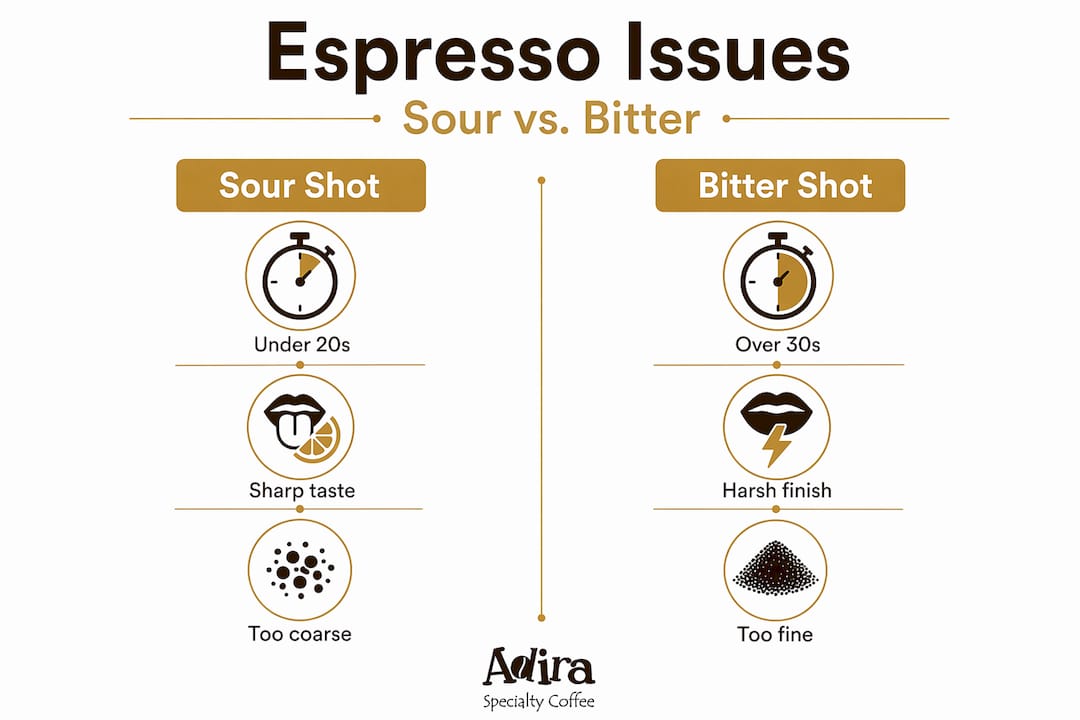
Sour espresso has a sharp, almost citric bite that stings the sides of your tongue. The body feels thin, and the finish disappears quickly. If your shot pulls in under 20 seconds, under-extraction is almost certainly your problem.
The most common cause is a grind that’s too coarse. When the grind is coarse, water flows through the puck too quickly to dissolve the compounds responsible for sweetness and body. You get the early-extracting acids without the balancing sugars. Here’s how to fix it, step by step:
- Keep your dose and yield the same. Don’t change two things at once. Start with grind adjustments as your primary fix before touching anything else.
- Grind one to two steps finer. On most grinders, this is a small movement. Pull the same dose and target yield, and time the shot.
- Check the new shot time. You’re aiming for 25 to 35 seconds. If it’s still under 20, go finer by one more step.
- Taste before continuing. If the shot is longer but still sour, check your dose. Low dose reduces puck resistance even with a fine grind.
- Verify machine temperature. A machine that hasn’t fully heated up pulls cold shots that taste sour even with a correct grind. Allow ten minutes after the heat light comes on before pulling a shot.
Pro Tip: Wait until your machine reaches full thermal stability, not just when the ready light appears. On many home machines, that light comes on before the group head is actually up to temperature. A short “temperature surfing” flush of two to three ounces helps stabilize it.
Coffee freshness also matters here. Beans that are very freshly roasted (under a week from roast date) can produce gassy, uneven extractions that taste sour. At Adiracoffee, beans are roasted in small batches and shipped at peak freshness, so you’re not fighting stale or over-gassed coffee on top of your other variables.
Diagnosing bitter espresso (over-extraction)
Bitter espresso is easy to recognize. It tastes harsh, sometimes ashy, and leaves a dry feeling on the back of your palate. The shot usually pulls slowly, over 35 seconds, and often looks dark and syrupy. Over-extraction happens when water stays in contact with the grounds too long, pulling out astringent compounds after the desirable flavors are already gone.
- Grind one to two steps coarser. This is the mirror image of the sour fix. Coarser grind means less resistance and faster flow.
- Pull the same dose and yield. Keep everything else identical so you can isolate the grind change.
- Time the next shot. If it drops into the 25 to 35 second range and still tastes bitter, check your dose. A high dose packs the puck tighter and slows flow even with a coarser grind.
- Let your machine cool down after steaming. Steaming milk superheats the boiler. Pulling an espresso shot immediately after on a single-boiler machine means scalding water through the puck, which over-extracts fast. Flush the group head until the temperature drops.
- Clean your machine. Rancid coffee oil on the shower screen and portafilter adds bitter, stale flavors that no grind adjustment will fix.
One thing worth understanding: balanced espresso includes some bitterness. The goal isn’t to eliminate bitterness entirely. It’s to balance it with sweetness and a clean acidity so no single element dominates. A shot with zero bitterness often tastes flat. What you’re fixing is the harsh, unpleasant kind that overtakes the cup.
“Bitterness becomes a problem when it dominates with no sweetness and leaves a dry, harsh mouthfeel. A balanced shot has bitterness playing a supporting role, not the lead.” — Mikael Jasin
When espresso tastes sour and bitter at the same time
This is the scenario that trips up most home baristas. You get a shot that starts sour and finishes bitter, or has both notes in a jarring way. Many people respond by adjusting their grind, which doesn’t help because the problem isn’t extraction rate. It’s channeling.
Channeling happens when water finds a weak path through the puck and rushes through that channel while bypassing the rest of the grounds. The channeled area over-extracts while the rest under-extracts. The result is simultaneous sour and bitter taste in a single shot.
Here’s how to diagnose and fix it:
- Look at your puck after extraction. A channeled puck often shows holes, cracks, or uneven color. Some areas look bone dry while others are soaked.
- Use a bottomless portafilter. Watching the underside of the basket during extraction reveals channeling immediately. You’ll see spurts or uneven streams instead of a steady, centered flow.
- Apply the Weiss Distribution Technique (WDT). Use a thin wire tool (a paperclip works for testing) to stir the grounds in the basket before tamping. This breaks up clumps and distributes grounds evenly.
- Level before tamping. Rake the grounds flat with your finger or a distribution tool so the surface is even before any pressure goes on.
- Tamp with consistent, level pressure. Angled tamping creates pockets of low resistance that channel immediately.
Pro Tip: Channeling is often misdiagnosed as a grind problem. Fix your puck prep first. If the shot still has mixed flavors after three consistent, well-prepped pucks, then revisit your grind.
| Issue | Symptoms | Primary fix |
|---|---|---|
| Under-extraction | Sour, thin, fast shot under 20s | Grind finer |
| Over-extraction | Bitter, harsh, slow shot over 35s | Grind coarser |
| Channeling | Sour and bitter together, uneven puck | Improve puck prep and distribution |
Machine cleanliness and its impact on flavor
Here’s a truth that doesn’t get enough attention: a perfectly dialed-in grind and a flawlessly prepped puck won’t save a dirty machine. Daily cleaning of the group head, portafilter, and shower screen prevents the rancid oil buildup that causes dull, bitter off-flavors in every shot you pull, regardless of your technique.
A practical cleaning routine for home baristas:
- After every session: Wipe the portafilter basket clean, purge the group head, and rinse the steam wand immediately after use. Milk protein dries in seconds and becomes very difficult to remove.
- Weekly: Remove and soak the portafilter basket in hot water. Wipe the shower screen with a damp cloth. If your machine supports blind basket backflushing, do it with plain water once a week.
- Monthly: Use a cleaning tablet or powder for a full backflush cycle. Descale if you’re in a hard water area.
On cleaning products: correct dosing of cleaning products matters more than most people realize. Too much cleaner leaves chemical residue that taints your next few shots. Too little fails to remove the oils. Pre-measured cleaning tablets take the guesswork out entirely and protect your machine’s seals and gaskets at the same time.
Your grinder needs attention too. Stale grounds trapped in the burr chamber mix with fresh beans on every grind. Purge a few grams of fresh beans after any extended break, and use a grinder brush weekly to clear accumulated fines. The full picture of grind size and machine care working together is what produces consistently clean-tasting espresso.
What years of brewing actually taught me
After working with coffee for a long time, the single lesson I keep coming back to is this: most home baristas are solving the wrong problem. They taste something off, reach for the grind dial, and spend an hour chasing a flavor that was never a grind issue to begin with.
I’ve seen people completely transform their espresso just by spending two minutes on proper puck prep. Not a new grinder, not a recipe change. Just consistent distribution and a level tamp. It’s not glamorous advice, but it works more reliably than almost anything else.
The other mistake I see constantly is changing two or three things between shots. You pull something sour, so you grind finer, add more coffee, and raise the temperature all at once. Now you have a different shot, but you have no idea which change fixed it or whether the combination accidentally masked a deeper problem. Change one variable at a time. Write it down. Give each change three shots before judging it.
The last thing I’ll say on bitterness: some bitterness belongs in espresso. If you’re chasing a shot with zero bitterness, you’ll end up with something weak and flat. The goal is a shot where the sweetness and bitterness pull in the same direction. That’s what balance actually means in the cup.
— Stefan
Start with better beans to troubleshoot faster
The fastest way to simplify espresso flavor troubleshooting is to remove the bean quality variable entirely. When you’re working with inconsistent or old coffee, you’re solving two problems at once.

At Adiracoffee, every bag ships directly from the roaster at peak freshness, sourced from farms across Colombia, Ethiopia, Costa Rica, and beyond. If you want a forgiving, well-structured bean to dial in your technique, the Colombia single origin is an excellent starting point. Its natural sweetness and clean acidity make extraction feedback easy to read. Not sure where to begin? The roast level guide helps you match roast to your brewing style and flavor preferences so your troubleshooting starts on solid ground.
FAQ
What causes sour espresso?
Sour espresso is caused by under-extraction, where the shot pulls too fast (under 20 seconds) and water doesn’t dissolve enough of the coffee’s sugars and oils. The fix is to grind finer and verify your dose is accurate.
Why does my espresso taste bitter?
Bitter espresso results from over-extraction, typically caused by a grind that’s too fine, a high dose, or excessive heat. Grind coarser by one to two steps and check that your machine has cooled down properly after steaming.
What is channeling in espresso?
Channeling is when water finds a weak path through the coffee puck and bypasses the rest of the grounds. It causes simultaneous sour and bitter flavors and is fixed through better puck distribution and level tamping, not grind adjustments.
How often should I clean my espresso machine?
Wipe the portafilter and purge the group head after every session. Backflush with plain water weekly, and run a full cleaning tablet cycle monthly. Regular cleaning prevents rancid oil buildup that contaminates flavor regardless of technique.
Why does my espresso taste different every day?
Shot-to-shot inconsistency usually comes from variable dosing, inconsistent tamping, or grinder clumps. Build a consistent prep routine and record your variables each session to identify what’s drifting between days.