
TL;DR:
- Most home brewers focus on selecting beans but overlook the importance of grind size in shaping flavor. Small, deliberate adjustments in grind size can significantly improve coffee balance by influencing extraction speed and particle distribution. Tailoring grind settings to specific brewing methods and personal taste leads to better, more consistent results.
Most home brewers spend a lot of time choosing great beans but almost no time thinking about how they grind them. That’s a problem, because grind size is one of the biggest levers you have over the flavor in your cup. A slight shift toward finer or coarser can swing your coffee from bright and balanced to bitter or sour in ways that feel mysterious until you understand what’s actually happening. This guide breaks down the science, the practical method-by-method differences, and the simple adjustments you can start making today to brew noticeably better coffee at home.
Table of Contents
- The science behind grind size and flavor extraction
- Comparing grind sizes for different brewing methods
- Why small grind adjustments can make a big difference
- Practical tips for dialing in your perfect grind size
- What most home brewers get wrong about grind size
- Experience better coffee with Adira
- Frequently asked questions
Key Takeaways
| Point | Details |
|---|---|
| Extraction is grind-dependent | Grind size directly affects how your coffee extracts and tastes. |
| Method dictates grind choice | Each brewing style requires a specific grind range for best results. |
| Small tweaks matter | Even minor grind adjustments can help you perfect your brew. |
| Uniformity isn’t everything | A mix of particle sizes can create richer flavor than a perfectly uniform grind. |
| Taste is the best guide | Trust your own palate and experiment—enjoyment trumps technical ‘rules’. |
The science behind grind size and flavor extraction
Extraction is the process of water pulling flavor compounds, acids, sugars, and other soluble material out of your coffee grounds. The amount of surface area those grounds expose to water controls how fast and how thoroughly that process happens. Grind size is simply how you manage that surface area.
Finer grinds create more surface area per gram of coffee, so extraction happens quickly and aggressively. If the water moves through too slowly or sits in contact too long, the result tips past balance and into over-extraction, which tastes bitter, dry, and harsh. Coarser grinds do the opposite. Water moves through fast, extraction is incomplete, and the result is under-extracted coffee that tastes sour, thin, and flat. The goal is always that middle ground where enough of the good stuff is dissolved without pulling the unpleasant compounds along for the ride.
What makes this more interesting is that the distribution of particle sizes matters just as much as the average. Scientific research on how grind particle size and distribution affect beverage properties shows that they directly impact total dissolved solids and the range of compounds released into your cup. In other words, it’s not just “coarse vs fine.” The spread of sizes in your grind matters enormously.
Here’s a point that surprises many brewers: a perfectly uniform grind is not always superior. A bimodal distribution, where you have two clusters of particle sizes rather than one tight group, can actually be richer in bioactive compounds and dissolved solids. You can read more about the science of extraction and how these principles interact with water, temperature, and brew time.
How grind size affects extraction and flavor:
| Grind size | Extraction speed | Flavor risk | Typical outcome |
|---|---|---|---|
| Extra fine (espresso) | Very fast | Over-extraction | Bitter, intense, full-bodied |
| Fine (Moka, AeroPress) | Fast | Slight bitterness | Bold, rich, concentrated |
| Medium (drip, pour over) | Moderate | Balanced range | Balanced, nuanced, clean |
| Coarse (French press, cold brew) | Slow | Under-extraction | Smooth, lower acidity |
Understanding this table is the first step toward smarter brewing. It shows that no single grind size is universally “correct.” The right choice depends entirely on how you brew. Getting your proper grinding techniques dialed in before you change anything else sets you up for consistent results.
“The distribution of grind particles, not just the average size, directly shapes what ends up in your cup. Evenness is one goal, but richness often comes from a more complex mix.”
Comparing grind sizes for different brewing methods
Every brewing method has a different relationship between water, contact time, and pressure. Those variables define the grind size that will give you the best extraction. Getting this wrong is the most common reason home brewers get disappointing results even with excellent beans.
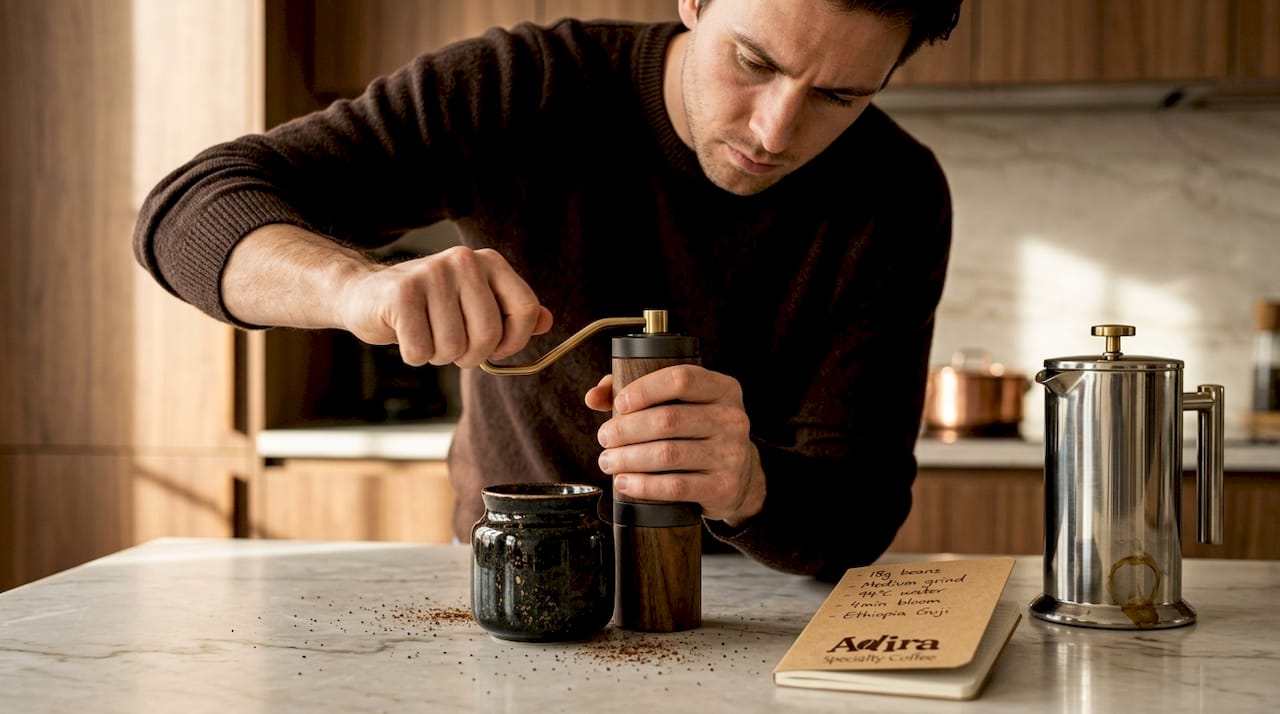
French press uses full immersion, meaning grounds sit in water for several minutes. A coarse grind, similar in texture to rough sea salt, gives the water enough contact time to extract well without going bitter. Use a medium grind in a French press and you’ll notice the result tastes heavier and more astringent.
Drip coffee makers typically run water through a basket at a flow rate designed for a medium grind. The grind should feel like fine sand. Go too coarse and the water flows through without picking up enough flavor. Go too fine and the basket can clog, the brew time slows dramatically, and you get over-extracted, harsh coffee.
Espresso requires a fine, almost powdery grind to create enough resistance for pressurized water to extract properly in 25 to 30 seconds. This is the most grind-sensitive method of all. Even a half-step adjustment on your grinder dial can shift your shot from sour to bitter, which is why espresso grinders are built with precision in mind.
An important finding from drip brew research shows that for filter coffee, grind size changes can be subtle enough that many tasters don’t reliably detect differences within a certain range. This is actually reassuring for home brewers who stress about perfection.
Grind size by brewing method:
| Brew method | Recommended grind | Risk if too fine | Risk if too coarse |
|---|---|---|---|
| French press | Coarse | Muddy, bitter cup | Sour, weak brew |
| Drip/pour over | Medium | Slow flow, over-extraction | Watery, flat flavor |
| AeroPress | Medium to fine | Choking the filter | Under-extracted, sour |
| Espresso | Fine to extra fine | Sour shot, no crema | Channeling, bitter |
| Cold brew | Extra coarse | Over-extracted, harsh | Minimal flavor |
Check the brewing methods guide for a deeper look at how each method works and why it pairs with specific grind settings. If you work with filter coffee regularly, the filter coffee workflow walks through every variable from grind to pour.
Pro Tip: Don’t chase someone else’s “perfect” grind setting. Start with the recommended range for your method, brew it, and taste it. The goal is your best cup, not a number on a dial.
Why small grind adjustments can make a big difference
Here’s where most guides mislead home brewers. They suggest you need to make dramatic grind changes to notice any difference. That’s often wrong, and it leads to overcorrecting. You grind coarser, it still tastes off, so you go coarser again, and suddenly you’ve swung past the balance point in the opposite direction.
Small adjustments, one or two notches on a burr grinder, are often all you need. The change in particle size is modest, but it shifts the extraction enough to taste the difference in the balance of sweetness, acidity, and body. The key is tasting deliberately and knowing what you’re looking for.
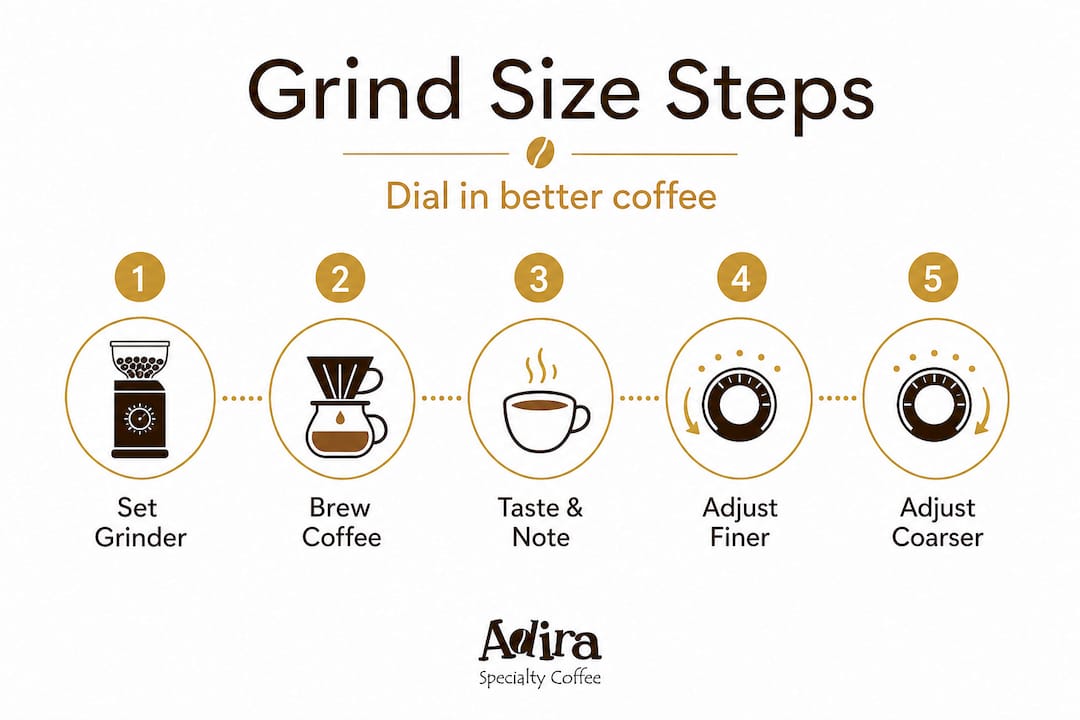
Research on drip brewing found that even a roughly 25% difference in median particle size often wasn’t detected by most tasters in blind tests. This tells you two things. First, small tweaks may be enough to get you where you want to be. Second, you have more room to experiment than you think without ruining your cup.
Steps for making small grind adjustments:
- Brew your coffee at your current grind setting and taste it deliberately, noting whether it leans bitter, sour, or balanced.
- If it tastes bitter, move one notch coarser. If it tastes sour or weak, move one notch finer.
- Brew again using the exact same dose, water temperature, and brew time as before.
- Taste and compare. Don’t change two variables at once or you’ll lose track of what made the difference.
- Repeat in single-step increments until you hit your preferred flavor.
- Note the setting and use it as your new baseline.
Pro Tip: Keep a simple notebook or phone note with your grind setting, brew method, dose, and a one-line tasting note. It sounds fussy, but after a week of brewing you’ll have a clear picture of what works and why.
Your choosing the right beans choice also interacts with grind size because lighter roasts are denser and often need a slightly finer grind to extract fully compared to darker roasts of the same bean. The coffee blooming effects on extraction also change based on how fine or coarse you grind, since finer grinds release CO2 more aggressively during bloom.
Practical tips for dialing in your perfect grind size
Knowing the science and understanding the method comparisons is useful, but what you really need are strategies you can apply every morning without overthinking it. Here’s what actually works.
Starting grind guidelines by brew method:
- French press: Start coarse, around the texture of cracked peppercorns, and adjust finer if the cup tastes weak.
- Pour over: Start medium, close to coarse table salt texture, and adjust based on how long the water takes to drain through.
- Drip machine: Medium grind is almost always right here; most home machines are calibrated for it.
- AeroPress: Experiment between medium and fine depending on brew time. Shorter brews need finer. Longer brews need coarser.
- Espresso: Dial in by shot time. 25 to 30 seconds for a double shot is your target. Adjust from there.
Adjusting by taste, not by appearance:
Visual cues like “it looks right” are unreliable. The same grind setting can look identical on two different grinders but produce very different particle distributions. Train yourself to taste for these signals instead. Bitterness that lingers past the swallow points to over-extraction. A sharp, almost sour punch with no sweetness points to under-extraction. A clean finish with some sweetness and the right body is your target.
One counter-intuitive finding worth knowing: research shows that a very fine, highly uniform grind actually extracted fewer bioactive compounds and lower total dissolved solids than a classical bimodal grind. This is why some experienced brewers deliberately use grinders that produce a mix of particle sizes. Uniformity is not the only goal, and sometimes a little variation in your grind distribution adds richness to the cup rather than taking away from it.
A few more tips that make a real difference:
- Grind fresh. Pre-ground coffee stales quickly because more surface area is exposed to air. Grinding right before you brew preserves volatile aromatics that contribute most of the flavor complexity you enjoy.
- Keep your grinder clean. Coffee oils build up on burrs and create rancid flavors that blend into your cup. A quick brush after every few uses goes a long way.
- Buy whole beans in smaller quantities. Beans that are past their peak flavor window won’t taste good at any grind size.
Pro Tip: Taste before you tweak. If you genuinely love your coffee today, don’t let a number on a chart talk you out of it. The best grind size is the one that makes your cup taste the way you want it to.
For hands-on application, the manual brewing tips guide and expert brewing tips resource both offer concrete workflows to practice everything covered here.
What most home brewers get wrong about grind size
Here’s the honest take after working with hundreds of coffee drinkers across all skill levels: the biggest mistake isn’t grinding wrong. It’s grinding anxiously.
Most guides, including many good ones, lead people to believe that coffee brewing is a precision exercise where deviation from a recommended grind size causes failure. That framing creates a kind of paralysis. Brewers obsess over getting it exactly right, feel like something must be off when results vary, and lose sight of why they started making coffee at home in the first place.
The truth is more forgiving. Great coffee can come from “good enough” grinding paired with smart brewing trade-offs. A French press with a slightly less-than-ideal coarse grind but excellent fresh beans, good water, and proper steep time will taste far better than a technically perfect grind on stale beans with mediocre water. Grind size is one variable in a system, not the whole system.
The other thing most guides miss is that taste is personal. If you brew your pour over a little finer than the charts suggest and love the result because it’s richer and more full-bodied for your palate, that IS the right grind for you. Not every rule applies to every person. The master brewing techniques perspective on coffee blends and flavor development supports this idea: personal preference is always a valid destination.
Stop chasing the perfect grind. Start chasing the cup you actually enjoy. Use the science as a map, not a rulebook.
Experience better coffee with Adira
Understanding grind size is the knowledge. The next step is practicing with coffee worth experimenting on.
At Adira Coffee, we source from around 50 farms across Colombia, Ethiopia, Costa Rica, Guatemala, Brazil, and Sumatra, and roast in small batches in California to deliver beans at their absolute peak. Every origin we offer has been selected to show clear, distinct flavor characteristics that respond beautifully to grind adjustments. Whether you’re dialing in a bright and fruity Ethiopia Natural coffee for your pour over or pulling a rich, balanced shot with our Colombia single origin coffee, fresh beans give you the clearest feedback when you’re experimenting with grind size. Explore Adira’s coffee selection to find the right beans for your brewing setup, along with guides and resources designed to help every home barista brew with confidence.
Frequently asked questions
Can I use the same grind size for all brewing methods?
No. Each method needs a specific grind size because contact time, water flow, and pressure all vary. Using the same grind across methods leads to either over-extraction or under-extraction, both of which hurt flavor. Research confirms that grind distribution directly shapes which compounds end up in your cup.
How much can I taste a 25% grind size difference in my coffee?
For most drip and filter brewing situations, the difference is smaller than you’d expect. Studies on drip coffee found that many tasters couldn’t detect a ~25% shift in particle size in blind tasting, which means small adjustments are often more useful than dramatic changes.
Is a more uniform grind always better?
Not necessarily. A bimodal grind, with two particle size clusters, can actually deliver more dissolved compounds and richer flavor than a highly uniform grind. Research shows that a homogeneous fine grind was deficient in bioactive compounds compared to a classical bimodal grind.
What’s the easiest way to adjust grind size for better coffee at home?
Change one notch at a time, brew the same way you normally do, and taste carefully before changing anything else. Small, deliberate tweaks give you the clearest feedback and prevent the overcorrection that leads most home brewers in circles.