Less Bitter Coffee at Home: What to Change First

Bitter coffee at home almost always has one of four causes: the grind is too fine for your brewer, the coffee is over-extracted (too much pulled out of the grounds), the beans are stale or too deeply roasted, or the machine is carrying old oils and scale. Fix them in that order and most cups improve within a day. Beans roasted only after you order, like ours at Adira Coffee, remove the stale-bean problem before you touch a dial.
TL;DR
- Grind coarser first. It is the single most reliable fix for bitter, drying coffee, and grind finer if the cup turns sour.
- Change one thing at a time: grind, then coffee-to-water ratio, then brew time and water temperature.
- Use fresh beans and a clean machine. Old beans and rancid oil taste flat and bitter no matter how well you dial in.
- Lighter and medium roasts taste less bitter than dark roasts.
- A pinch of salt or a splash of milk softens a cup you already brewed, but it does not replace fixing the extraction.
In this guide
- Why coffee turns bitter
- Step 1: Grind coarser
- Step 2: Check your coffee-to-water ratio
- Step 3: Shorten the contact time
- Step 4: Mind the water
- Step 5: Start with fresher, lighter beans
- Step 6: Clean the machine
- Fixing a cup you already brewed
- Troubleshooting by machine
- Our perspective
- Fresh beans and a starting recipe, delivered
- FAQ
- Sources
Why coffee turns bitter
When hot water meets ground coffee, it dissolves flavor in a rough sequence: acids first, sugars next, and the heavy, bitter and astringent compounds last. Serious Eats puts the balanced zone at 19 to 22% extraction yield, and says that above that, astringent and bitter flavors dominate. Bitter coffee is simply coffee that stayed in contact with water too long, too hot, or with too much surface area.
That gives you five levers: ratio, grind size, brew time, water temperature and agitation (stirring or turbulence). Strength and extraction are separate things. Home Coffee’s dial-in guide notes that a cup can be strong and sour at the same time, so adding more coffee never fixes a flavor problem. Bitter and weak is over-extracted. Sour and weak is under-extracted.
Step 1: Grind coarser
America’s Test Kitchen gives the home rule plainly: if the coffee tastes too bitter, grind a bit coarser to avoid overextraction, and go finer if it tastes sour. Finer grounds expose more surface and slow the water down, so more bitter compounds leave the bed. Serious Eats adds that a grind that is too fine makes pour-over astringent, bitter and strong.
How to do it well:
- Move one notch or click at a time, and brew the same dose each time so you can taste the difference.
- Grind right before brewing. America’s Test Kitchen notes that fresh grinding preserves flavor compounds.
- Use a burr grinder if you can, since uneven particles over-extract the fines while under-extracting the boulders. Our guide to grinder tips for home baristas and the piece on why grind size matters cover the details.
If you buy pre-ground, tell the seller your brewer. Every Adira coffee comes whole bean or ground for your brewer, so the grind already suits a drip machine, French press or moka pot.
Step 2: Check your coffee-to-water ratio
Too much coffee for the water over-doses the brew and tastes heavy and harsh. GE Appliances’ U.S. support page recommends a 1:16 ratio, which means 1 gram of coffee to 16 grams of water, and suggests using slightly less coffee for the same water if the drip maker’s result is bitter.
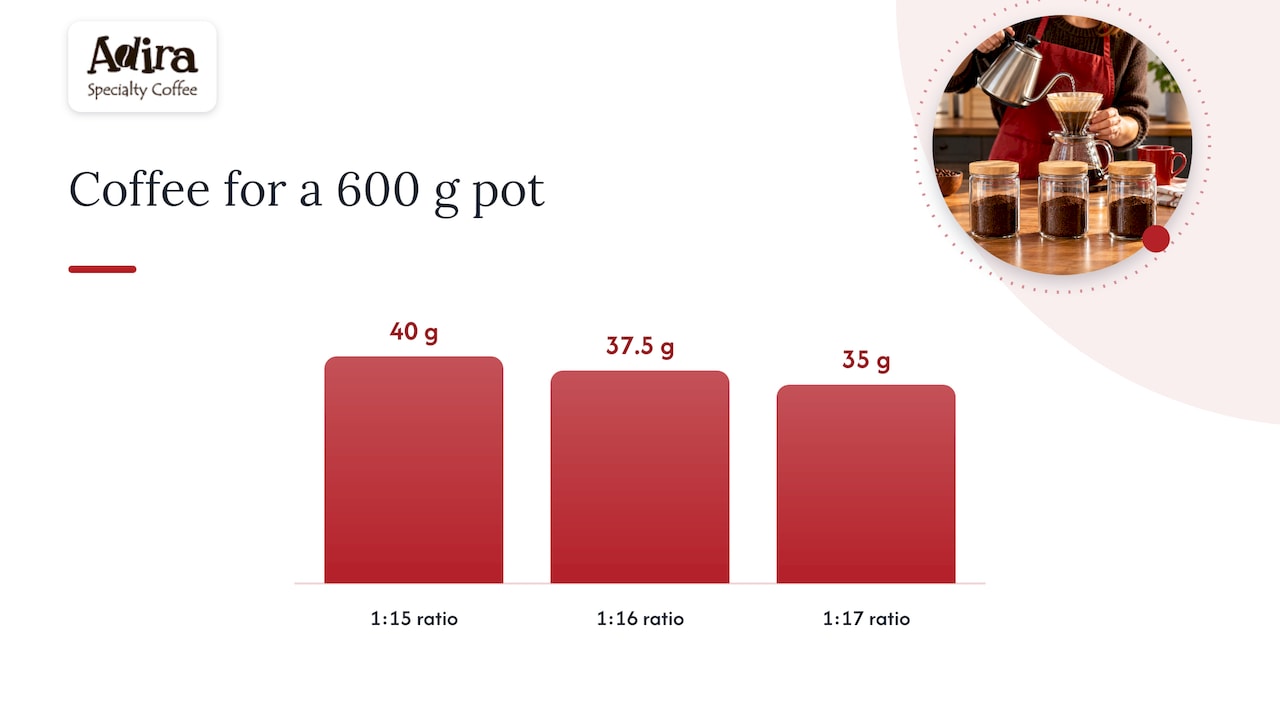
A simple worked example: for a 600 g (about 20 oz) pot, 1:16 is 37.5 g of coffee. If that tastes bitter and heavy, drop to 1:17 and use about 35 g. If it tastes pleasant but thin, go the other way to 1:15, around 40 g. Coffee Brew Guide’s troubleshooting table makes the same distinction between weak-but-pleasant and too-strong-but-balanced. Weigh it on a kitchen scale, because scoops vary a lot with roast and grind. We go deeper in our 1:16 baseline ratio guide and the one on automatic drip ratios.
Step 3: Shorten the contact time
Longer contact pulls more bitterness. Serious Eats suggests a total pour-over time of three to four minutes and says that past five minutes the brew starts pulling astringent flavors. Breville’s U.S. troubleshooting page suggests shortening brew time by 30 seconds to a minute per test.
| Brewer | Where time hides | Quick adjustment |
|---|---|---|
| Pour-over (V60, Chemex) | Slow draw-down from too fine a grind | Coarser grind, pour a bit faster |
| French press | Coffee sitting in the carafe | Coarser grind, plunge and pour out all the coffee at once |
| Drip machine | Warming plate cooking the pot | Move coffee to a thermal carafe |
| Espresso | Long, slow shots | Coarser grind or a shorter yield |
The drip and warming-plate point comes from Coffee Brew Guide, and the espresso advice from Home Coffee: bitter, dry shots call for a coarser grind or a shorter yield. If you pull espresso, our bitter espresso dial-in guide and shot troubleshooting guide walk through it shot by shot.
Step 4: Mind the water
Temperature
GE says water that is too hot over-extracts and pulls out more bitter compounds. Breville’s range is 195 to 205°F, and Serious Eats puts ideal automatic drip near 198 to 202°F. For a kettle, Serious Eats recommends 205 to 210°F because water loses about 10°F while pouring. Darker roasts dissolve more easily, so Brew Coffee At Home suggests cooler water, about 185 to 190°F, for medium and dark roasts.
Keep expectations realistic. A research review at NIGAMI LAB found that when strength and extraction were held constant, 87 to 93°C showed no significant bitterness difference. A few degrees will not rescue a recipe whose grind and ratio are off, so fix those first.
Hardness and filtering
Breville notes that bicarbonate in hard water can bring out bitter notes even in properly brewed coffee, and recommends filtered water. America’s Test Kitchen suggests testing tap water with a hardness kit and switching to distilled if it is too hard.
Step 5: Start with fresher, lighter beans
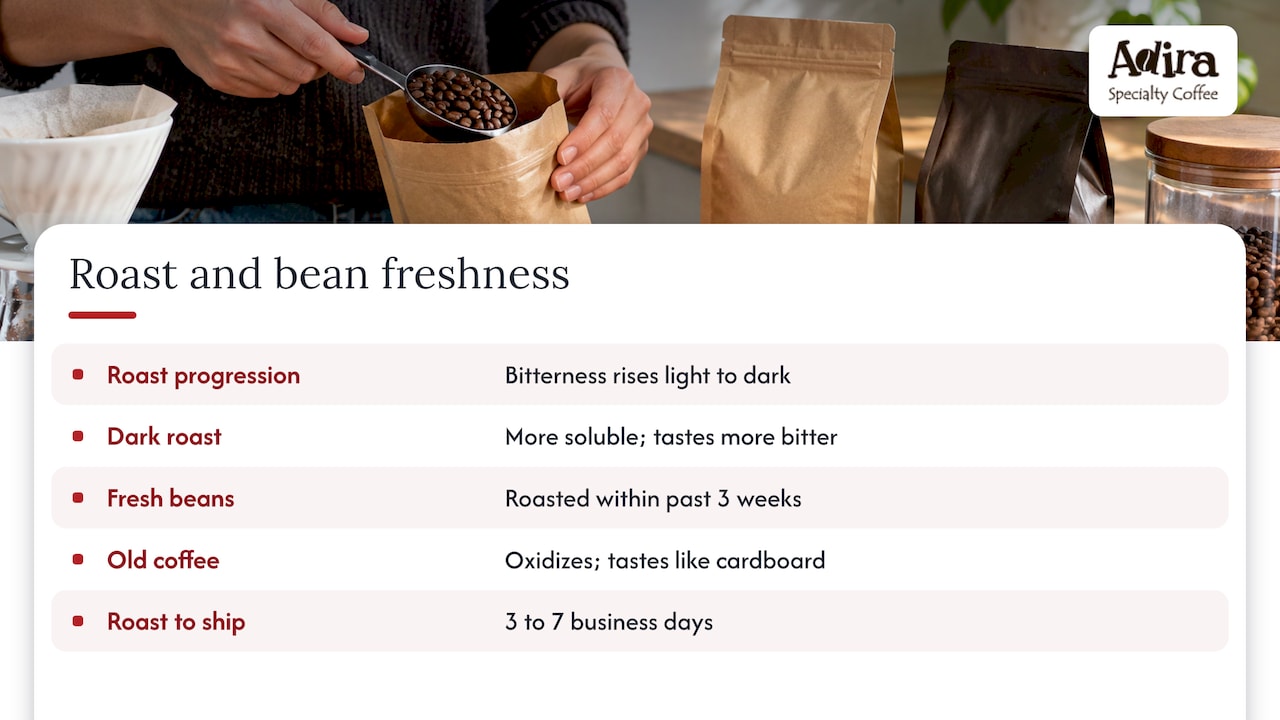
Roast level matters more than most people expect. In a sensory panel study reported by NIGAMI LAB, trained assessors rated Ethiopian arabica cold brew, and bitterness scores rose significantly from light to medium to dark roast. Martha Stewart’s reporting quotes experts who say darker roasts are more soluble and taste more bitter, and recommend fresh, high-quality Arabica in the roast degree you like.
Freshness is the other half. The same publication’s brewing-mistakes piece cites a New York coffee roaster saying beans roasted within the past three weeks make the best coffee, and that old coffee oxidizes and tastes like cardboard. Supermarket bags often sit for months with no roast date, which is why the same machine can taste smoother with a fresh bag.
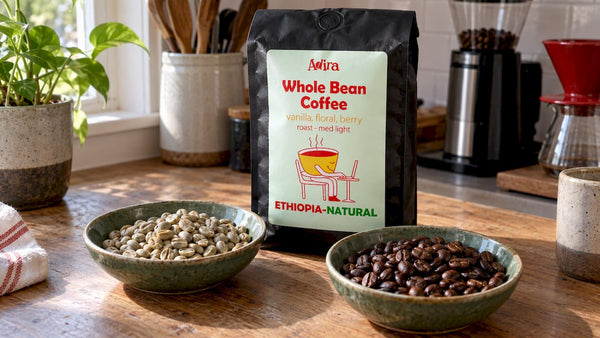
That is the reason we roast after you order and ship in 3 to 7 business days. If you want to start low on bitterness, our single origins from Colombia, Ethiopia, Costa Rica, Mexico and Sumatra let you taste what the bean itself offers, and our signature blends include Adira Blend, a rich, chocolatey everyday espresso and drip coffee.
Step 6: Clean the machine
A spotless grinder and brewer can fix bitterness that no recipe change will. The Martha Stewart brewing-mistakes piece says uncleaned pots leave rancid coffee oil in the brew, and advises rinsing thoroughly and using soap and water. Talk About Coffee reports that coffee oils go rancid within 24 to 48 hours at room temperature, giving a stale, slightly bitter flavor. A simple routine from the same page:
- Rinse the carafe and basket after every brew.
- Wash them with soap and hot water weekly, including the shower head on a drip machine.
- Descale monthly. Mineral scale is a separate buildup that soap does not remove.
Fixing a cup you already brewed
Sometimes the pot is made. A tiny pinch of salt can help: ScienceAlert reports that a 1995 study found salt made sweet-and-bitter mixtures taste sweeter and less bitter. Start with a few grains and adjust, since taste varies from person to person.
Milk helps too. NIGAMI LAB summarizes a 2025 study in which blending 70% medium or dark roast coffee with 30% milk or oat drink significantly lowered how often bitterness dominated the taste. Use these as a rescue, then go back to the steps above for the next pot.
Troubleshooting by machine
- Drip machines (Moccamaster, Cuisinart, Mr. Coffee, Ninja): Weigh the coffee to 1:16, go slightly coarser, and keep the finished pot off a hot plate.
- Espresso machines (Breville, De’Longhi): Coarsen one step, or stop the shot earlier. If the shot is both sour and bitter, Home Coffee points to uneven extraction, so check distribution and grinder consistency.
- French press and moka pot: Coarse grind, and pour everything out as soon as it is done.
- Cold brew and iced drinks: Dark roast raises bitterness here too, so choose a medium roast. Our Cold Brew is a ready-made option.
If the opposite is your problem and your cup tastes thin, see our watery coffee fix. If you want a bolder cup without harshness, read how to make coffee stronger. To keep everything you brew with within arm’s reach, a tidy setup helps, and this guide to a coffee station setup shows how to place the kettle, grinder and scale so you can repeat your recipe the same way every morning.
Our perspective
Most bitter coffee is not a skill problem. It is a bag problem and a settings problem, and people usually blame their own taste or their machine.
We started Adira because we could not find a supermarket coffee worth a second cup. Roasting after you order means the beans reach you within days of the roaster, not months. Then we give every bag a starting recipe for the machine you already own, so the first cup is close and the second is better.
Change one thing at a time, write down what you did, and trust your tongue. Bitter means go coarser, sour means go finer. That is most of the craft.
Stefan
Fresh beans and a starting recipe, delivered
We roast every bag after you order and ship it in 3 to 7 business days, whole bean or ground for your brewer, with a starting recipe for your machine. Your first bag ships free with the code FIRSTBAG, and orders over $35 always ship free. If you drink a bag every couple of weeks, Autopilot delivers every 2 weeks or every month with up to 15% off, free shipping, and the option to skip, pause or cancel anytime. Every bag also sends $1 to young leaders in Bulgaria.
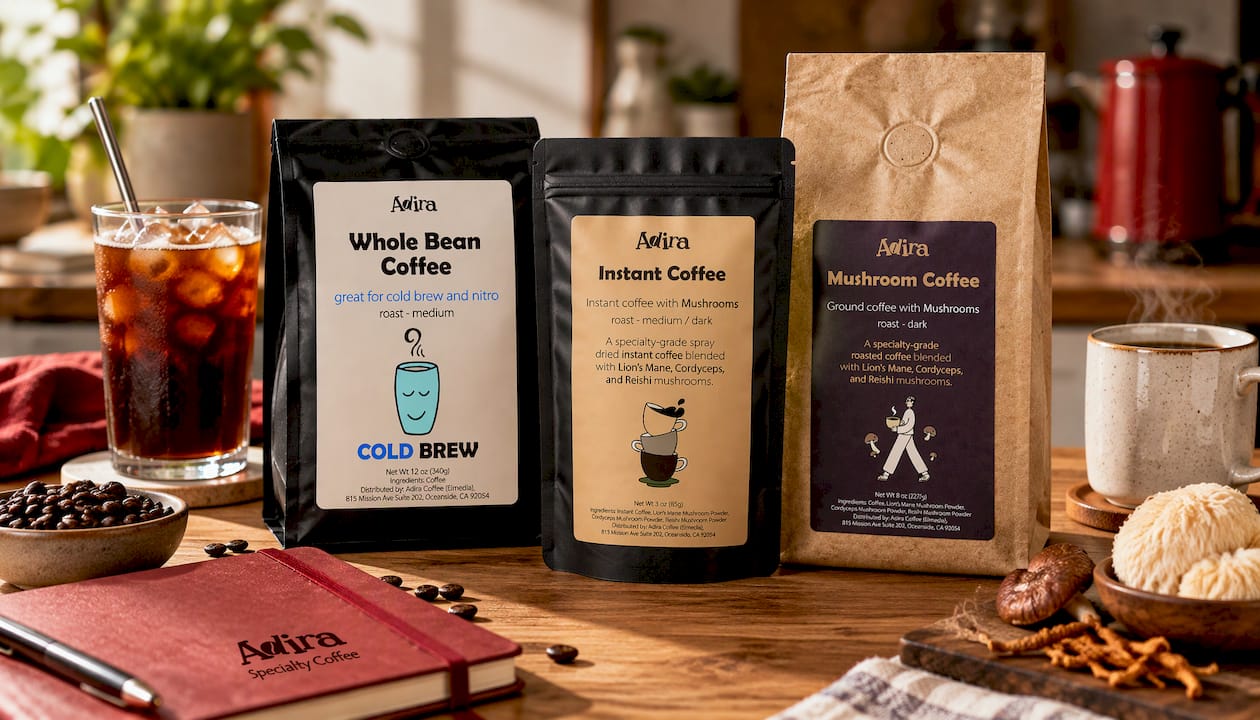
Browse the Adira Coffee blends to find your everyday cup.
FAQ
How do I make coffee less bitter without sugar or creamer?
Grind coarser, brew a little shorter and use slightly less coffee. If you still taste bitterness, move to a medium roast and make sure your beans are fresh. A few grains of salt can also soften a finished cup.
What is the least bitter kind of coffee?
Lighter and medium roasts are less bitter than dark roasts, according to the sensory panel results above. Choose freshly roasted Arabica, and consider a single origin to taste the bean’s natural sweetness.
Does a cleaner machine really change the taste?
Yes. Rancid coffee oils and mineral scale both degrade the cup. Rinse after each brew, wash weekly with soap and hot water, and descale monthly.
Does hotter water make coffee more bitter?
Too-hot water over-extracts, so keep drip near 195 to 205°F. But if grind and ratio are already right, a few degrees will not change much, so adjust grind first.
Sources
- How to Brew the Perfect Cup of Coffee, America’s Test Kitchen
- How to Make the Best Pour-Over Coffee at Home, Serious Eats
- How to Dial In Coffee, Home Coffee
- Tips for Making Coffee, GE Appliances
- Bitter coffee: Why it happens and how to fix it, Breville
- What Is The Ideal Coffee Brewing Temperature?, Brew Coffee At Home
- Coffee bitterness, NIGAMI LAB
- How to Make Coffee Less Bitter, According to Experts
- 9 Coffee Brewing Mistakes You’re Probably Making
- How to Clean Your Coffee Maker Or Coffee Pot, Talk About Coffee
- People Are Adding Salt to Their Morning Coffee, ScienceAlert
- Coffee Station Setup, Homable
Recommended
Brew it with the right coffee
The bag this guide was written around. Roasted after you order, shipped from California.
More to try
All coffee Dark roastLightDark
Adira Blend
Dark chocolate, Caramel, Roasted nuts
Invests in young leaders in Bulgaria
$24.99
 Medium-light roastLightDark
Love Blend
Milk chocolate, Caramel, Floral lift
Invests in young leaders in Bulgaria
$24.99
 Medium-dark roastLightDark
Ocean Blend
Cocoa, Soft caramel, Clean vanilla finish
Invests in young leaders in Bulgaria
$24.99
Never run out.
Never pay shipping.
Any Adira coffee with Monthly Sender: up to 15% off every delivery, free shipping every time, skip, pause or cancel whenever you like.
Set up Monthly Sender