
Start at 1:16, coffee to water, for most automatic drip machines. That’s the practical baseline: about 22 grams of coffee for every 350 grams (12 ounces) of water. Want it stronger? Tighten to 1:15. Want it lighter, or you’re chasing Golden Cup territory? Loosen to 1:17–1:18. Weigh the coffee on a scale, not a scoop, and adjust from there.
TL;DR:
- Using a coffee-to-water ratio of around 1:16 provides a practical balance, compensating for typical home machine temperature and saturation inconsistencies.
- For larger batches or full carafes, tightening the ratio to 1:15 enhances extraction efficiency and flavor consistency.
- Weigh coffee and water precisely with a scale to eliminate guesswork and achieve reproducible brewing results, as scoops can vary by 15 to 20 percent.
- Adjust grind size first to fix flavor issues, then modify the ratio only after testing grind and dose separately for optimal extraction.
- Freshly roasted beans provide the best results, with the default ratios suited for peak freshness, especially when using high-quality drip machines.
Table of Contents
- Why 1:16 Beats the “Official” Drip Coffee Ratio
- Drip Coffee Measurements for Every Batch Size
- Get a Scale: Scoops Are Guessing, Not Measuring
- Full Carafes Need a Tighter Coffee Brewing Ratio
- Grind Size, Roast Level, and When to Change What
- Troubleshooting Weak, Bitter, or Sour Drip Coffee
- Adira Coffee’s Tested Starting Recipes
- Founder Perspective: Dialing In Drip at Home
- Get Fresh Beans Dialed In for Your Exact Ratio
- Sources
Why 1:16 Beats the “Official” Drip Coffee Ratio
The Specialty Coffee Association’s Golden Cup standard calls for 55 grams of coffee per liter of water, which works out to roughly 1:18.18, aiming for a brew strength of 1.15–1.35% TDS. That’s the lab number, tuned for machines that hold water at a steady 92–96°C and saturate the grounds evenly. Most kitchen drip machines don’t run that hot or that evenly. That gap is exactly why practical guides land on a tighter 1:16 as the everyday starting point for home brewers, then invite you to loosen toward the SCA number if your machine runs hot or you prefer a lighter cup.
Think of 1:16 as the ratio that compensates for an average machine, and 1:18 as the ratio you earn once you know your machine runs closer to lab conditions. Both are valid. They’re just calibrated to different equipment.
Drip Coffee Measurements for Every Batch Size
Coffee-to-water math gets confusing fast once “cups” enter the picture, because a machine’s cup marking is almost always 5 ounces (about 148 mL), not the 8-ounce cup you drink from. A “12-cup” machine typically holds around 1,776 mL total, and at 1:16 that means roughly 111 grams of coffee, not the 12 tablespoons a scoop-based habit might suggest.
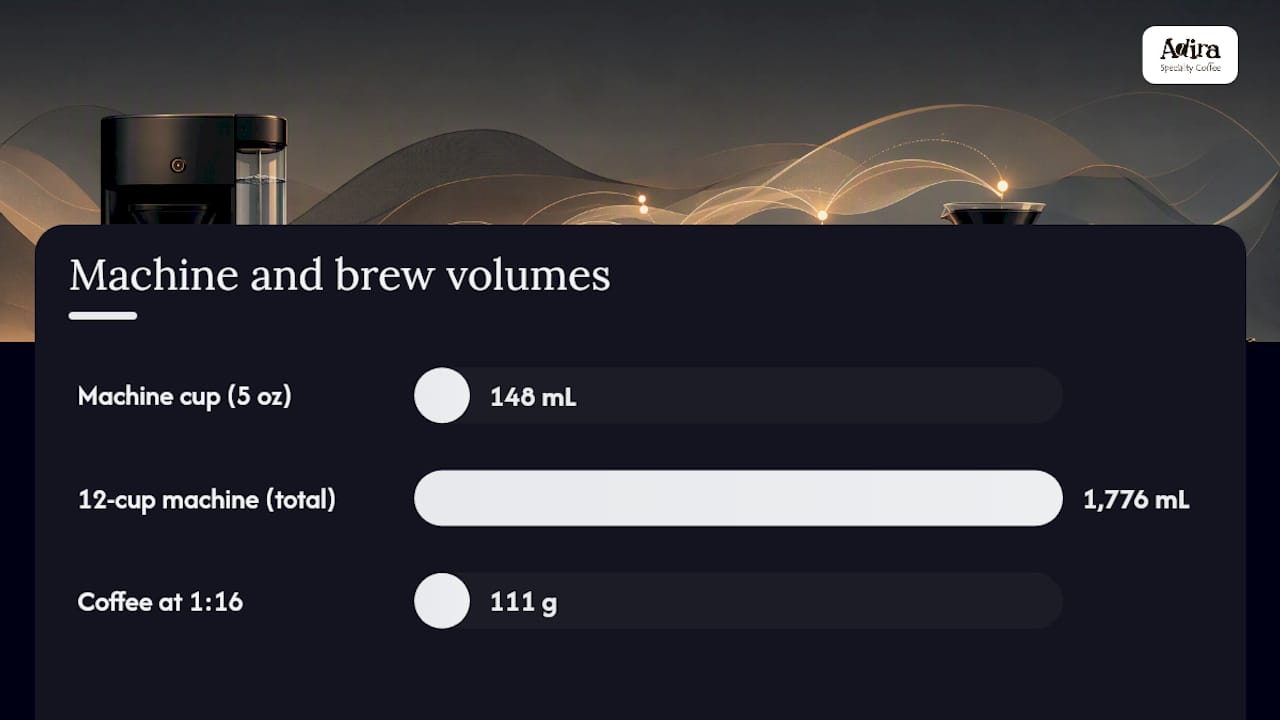
Here’s how the numbers break down at three common starting ratios, plus the SCA reference point:
A few things worth knowing before you start scaling recipes off this table:
- Grams and milliliters are close enough for water that you can treat them as interchangeable for home brewing.
- A rounded tablespoon of ground coffee runs about 5 to 7 grams, but scoop size varies wildly by grind and how packed it is.
- Machine-cup markings (5 oz) are not the same as the mug you drink from (usually 8 to 12 oz), so always check your carafe’s actual capacity in ounces or milliliters.
Get a Scale: Scoops Are Guessing, Not Measuring
Scoops introduce 15 to 20% dosing variance from one pour to the next, even when you’re trying to be consistent. That’s the difference between a cup that tastes balanced and one that tastes thin or harsh, using the exact same beans and machine. A scale removes the guesswork entirely.
Buy a scale with these specs:
- Resolution: 0.1 gram increments, minimum. Anything coarser hides the exact variance you’re trying to eliminate.
- Capacity: 2 kilograms or more, so a full 12-cup carafe with pitcher doesn’t overload it.
- Tare function: lets you zero out the weight of your carafe or filter before adding coffee.
- Power: USB-rechargeable beats battery-only if you’re weighing coffee daily.
Pro Tip: Weigh your water too, not just the coffee. A kitchen scale under your carafe for ten seconds tells you exactly how much water your machine actually dispenses, which is often different from what the fill line claims.
Full Carafes Need a Tighter Coffee Brewing Ratio
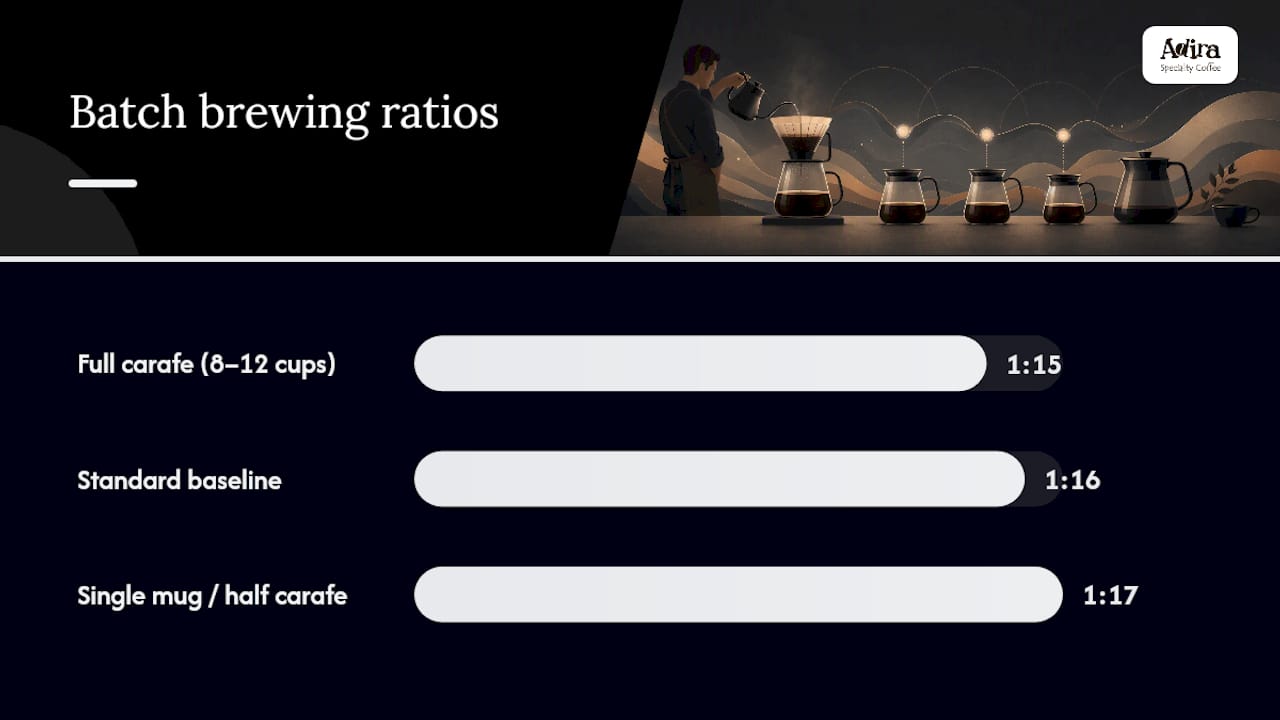
Extraction efficiency drops as batch size grows, because more grounds mean less water contact time per gram and a shallower, faster flow through a wider coffee bed. A single mug’s worth of grounds gets saturated more thoroughly than a full 12-cup load moving through the same drip cycle. That’s why the same ratio doesn’t taste the same across batch sizes.
Adjust for it directly instead of fighting your machine:
- For full carafes (8 to 12 cups), tighten to 1:15 rather than 1:16.
- For a single mug or a half carafe, you can loosen slightly toward 1:17 without losing body.
- If you’re brewing for a group, err stronger rather than weaker: it’s easy to dilute an overly strong pot with hot water, but you can’t rescue a weak one without starting over.
- Test one batch size at a time. Changing ratio and batch size together makes it impossible to tell which variable moved the flavor.
Grind Size, Roast Level, and When to Change What
Diagnose grind before you touch the ratio. A ratio adjustment fixes strength; a grind adjustment fixes extraction, and the two problems taste different even when they seem similar at first sip.
- Check grind first. If your coffee tastes sour or thin despite a normal dose, the grind is likely too coarse for your machine’s contact time.
- Match grind to roast. Light roasts are denser and benefit from a finer grind paired with a tighter ratio, closer to 1:15. Dark roasts are more porous and extract faster, so a coarser grind and a looser ratio around 1:17 usually taste cleaner.
- Change one variable at a time. Move dose by 2 to 4 grams, or shift grind by one notch on your grinder’s setting, then taste before making a second change.
Troubleshooting Weak, Bitter, or Sour Drip Coffee
Most drip coffee problems trace back to one of three causes, and each has a specific fix rather than a vague “brew it stronger” answer.
- Weak or watery: usually under-dosed coffee, too coarse a grind, or a machine running cooler than it should. Add 3 to 5 grams, grind one notch finer, and confirm your machine reaches proper brewing temperature.
- Sour or sharp: a sign of under-extraction. Tighten your ratio or grind finer so the water pulls more from the same grounds.
- Bitter or ashy: over-extraction. Coarsen the grind or loosen the ratio so less gets pulled from the grounds.
What “balanced” actually means: the SCA Golden Cup framework defines a balanced cup as 1.15–1.35% TDS with an 18 to 22% extraction yield. Below that range tastes sour and thin; above it tastes bitter and dry. Your ratio and grind together determine where you land in that window.
Once you understand this and other basics behind why coffee extraction works the way it does, troubleshooting stops feeling like guesswork and starts feeling like tuning a dial.
Adira Coffee’s Tested Starting Recipes
The coffee used in these recipes is roasted in small batches and shipped within days, which means the beans are close to peak freshness when they reach your machine. That freshness changes how forgiving a ratio is: stale beans extract unevenly no matter how precisely you weigh them.
A few starting points worth trying with your own dose:
- Standard automatic drip: 1:16, medium grind, adjusted a half notch coarser for darker roasts.
- Moccamaster or similar high-heat drip brewers: closer to 1:17, since these machines run hotter and extract more efficiently. Adira’s Moccamaster starting recipe walks through the exact dose.
- Single-origin light roasts: 1:15, fine grind, to draw out clarity without tipping into sourness.
Adira adjusts these defaults based on roast profile and customer feedback, not a single fixed number for every bag.
Founder Perspective: Dialing In Drip at Home
I run two experiments constantly at home: one mug versus a full carafe, same beans, same grind, just different dose. The full carafe almost always needs that tighter 1:15 pull to taste as balanced as the single mug at 1:16 or 1:17. It’s a small adjustment, but it’s the one most people skip, and it explains half the “my coffee tastes different depending on how much I make” complaints I hear. Try the recipes above on your own machine this week and see where your batch size actually wants to sit.
— Stefan
Get Fresh Beans Dialed In for Your Exact Ratio
This coffee is roasted to order in small batches and shipped within days, so the ratios above actually behave the way they’re supposed to instead of fighting stale, oxidized beans. That freshness matters more for drip brewing than almost any other variable, since a tired bean under-extracts no matter how carefully you weigh it.
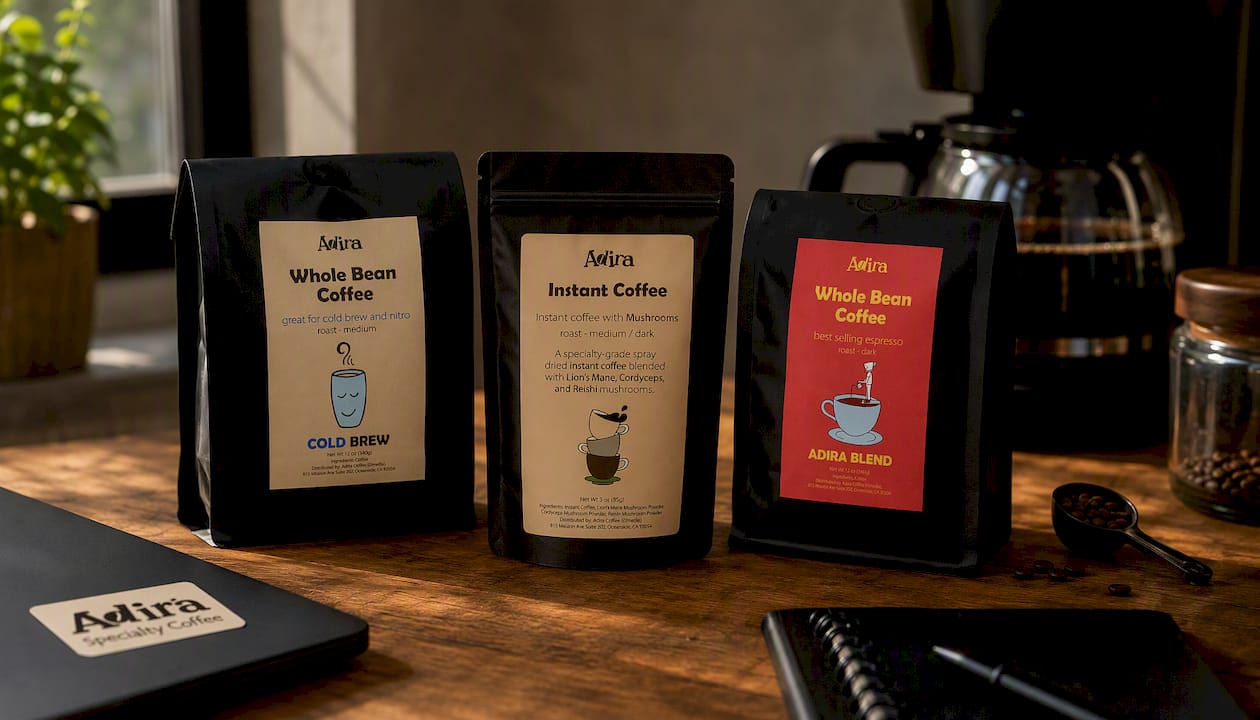
The Adira Blend is built to perform across drip and espresso, so it’s a solid place to test the 1:16 starting ratio without second-guessing the bean. If you’re leaning toward something cold-brewed for warmer months, the Cold Brew lineup uses a different extraction logic entirely, worth exploring once your hot-brew ratio is locked in. And for mornings where a full drip cycle isn’t practical, the Instant Coffee with Mushrooms skips the ratio math altogether. Order a bag, weigh out 1:16, and adjust from there based on what your specific machine and roast need.
Sources
- What is the Golden Cup standard — Moccamaster support
- Drip Coffee Ratio (Simple Chart + Fixes) 2026 — CoffeeGearHub
- Drip Coffee Calculator — Grounds & Water for Your Machine | Coffee Nutrify
- What quantity of ground coffee should I use for an automatic drip machine? — Coffee.StackExchange