
The official Moccamaster brew ratio is 55 grams of coffee per liter of water, which works out to roughly 2 level tablespoons per 6 oz of water. That single number, confirmed by Moccamaster’s own guidance, is the industry standard starting point for filter coffee on this machine. For a full 1.25 L carafe, that’s about 69 g (roughly 7 level scoops). For a 1.8 L batch, you’re looking at 99 g.
If you’re using tablespoons: 2 level tablespoons per 6 oz of water is the quick-and-dirty home conversion. A kitchen scale gets you there faster and more accurately, but the tablespoon rule holds up well enough for everyday brewing.
Key Takeaways
The most reliable Moccamaster brew ratio is 55 grams of coffee per liter of water, equivalent to roughly 2 level tablespoons per 6 oz, with grind size and water quality determining whether that ratio actually performs.
| Point | Details |
|---|---|
| Official brew ratio | Use 55 g per liter (approx. 2 tbsp per 6 oz) as your starting point for every batch size. |
| Use a scale, not scoops | A digital scale removes density variables; tare with the filter basket in place for accuracy. |
| Medium-coarse grind | Target 500–800 microns; KM5 setting 5 is the ECBC-approved starting point. |
| Too strong? Dilute first | Moccamaster recommends adding hot water to the cup before reducing your dose. |
| Adiracoffee for Moccamaster | Love Blend and Mushroom Coffee Medium Roast ship fresh with a personalized Moccamaster recipe included. |
Table of Contents
- Quick reference chart for common Moccamaster batch sizes
- How to brew a consistent Moccamaster carafe step by step
- What grind size works best in a Moccamaster?
- Does water quality actually change your Moccamaster brew?
- How the Moccamaster handles bloom, and when to help it
- How to fix a bitter, sour, or weak Moccamaster brew
- How to scale the Moccamaster recipe up or down
- Which Adiracoffee beans work best in a Moccamaster?
- Why the ratio matters more than the machine
- Freshly roasted beans for your Moccamaster, dialed in from day one
- Sources
Quick reference chart for common Moccamaster batch sizes
The table below uses Moccamaster’s official formula chart as its source. Gram figures are ±5 g to account for roast density differences. Scoop counts assume a standard 7 g level coffee scoop.
A note on small batches: Moccamaster recommends brewing at least 0.3 L to maintain proper brew temperature and saturation. Below that threshold, the machine’s heating element and spray arm aren’t working in their designed range. If you want a single small cup, a manual pour-over method like the Kalita Wave 185 recipe gives you more control at low volumes.
Scoops are approximate. Roast level, grind size, and bean density all shift the weight per scoop. A scale removes that guesswork entirely.
How to brew a consistent Moccamaster carafe step by step
Start with the 55 g/L ratio, then follow these steps:
- Weigh your beans. Use a digital kitchen scale. For a 1.25 L brew, measure 69 g whole beans before grinding.
- Set your grind. Medium-coarse, like rough sand or coarse sea salt. Grind fresh, right before brewing.
- Rinse the paper filter. Place the filter in the basket, pour a small amount of hot water through it, and discard. This removes paper taste and prevents the filter from absorbing your first pour.
- Fill the reservoir. Measure water directly into the reservoir using the carafe markings or a separate scale. Cold tap or filtered water works well.
- Add ground coffee to the rinsed filter. Level the bed gently with a finger or spoon.
- Start the brew. Close the lid and switch on. The machine handles the rest.
- Remove the carafe when done. Don’t leave coffee on the hot plate longer than 20 minutes; it continues to cook and turns bitter.
Pro Tip: For very fresh beans (roasted within the last 3–5 days), the CO2 off-gassing can push water off the grounds unevenly. Pour about 30–40 ml of hot water manually over the grounds before starting the machine, wait 30 seconds, then start the brew. This short manual bloom lets the gas escape and gives you a more even extraction.
What grind size works best in a Moccamaster?
Moccamaster recommends a medium-coarse grind, roughly 500–800 microns, with a texture similar to coarse sand or sea salt. Too fine and you’ll over-extract, get bitterness, and risk clogging the paper filter. Too coarse and the water rushes through without extracting enough, leaving you with a sour, thin cup.
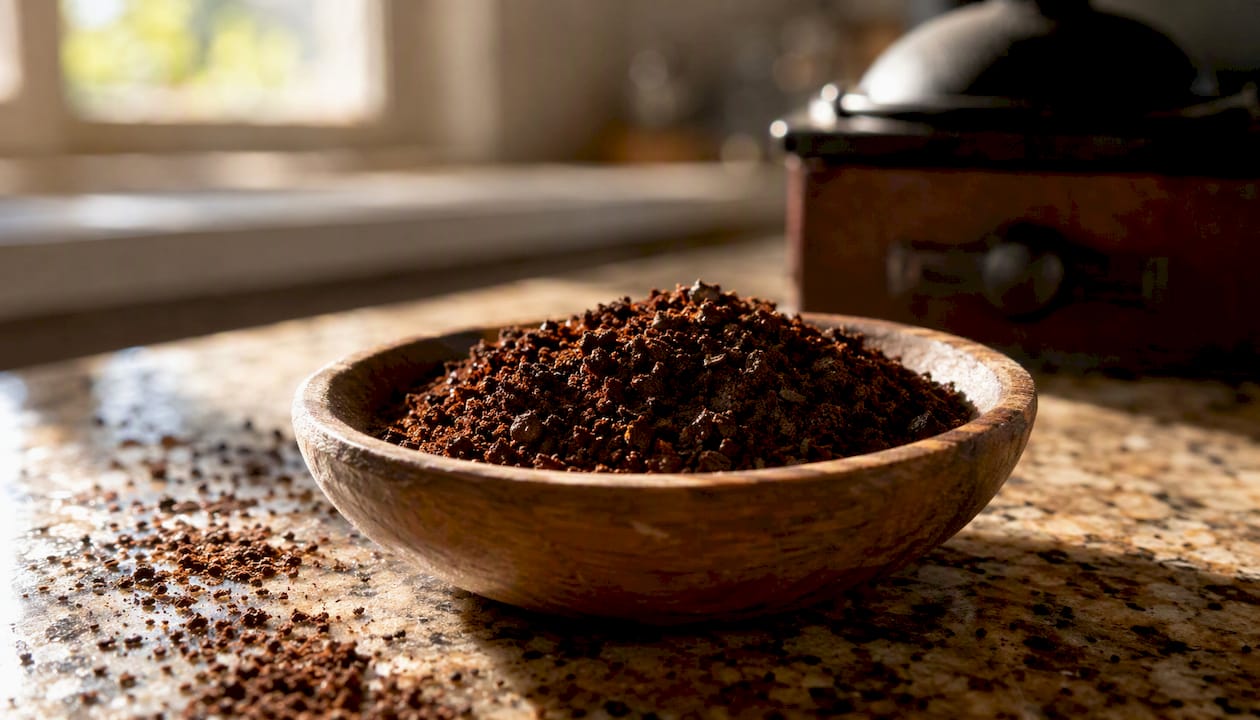
If you’re using the KM5 burr grinder, the ECBC-approved starting point is setting 5. Many U.S. home brewers find 5.5–6 suits their taste better, especially with medium or light roasts. The KM5 adjustment knob runs from 1 (fine) to 9 (coarse); Moccamaster advises not going below 4 for use with their brewers.
One practical tip: when changing the grind setting on the KM5, run the grinder briefly before moving the knob to clear residual grounds from the burrs. This prevents jamming and ensures your new setting is actually what you’re brewing with. Full workflow guidance is at the KM5 grinder 101 page.
For a deeper look at grinding workflow and burr maintenance, Adiracoffee has a practical guide worth bookmarking.
Does water quality actually change your Moccamaster brew?
Yes, more than most people expect. Here’s what matters:
- Use fresh tap or filtered water. It should taste clean and drinkable on its own. If your tap water has a strong chlorine smell, run it through a basic filter first.
- Avoid distilled or reverse-osmosis water. Very low-mineral water can produce flat-tasting coffee and may stress the machine’s copper heating element over time.
- Target brew temperature: 197–204°F (92–96°C). The Moccamaster’s thermoblock is designed to hit this range automatically, which is ideal for filter extraction. You don’t need to adjust anything; just don’t use water that’s already been sitting in a kettle for an hour.
- Rinse the paper filter before brewing. Beyond removing paper taste, this step prevents the dry filter from wicking away the first few grams of water, which would throw off your actual brew ratio.
For a deeper look at how water mineral content affects extraction, the difference between tap and filtered water is worth understanding before you dial in your dose. The Coway guide on tap vs. filtered water breaks down the practical differences clearly.
How the Moccamaster handles bloom, and when to help it
The Moccamaster’s spray arm delivers water in a pulsed pattern that naturally wets the grounds before the main flow begins. Moccamaster documents this as a bloom-like behavior: you’ll see the coffee bed swell and bubble slightly in the first 30 seconds of the brew cycle. For most beans, this automatic wetting is sufficient.
For very fresh, gassy beans, a short manual pre-infusion helps. Use roughly 2 parts water to 1 part coffee by weight (so about 30 ml for 15 g of coffee), pour it evenly over the grounds, and wait 30 seconds before starting the machine. Don’t agitate or stir the bed; over-agitation can compact the grounds and restrict flow through the filter.
Safety note: Never remove the brew-basket lid or touch the outlet tube while the machine is actively brewing. The water coming through the spray arm is near boiling, and the steam pressure builds quickly inside the basket.
How to fix a bitter, sour, or weak Moccamaster brew
Taste the problem first, then change one variable at a time:
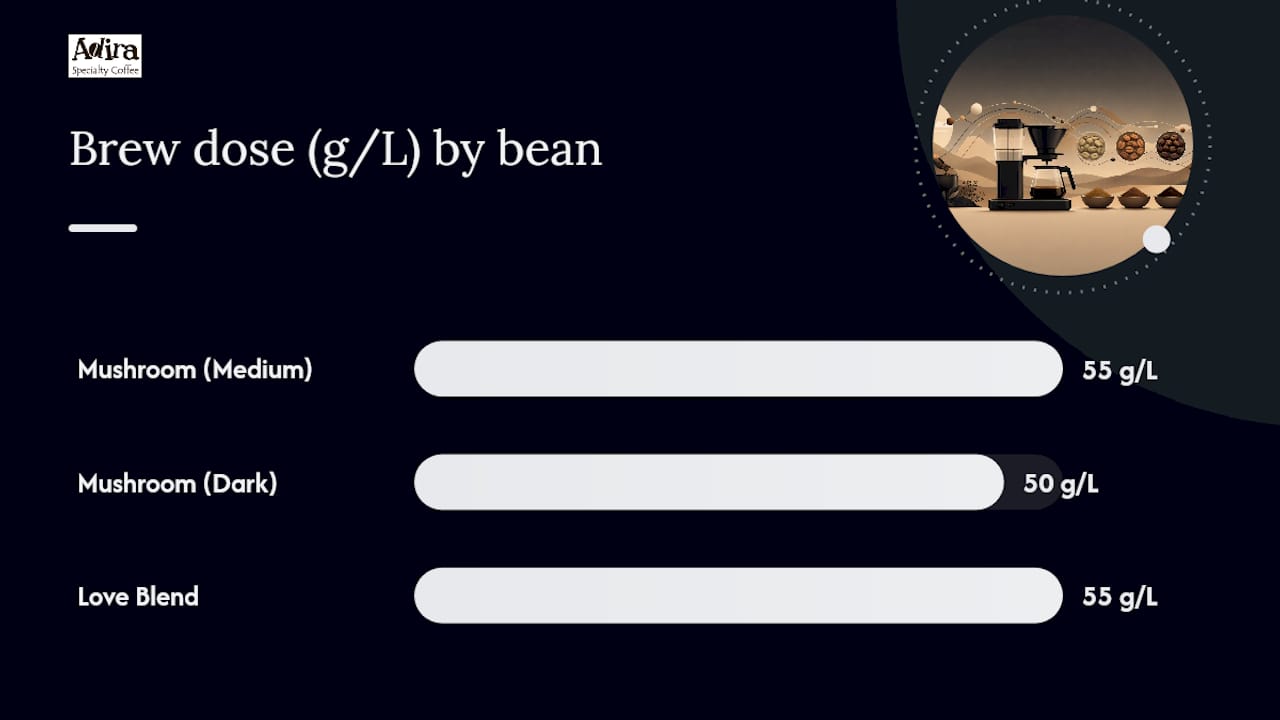
- Bitter or over-extracted: Grind is likely too fine. Move one step coarser on the KM5 (try 5.5 if you were at 5). Also check roast level; a very dark roast brewed at 55 g/L can tip bitter quickly. Try 50 g/L with dark roasts.
- Sour or under-extracted: Grind is probably too coarse, or your dose is too low. Move one step finer, or add 5 g to your dose. Verify the beans are fresh; stale beans under-extract even at the right grind.
- Too strong: Moccamaster’s own guidance says to dilute the finished cup with hot water rather than immediately reducing your dose. This preserves extraction quality while adjusting strength to taste.
- Too weak: Add 5 g to your dose before changing anything else. If that doesn’t help, try a slightly finer grind. Avoid just dumping in more coffee without adjusting grind; you’ll get more volume but not necessarily better flavor.
Quick debug checklist: taste → check grind size → check dose → check water freshness and temperature → adjust one variable, brew again. For more brewing troubleshooting tips, Adiracoffee’s guide covers common filter coffee faults in plain language.
How to scale the Moccamaster recipe up or down
The math is straightforward once you anchor to 55 g/L. Divide your target water volume (in milliliters) by 1,000, then multiply by 55.
- 0.5 L: 500 ÷ 1,000 × 55 = 27.5 g (round to 28 g)
- 1.0 L: 1,000 ÷ 1,000 × 55 = 55 g
- 1.8 L: 1,800 ÷ 1,000 × 55 = 99 g
If you prefer a stronger brew, use the 1:16 ratio that many independent guides recommend: divide water volume in grams by 16 to get your coffee dose. At 1.0 L, that’s 62.5 g. At 1.25 L, it’s 78 g. The official Moccamaster numbers sit closer to 1:18; the 1:16 range suits people who find the standard formula a bit light.
Tablespoon conversion caveat: One level tablespoon of ground coffee weighs roughly 5–7 g depending on grind size and roast density. Light roasts weigh less per tablespoon; dark roasts pack denser. A scale is always more accurate, but the 2 tablespoons per 6 oz rule works as a reliable starting point.
Pro Tip: Tare your scale with the empty filter basket in place, then add grounds directly into the basket. You skip the transfer step and avoid losing any coffee to static or spillage.
Which Adiracoffee beans work best in a Moccamaster?
The Moccamaster’s consistent temperature and even saturation reward beans with clarity and balance. Here’s how Adiracoffee’s lineup maps to the machine:
- Mushroom Coffee (Medium Roast): A natural fit for the 55 g/L starting ratio. Medium roasts extract cleanly at the machine’s 197–204°F range, and this blend’s balanced profile shows well in a full carafe. Start at KM5 setting 5.
- Mushroom Coffee (Dark Roast): Pull the dose back slightly to 50 g/L to avoid bitterness. Dark roasts extract faster, so a coarser grind (KM5 5.5–6) also helps keep the cup clean.
- Love Blend: Adiracoffee’s signature everyday blend, designed for automatic brewers. Use the standard 55 g/L and KM5 setting 5 as your baseline; this one is forgiving across a range of grind sizes.
- Cold Brew: Not a Moccamaster recipe, but worth knowing about if you want a concentrated cold option alongside your morning carafe.
Freshness note: Beans roasted within the past week will off-gas more CO2 during brewing. If your carafe tastes uneven or the bloom looks particularly aggressive, try the short manual pre-infusion described in the recipe section above, or let the bag rest open for 12 hours before brewing.
Why the ratio matters more than the machine
Most Moccamaster owners set the machine once and never touch it again. That’s fine for consistency, but it means a wrong starting ratio gets locked in permanently. The 55 g/L number isn’t arbitrary; it’s the result of decades of filter coffee research and sits at the center of the Specialty Coffee Association’s recommended brew strength range.
What surprises people is how much a 5 g swing changes the cup. At 50 g/L, a medium roast tastes noticeably lighter and brighter. At 60 g/L, the same beans taste fuller and slightly more bitter. The machine doesn’t compensate for either direction; it just brews what you give it. That’s why the ratio, not the machine settings, is where your control actually lives.
The other thing worth saying: if your Moccamaster brew consistently tastes flat or thin even at the right ratio, the problem is almost always the beans, not the machine. Fresh, well-sourced coffee brewed at 55 g/L on a properly maintained Moccamaster produces a genuinely excellent cup. Stale supermarket coffee brewed at the same ratio produces a genuinely mediocre one.
Freshly roasted beans for your Moccamaster, dialed in from day one
Adiracoffee roasts every bag to order in small batches in California and ships within days of roasting. That means the beans arriving at your door are at peak freshness for the bloom and extraction behavior described in this guide.

Every order comes with a personalized Moccamaster starting recipe built around your specific roast and grind preference. The Love Blend and Mushroom Coffee medium roast are the two most popular choices for Moccamaster brewers. Browse the full coffee beans collection, subscribe for 10% off, and get free US shipping on orders over $35.
Sources
- What formula of water to coffee does Moccamaster recommend?
- How to Make the Perfect Cup of Coffee: Perfect Cup of Coffee Ratio | Moccamaster USA
- Technivorm Moccamaster KBGT review (The Way To Coffee)