
Start with 1 gram of coffee for every 16 grams of water. That’s the Chemex ratio that Chemex, roasters, and specialty guides consistently land on as the most practical baseline, and it produces a clean, balanced cup with the body and clarity the Chemex is known for. The common working range is 1:15–1:17, with Chemex-affiliated sources treating 1:16–1:17 as the sweet spot for everyday brewing.
Here’s what 1:16 looks like in the cup before you read another word:
A typical 6-cup batch uses roughly 40–45 g of coffee with 650–720 g of water, depending on how strong you prefer it. The Specialty Coffee Association’s pour-over window runs approximately 1:15–1:18, so 1:16 sits comfortably in the middle. Aim for a total drawdown of 4:30–5:30 from first pour to empty bed. If you’re outside that window, grind adjustment is almost always the fix.
Key Takeaways
Start at 1:16, aim for a 4:30–5:30 drawdown, and change only one variable per brew until the cup is where you want it.
| Point | Details |
|---|---|
| Best starting ratio | Use 1:16 (coffee:water) as your baseline; the practical range is 1:15–1:17. |
| Common recipe doses | Single serve: 15 g / —. Two-cup: — / 400 g. Six-cup: 40 g / 640 g. |
| Target drawdown time | Aim for 4:30–5:30 total; adjust grind coarser if slow, finer if fast. |
| Dial-in order | Fix ratio first, then grind to hit drawdown time, then adjust temperature last. |
| Adiracoffee recommendation | Mushroom Coffee (Medium or Dark Roast), roasted to order and shipped within days. |
Table of Contents
- How the Chemex ratio shapes strength, body, and sweetness
- How to pick your starting ratio and dial it in
- A step-by-step Chemex recipe you can use right now
- What grind size actually works on a Chemex
- Fixing common Chemex problems
- Freshness, bean selection, and why we weigh everything
- The part of dialing in nobody talks about
- Fresh beans make the recipe worth following
- Sources
How the Chemex ratio shapes strength, body, and sweetness
Ratio controls strength and body more than it controls extraction. Moving from 1:17 to 1:15 doesn’t dramatically change whether the coffee is over- or under-extracted — it changes how dense and sweet the cup feels in your mouth. Testing across multiple ratios confirms that a tighter ratio like 1:14 pushes perceived sweetness and body noticeably higher, while a looser 1:17 produces something lighter and more tea-like. Grind and temperature are still the primary extraction levers.
The Chemex adds its own wrinkle. Its paper filter is significantly thicker than a standard V60 filter, which slows flow and extends contact time between water and grounds. Baratza’s Chemex guide notes this directly: the thick paper changes how ratio and grind interact, because slower flow means more extraction per gram of coffee even before you touch the ratio. That’s why a grind that works on a V60 will often run too slow on a Chemex and taste bitter or over-extracted.
A few things ratio can and can’t do:
- Stronger cup: tighten to 1:15 or 1:14
- Lighter, cleaner cup: loosen to 1:17 or 1:18
- Fix bitterness: adjust grind first, not ratio
- Fix sourness: check drawdown time and grind before changing ratio
Pro Tip: When something tastes off, change one variable at a time — ratio first, then grind, then temperature. Changing two things at once makes it impossible to know what actually fixed the problem.
How to pick your starting ratio and dial it in
The dial-in process is shorter than most people expect. Here’s the sequence that works:
- Start at 1:16. Weigh your dose and water. Brew and taste.
- Evaluate body and strength first. If the cup feels thin or watery, move to 1:15. If it feels heavy or muddy, try 1:17.
- Check your drawdown time. BaristaPath recommends using drawdown as the primary diagnostic: target 4:30–5:30 for Chemex. If you’re outside that window, adjust grind before touching ratio again.
- Adjust grind to hit the time target. Too slow (over 5:30)? Grind coarser. Too fast (under 4:30)? Grind finer.
- Tweak temperature last. Only move water temperature if ratio and grind are dialed and the cup still tastes flat or harsh.
For context on where different ratios land:
- 1:14–1:15: full body, pronounced sweetness, good for darker roasts or dessert-style cups
- 1:16: balanced, clean, works across most roast levels
- 1:17–1:18: delicate, tea-like, highlights floral and fruit notes in light roasts
Keep a simple log: dose, grind setting, water temperature, drawdown time, and one tasting note. Patterns show up fast. After three or four brews, you’ll know exactly which direction to move. Home brewing guides consistently recommend 1:15–1:16 as the most practical everyday baseline, with 1:16 being the easier starting point for new Chemex brewers.
A step-by-step Chemex recipe you can use right now
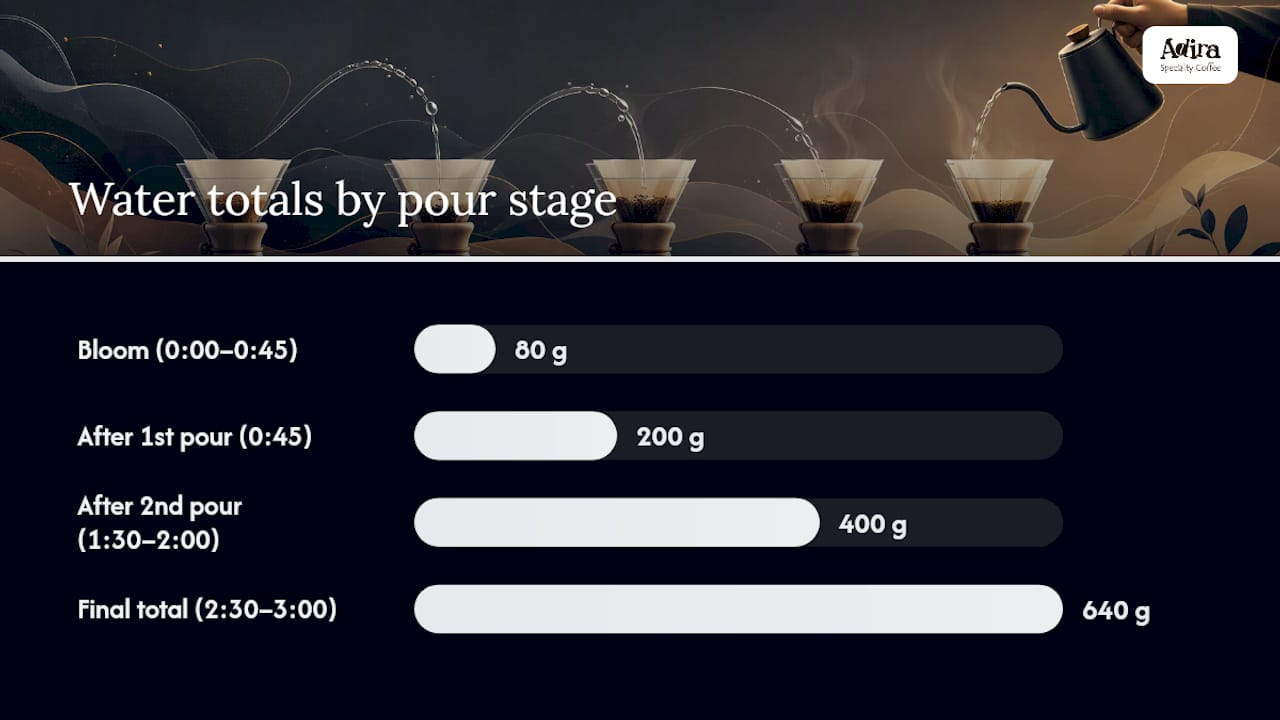
This recipe uses the 1:16 ratio at a 40 g dose — a standard 6-cup Chemex batch. Scale it down using the table in the opening section for single-serve or 2-cup yields.
What you need: Chemex, Chemex filter, scale, timer, gooseneck kettle (preferred), freshly ground coffee, water at 195–205°F.
A note on yield: The Chemex filter retains some water after brewing, typically 20–30 g. Your actual yield in the cup will be slightly less than the total water poured. Account for this if you’re targeting a specific volume.
Step-by-step:
- Rinse the filter. Place the Chemex filter with three layers facing the spout. Pour hot water through to rinse, then discard the rinse water. This removes papery taste and preheats the vessel.
- Add coffee. Grind 40 g at a medium-coarse setting. Add to the rinsed filter.
- Bloom (0:00–0:45). Pour 80 g of water (2× the coffee dose) evenly over the grounds. Start your timer. Let it bloom for 30–45 seconds. The bloom releases CO₂ and primes the bed for even extraction.
- First pour (0:45). Pour slowly to reach 200 g total water. Use a circular motion, keeping the pour steady and controlled.
- Second pour (1:30–2:00). Pour to 400 g total. Maintain a slow, steady spiral from center outward.
- Final pour (2:30–3:00). Pour the remaining water to reach 640 g total. Keep the bed level and avoid pouring directly on the filter walls.
- Drawdown. Let the bed drain completely. Target finish: 4:30–5:30 from first pour. Remove the filter and serve.
Water temperature matters more than most beginners expect. The 195–205°F range (roughly 30 seconds off a full boil at sea level) is the standard for filter coffee. Lighter roasts tend to benefit from the higher end of that range; darker roasts extract more easily and can taste harsh above 200°F. A gooseneck kettle gives you better pour control and helps keep the bed even, but it’s not a prerequisite. A consistent grind and a scale matter more.
What grind size actually works on a Chemex
Medium-coarse is the right starting point. Think coarser than a V60, closer to the texture of coarse sea salt. Because the Chemex filter is thicker than most pour-over papers, it already slows flow on its own. A grind that’s too fine will clog the filter and push your drawdown past 6 minutes, producing a bitter, over-extracted cup.
Starting points for common grinders:
- Comandante C40: clicks 28–32 as a starting range
- Baratza Encore: settings 22–26 as a starting range
- Timemore C2/C3: around 20–24 clicks
These are starting points, not fixed targets. Your actual setting depends on your specific grinder’s calibration, the bean’s density, and roast level. Use drawdown time to confirm: if the bed drains in 4:30–5:30, your grind is in range. Baratza’s guide targets a clean drain near 4.5–5 minutes as the baseline for Chemex.
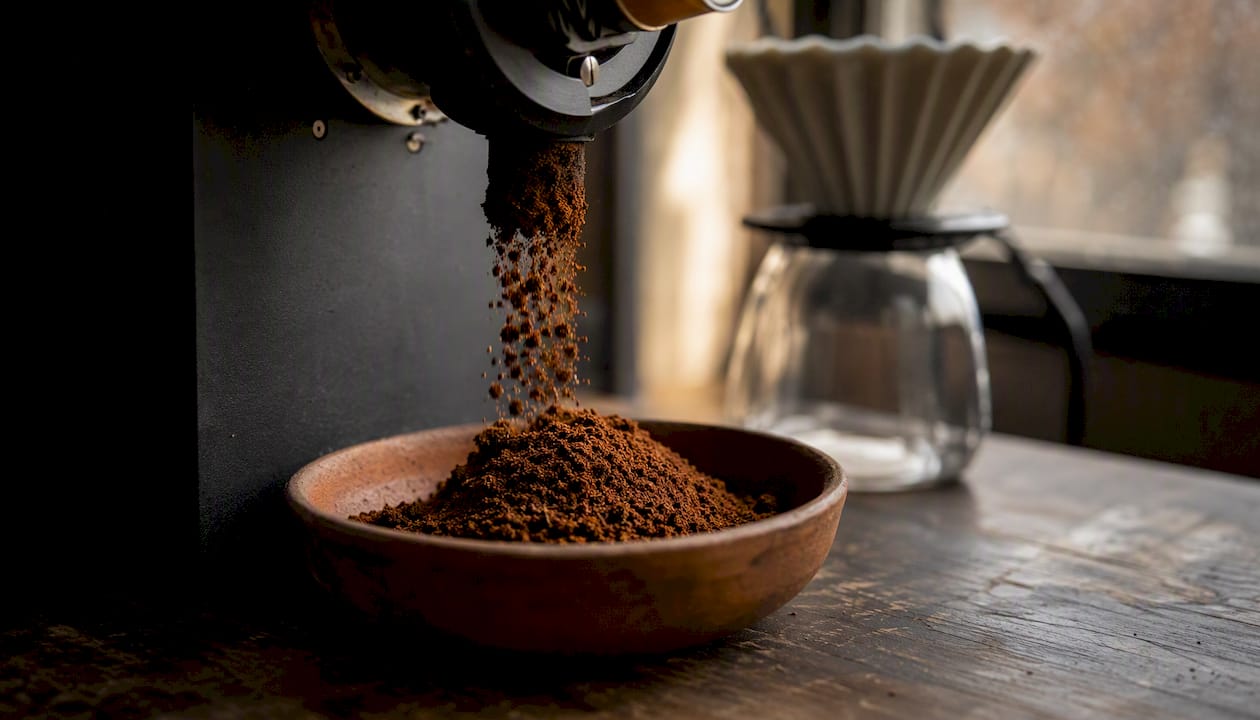
Burr grinders produce a more consistent particle size than blade grinders, which matters specifically on the Chemex. Fewer fine particles means less filter clogging and a more predictable drawdown. A blade grinder can work in a pinch, but the inconsistency shows up in the cup as uneven extraction.
Pro Tip: A scale and a timer are non-negotiable. A gooseneck kettle is a worthwhile upgrade once your ratio and grind are dialed. Prioritize grind consistency over kettle hardware when you’re deciding where to spend next.
Fixing common Chemex problems
Most Chemex problems trace back to grind or pour technique, not ratio. Here’s a quick reference:
| Symptom | Likely Cause | First Fix |
|---|---|---|
| Papery or flat taste | Filter not rinsed, or rinse water not discarded | Rinse thoroughly; discard all rinse water before adding coffee |
| Weak, watery cup | Ratio too loose or grind too coarse | Tighten to 1:15, or grind slightly finer |
| Sour, sharp taste | Under-extracted; drawdown too fast | Grind finer; slow your pour |
| Bitter, harsh taste | Over-extracted; drawdown too slow | Grind coarser; check for fines clogging filter |
| Drawdown stalls (>6 min) | Grind too fine or fines clogging filter | Grind coarser; check grinder for fines |
| Drawdown too fast (<3:30) | Grind too coarse | Grind finer; pour more slowly |
The papery taste issue trips up more people than any other problem. Rinsing the filter is the fix, but the detail that gets skipped is discarding the rinse water completely before adding coffee. Residual rinse water in the bottom of the Chemex dilutes the first pour and can carry that papery flavor straight into the cup.
Specialty educators note that thin or papery results usually point to grind size or temperature before ratio. If the cup tastes clean but weak, ratio is the right lever. If it tastes flat or papery despite a correct ratio, grind finer or raise water temperature by 5°F before changing anything else.
Pro Tip: Orient the Chemex filter so the three-layer side faces the spout. This keeps the filter stable during pouring and prevents it from collapsing against the spout opening, which can slow or block the drawdown.
Freshness, bean selection, and why we weigh everything
The ratio and recipe above assume one thing: reasonably fresh coffee. Beans roasted more than three or four weeks ago behave differently in the Chemex. The bloom is weaker, CO₂ has off-gassed, and the extraction tends to run flatter regardless of how precise your ratio is. Fresh-roasted beans produce brighter aromatics and a more active bloom, which sets up the rest of the brew.
Roast profile also shifts where you want to start:
- Light roasts: denser beans, slower extraction, often benefit from a slightly tighter ratio (1:15–1:16) and higher water temperature
- Medium roasts: the most forgiving range; 1:16 works well across most origins
- Dark roasts: extract faster, can taste harsh above 200°F; try 1:16–1:17 and stay toward the lower end of the temperature range
Weighing your dose and water every single time is the single most repeatable habit in home brewing. A 2-gram variance in dose changes the cup more than most people expect — and it’s the easiest variable to control precisely.
At Adiracoffee, every bag ships within days of roasting, which means the bloom you get on day 7 is genuinely different from day 21. Peak flavor for most filter roasts falls between 7 and 21 days post-roast. After that, you may need to grind slightly finer or tighten the ratio by a point to compensate for reduced CO₂ activity.
Store beans in an airtight container away from light and heat. Avoid the freezer unless you’re storing a large quantity long-term and can portion it without repeated freeze-thaw cycles.
The part of dialing in nobody talks about
Most guides tell you to change one variable at a time. That’s correct. What they don’t say is that the first variable worth changing is almost never ratio.
When a Chemex cup tastes off, the instinct is to add more coffee. Sometimes that’s right. More often, the problem is grind consistency or pour technique, and adding more coffee just makes an uneven extraction taste stronger and more uneven. Ratio is a finishing lever, not a rescue tool.
The brewers who get the most out of a Chemex are the ones who lock in a ratio early (1:16 is a fine place to stay permanently), then spend their energy on grind setting, water temperature, and pour rhythm. Those three variables have more combined impact on cup quality than any ratio adjustment within the 1:15–1:17 range.
That said, once your technique is consistent, small ratio shifts become genuinely expressive. Moving from 1:16 to 1:15 with a well-dialed grind and a good bean produces a noticeably richer cup. The ratio matters. It just matters less than most people think until everything else is already working.
Fresh beans make the recipe worth following
The recipes above work best with coffee roasted to order. Adiracoffee’s Mushroom Coffee (Medium Roast) is a natural fit for the 1:16 starting recipe: it’s balanced, clean, and forgiving across the 195–205°F temperature range, which makes it a good choice while you’re dialing in your grind. The Mushroom Coffee (Dark Roast) suits brewers who prefer a fuller-bodied cup and works well at 1:16–1:17 with water closer to 195°F.

For a cleaner, single-origin filter profile, Adiracoffee’s single-origin collection includes beans from Colombia, Ethiopia, Costa Rica, Mexico, and Sumatra, each roasted in small batches in California and shipped within days of roasting. Every bag arrives ready to bloom.
Sources
These are the strongest external references for Chemex brewing, each adding something distinct:
- Chemex Coffee Recipe: Classic Method, Ratio & James Hoffmann’s Technique | Pour Over Timer
- Chemex brew guide — Baratza
- The Best Chemex Ratio (We Tested The Perfect Brew) - The Green Pods NZ
- Chemex Brew Guide — Chemex Canada