
Adiracoffee is the recommended California pick for buyers who want small-batch, roast-to-order specialty beans with personalized brewing guidance. Every bag ships within days of roasting, sourced from cooperatives in Colombia, Ethiopia, Costa Rica, Mexico, and Sumatra.
Top 5 shortlist for 2026:
- Adiracoffee (Love Blend) — best for everyday espresso and drip drinkers who want a reliable house blend
- Adiracoffee (Mushroom Coffee, Medium Roast) — best for home drinkers seeking a functional, approachable daily roast
- Adiracoffee (Mushroom Coffee, Dark Roast) — best for cold-brew fans and anyone who prefers a fuller-bodied, lower-acidity cup
- Adiracoffee (Cold Brew) — best for batch brewers and iced-coffee regulars
- West Coast direct-trade light-roast specialist — best for filter-focused buyers who prioritize single-origin transparency and cupping scores
These picks were ranked on freshness (roast-date disclosure), sourcing transparency, subscription convenience, and brew-method fit. Industry benchmarks like the Good Food Awards and roast-quality frameworks such as Scott Rao’s Development Time Ratio informed how we weighted roast consistency.
Table of Contents
- How do the top California coffee brands compare at a glance?
- Ranked picks: which California coffee brands are worth buying in 2026?
- How we picked these brands
- How do you choose the right coffee brand for your setup?
- Why California roasters lead the specialty coffee market
- Key Takeaways
- The case for buying fresh, not buying famous
- Adiracoffee: fresh from California, roasted for your setup
- Sources and further reading
How do the top California coffee brands compare at a glance?
Before diving into individual picks, here is what separates the field on the dimensions that actually matter at checkout. Always verify the roasted-on date when you order — some brands update this at the product level, others only on request.
| Brand / Category | Best for | Roast-to-order / roast date shown | Subscription | Price range & pack sizes | Sourcing transparency | Where based | Roast profile |
|---|---|---|---|---|---|---|---|
| Adiracoffee ⭐ CA | Espresso, filter, cold brew, subscription, gift | ✅ Roasted to order; roast date disclosed | ✅ Yes — 10% off + free US shipping over $35 | Mid-range; 12 oz bags | Single-origin + blends; Colombia, Ethiopia, Costa Rica, Mexico, Sumatra | California | Light, medium, dark; signature blends |
| West Coast direct-trade light-roast specialist | Filter / pour-over buyers; single-origin focus | ✅ Typically disclosed | ✅ Often available | Higher per-oz; 12–16 oz | Direct trade; farm-level detail | California / Pacific Northwest | Light |
| Subscription-first curator | Buyers who want variety and auto-delivery | ✅ Usually disclosed | ✅ Core model; flexible | Mid to high; 12 oz | Varies by roaster partner | Various US hubs | Light to medium |
| Cold-brew-focused brand | Batch brewers; iced coffee drinkers | Sometimes disclosed | Sometimes available | Mid-range; 12–16 oz | Blend-level; origin varies | Various US | Medium-dark to dark |
| National specialty blend house | Gift buyers; accessible entry-level specialty | Rarely disclosed | Sometimes available | Lower per-oz; 12 oz–2.2 lb | Blend-level; limited farm detail | National (not CA) | Medium to dark |
Sourcing note: California’s specialty coffee scene is built on direct-trade relationships and seasonal single-origin offerings. Brands that publish farm-level origin data and harvest information are a stronger buy signal than those listing only a country of origin.
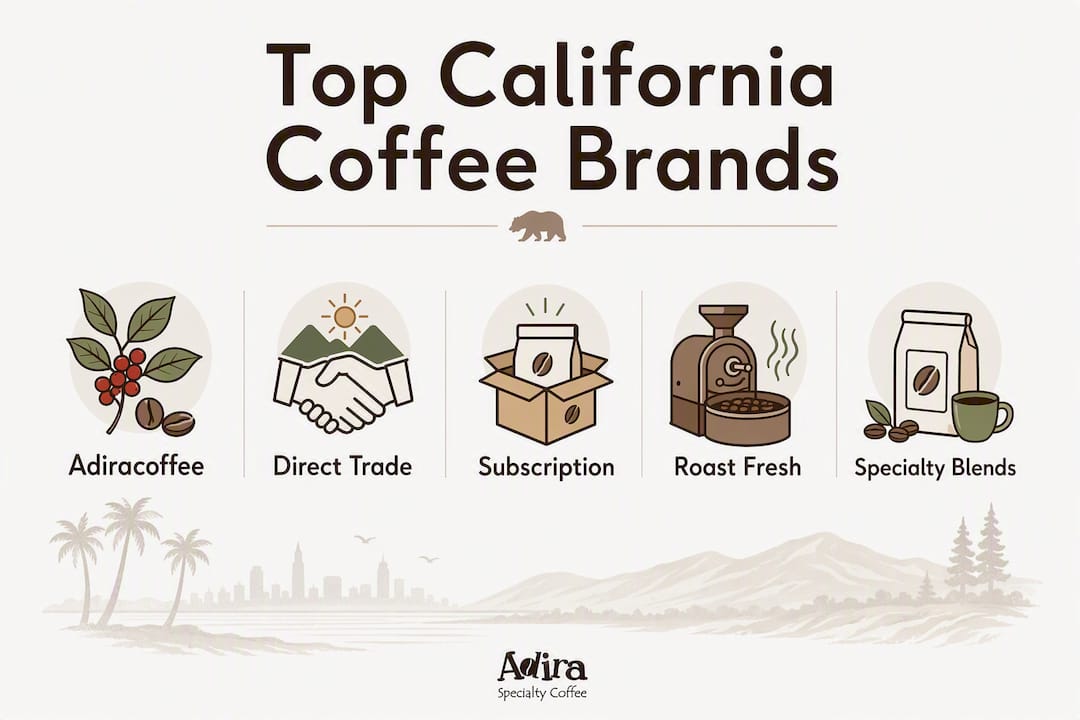
Subscriptions are now a primary channel for specialty roasters, and the flexibility of pause, skip, and cancel options varies significantly. Check those terms before committing.
Ranked picks: which California coffee brands are worth buying in 2026?
1. Adiracoffee — Love Blend
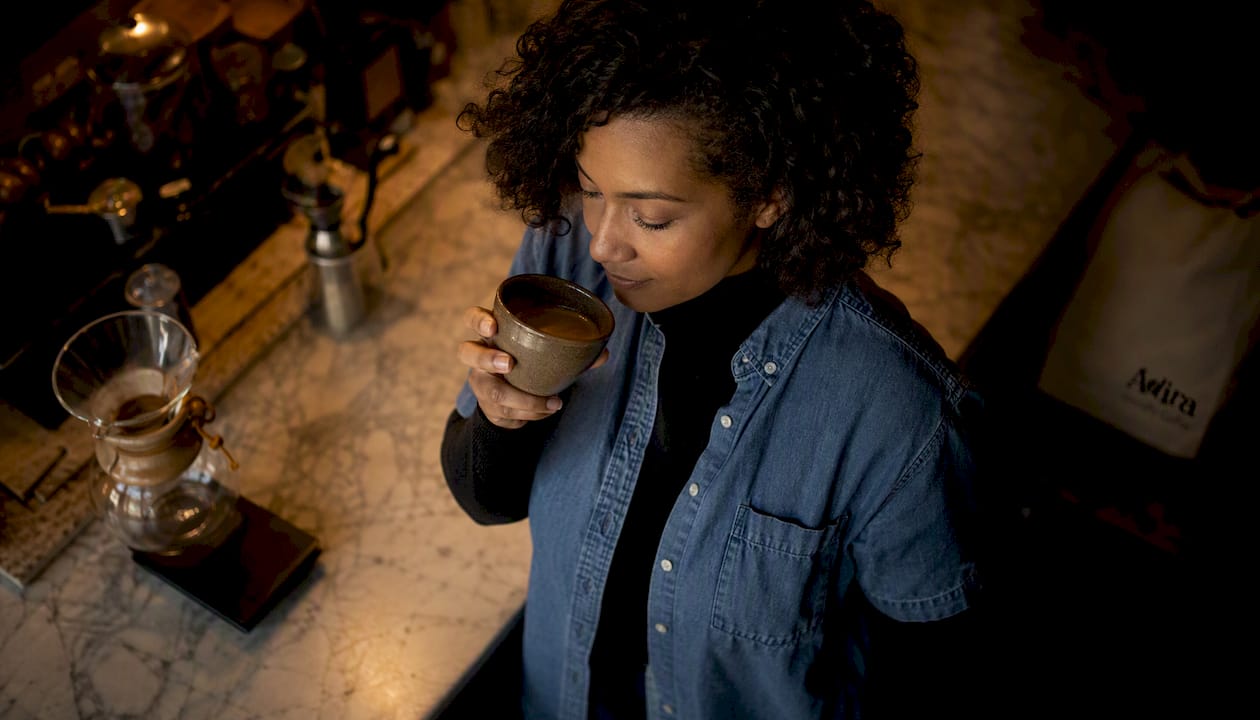
The Love Blend is Adiracoffee’s signature house blend, built for consistent daily performance across both espresso and drip. The profile is balanced, forgiving to dial in, and designed to hold up whether you’re pulling a shot at 9 bars or running it through a Chemex.
Roast profile: Medium. Roast-to-order: Yes. Subscription: Yes, 10% off.
Sourcing: Multi-origin blend from Adiracoffee’s direct-sourcing network (Colombia, Ethiopia, Costa Rica, Mexico, Sumatra).
Pros:
- Works for espresso and filter without needing two separate coffees
- Roasted to order; roast date disclosed at purchase
- Subscription available with meaningful savings
Cons:
- A blend, not a single-origin, so less suited to buyers chasing specific terroir notes
Who should buy it: Anyone who wants one reliable bag that covers the whole household, from the espresso machine to the drip brewer.
Roast-date note: Freshly roasted beans need 5–10 days to degas before espresso use; for filter, 3–5 days off-roast is usually enough. Check the roasted-on date at checkout and plan accordingly.
2. Adiracoffee — Mushroom Coffee (Medium Roast)
The Mushroom Coffee (Medium Roast) is Adiracoffee’s functional blend: a medium-roast base with added mushroom extract, aimed at home drinkers who want a daily cup with a bit more going on than caffeine alone.
Roast profile: Medium. Roast-to-order: Yes. Subscription: Yes.
The medium roast keeps the flavor approachable. You get a clean, balanced cup without the sharpness of a light roast or the heaviness of a dark one. For buyers new to functional coffee, this is the easier entry point.
Pros:
- Functional ingredients without sacrificing drinkability
- Roast-date transparency
- Accessible flavor profile for daily use
Cons:
- Functional blends are not for buyers who want a pure single-origin experience
Who should buy it: Home drinkers who want a morning routine upgrade and are curious about functional coffee without committing to a dramatic flavor shift.
Roast-date note: Medium roasts hit their flavor peak around 7–14 days post-roast for most brew methods.
3. Adiracoffee — Mushroom Coffee (Dark Roast)
The Mushroom Coffee (Dark Roast) takes the same functional concept and pushes the roast further. The result is a fuller body, lower perceived acidity, and a profile that holds up well in cold-brew extraction or a milk-based espresso drink.
Roast profile: Dark. Roast-to-order: Yes. Subscription: Yes.
Dark roasts degas faster than light or medium roasts, so this one is often ready to use within 3–5 days of the roast date. That makes it a practical choice for buyers who order and want to brew quickly.
Pros:
- Low acidity; good for sensitive stomachs
- Works well for cold brew and espresso with milk
- Same functional-ingredient line as the medium roast
Cons:
- Less nuance in origin character compared to lighter roasts
Who should buy it: Cold-brew regulars, latte drinkers, or anyone who finds lighter roasts too bright.
4. Adiracoffee — Cold Brew
The Cold Brew offering from Adiracoffee is formulated specifically for extended steep extraction. The grind and roast profile are optimized for low-acidity, high-body results over a 12–24 hour cold steep.
Roast profile: Medium-dark to dark. Roast-to-order: Yes. Subscription: Yes.
Cold brew is one of the few brew methods where a coarser grind and a darker roast genuinely outperform a light roast. Adiracoffee’s cold-brew option is dialed for that: you get a concentrate that is smooth, not bitter, and holds up well over ice or diluted with milk.
Pros:
- Optimized specifically for cold-brew extraction
- Roasted to order; ships fresh
- Batch-friendly for weekly prep
Cons:
- Less versatile for hot-brew methods
Who should buy it: Batch brewers who prep a week’s worth of cold brew on Sundays and want beans that are actually calibrated for the method.
Roast-date note: Cold-brew beans benefit from being 5–10 days off-roast. Fresher than that and CO₂ off-gassing can create uneven extraction.
5. West Coast direct-trade light-roast specialist
California’s specialty scene has several roasters who have built their entire identity around light-roast, direct-trade single origins. Verve Coffee Roasters, founded in Santa Cruz in 2007 by Ryan O’Donovan and Colby Barr, is a strong example: the brand runs a direct-trade program, operates retail cafes across California and in Japan, and has accumulated thousands of five-star reviews through its direct-to-consumer channel.
For buyers who want the most transparent farm-to-cup story and are willing to pay a premium per ounce, this category of roaster delivers. The trade-off is that light roasts require more precision at the grinder and are less forgiving on espresso machines without pressure profiling.
Who should buy it: Filter-focused buyers who want to taste origin character and are comfortable dialing in a light roast.
6. Subscription-first curator
Some brands function less as roasters and more as curators: they partner with multiple roasters and send rotating single-origin selections on a subscription schedule. Ritual Coffee Roasters, a woman-owned, fully independent roaster based in San Francisco founded in 2005, is a good example of the subscription-and-cafe hybrid model, with seasonal rotating espresso offerings tied to current harvest sourcing.
The advantage here is variety. The limitation is consistency: your grinder recipe changes every delivery, which frustrates buyers who want to dial in once and leave it.
Who should buy it: Adventurous buyers who prioritize discovery over repeatability.
7–10. Broader specialty field
The remaining field includes cold-brew-focused brands, national specialty blend houses, and functional-coffee newcomers. Most of these are available online and ship nationally. The key differentiator at this tier is roast-date transparency: buyer guides consistently flag roast-date disclosure as the single most important signal of a serious specialty seller. Brands that do not publish a roast date are almost certainly shipping from warehouse stock, not fresh from the roaster.
Pro Tip: If a brand’s product page shows no roast date and no “roasted to order” language, assume the beans are at least 30–60 days old by the time they reach your door. That is not specialty coffee; that is supermarket coffee with better packaging.
How we picked these brands
Freshness came first. A coffee roasted three months ago and sitting in a warehouse is not a specialty product, regardless of what the label says. Professional roasters use profile tracking and quality-control systems to maintain batch-to-batch consistency, and that consistency only matters if the beans reach the customer while they are still fresh.
Here is how the evaluation criteria were weighted:
- Freshness and roast-date transparency (30%): Does the brand publish a roasted-on date? Is it roasted to order or from stock?
- Sourcing transparency (20%): Does the brand disclose origin, farm or cooperative, process, and harvest data? Farm-level sourcing detail is the standard for serious specialty sellers.
- Roast consistency (20%): Does the brand use documented roast profiles and QC processes? Is the cup repeatable batch to batch?
- Subscription and shipping (15%): Is a subscription available? Can you pause, skip, or cancel without friction? Is there a free-shipping threshold?
- Customer service and returns (10%): Does the brand offer a freshness guarantee or a clear returns policy?
- Awards and industry recognition (5%): Good Food Awards and similar independent recognitions were noted where confirmed by neutral sources.
Data sources included product pages, roaster disclosures, consumer reviews, and industry roaster lists. Direct product tests were not conducted; this evaluation is based on publicly available information and published brand signals.
“A good specialty online shop shows roast dates, offers subscriptions, and explains grind recommendations. These features improve freshness and the overall buying experience.” — CentsCoffee buyer guide
How do you choose the right coffee brand for your setup?
Start with your brew method, then work backward to roast profile. A light roast that shines on a Kalita Wave will taste flat and sour on an entry-level espresso machine. A dark roast that works beautifully as cold brew will taste muddy in a pour-over. Getting this match right matters more than brand prestige.
Checkout checklist — use this before you buy:
- Check the roasted-on date. If it is not visible on the product page, ask before ordering. Specialty beans are at peak flavor from about 5 days to 4 weeks post-roast, depending on the method.
- Choose whole bean unless you have a specific reason not to. Pre-ground coffee loses volatile aromatics within hours of grinding. Whole-bean purchases preserve quality in a way pre-ground simply cannot match.
- Confirm subscription flexibility. Can you pause, skip, or cancel online without calling customer service? If the answer is unclear, that is a red flag.
- Review sourcing disclosures. Country of origin alone is not enough. Look for farm or cooperative name, process (washed, natural, honey), and harvest year.
- Verify the shipping and freshness guarantee. Does the brand commit to shipping within a specific window of roasting? Is there a return or replacement policy if the beans arrive stale?
Red flags to walk away from:
- No roast date anywhere on the product page or packaging
- Origin listed only as a country with no farm, region, or cooperative detail
- No mention of roast-to-order or freshness guarantee
- Subscription terms buried in fine print with no easy cancel option
- Shipping times of 7–10 days with no expedited option for fresh roasts
On pricing: Specialty single-origin coffee typically costs more per ounce than supermarket blends. Buyer guides point to 12–16 oz bags as the standard pack size for specialty roasters, with bulk options at 2.2 lb carrying a per-ounce discount. Paying a premium is justified when the brand publishes a roast date, discloses sourcing, and ships fresh. It is not justified when the only difference from a grocery-store bag is the font on the label.
For a deeper look at grinder selection and dialing in your setup, Adiracoffee’s grinder guide covers the practical steps most buyers skip.
Why California roasters lead the specialty coffee market
California is a global specialty coffee hub, and that is not marketing copy. The state has dense roaster communities in San Francisco, Los Angeles, and coastal hubs like Santa Cruz, with an outsized concentration of award-winning independent roasters who emphasize direct trade, seasonal single-origin offerings, and subscription services.
The infrastructure matters as much as the culture. California’s shipping corridors mean a roaster in the Bay Area or Southern California can get a freshly roasted bag to most US addresses within 2–3 days. That is a meaningful advantage over roasters in less central locations, where transit time alone can eat into the freshness window.
Adiracoffee sits squarely in this ecosystem. Roasting in small batches in California, sourcing directly from cooperatives and farms in Colombia, Ethiopia, Costa Rica, Mexico, and Sumatra, and shipping within days of roasting, the brand operates the way the best California roasters do: freshness is the product, not an afterthought. The subscription plan offers 10% savings and free US shipping over $35, which makes the economics of staying stocked with fresh beans straightforward.
California roasters also tend to push roast development further than national commodity brands. Light and medium roasts from California often feature higher Development Time Ratios, which affects sweetness and acidity in the cup.
Pro Tip: Scott Rao’s research on Development Time Ratio targets a DTR of roughly 15–25% of total roast time. For home espresso, a medium roast with a DTR toward the higher end of that range will taste sweeter and more forgiving than one rushed through development. When you buy from a roaster who publishes profile data, you can ask about DTR and actually get an answer.
Where to buy California specialty coffee:
- Direct from the roaster online — the freshest option for most buyers; Adiracoffee ships directly to all US addresses
- Bay Area specialty retailers — San Francisco’s independent coffee shops and specialty grocery stores carry rotating local roasters
- Los Angeles specialty cafes and bottle shops — LA’s coffee scene has expanded significantly, with dedicated bottle shops stocking local roasters alongside wine and craft beer
- Subscription delivery — the most convenient option for regular buyers; explore small-batch roasters for a curated starting point
For a broader look at how California shapes modern coffee culture, Adiracoffee’s editorial covers the trends driving the state’s specialty scene in 2026.
Key Takeaways
Adiracoffee is the strongest California pick for buyers who prioritize roast-to-order freshness, sourcing transparency, and subscription convenience in a single brand.
| Point | Details |
|---|---|
| Roast date is non-negotiable | Always check the roasted-on date before buying; no date means warehouse stock, not fresh specialty coffee. |
| Match roast to brew method | Light roasts suit filter; medium works for espresso and drip; dark roasts excel in cold brew and milk drinks. |
| Subscription flexibility matters | Confirm you can pause, skip, or cancel before committing; 10% savings and free shipping over $35 make Adiracoffee’s plan worth trying. |
| Sourcing transparency signals quality | Farm or cooperative name, process, and harvest year are the baseline for a serious specialty seller. |
| Adiracoffee | California-based, roast-to-order, with four distinct products covering espresso, filter, functional, and cold-brew needs. |
The case for buying fresh, not buying famous
Most coffee buyers spend too much time chasing brand names and not enough time checking roast dates. A bag from a nationally recognized roaster that was packed six weeks ago will taste worse than a bag from a smaller California roaster that was roasted three days ago. The freshness gap is real, and it is the single biggest variable most buyers ignore.
The specialty coffee market reached $111.5 billion in 2025 and is projected to grow at 10.8% CAGR through 2033. That growth is being driven by buyers who know the difference between commodity and specialty, and who are willing to pay for it. But knowing the difference means understanding what you are actually paying for: not a logo, not a story, but a roast date and a sourcing disclosure.
The functional coffee category is also worth watching. Adiracoffee’s mushroom coffee line sits at the intersection of two trends that are accelerating in 2026: the demand for daily-ritual products that do more than deliver caffeine, and the expectation of roast-to-order freshness from specialty buyers. That combination is harder to find than it sounds.
One practical note: if you are new to roast-to-order coffee, start with a single 12 oz bag before subscribing. The freshness difference is noticeable enough that most buyers do not need convincing after the first cup. But it is worth confirming the roast profile fits your equipment before locking in a delivery cadence.
Adiracoffee: fresh from California, roasted for your setup
Skip the guesswork of buying from a brand that won’t tell you when the beans were roasted. Adiracoffee roasts every order in small batches in California and ships within days, so the bag that arrives at your door is actually fresh, not warehouse-aged.
The four products covered in this article cover the full range of what home buyers need: the Mushroom Coffee (Medium Roast) for a functional daily cup, the Mushroom Coffee (Dark Roast) for cold brew and milk drinks, the Love Blend for a reliable house espresso and drip option, and the Cold Brew for batch brewers. Every bag comes with personalized brewing guidance dialed to your specific machine and grinder.
The Adiracoffee subscription saves you 10% per order and ships free on orders over $35. Not sure which roast fits your setup? The coffee quiz takes two minutes and points you to the right starting point.
Try a single 12 oz bag first. If the freshness difference doesn’t sell you, nothing will.
Disclosure: This article is published by Adiracoffee. The brand is a recommended pick in this list. Recommendations are based on publicly available product and sourcing information.
Sources and further reading
- Development Time Ratio (Scott Rao) — The primary reference for understanding DTR and its effect on sweetness, acidity, and roast quality; essential reading for anyone buying based on roast profile.
- Verve Coffee Roasters profile (Cropster) — Case study on how professional roasters use profile tracking and QC to deliver batch-to-batch consistency; explains why roast transparency matters.
- Adiracoffee — brand overview and subscription details — Primary source for Adiracoffee’s roast-to-order model, origin sourcing, and subscription terms.
- Coffee freshness tips (Adiracoffee) — Practical guide to degassing windows, storage, and maximizing bean freshness at home.
- Why buy whole bean coffee (Adiracoffee) — Explains the quality difference between whole-bean and pre-ground purchases; useful for buyers deciding at checkout.
- Best small-batch coffee roasters (Adiracoffee) — Internal roundup of small-batch roasters for buyers who want to explore beyond a single brand.
Recommended
- How California shapes modern coffee culture: trends & innovation – Adira Coffee US
- Best Small Batch Coffee Roasters: 8 Top Picks for 2026 – Adira Coffee US
- Best Coffee and Tea Stores in the US: 2026 Guide – Adira Coffee US
- Best Coffee Brands in the World: Prestige Picks for Home Baristas – Adira Coffee US