
TL;DR:
- The top small batch coffee roasters in the U.S. prioritize roast-to-ship date transparency and traceable sourcing to ensure freshness and quality. Adiracoffee is recommended for roast-to-order beans with personalized brewing guidance and ethically sourced beans from multiple regions. Selecting a roaster depends on your brewing method, sourcing preferences, and desire for flexible subscription options.
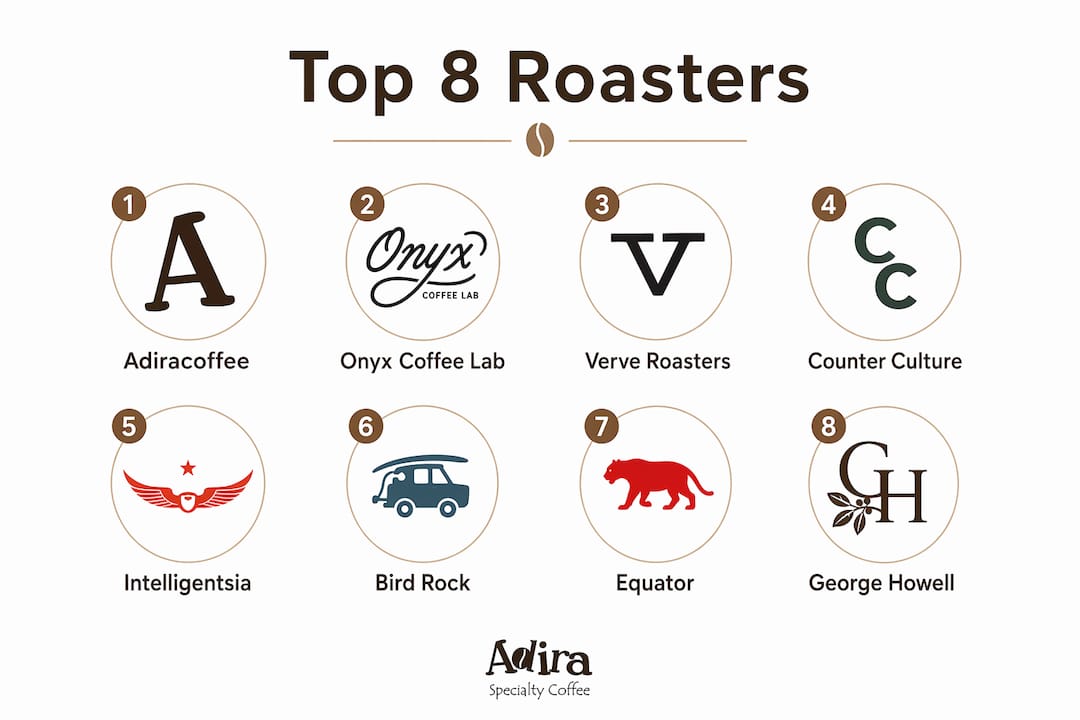
The best small batch coffee roasters in the U.S. right now are Adiracoffee, Onyx Coffee Lab, Verve Coffee Roasters, Counter Culture Coffee, Intelligentsia Coffee, Bird Rock Coffee Roasters, Equator Coffees, and George Howell Coffee. Each made this list for the same core reasons: a visible roast date, documented farm or cooperative sourcing, and a roast-to-ship window that gets fresh beans to your door before the flavor peak passes.
Quick shortlist at a glance:
| Roaster | Best For | Roast Style |
|---|---|---|
| Adiracoffee | Espresso, subscription, personalized brewing | Light to dark, roast-to-order |
| Onyx Coffee Lab | Single-origin exploration | Light, filter-forward |
| Verve Coffee Roasters | California espresso lovers | Medium, espresso-focused |
| Counter Culture Coffee | Subscription seekers | Light to medium |
| Intelligentsia Coffee | Urban specialty drinkers | Light to medium |
| Bird Rock Coffee Roasters | Competition-grade single-origin | Light, SCA-aligned |
| Equator Coffees | Sustainable sourcing priority | Medium, balanced |
| George Howell Coffee | Terroir-focused enthusiasts | Light, ultra-traceable |
Adiracoffee is the recommended U.S. small-batch option for readers who want roast-to-order freshness, traceable single-origin beans from Colombia, Ethiopia, Costa Rica, Mexico, and Sumatra, and a subscription that ships within days of roasting.
Table of Contents
- How do these top small-batch roasters compare?
- How we picked these roasters
- Ranked profiles: the best small-batch roasters in detail
- How to choose the right small-batch roaster for your brew and budget
- Why freshness and traceability matter more than the label
- Key Takeaways
- Why small-batch coffee still earns the premium
- Fresh from California: Adiracoffee’s small-batch subscription
- Sources and further reading
How do these top small-batch roasters compare?
The table below maps each roaster across the dimensions that actually move buying decisions: price, freshness policy, subscription terms, and sourcing depth.
| Roaster | Best For | Roast Style | Traceability | Subscription | Price/lb (approx.) | Roast-to-Ship | Sustainability | U.S. Shipping |
|---|---|---|---|---|---|---|---|---|
| Adiracoffee | Espresso, subscription, personalized brewing | Light–dark, roast-to-order | Farm/co-op, country, region | Yes, 10% off + free shipping over $35 | $18–$28 | Ships within days of roast | Direct trade, small farms | Yes, nationwide |
| Onyx Coffee Lab | Single-origin, filter | Light | Farm, lot, process | Yes | $20–$32 | Roast date on bag | Direct relationships | Yes |
| Verve Coffee Roasters | Espresso, California buyers | Medium | Region, farm | Yes | $18–$28 | Roast date on bag | Direct trade | Yes |
| Counter Culture Coffee | Subscription, education | Light–medium | Farm, co-op | Yes, flexible | $16–$26 | Roast date on bag | Certified B Corp | Yes |
| Intelligentsia Coffee | Urban specialty | Light–medium | Farm, region | Yes | $18–$28 | Roast date on bag | Direct trade | Yes |
| Bird Rock Coffee Roasters | Competition-grade single-origin | Light | Micro-lot, farm | Yes | $20–$34 | Roast date on bag | Direct relationships | Yes |
| Equator Coffees | Sustainability-first buyers | Medium | Farm, co-op | Yes | $17–$26 | Roast date on bag | Fair Trade, B Corp | Yes |
| George Howell Coffee | Terroir-focused enthusiasts | Light | Micro-lot, farm, lot | Yes | $20–$36 | Roast date on bag | Direct trade | Yes |
For espresso drinkers who want personalized dialing guidance, Adiracoffee stands out because it tailors brewing recipes to your specific machine. Subscription seekers who want rotating origins should look at Counter Culture or Onyx. If ultra-traceable micro-lots are the priority, George Howell Coffee is the deepest option on this list.
Specialty grade starts at 80 points on the SCA’s 100-point scale. Scores of 85–89.99 are rated “excellent”; 90 and above is “outstanding.” Every roaster on this list sources coffee that meets or exceeds that threshold.
How we picked these roasters
Selection for this list prioritized four things above everything else: roast-to-ship freshness, sourcing transparency, roast profile skill, and subscription quality. A roaster without a printed roast date on the bag did not make the cut, full stop.
Scoring criteria (weighted by importance):
- Roast date visibility and freshness policy — does the roaster print a roast date and ship within a tight window?
- Sourcing transparency — country, region, farm or cooperative, variety, and processing method all disclosed?
- Taste profile and roast skill — does the roast style serve the origin’s character rather than mask it?
- Subscription value — flexible frequency, skip/pause options, and a freshness commitment?
- Packaging and shipping — one-way valve bags, airtight seals, and reasonable transit times?
- Customer service — responsive to brewing questions and willing to customize?
Inclusion rules:
- Ships to U.S. customers (nationwide or broad regional coverage).
- Prints a roast date on every bag, not just a best-by date.
- Sources traceable specialty-grade coffee (SCA 80+ equivalent).
- Operates at small-batch or micro-batch scale, not industrial volume.
- Offers or has offered a subscription with meaningful freshness commitments.
Exclusion rules: Mass commercial roasters, private-label brands without roaster identity, and any operation that hides roast age behind a distant best-by date were excluded. Specialty guides are clear that a long best-by date with no roast date is a red flag, not a neutral omission.
The shortlist was built by reviewing roaster websites, SCA-aligned sourcing documentation, subscription terms, tasting notes, and packaging practices across dozens of U.S.-shipping specialty roasters.
Pro Tip: When evaluating any roaster not on this list, start with one question: “What date was this roasted?” If the answer isn’t on the bag or the website, move on.
Ranked profiles: the best small-batch roasters in detail
1. Adiracoffee — Best for espresso, subscription, and personalized brewing
Location: California, U.S. | Roast style: Light to dark, roast-to-order
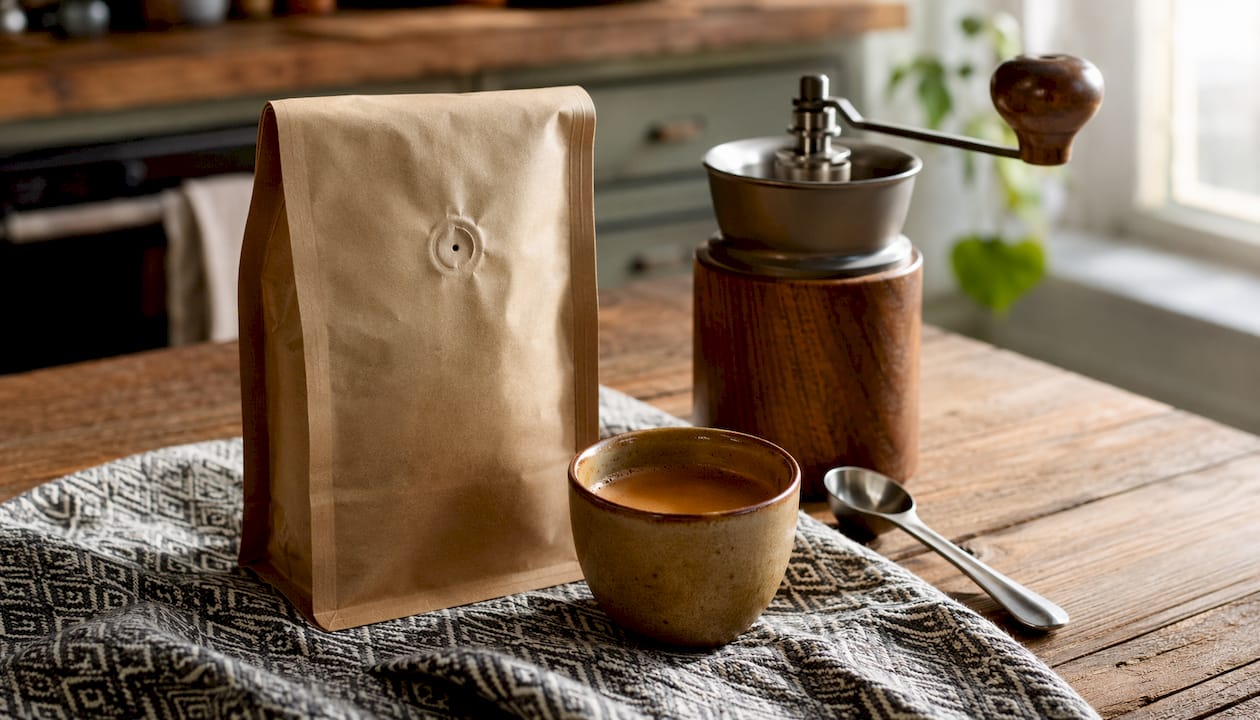
Adiracoffee roasts every bag to order in small batches in California and ships within days of roasting. That alone separates it from most options on a supermarket shelf, but the detail that makes it genuinely useful for home baristas is the personalized brewing recipe: when you order, Adiracoffee dials in extraction guidance for your specific machine and grinder. That is rare at this price point.
Sourcing covers Colombia, Ethiopia, Costa Rica, Mexico, and Sumatra, with beans sourced from cooperatives and small farms. The single-origin collection rotates with harvests, which is a practical signal that the team is working with current crops rather than sitting on old inventory.
- Subscription: Yes, 10% savings and free U.S. shipping over $35
- Price range: ~$18–$28/lb
- Roast-to-ship: Ships within days of roasting; roast date on every bag
- Traceability: Farm and cooperative sourcing disclosed by origin
- Packaging: One-way valve bags for CO₂ release; store in a cool, dark place after delivery
Featured products include the Mushroom Coffee (Medium Roast) and Mushroom Coffee (Dark Roast), both roasted to order and available on subscription.
Pro Tip: Use Adiracoffee’s brewing recipe service when you order. Dialing espresso from a roaster’s own tasting notes cuts hours off the extraction guesswork.
2. Onyx Coffee Lab — Best for single-origin exploration
Location: Rogers, Arkansas | Roast style: Light, filter-forward
Onyx has built a reputation on competition-level sourcing and meticulous light roasts that let origin character lead. Their tasting notes are specific enough to be useful, and their direct relationships with farms in Ethiopia, Colombia, and Guatemala show up in the cup. Bags carry a roast date, and the subscription rotates with seasonal lots.
- Subscription: Yes | Price range: ~$20–$32/lb
- Traceability: Farm, lot, and processing method disclosed
- Packaging: Valve-sealed bags; best consumed within 2–4 weeks of roast date
3. Verve Coffee Roasters — Best for California espresso lovers
Location: Santa Cruz, California | Roast style: Medium, espresso-focused
One of the top small batch coffee roasters in California, Verve has been dialing in espresso-friendly medium roasts since 2007. Their sourcing is direct-trade, and their roast profiles hit a sweet spot between brightness and body that works well on both espresso and pour-over. Roast dates are printed on every bag.
- Subscription: Yes | Price range: ~$18–$28/lb
- Traceability: Region and farm disclosed; direct-trade relationships
- Packaging: Valve-sealed; ships nationwide
4. Counter Culture Coffee — Best for subscription seekers
Location: Durham, North Carolina | Roast style: Light to medium
Counter Culture is a Certified B Corp with a long track record of transparent sourcing and flexible subscription terms. Their subscription lets you choose frequency and pause anytime, which is exactly what good subscription programs should offer. Their education resources are unusually good for home brewers.
- Subscription: Yes, flexible skip/pause | Price range: ~$16–$26/lb
- Traceability: Farm and co-op level; annual transparency report published
- Packaging: Valve-sealed bags; roast date on every bag
5. Intelligentsia Coffee — Best for urban specialty drinkers
Location: Chicago, Illinois (roasts in multiple U.S. cities) | Roast style: Light to medium
Intelligentsia pioneered direct trade in the U.S. specialty market and still maintains farm-level relationships that show up in their sourcing documentation. Their Black Cat espresso blend is a benchmark for medium-roast espresso, and their single-origins rotate seasonally.
- Subscription: Yes | Price range: ~$18–$28/lb
- Traceability: Farm and region disclosed; direct-trade program documented
- Packaging: Valve-sealed; roast date on bag; ships nationwide
6. Bird Rock Coffee Roasters — Best for competition-grade single-origin
Location: San Diego, California | Roast style: Light, SCA-aligned
Bird Rock has won U.S. Roasting Championship recognition and sources micro-lots that score consistently in the specialty range. Their light roasts are precise and expressive. If you want to taste what small-batch precision actually does to a delicate Ethiopian natural or a Kenyan washed lot, Bird Rock is the clearest demonstration on this list.
- Subscription: Yes | Price range: ~$20–$34/lb
- Traceability: Micro-lot and farm disclosed; competition-sourced lots noted
- Packaging: Valve-sealed; roast date printed; ships nationwide
7. Equator Coffees — Best for sustainability-first buyers
Location: San Rafael, California | Roast style: Medium, balanced
Equator is both Fair Trade certified and a Certified B Corp, and their sourcing documentation is among the most thorough on this list. Their medium roasts are approachable for a range of brew methods, and their subscription is straightforward. A good pick for buyers who want ethical sourcing to be verifiable, not just marketed.
- Subscription: Yes | Price range: ~$17–$26/lb
- Traceability: Farm and co-op level; Fair Trade and B Corp certified
- Packaging: Valve-sealed; roast date on bag; ships nationwide
8. George Howell Coffee — Best for terroir-focused enthusiasts
Location: Acton, Massachusetts | Roast style: Light, ultra-traceable
George Howell is one of the founding figures of the U.S. specialty coffee movement, and his roastery still operates with the same obsessive attention to lot-level traceability. Bags list farm, lot, altitude, variety, and processing method. The price reflects that depth. For enthusiasts who treat coffee the way wine collectors treat single-vineyard bottles, this is the right call.
- Subscription: Yes | Price range: ~$20–$36/lb
- Traceability: Micro-lot, farm, altitude, variety, and process all disclosed
- Packaging: Valve-sealed; roast date on bag; ships nationwide
How to choose the right small-batch roaster for your brew and budget
The right roaster depends on how you brew, what you value in the cup, and how often you want to order. Work through this checklist before you commit.
Step-by-step decision checklist:
- Match roast level to your brew method. Espresso generally performs better with medium or medium-dark roasts that have enough body to hold up under pressure. Filter and pour-over reward lighter roasts where acidity and fruit notes can open up. Check out how to choose beans for your brew method before ordering.
- Decide: single-origin or blend? Single-origins are better for tasting terroir and seasonal variation. Blends are more consistent cup to cup and often better for espresso with milk.
- Check the roast date before you buy. Peak flavor for most specialty coffee falls within a few weeks after roasting, depending on roast level and brew method. If the bag shows only a best-by date, that is a red flag.
- Evaluate subscription flexibility. The best programs let you set frequency, skip shipments, and pause without penalty. A subscription that locks you into a fixed cadence with no control is a poor fit for most home brewers.
- Set a realistic budget. Specialty micro-batch coffee costs more than commodity coffee because the green coffee itself costs more and the roasting is labor-intensive. Expect to pay $16–$36/lb for quality. The cost per cup, though, stays competitive with a café visit.
- Order a sampler or trial bag first. Most roasters on this list offer 6–12 oz trial sizes. Start there before committing to a subscription.
Questions to ask any roaster before subscribing:
- What date was this roasted, and when will you ship it?
- Can you tell me the farm or cooperative, the variety, and the processing method?
- Do you have brewing recommendations for this specific lot?
- Can I skip or pause my subscription without a penalty?
Red flags to walk away from:
- No roast date anywhere on the bag or website
- Vague origin (“South American blend,” no country or farm)
- The same lot available year-round with no seasonal rotation
- Price significantly below $14/lb for claimed specialty-grade coffee
Pro Tip: When your beans arrive, check the roast date immediately. If it shipped more than 10 days after roasting, contact the roaster. Good roasters stand behind their freshness window.
Why freshness and traceability matter more than the label
The SCA’s specialty threshold is 80 points on a 100-point scale. Graders evaluate aroma, flavor, acidity, body, balance, and defects. Scores of 85–89.99 earn an “excellent” designation; 90 and above is “outstanding.” Most of the roasters on this list source coffee in the 85–92 range, which means the green coffee itself is already exceptional before it hits the roaster.
What happens after harvest matters just as much. Small-batch roasting in the 1–25 kg range lets a roaster adjust temperature profiles mid-roast and inspect beans throughout the cycle. That level of control is physically impossible at industrial scale. The result is that delicate fruit and floral notes, which are the first compounds to degrade under heat, survive the roast intact.
Freshness after roasting is the other half of the equation. Roasted coffee begins off-gassing CO₂ immediately, and the volatile aromatic compounds that define a specialty cup start fading within weeks. That is why a printed roast date is not a marketing detail. It is the only way to know whether you are buying coffee in its peak window or well past it.
“Roasters who rotate selections seasonally signal active sourcing and working with current harvests — this often correlates with fresher, more expressive cups than year-round inventory.” — Specialty Coffee Association
Traceability works the same way. When a roaster lists the farm, the cooperative, the variety, and the processing method, that specificity is a practical signal of intentional sourcing relationships. Vague origin labels (“Central American blend”) usually mean commodity sourcing through a large supply chain, where freshness and quality control are secondary to price and volume.
Signals you can verify before buying:
- Printed roast date (not just a best-by date)
- Specific farm or cooperative name, not just a country
- Processing method listed (washed, natural, honey)
- Tasting notes tied to the origin, not generic descriptors
- Seasonal menu rotation rather than year-round identical SKUs
For a deeper look at what small-batch roasting actually involves at the process level, the mechanics behind batch size and roast control are worth understanding before you spend $30 on a bag.
Key Takeaways
The single most important signal when choosing a small-batch specialty roaster is a printed roast date: without it, every other quality claim is unverifiable.
| Point | Details |
|---|---|
| Roast date is non-negotiable | Only buy from roasters who print the roast date; peak flavor runs roughly 7–30 days post-roast. |
| Traceability signals quality | Farm, variety, and processing method on the label indicate intentional sourcing, not commodity supply chains. |
| Subscription flexibility matters | The best programs let you skip, pause, and adjust frequency without penalty. |
| Match roast level to brew method | Espresso favors medium to medium-dark; filter and pour-over reward lighter, more acidic roasts. |
| Adiracoffee for U.S. buyers | Roasts to order in California, ships within days, offers 10% subscription savings and personalized brewing recipes. |
Why small-batch coffee still earns the premium
The conventional wisdom in specialty coffee circles is that origin is everything. Buy the best green coffee, and the roast almost takes care of itself. That framing is half right, and the half it gets wrong is where most buyers lose money.
Green coffee quality sets the ceiling. But roast execution, freshness, and the relationship between the roaster and the end brewer determine whether you ever reach it. A 90-point lot roasted three months ago and shipped without a date is a worse cup than an 84-point lot roasted last week by someone who knows how you brew. That gap is real, and it is exactly what separates the roasters on this list from the well-branded bags sitting on a grocery shelf.
The other thing people underestimate is the value of a roaster who will actually talk to you. When Adiracoffee dials in a brewing recipe for your specific machine, that is not a marketing gimmick. It is the difference between a bag that tastes like the tasting notes promised and one that sits on your counter because you could never get the extraction right. Small-batch roasters can do that. Industrial operations cannot.
If you have been buying specialty coffee by brand recognition alone, try ordering from a roaster who will tell you the farm name, the harvest date, and the exact grind setting for your brewer. The difference in the cup is not subtle.
Fresh from California: Adiracoffee’s small-batch subscription
If this list confirmed what you already suspected, that freshness and sourcing transparency are the real differentiators, Adiracoffee is the direct-to-consumer option built around exactly those priorities. Every bag is roasted to order in small batches in California and ships within days of roasting. No warehouse inventory, no best-by-date guessing games.
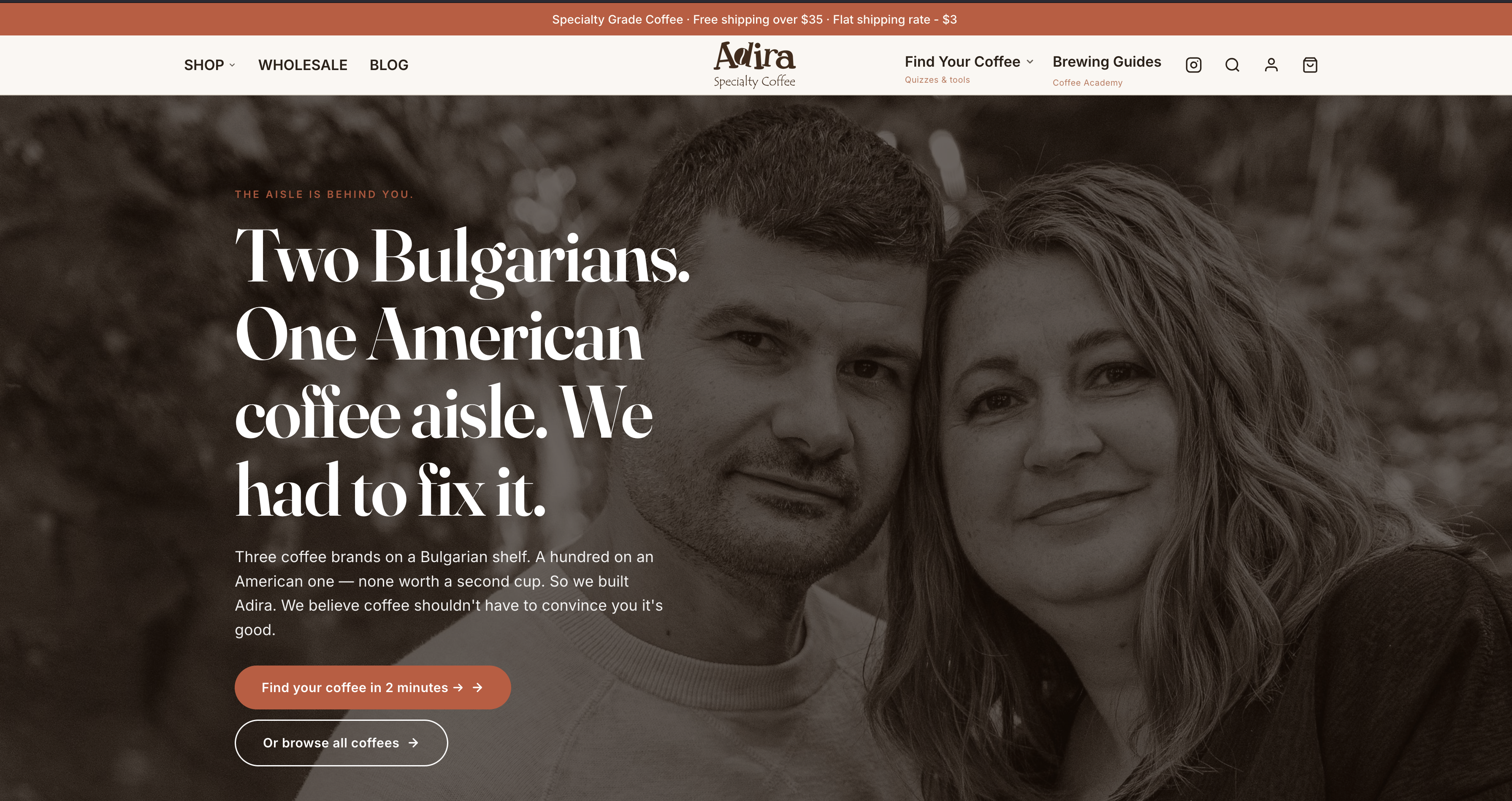
Adiracoffee sources from cooperatives and small farms in Colombia, Ethiopia, Costa Rica, Mexico, and Sumatra, with each origin documented and each bag dialed in for your brewing setup. Two standout products worth trying immediately: the Mushroom Coffee (Medium Roast), which works well on espresso and drip alike, and the Mushroom Coffee (Dark Roast), a fuller-bodied option for those who want depth over brightness. Both are available on subscription.
| Product | Roast Level | Best Brewing Method | Subscription Perk |
|---|---|---|---|
| Mushroom Coffee (Medium Roast) | Medium | Espresso, drip, pour-over | 10% off + free U.S. shipping over $35 |
| Mushroom Coffee (Dark Roast) | Dark | Espresso, French press, cold brew | 10% off + free U.S. shipping over $35 |
Subscribe, set your frequency, and skip or adjust anytime. Start with a single bag or go straight to the single-origin collection to find the origin that fits your palate. Free U.S. shipping on orders over $35.
Sources and further reading
- Specialty Coffee Association — Coffee Standards: The primary authority on SCA scoring methodology, specialty grade thresholds (80+), and grading criteria used throughout this article.
- Small Batch Coffee Roaster: Why It Makes Better Coffee — San Pedro Coffee: Explains roast-date importance, peak flavor windows (7–30 days), and the red-flag significance of best-by-only labeling.
- Micro-Batch vs Commercial Coffee: The Real Difference — The Blind Coffee Roaster: Covers batch size ranges (1–25 kg), roast control advantages, and why small-batch operations preserve origin-specific flavor compounds.
- Choosing a Specialty Roaster — BrewFYI: Practical consumer guide covering roast date as a baseline freshness marker and subscription flexibility criteria.
- How to Know If Your Coffee Is Really Specialty Grade — Black Pole Coffee: Explains how origin detail depth (farm, variety, processing method) correlates with genuine specialty sourcing versus marketing language.
- Independent Roasters vs. Commercial Coffee Brands — Who’s Brew: Side-by-side comparison of roast scale, freshness policy, and sourcing practices between independent and commercial operations.
- Why Roast Date Matters for Peak Coffee Flavor — Adiracoffee: Adiracoffee’s own explainer on roast date significance and how freshness windows apply to different brew methods.
- Why Traceable Coffee Sourcing Matters — Adiracoffee: Background on farm relationships, cooperative sourcing, and why traceability connects to both cup quality and ethical supply chains.