

TL;DR:
- Roast date indicates the exact day coffee beans were roasted and begins the freshness countdown. It is a better marker than the best-by date, which mainly measures safety and shelf life. Brewing within the optimal window based on roast level and date enhances flavor and reduces staling risks.
The roast date is defined as the exact day coffee beans were transformed from raw green seeds into the roasted beans in your bag, and it starts the freshness countdown the moment roasting ends. Every cup you brew sits somewhere on that timeline. Specialty Coffee Association standards and specialty roasters worldwide recognize the roast date as the true measure of coffee freshness, not the best-by date printed below it. Most coffee drinkers have never been told this, which means they have been buying and brewing coffee well past its flavor peak without knowing it. Understanding why roast date matters changes how you shop, how you store, and how your coffee tastes.
Why roast date matters: what happens inside the bean
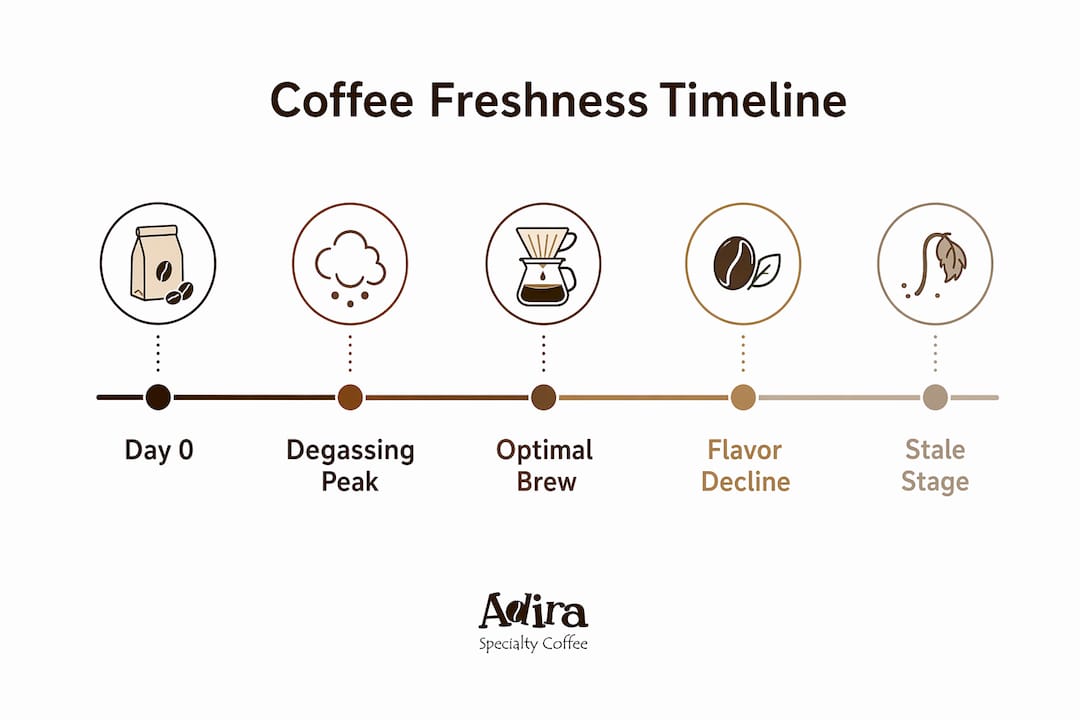
Coffee undergoes rapid chemical change the moment roasting ends. The most immediate process is degassing, the release of carbon dioxide (CO2) that builds up inside the bean during roasting. CO2 releases rapidly in the first 24–72 hours after roasting, then continues gradually over the following 1–3 weeks. That timeline is the core reason roast date is important to track.
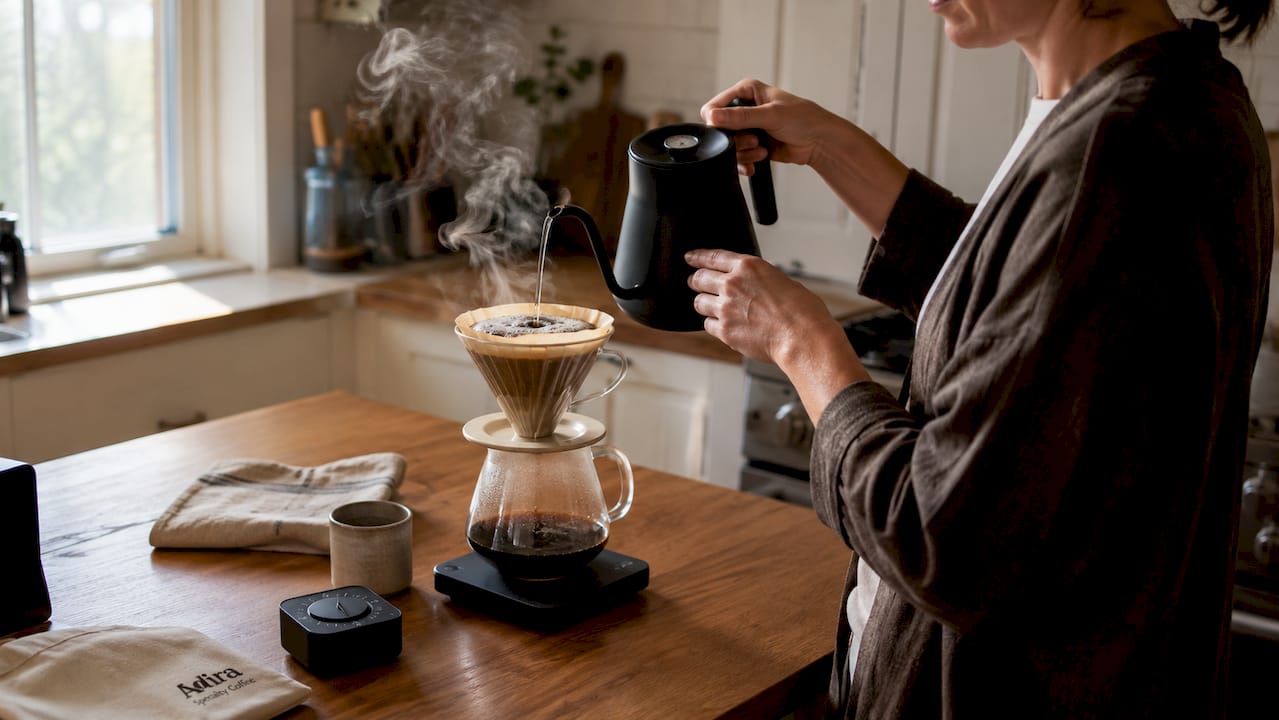
CO2 is not just a byproduct. It directly shapes your brew. In pour-over, CO2 creates the bloom, the bubbling expansion you see when hot water first hits the grounds. In espresso, CO2 contributes to crema stability and mouthfeel. Excess CO2 causes uneven extraction, aggressive bloom, and sharp or hollow shots. Brew too soon after roasting and the CO2 actively works against you.
After degassing slows, oxidation takes over as the main threat to flavor. Oxygen attacks the aromatic compounds and flavor oils in roasted coffee, breaking them down progressively. The result is a flat, papery, or cardboard-like taste that no brewing technique can fix. This is the staling process, and it accelerates once the protective CO2 barrier is gone.
Roast level changes the timeline significantly. Light roasts hold more CO2 and can taste grassy or sharp if brewed too soon. Espresso roasts generally need 10–21 days of rest after roasting for optimal flavor. Dark roasts degas faster and can be brewed sooner, but they also oxidize faster. Knowing your roast level and your roast date together gives you real control over your cup.
Pro Tip: For pour-over and drip, aim to brew between 7 and 21 days after the roast date. For espresso, wait at least 10 days. For cold brew, a slightly older bean, around 2–4 weeks post-roast, often produces a smoother, less aggressive result.
How roast level changes your rest window
The practical takeaway is simple. Match your rest period to your roast level and brew method. A light roast Ethiopian single-origin brewed as pour-over needs more rest than a dark roast blend pulled as espresso. Check the roast date and flavor relationship on the bag before you grind.
Why roast date matters more than the best-by date
The best-by date and the roast date measure completely different things. The best-by date is a food safety marker. It tells you when the product is no longer considered safe to consume. The roast date is a flavor clock. It tells you when the coffee was at its best and how far past that point you are now.
Specialty coffee best-by dates are typically set 60–90 days from the roast date, which represents a flavor freshness recommendation, not a safety cutoff. That window sounds generous, but flavor peaks much earlier. Most specialty roasters consider the first 4–6 weeks after roasting the prime window for everyday brewing. For espresso, that window narrows to 10–21 days.
Commercial brands use best-by dates strategically. A bag with a best-by date 12 months from now tells you almost nothing about when those beans were roasted. The absence of a roast date combined with a far-future best-by date is a reliable signal that the coffee has already passed its peak flavor window. The beans may have sat in a warehouse for months before reaching the shelf.
Specialty roasters display roast dates as a sign of transparency and pride, while commercial brands rely on best-by dates to obscure extended storage. That difference is not accidental. It reflects a fundamental difference in what each type of brand prioritizes: flavor quality versus shelf life and distribution logistics.
| Point | Roast date | Best-by date |
|---|---|---|
| What it measures | Flavor freshness from roasting | Food safety shelf life |
| Set by | The roaster, at time of roasting | Manufacturer, often 60–90 days post-roast |
| Flavor relevance | Direct and immediate | Indirect and misleading |
| Red flag if missing | Yes. Indicates possible stale stock | No. Common on all packaged food |
| Specialty coffee standard | Always displayed by quality roasters | Secondary to roast date |
How to choose and store coffee based on roast date
Selecting coffee by roast date starts with knowing your own consumption pace. If you brew one or two cups a day, a 250-gram bag lasts about two weeks. Buy a bag roasted within the last week and you will drink it within its prime flavor window. If you brew more, you can buy slightly larger quantities, but always check the roast date first.
Here are the core storage principles that slow oxidation and protect flavor after you bring the bag home:
- Keep beans in an airtight container. Oxygen is the primary enemy of roasted coffee. Transfer beans from the original bag to an airtight canister if the bag does not have a resealable one-way valve.
- Store away from light. UV exposure degrades aromatic compounds quickly. A dark cabinet or opaque container works better than a clear jar on the counter.
- Avoid heat and moisture. The kitchen counter near the stove or the refrigerator are both poor choices. Room temperature in a cool, dry cabinet is the right environment.
- Buy whole beans, not pre-ground. Whole beans retain freshness longer than pre-ground coffee because grinding dramatically increases surface area exposed to oxygen. Grind only what you need, right before brewing.
- Use one-way valve bags when possible. These bags allow CO2 to escape without letting oxygen in, which is why quality roasters use them. They slow staling but do not stop it.
Pro Tip: If you receive a bag roasted just one or two days ago, let it rest on the counter, sealed, for at least five days before opening. The CO2 inside is still too active for a clean extraction. Patience here pays off in a noticeably smoother cup.
Buying from roasters who ship directly after roasting is the most reliable way to get a genuinely fresh bag. Adiracoffee roasts every bag in small batches in California and ships within days of roasting, so the roast date on the bag reflects real, recent freshness, not warehouse time. You can learn more about choosing beans by freshness to build a consistent buying routine.
Common misconceptions about roast dates and freshness
The biggest myth in coffee freshness is that newer always means better. Brewing coffee the day it is roasted produces a harsh, uneven cup. The CO2 is still escaping aggressively, which disrupts water flow through the grounds and creates inconsistent extraction. The result is a sharp, sour, or hollow flavor that has nothing to do with bean quality.
A few other misconceptions are worth addressing directly:
- “Old coffee is expired coffee.” Coffee roasted 18 months ago but kept sealed has not expired. It is stale and past its peak flavor, but it will not make you sick. Expiration indicates safety; the roast date indicates flavor quality. These are separate concerns.
- “One-way valve bags keep coffee fresh indefinitely.” Valve bags slow the aging process by releasing CO2 and blocking oxygen ingress. They do not stop oxidation. A bag in a valve-sealed package still stales. The roast date still matters.
- “Freezing coffee solves the freshness problem.” Freezing can extend freshness if done correctly, with an airtight container and no repeated thawing. But most home freezers introduce moisture during the freeze-thaw cycle, which accelerates staling rather than preventing it.
- “Commercial coffee is just as fresh as specialty coffee.” Commercial supply chains involve roasting, warehousing, shipping to distributors, and then to retailers. By the time a bag reaches your cart, weeks or months may have passed. The best-by date on the front tells you nothing about that journey.
The effects of roast date on your cup are most visible when you compare a bag brewed at 5 days post-roast versus one brewed at 14 days. The difference in clarity, sweetness, and body is not subtle. Resting creates flavor stability by allowing CO2 to dissipate at a natural rate, which lets the water extract evenly and consistently. You can read more about identifying fresh coffee at home to sharpen your palate for these differences.
Key Takeaways
The roast date is the single most reliable indicator of coffee freshness, and brewing within the 7–21 day window after roasting produces the best flavor for most brew methods.
| Point | Details |
|---|---|
| Roast date defines freshness | The roast date starts the flavor clock; best-by dates measure safety, not taste. |
| Degassing affects extraction | Brew too soon and excess CO2 creates uneven, sharp flavors; rest beans first. |
| Flavor peaks at 4–6 weeks | Most coffee tastes best within 4–6 weeks post-roast; espresso peaks at 10–21 days. |
| Storage slows but does not stop aging | Airtight, dark, cool storage extends freshness; whole beans outlast pre-ground. |
| No roast date is a red flag | A bag with only a far-future best-by date likely contains coffee past its prime. |
What I have learned from years of watching people brew stale coffee
Most coffee drinkers I have met are not buying bad beans. They are buying beans at the wrong time, or storing them the wrong way, and then blaming the roast or the origin for a flat cup. The roast date is the variable they never checked.
When Ekaterina and I started Adiracoffee, the frustration that drove us was exactly this. We could not find a bag at the supermarket that tasted like the coffee we grew up drinking. The beans were not bad. They were just old. The roast date told the whole story, and nobody was printing it.
What I have found is that coffee drinkers who start paying attention to roast dates go through a small but real shift. They stop thinking of freshness as a vague quality and start treating it as a measurable variable. They rest their beans. They buy smaller quantities more often. They notice when a bag blooms well and when it does not. That awareness is what separates a good cup from a great one.
My honest advice: trust roasters who print the roast date prominently. That date is a commitment. It means the roaster is not hiding anything about when those beans were processed. If a bag only shows a best-by date, ask yourself what they are not telling you. Then buy from someone who will.
— Stefan
Fresh from the roaster: Adiracoffee ships within days of roasting
Every bag from Adiracoffee carries a clear roast date because freshness is not a marketing claim here. It is the standard. Adiracoffee roasts in small batches in California and ships directly to you within days, so the date on the bag reflects beans at the start of their flavor peak, not the end of a warehouse cycle.
The Mushroom Coffee Medium Roast is a strong starting point if you want to experience what a properly rested, recently roasted bag actually tastes like. Sourced from small farms and roasted to order, it arrives ready to rest for a few days and then deliver a clean, full-flavored cup. Free US shipping on orders over $35, with a subscription option that saves 10% and keeps fresh coffee arriving on your schedule.
FAQ
What is a roast date on a coffee bag?
The roast date is the day the coffee beans were roasted, marking the start of their freshness and flavor timeline. It is the most reliable indicator of how fresh your coffee is.
How long after the roast date is coffee at its best?
Most coffee tastes best between 7 and 21 days after the roast date for pour-over and drip methods. Espresso typically needs 10–21 days of rest, while flavor generally peaks within 4–6 weeks post-roast.
Why does brewing coffee too soon after roasting taste bad?
Excess CO2 in freshly roasted coffee disrupts water flow during extraction, producing sharp, sour, or hollow flavors. Resting the beans for at least 5–7 days allows CO2 to dissipate and extraction to stabilize.
Is coffee with only a best-by date still fresh?
Not necessarily. A bag showing only a best-by date far in the future often indicates the coffee was roasted weeks or months ago. No roast date on the bag is a reliable sign the roaster is not prioritizing freshness transparency.
Does storing coffee in the freezer keep it fresh longer?
Freezing can extend freshness if the coffee is sealed airtight and never repeatedly thawed. In most home settings, moisture from the freeze-thaw cycle accelerates staling. Proper storage in a cool, dark, airtight container at room temperature is the more reliable method for everyday use.