
TL;DR:
- Origin stories in coffee reveal the geographic, cultural, and human roots of a bean, shaping consumer trust and market value. They are reinforced by certification labels that ensure regional quality claims and support rural communities, influencing how coffee is perceived and priced globally. Combining origin, processing, and producer details creates richer, more authentic coffee narratives that deepen consumer engagement and ethical appreciation.
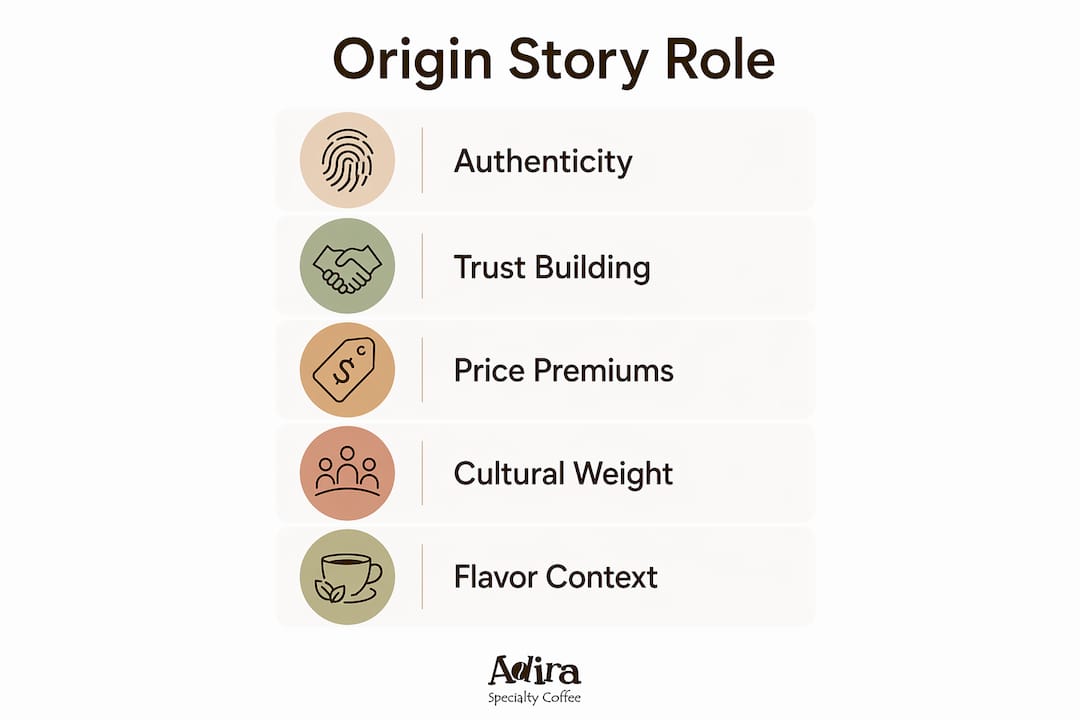
Origin stories in coffee are defined as the geographic, cultural, and human narratives that explain where a bean was grown, who grew it, and under what conditions. The role of origin stories in coffee extends far beyond geography. These narratives function as trust signals, quality indicators, and emotional anchors that shape what you pay, what you taste, and how deeply you connect with what’s in your cup. From the Juan Valdez campaign that ran for over 60 years to modern Geographical Indication (GI) certification systems, origin storytelling has been the backbone of specialty coffee’s rise as a premium market category.
How origin stories establish trust and justify price premiums
Origin narratives are legitimacy mechanisms. They convert abstract reputation into measurable market premiums by giving consumers a shortcut through a problem economists call information asymmetry. You cannot taste a bag of coffee before you buy it. You cannot visit the farm. So you rely on signals, and origin is one of the most powerful signals available.
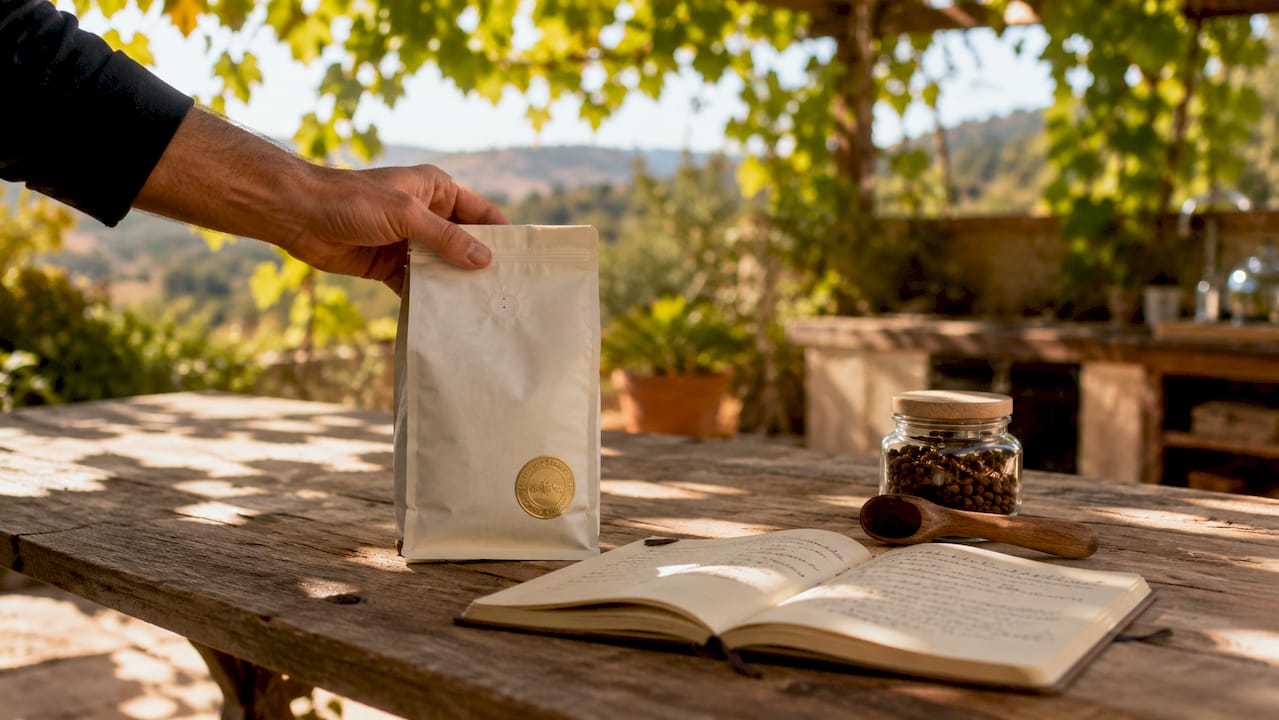
GI certification formalizes this by tying a coffee’s name to a specific geographic region with defined quality standards. Think of it like a legal guarantee that the story on the bag matches the reality in the field. Research on Indonesian coffee markets shows that official GI logos generate stronger trust effects than informal seller claims, and that middle-income consumers respond most strongly to them. This matters because it confirms that origin branding is not just a luxury-market phenomenon. It works across income levels when the signal is credible.
The Colombian coffee industry understood this early. The Juan Valdez campaign, launched in 1959 by the Federación Nacional de Cafeteros, created lasting American consumer expectations about Colombian origin as a synonym for quality. That campaign did not sell a specific farm or roaster. It sold a country, a face, and a story. The result was a decades-long price premium for Colombian beans in global markets.
Pro Tip: When you see a GI label on a coffee bag, treat it the way you would a Protected Designation of Origin label on wine or cheese. It signals institutional accountability, not just marketing.
| Signal type | What it tells you |
|---|---|
| GI certification | Region-verified quality with legal accountability |
| Farm name on label | Producer identity and traceability to a single source |
| Cooperative sourcing | Community-scale production with shared quality standards |
| Country of origin only | Broad geographic context without farm-level specificity |
Are processing methods replacing origin as the primary flavor cue?
Consumer preferences are shifting, and the shift is real. Processing methods are displacing origin as the primary flavor cue among newer, entry-level consumers. Terms like “anaerobic” and “natural process” now carry more weight in certain segments than country names do. This does not mean origin is dying. It means the story is getting more complex.
Here is what the current landscape looks like for coffee drinkers:
- Entry-level enthusiasts often respond more to processing language because fermentation-driven flavors are dramatic and immediately noticeable. A natural-processed Ethiopian coffee tastes like blueberries. That is a story your palate tells you without needing background knowledge.
- Mid-tier and experienced drinkers still value origin strongly. They use it to set flavor expectations and to assess whether a roaster’s sourcing is consistent with quality claims.
- Producer identity is emerging as a third narrative layer. Farm-style storytelling places the individual farmer or family at the center, making the coffee feel personal rather than geographic.
- Ritual storytelling focuses on the drinking moment itself, the morning routine, the slow pour, the first sip, rather than the farm or the process. This approach makes coffee accessible to casual drinkers who do not want a lecture with their latte.
The most effective coffee narratives today blend all three layers. Origin sets the stage. Processing explains the flavor. Producer identity makes it human. Understanding how processing methods shape flavor helps you read these layered stories more fluently.
Why origin narratives carry cultural weight beyond the cup
The cultural significance in coffee origin narratives runs deeper than marketing. Origin stories connect you to communities, histories, and ways of life that most coffee drinkers will never see firsthand. That connection is not incidental. It is the point.
“When a coffee carries a place name, it carries the weight of that place. The soil, the altitude, the hands that picked it, the family that depends on it. Drinking it without knowing that story is like reading a book with the cover torn off.”
Ritual storytelling increases consumer engagement metrics by 2.7 times compared to functional product messaging. That number reflects something real about human psychology. People do not just want to know what they are drinking. They want to feel something about it. Origin stories provide that emotional context.
GI certification also carries social development implications that go beyond consumer trust. Official GI status acts as an inclusive rural development mechanism, linking a region’s reputation to economic outcomes for the farmers who live there. When you pay a premium for a GI-certified coffee from Sumatra or Colombia, part of that premium is designed to flow back to the producing community. The story on the bag, when backed by credible certification, is also a supply chain commitment.
The Juan Valdez campaign is the clearest historical example of origin storytelling at cultural scale. It shaped American consumer expectations about Colombian coffee for generations. It also created a model that the specialty coffee industry has been refining ever since, moving from country-level branding toward farm-level and now individual-producer-level narratives. Understanding coffee’s cultural and geographic roots gives you a richer lens for every cup you drink.
How to use origin stories to choose and appreciate coffee better
Reading a coffee label well is a skill. Once you have it, you can use origin narratives to predict flavor, assess ethics, and find coffees that match what you actually want.
-
Start with the country. Each major coffee-growing country has a flavor signature shaped by altitude, soil, and climate. Ethiopian coffees tend toward floral and fruity. Colombian coffees often deliver balanced sweetness with mild acidity. Sumatran coffees lean earthy and full-bodied. Country of origin is your first flavor filter.
-
Look for farm or cooperative names. A bag that names the farm or cooperative signals traceability. Traceability means the roaster knows exactly where the coffee came from and can be held accountable for quality claims. Traceable sourcing is one of the clearest indicators of a roaster’s commitment to quality and ethics.
-
Check for processing information. Once you know the origin, processing tells you how the flavor was developed after harvest. A washed Ethiopian and a natural Ethiopian from the same farm will taste dramatically different. Processing is the origin story’s second chapter.
-
Use certifications as quick trust signals. GI labels, Fair Trade seals, and Rainforest Alliance certifications are visual shortcuts. Origin branding research confirms that effective brands translate complex origin data into immediate trust cues through visual language. If you are buying quickly, a credible logo does the work a long narrative cannot.
-
Ask the roaster. Specialty roasters who source directly from farms almost always have more story than fits on a label. Asking where a coffee comes from, and why they chose that farm, tells you more about a roaster’s values than any certification can.
Pro Tip: If a bag lists only a country and a roast level, treat it as a commodity product. The story stops at the border. If it lists a farm, a region, a producer name, and a process, you are holding a coffee with a full narrative. That narrative usually predicts a better cup.
Pairing origin knowledge with sensory awareness deepens enjoyment significantly. The culinary experience of coffee is richer when you understand the context behind what you are tasting.
Key Takeaways
Origin stories in coffee are legitimacy mechanisms that convert geographic reputation into consumer trust, price premiums, and cultural connection across every market segment.
| Point | Details |
|---|---|
| GI certification builds trust | Official GI logos outperform informal seller claims and support rural producer livelihoods. |
| Processing narratives are rising | Terms like “anaerobic” now rival country names as flavor cues among newer coffee drinkers. |
| Cultural stories deepen engagement | Ritual and producer-identity storytelling increases emotional connection beyond functional product facts. |
| Labels are readable if you know how | Country, farm name, processing method, and certification each tell a distinct part of the quality story. |
| Origin premiums have social stakes | Price premiums tied to credible origin certification are designed to flow back to producing communities. |
Stefan’s take: origin stories are the contract between grower and drinker
I have tasted a lot of coffee over the years, and the cups I remember are almost always attached to a story. Not because the story made the coffee taste better in some placebo sense. Because the story told me what to pay attention to. When I know a coffee comes from a small cooperative in Huila, Colombia, grown at 1,800 meters, and washed using spring water from the same mountain, I taste with intention. I notice things I would miss if the bag just said “medium roast.”
What bothers me about the current conversation around origin is the false choice being presented. Some voices in the industry argue that processing is replacing origin, as if consumers have to pick one. That is not what I see. The best coffee stories I encounter weave origin, processing, and producer identity together. They do not compete. They compound.
The uncomfortable truth about origin stories is that not all of them are honest. Marketing narratives can generate price premiums without those premiums reaching the farmers who earned them. That is why certification matters. A GI label or a direct-trade relationship is not just a marketing asset. It is a verification that the story holds up under scrutiny. When you choose ethical brews, you are not just buying better coffee. You are rewarding the producers whose stories are true.
My advice: stay curious, but stay skeptical. Ask where the coffee came from. Ask how it was processed. Ask whether the roaster has visited the farm. The answers will tell you everything you need to know about whether the story on the bag is worth believing.
— Stefan
Adiracoffee: where every bag carries a real story
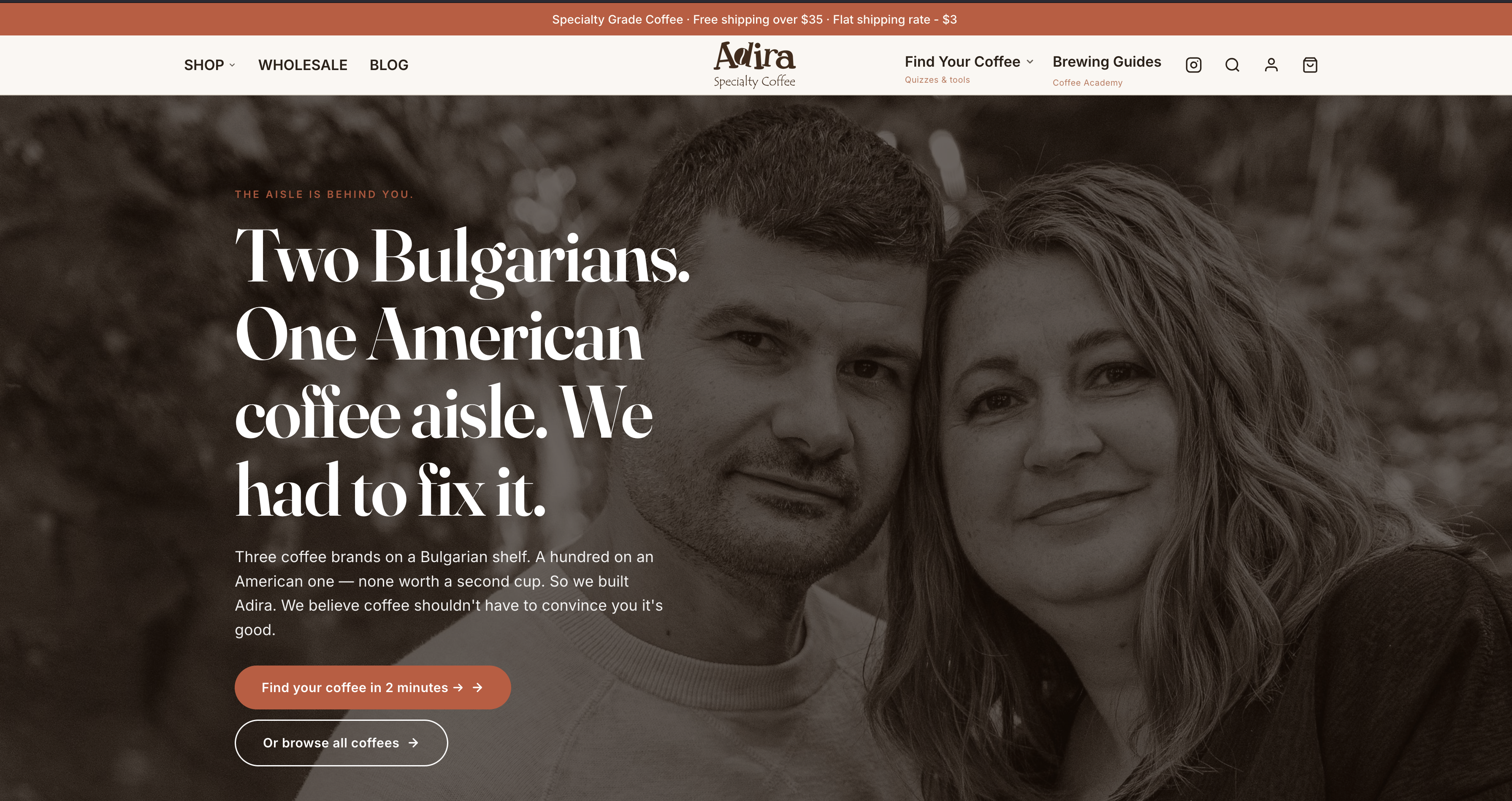
Adiracoffee was built on the belief that coffee without a story is just a commodity. Stefan and Ekaterina Nedelchev founded Adiracoffee after arriving in America and finding supermarket shelves full of bags that said nothing worth knowing. Every coffee Adiracoffee roasts comes from cooperatives and small farms in Colombia, Ethiopia, Costa Rica, Mexico, and Sumatra, with sourcing transparency built into every product.
If you want to taste what origin storytelling actually means in the cup, Adiracoffee’s single-origin selections and functional coffee collection are roasted in small batches in California and shipped within days of roasting. The Love Blend brings together beans from multiple origins with a clear sourcing narrative behind every component. Free US shipping on orders over $35, with a subscription option that saves you 10%.
FAQ
What is the role of origin stories in coffee?
Origin stories in coffee establish authenticity, signal quality, and build consumer trust by connecting a bean’s geographic and cultural context to its flavor and value. They function as legitimacy mechanisms that translate reputation into market premiums.
How does coffee origin affect flavor?
Coffee origin shapes flavor through altitude, soil composition, and climate, with Ethiopian coffees typically producing floral and fruity notes, Colombian coffees delivering balanced sweetness, and Sumatran coffees offering earthy, full-bodied profiles.
Are processing methods more important than origin now?
Processing methods are rising in importance among newer coffee drinkers, but origin remains the primary quality signal in mid-tier and specialty markets. The strongest coffee narratives combine origin, processing, and producer identity rather than treating them as competing factors.
What is a Geographical Indication (GI) label in coffee?
A Geographical Indication label is an official certification that ties a coffee’s name to a specific region with defined quality standards. Research shows GI logos generate stronger consumer trust than informal seller claims and support rural producer livelihoods.
How can I use origin information to choose better coffee?
Start with country of origin to set flavor expectations, then look for farm or cooperative names for traceability, check processing methods for flavor development details, and use GI or Fair Trade certifications as quick visual trust signals when buying quickly.