
TL;DR:
- Processing methods significantly influence coffee flavor by altering chemical composition and fermentation, shaping acidity, body, and aroma. Regional factors and infrastructure often determine processing choices more than flavor goals, with experimental techniques offering unique but inconsistent results. Tasting different processing styles from the same origin helps develop a nuanced palate and a deeper appreciation for coffee craft.
Most coffee lovers know that Ethiopia grows different beans than Brazil. But here’s what most people miss: two coffees from the same farm, same harvest, same altitude can taste completely different depending on how the cherries were processed after picking. The role of processing methods in coffee is just as powerful as origin when it comes to what ends up in your cup. Understanding this shift in perspective doesn’t just make you a more informed drinker. It makes every cup you taste richer with meaning.
Table of Contents
- Key takeaways
- The role of processing methods in coffee, explained
- How processing changes coffee chemistry
- Why region and resources shape processing choices
- Experimental methods and what they actually deliver
- My take on processing and what it means for you
- Explore processing diversity with Adiracoffee
- FAQ
Key takeaways
| Point | Details |
|---|---|
| Processing shapes flavor as much as origin | The method used after harvest directly determines acidity, body, sweetness, and aroma in the final cup. |
| Three core methods dominate globally | Washed, natural, and honey processing each produce distinct and predictable flavor profiles. |
| Fermentation is a critical variable | How long and under what conditions beans ferment determines bitterness, umami, mouthfeel, and aftertaste. |
| Regional factors drive method choice | Water availability, infrastructure, and climate often dictate processing decisions more than flavor goals alone. |
| Experimental methods deserve scrutiny | Techniques like co-fermentation and anaerobic processing are not automatic quality guarantees. |
The role of processing methods in coffee, explained
Before a green bean ever reaches a roaster, it starts as a fruit. Inside that cherry sits the seed we call a coffee bean, surrounded by layers of pulp, mucilage, and parchment. How producers remove those layers, and over what timeline, is what we mean by processing. The impact of coffee processing is not subtle. It determines which sugars, acids, and aromatic compounds survive into the final bean.
There are three primary coffee bean processing methods you’ll encounter across specialty coffee.
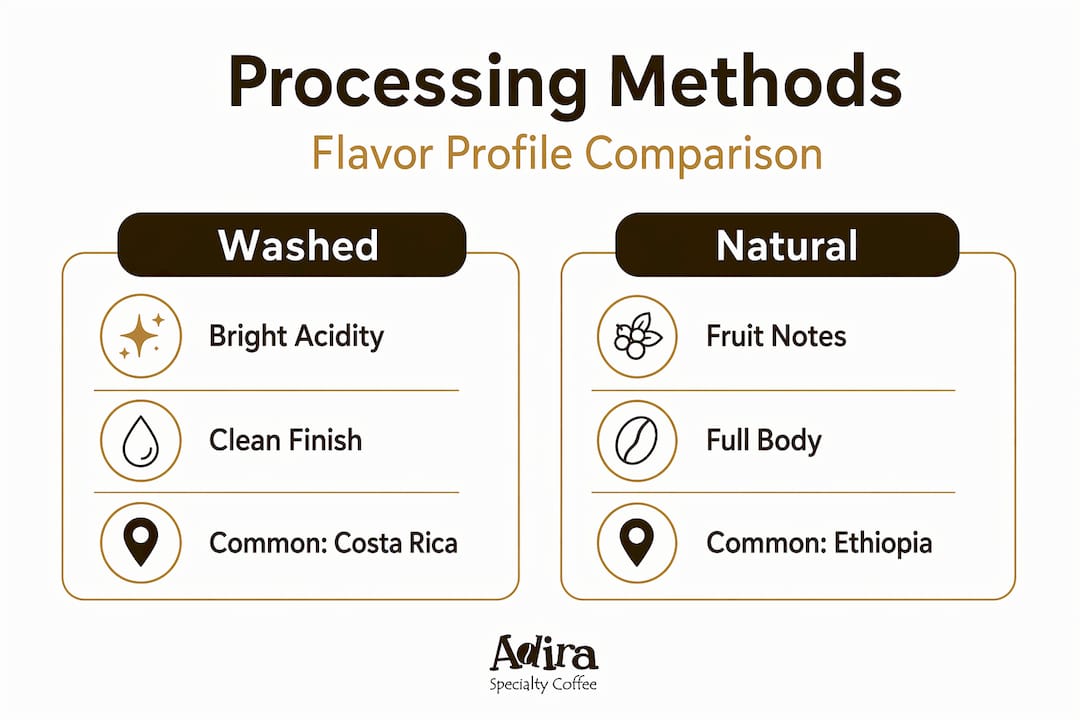
Washed (wet) processing strips the cherry skin and pulp before fermentation, leaving the bean in contact only with its sticky mucilage layer. That mucilage is then broken down through water-based fermentation and washing. The result is a clean, bright cup where the bean’s origin and terroir shine through with minimal interference. Think crisp acidity, clarity, and defined fruit notes.
Natural (dry) processing skips the washing entirely. Whole cherries are spread out to dry in the sun for weeks, and the bean absorbs sugars and flavors directly from the fermenting fruit around it. The result is bold, full-bodied coffee with intensely fruity, wine-like, or even fermented characteristics. Ethiopia and Brazil both use this method extensively, though for very different reasons.
Honey processing sits between the two. The skin is removed, but some or all of the mucilage is left on the bean during drying. The name comes from the sticky, honey-like feel of the bean during this stage. Yellow, red, and black honey variants correspond to how much mucilage remains and how long the drying takes. Flavor-wise, you get a middle ground: rounded sweetness, lower acidity than washed, less fermented intensity than natural.
| Processing method | Mucilage removed | Typical flavor profile | Common origin |
|---|---|---|---|
| Washed | Yes | Clean, bright, high acidity | Colombia, Kenya, Ethiopia |
| Natural | No | Fruity, full-bodied, wine-like | Ethiopia, Brazil |
| Honey | Partially | Sweet, balanced, medium body | Costa Rica, Guatemala |
Processing method choice varies sharply by region. Costa Rica uses washed processing for 94% of its production, while El Salvador splits roughly 80% washed, 10% natural, and 10% honey. These numbers reflect both tradition and practical infrastructure.
How processing changes coffee chemistry
The science behind how processing affects coffee flavor goes deeper than taste preferences. Every processing decision triggers real chemical changes inside the bean that no roaster can undo later.
Fermentation is the engine driving most of those changes. During fermentation, microorganisms break down mucilage and produce metabolites including organic acids, ethanol, and aromatic compounds. These compounds migrate into the bean and become locked into its cellular structure. The role of fermentation in coffee is therefore not just procedural. It actively constructs the flavor architecture of everything that follows.
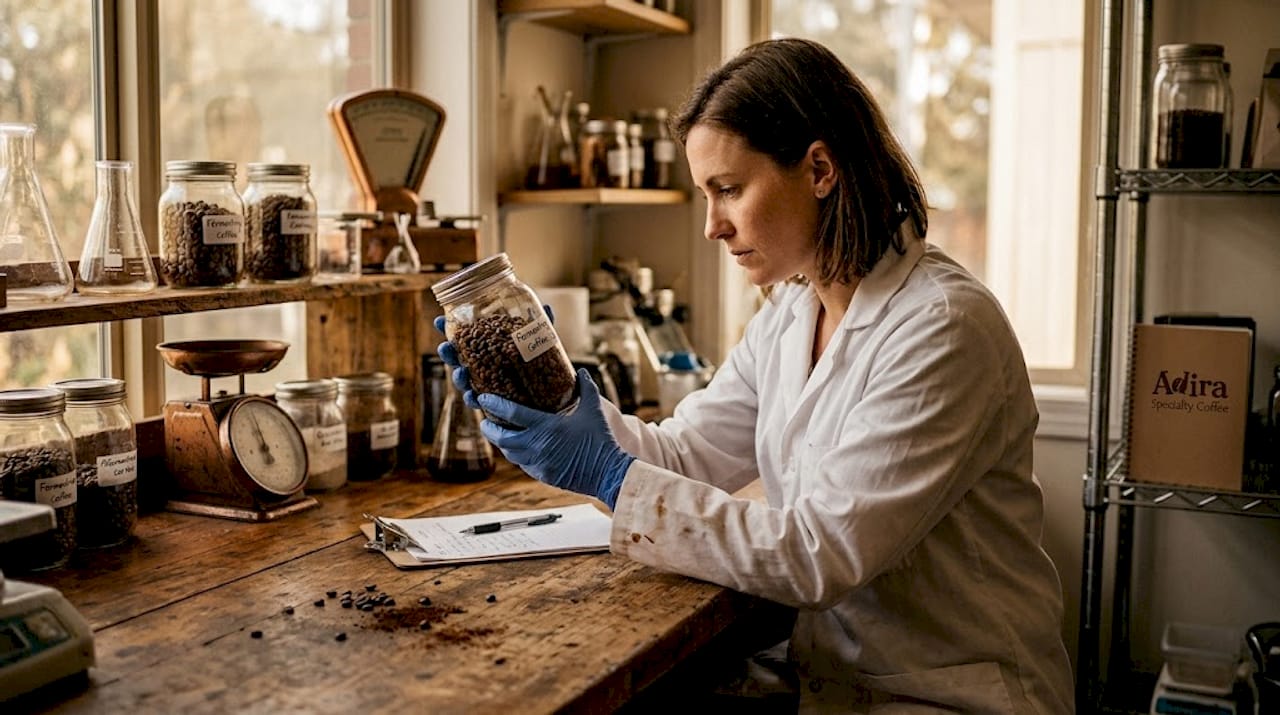
Metabolomic research shows that processing methods produce measurably different compound profiles. Amino acids like glutamic acid correlate with umami notes. Phenolic compounds affect bitterness and astringency. Lipid remodeling pathways shift depending on fermentation conditions, influencing the precursors of roast-related flavor compounds. In other words, lipid changes during processing directly affect how a bean will express itself in the roaster.
Sensory evaluations confirm what the chemistry predicts. Washed coffees score highest on bitterness and astringency, while honey-processed and anaerobically fermented coffees score better on mouthfeel and overall balance. Coffee processing effects on acidity are also method-dependent. Washed coffees typically carry higher perceived acidity because the clean fermentation preserves bright organic acids. Natural coffees feel softer and rounder because prolonged fruit contact mutes those sharper acidic compounds.
The importance of drying methods in coffee is often underestimated too. Slow, even drying preserves volatile aromatics. Too fast, and you get baked, flat flavors. Too slow or uneven, and fermentation goes too far, producing off notes like over-ripeness or vinegar.
Pro Tip: When tasting a new coffee, ask for its processing method before you brew. It will tell you what to expect from the cup and train your palate to recognize processing-driven flavors like fruit-forward sweetness in naturals or that sparkling clarity in a well-made washed Ethiopian.
Modified atmosphere fermentation is one of the more promising developments in controlled fermentation. Fermenting under CO2 preserves chlorogenic acid while reducing elaidic acid by less than 10%, resulting in measurably better sensory scores and fewer cup defects. This approach shows how understanding fermentation chemistry translates directly into better quality outcomes.
Why region and resources shape processing choices
Flavor is not always the primary reason a producer chooses a processing method. Infrastructure, climate, and resources often dictate those decisions far more than what a specialty roaster in California wants in the cup.
Washed processing requires clean water in significant quantities, along with fermentation tanks, washing channels, and reliable infrastructure for consistent results. In water-scarce regions or smallholder farms without capital investment, those conditions simply aren’t available. Natural processing, by contrast, requires only raised drying beds and dry weather. That’s why Brazil, with its vast mechanized farms and dry harvest climate, relies heavily on natural and pulped-natural methods. It fits the land, the scale, and the economics.
Costa Rica’s near-total dominance of washed processing reflects a different reality. The country has invested heavily in cooperative infrastructure and has access to water resources that support wet milling. It’s not that Costa Rican farmers prefer washed processing philosophically. It’s that the system around them was built for it.
Local sustainability factors also push producers toward certain methods. Water usage is a growing concern in coffee-producing countries, and some regions are shifting away from washed processing specifically to reduce their water footprint. Mechanical demucilaging machines offer a middle path. They remove mucilage without the water volume of traditional wet milling, opening up honey-style processing to farms that couldn’t otherwise do it.
Understanding this context matters for coffee buyers and enthusiasts. When you see “washed” on a bag, you’re not just reading a flavor cue. You’re reading a story about water access, investment, tradition, and priorities on that specific farm.
Experimental methods and what they actually deliver
The specialty coffee world has developed a taste for experimental processing, and that appetite has accelerated significantly. Anaerobic fermentation, carbonic maceration, and co-fermentation with added yeasts or fruit have all found eager markets among adventurous drinkers.
Here’s how some of the major experimental approaches work and what they actually produce:
- Anaerobic fermentation: Cherries or depulped beans ferment in sealed, oxygen-free tanks. CO2 builds up and slows microbial activity in specific ways, often producing wines-like flavors with heavy mouthfeel and distinctive floral or tropical fruit notes.
- Carbonic maceration: Borrowed from wine-making, whole cherries ferment under CO2 without oxygen. The result can be intensely aromatic with syrupy body, though consistency is notoriously difficult to achieve.
- Co-fermentation: Producers add specific yeasts, bacteria, or fruit to the fermentation environment to introduce new flavor compounds. Results range from genuinely exciting to bizarre, depending on execution.
The critical question is whether these methods are revealing something authentic about the coffee or masking something missing. Co-fermentation concerns within the specialty community center on exactly this: producers sometimes use these techniques as shortcuts to compensate for terroir limitations, not as genuine quality enhancements. A coffee that tastes like passionfruit and vanilla may be doing so because added yeasts manufactured those flavors, not because the farm’s microclimate produced them naturally.
Pro Tip: When you see heavy experimental processing on a bag, look for transparency from the producer or roaster. A good experimental coffee will tell you exactly what method was used, what ingredients were added if any, and why. Vague language about “special fermentation” is a red flag.
That doesn’t make experimental coffees bad by definition. It means knowing your specialty coffee standards matters. The best experimentally processed coffees are those where the technique amplifies what’s already present in exceptional fruit, not those that replace quality with novelty.
My take on processing and what it means for you
When I started working directly with farmers across Colombia, Ethiopia, and Costa Rica, I assumed origin would always be the dominant variable in coffee quality. What I’ve learned over years of tasting across dozens of farms is that two coffees from the same region can sit at opposite ends of the flavor spectrum purely because of processing decisions made in the days after harvest.
My honest perspective: no single processing method is categorically better than another. I’ve tasted extraordinary naturals and extraordinary washed coffees. I’ve also tasted terrible versions of both. Processing methods and coffee quality aren’t in a fixed relationship. Execution matters far more than method choice.
What I’ve also come to believe is that the experimental processing craze can mislead well-meaning coffee lovers. Seeing “anaerobic” or “co-fermented” on a bag doesn’t guarantee a better cup. It guarantees a different cup. That difference might be spectacular. It might not. Your job as an informed coffee drinker is to taste with curiosity while keeping your expectations calibrated to what the method actually promises, not to what the label implies.
The most practical advice I can offer: taste three coffees from the same origin processed differently and let your palate do the work. Your own sensory memory is the best education you can get. You’ll never forget the first time a natural Ethiopian tastes like blueberry jam next to a washed coffee from the same country that tastes like lemon and jasmine.
— Stefan
Explore processing diversity with Adiracoffee
If this article has you curious about tasting the actual differences between processing methods, Adiracoffee’s sourcing from around 50 farms across Ethiopia, Colombia, Costa Rica, Guatemala, and Brazil puts those contrasts right at your fingertips.

Adiracoffee works with farms that represent the full range of processing approaches, from the precision of Costa Rican washed lots to the lush naturals of Ethiopian highlands. Every bag includes sourcing and processing information so you know exactly what you’re drinking and why it tastes the way it does. Take the coffee finder quiz to match your flavor preferences with the right processing style, or browse by roast level to pair roast and process for the best possible cup.
FAQ
What is the role of processing methods in coffee flavor?
Processing methods determine how much fruit contact a coffee bean has before drying, which directly shapes its acidity, sweetness, body, and aroma. Washed coffees tend to taste clean and bright while natural coffees taste fruity and full-bodied.
How does fermentation affect coffee quality?
Fermentation breaks down mucilage and produces organic acids, amino acids, and aromatic compounds that absorb into the bean. Research shows that fermentation conditions including atmosphere and duration directly affect sensory scores and defect rates in the final cup.
What are the main types of coffee processing?
The three primary types are washed (wet), natural (dry), and honey (semi-washed). Each removes the cherry layers differently, producing distinct flavor profiles ranging from clean and acidic in washed to fruity and heavy-bodied in naturals.
Why do different coffee regions use different processing methods?
Processing method choice is heavily influenced by water availability, climate, infrastructure, and economic factors. Costa Rica processes 94% of its coffee using the washed method due to infrastructure investment, while Brazil relies on natural processing because its dry climate and large-scale farms make it practical.
Are experimental processing methods always better?
No. Methods like anaerobic fermentation and co-fermentation can produce extraordinary cups when applied with skill and transparency, but they can also mask terroir limitations or produce inconsistent results. Experimental processing is a tool, not a guarantee of quality.
Recommended
- Key Factors Affecting Coffee Flavor, Explained – Adira Coffee US
- The role of origin in coffee flavor: what every aficionado should know – Adira Coffee US
- How Coffee Farms Define Flavor: Practices That Impact Quality – Adira Coffee US
- What is coffee blooming and why it matters for flavor – Adira Coffee US