
TL;DR:
- The chemical fingerprint of coffee beans, shaped by origin, significantly influences their flavor profiles before roasting. Terroir-related compounds and fermentation processes create measurable differences in aroma, taste, and mouthfeel that define regional character. Understanding these factors and controlling brewing variables enhances appreciation of single-origin coffees and their unique global diversity.
Most coffee drinkers assume the roast profile is the dominant force behind what ends up in their cup. It matters, yes, but the role of origin in coffee flavor runs far deeper than most people realize. Before a roaster ever touches green beans, the chemical fingerprint of those beans, shaped by altitude, soil, rainfall, and local processing traditions, has already written most of the flavor story. Science backs this up: volatile compound analysis and sensory outcomes differ measurably by origin, and machine learning models can classify where a coffee came from with 91% accuracy based on chemistry alone. What follows is a guide to understanding exactly why that matters, and how to use that knowledge.
Table of Contents
- How origin shapes coffee’s chemical and sensory profiles
- The impact of processing methods linked to origin on taste characteristics
- The role of microbial fermentation dynamics in reinforcing origin flavors
- Differentiating origins through flavor profiles: comparison of top coffee-growing regions
- From origin to cup: practical tips for appreciating and selecting single-origin coffees
- Why understanding coffee origin requires balancing science and sensory experience
- Explore single-origin coffees to experience unique flavors from around the world
- Frequently asked questions
Key Takeaways
| Point | Details |
|---|---|
| Origin shapes flavor | Coffee origin sets the chemical and sensory foundation for a coffee’s unique flavor profile. |
| Processing influences taste | Primary processing methods like wet and dry impact bitterness, astringency, and mouthfeel linked to origin. |
| Fermentation matters | Microbial activity during fermentation further modulates sensory attributes associated with specific origins. |
| Scientific classification | Advanced chemical and AI analyses can accurately identify coffee origin and aroma intensity. |
| Practical tasting tips | To appreciate origin flavors, keep roasting and brewing consistent and consider processing details. |
How origin shapes coffee’s chemical and sensory profiles
Geography is not just a story you read on a bag. It is a measurable set of growing conditions that directly alter the chemical composition of a coffee bean. This concept, borrowed from wine, is called terroir, which refers to the combined effect of climate, elevation, soil mineral content, and agricultural practices unique to a specific place. In coffee, terroir does not just create poetic tasting notes. It produces distinct volatile compounds that your nose and palate can actually detect.
Research shows that origin shapes sensory potential before roasting even begins, producing differences in aroma intensity and flavor outcomes that no roasting adjustment can fully manufacture. The variety of these differences across regions is what makes flavor diversity in coffee one of the most genuinely complex topics in the food world.
Here are some of the key volatile compound categories that differ by origin and what they contribute:
- Pyrazines (more prominent in Brazilian coffees): responsible for roasted, nutty, and earthy aromas
- Terpenes (common in Ethiopian varieties): contribute floral, citrus, and herbal notes
- Furans: caramel and sweet aromas, often elevated in Central American coffees
- Esters: fruity and wine-like notes, frequent in naturally processed coffees regardless of origin
- Aldehydes: green and grassy aromas, more common in lightly processed beans from humid climates
These compounds are not random. They reflect the metabolic responses of coffee plants to their specific environment. A Yirgacheffe bean grown at 2,000 meters in Ethiopian highlands produces different chemical precursors than a Santos bean grown at 900 meters in the Brazilian cerrado. The result is not just a subjective difference in taste. It is a measurable one. Learning more about how origin shapes flavor can help you connect this science to the cup you brew every morning.
The impact of processing methods linked to origin on taste characteristics
Understanding the chemistry of terroir is essential, but processing is where many of those chemical differences either shine or get obscured. The three primary processing methods, wet (washed), dry (natural), and honey, each affect how the bean’s flavors develop after harvest. And importantly, different coffee-growing regions have their own dominant processing traditions.
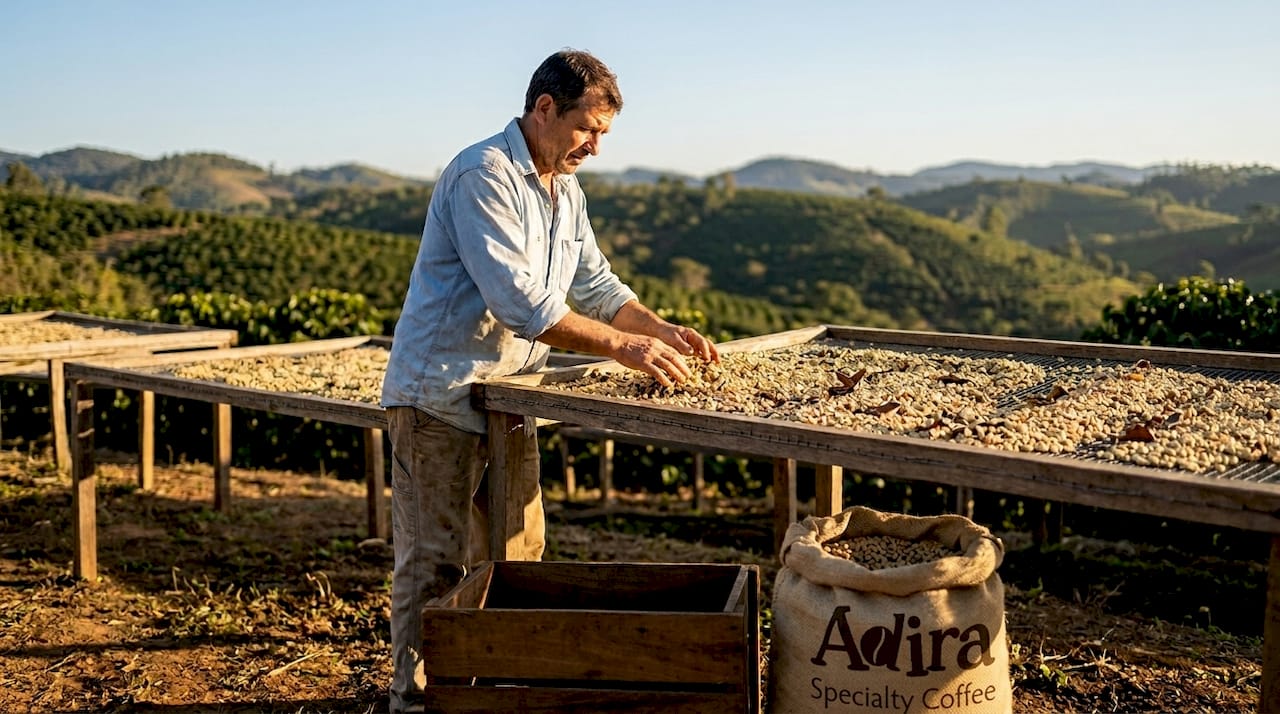
Research confirms that wet and dry processing produce significantly different sensory outcomes, particularly in bitterness, astringency, and mouthfeel. Wet-processed coffees tend to be cleaner and brighter, with pronounced acidity, while dry-processed coffees often carry more body, sweetness, and a distinctive fermented complexity. These differences interact with, and sometimes override, the underlying terroir signal.
Here is a practical sequence for comparing origin flavors without letting processing muddy your conclusions:
- Choose the same processing method across origins. If you want to compare Ethiopian versus Colombian terroir directly, use two washed coffees. Mixing a natural Ethiopian with a washed Colombian tells you more about processing than geography.
- Hold roast level constant. Use two medium roasts or two light roasts. Different roast levels produce more flavor variation than different origins in some cases.
- Use identical brew parameters. Same grind size, water temperature, brew ratio, and extraction time. Change one variable at a time.
- Taste side by side, not sequentially. Your palate resets when you cup two coffees simultaneously. Sequential tasting introduces memory bias.
- Focus on texture and finish, not just aroma. Origin differences often show up most clearly in mouthfeel and aftertaste, not the first sniff. Understanding how farms define flavor through their practices can give you additional context for what you are tasting.
Pro Tip: When shopping for single-origin coffees, look for bags that list the processing method alongside the origin. Without that information, you cannot accurately interpret what you are tasting or compare it meaningfully to another origin.
The role of microbial fermentation dynamics in reinforcing origin flavors
After picking and before drying, most coffees go through a fermentation stage where microorganisms break down the mucilage surrounding the bean. This is not an incidental step. It is where the origin’s environmental microbiome leaves its most distinctive mark on the final flavor.
Specific microbial genera during fermentation directly influence sensory attributes, and those microbial communities are shaped by the local temperature, humidity, water source, and even the ambient air of a particular farm. The fermentation tank in a Colombian Huila farm does not host the same microbial community as one in an Ethiopian Gedeo forest, and that difference shows up in the cup.
Key microbes that contribute positively to specialty coffee flavor include:
- Leuconostoc species: produce lactic acid and contribute mild acidity and clean sweetness
- Lactobacillus species: add fruity, lactic complexity and help develop wine-like or berry notes
- Pichia species (a wild yeast): contribute tropical fruit and floral aromas, common in naturally fermented lots
- Saccharomyces cerevisiae: when introduced as a starter culture, produces more predictable and replicable fruity fermentation notes
Temperature and duration of fermentation also matter significantly. A 24-hour ferment at 18°C produces a different microbial outcome than a 36-hour ferment at 26°C, even using the same starter culture. This is why two coffees from the same farm can taste noticeably different across harvests or even across different lots within the same harvest. The connection between fermentation and origin is one of the least discussed but most influential factors in specialty coffee.
Pro Tip: When you find a coffee you love, ask the roaster or importer what fermentation method the producer used. “Natural,” “washed,” and “anaerobic” tell part of the story, but fermentation time and temperature tell the rest.
Differentiating origins through flavor profiles: comparison of top coffee-growing regions
With the science established, the next question is: what does this actually taste like? The impact of coffee origin on sensory experience becomes clearest when you line up major growing regions side by side. Volatile chemistry and sensory traits map reliably to regional flavor archetypes, even if individual lots vary.
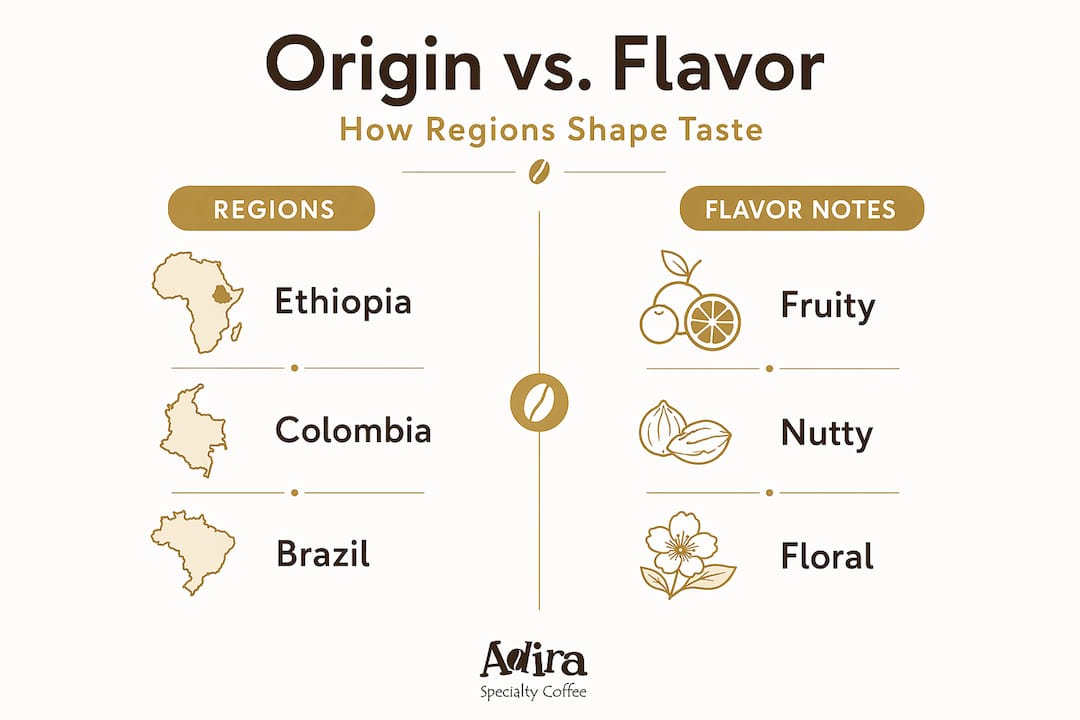
| Origin | Dominant flavor notes | Typical terroir | Key compounds |
|---|---|---|---|
| Brazil | Nutty, chocolate, low acidity | Low elevation, cerrado climate | Pyrazines, furans |
| Ethiopia | Floral, jasmine, herbal, citrus | High elevation, forest-grown | Terpenes, linalool |
| Colombia | Bright acidity, balanced, caramel | Mid-high elevation, volcanic soil | Esters, chlorogenic acids |
| Guatemala | Brown sugar, dried fruit, mild smoke | Volcanic soil, distinct dry season | Furans, esters |
| India | Spice, tobacco, low acidity | Monsoon-exposed, lower elevation | Pyrazines, phenolics |
A few things worth noting about this table. Brazil’s dominance in volume production means that many commercial blends are built on its lower-acid, nutty foundation. Ethiopia, widely considered the birthplace of Arabica, produces the most complex floral profiles in the world because its wild and landrace varieties carry genetic diversity not found elsewhere. Colombia’s volcanic soil and two annual harvest cycles make it one of the most consistent origins for balanced regional coffee taste year-round.
These profiles are not guarantees. They are tendencies. A natural-processed Ethiopian coffee will taste very different from a washed Ethiopian, even though both carry the origin’s terpene signature. This is exactly why knowing the origin is only the starting point. You can explore top coffee growing regions in detail, or match your palate to a specific origin style by browsing best coffee flavor profiles to see what resonates.
From origin to cup: practical tips for appreciating and selecting single-origin coffees
Knowing the science is one thing. Applying it at home is another. Since origin effects interact with processing and roasting, isolating the true terroir signal requires some deliberate choices in how you select and brew.
- Standardize your roast. If you buy from multiple roasters, light to medium roast is the most transparent window into origin character. Dark roasts mask origin flavors behind carbon and smoke.
- Use a controlled brewing recipe. A pour-over with a fixed ratio of 1:15 (coffee to water) at 93°C works well for origin comparison. Espresso compresses too many variables.
- Request processing and farm details. A roaster who cannot tell you how the coffee was processed is one who cannot give you origin confidence.
- Look for traceability. Lot numbers, farm names, and cooperative identifiers are signals of genuine single-origin sourcing, not just marketing language.
- Keep a tasting journal. Write down what you notice in aroma, acidity, body, and finish. Over time you will start to recognize origin signatures intuitively.
Pro Tip: Use your nose before your first sip. Dry aroma from the grounds and wet aroma after brewing often reveal origin character more clearly than the actual taste, especially for delicate floral or herbal notes that high brewing temperature can mute. When you are ready to buy with this knowledge, a single-origin coffee guide can help narrow down your choices, and tips for choosing coffee beans will help you apply these criteria practically.
Why understanding coffee origin requires balancing science and sensory experience
Here is something the origin conversation often gets wrong. It treats origin as a fixed label that determines flavor, rather than as a probability space that makes certain flavors more likely. A coffee’s origin shapes its chemical potential. Processing, fermentation, roast, water, and even your own palate determine whether that potential is realized.
Machine learning-based chemical profiling can authenticate whether a coffee truly came from Ethiopia or Colombia with remarkable accuracy. But that same model cannot tell you whether you will enjoy it, or whether the roaster got the most out of it. Authentication and appreciation are different problems.
The risk for enthusiasts is treating origin as a shortcut to certainty. “I love Ethiopian coffee” is not a stable preference if you have only tasted washed Yirgacheffe. A natural Sidama, a honey-processed Guji, and a wet-hulled Harrar all carry Ethiopian origin signatures, but they will taste dramatically different. Exploring the connection between terroir and taste is a practice, not a conclusion.
The most useful thing you can do as a home barista is hold two things at once. Trust the science that confirms origin matters chemically. And stay genuinely curious about what your specific palate finds compelling in a specific cup, regardless of what the label says should be there.
Explore single-origin coffees to experience unique flavors from around the world
Understanding origin is one thing. Tasting it is where the knowledge becomes real. At Adira Coffee, every bean we roast comes from farms we know by name, across regions where origin character is the whole point.
If you want to taste what a well-sourced, freshly roasted origin coffee actually delivers, our Colombian single-origin coffee is a great place to start. Bright acidity, balanced sweetness, and that volcanic-soil clarity that makes Colombia one of the most reliable origins in the world. Not sure which origin fits your palate? Take our coffee flavor psych test and get a recommendation based on your actual taste preferences, not just what sounds good on paper. Explore everything we offer at Adira Coffee and put this knowledge to work in your cup.
Frequently asked questions
How does coffee origin influence flavor compared to roasting?
Coffee origin determines the chemical composition and aroma precursors built into the bean before roasting, creating flavor profiles that roasting develops but cannot invent from scratch.
Why do coffees from the same origin taste different sometimes?
Fermentation dynamics and processing vary by producer and season, meaning that even two coffees sharing the same terroir can express noticeably different sensory attributes depending on how they were handled after harvest.
What processing methods most affect coffee flavor linked to origin?
Wet and dry processing produce the most dramatic sensory differences, with wet processing shifting bitterness and astringency and dry processing amplifying body and fruity complexity over the underlying origin character.
Can coffee origin certifications affect flavor or just price?
Certifications primarily support traceability and are linked to higher prices and quality signaling in specialty markets, though they reinforce sourcing practices that tend to preserve origin flavor integrity.
How can I best taste to appreciate origin flavors at home?
Keep your roast level and brew recipe consistent across different origins, and ask for processing and fermentation details so you can accurately attribute what you taste to geography rather than method.