1–4 Weeks: Order Coffee Beans by Roast Date for Home Drinkers

Order whole‑bean coffee often enough that you finish each bag while it’s still inside its peak flavor window, which for most home drinkers means every 1 to 4 weeks. The exact cadence depends on how much coffee you drink, whether you buy whole bean or ground, and how well you store what you have. A solo drinker with good storage can stretch that window; a two‑person household grinding daily should reorder closer to every two weeks.
TL;DR:
- Using roast date instead of best-by date helps you order coffee within its peak flavor window, which is typically 8 to 18 days after roasting.
- Whole beans generally stay fresh for weeks if stored properly, while pre-ground coffee loses aroma and oils within hours to a few days.
- Smaller bags are preferable for seasonal or specialty beans to avoid aging past peak, especially if you drink slowly or store poorly.
- Grinding just before brewing significantly improves aroma and flavor, making it the most impactful habit for better coffee.
- An order cadence should match your household’s consumption rate, with smaller, frequent orders ideal for maximum freshness and flavor.
In this guide
- How Often Should You Order Coffee Beans Based on Consumption?
- Why Roast Date and Degassing Set the Ordering Rhythm
- Does Grinding Ahead of Time Change How Often You Should Buy?
- What Storage Habits Let You Order Coffee Beans Less Often?
- Choosing Order Size and Whether a Subscription Makes Sense
- How Adira Coffee Keeps Every Bag Inside Its Peak Window
- The One Habit That Actually Moves the Needle
- Ready to Match Your Order Schedule to a Fresh Bag?
- Sources
- FAQ
How Often Should You Order Coffee Beans Based on Consumption?
The honest answer depends less on a calendar and more on your cup count. Match your order size and reorder date to how fast you actually drain a bag, and you’ll rarely be stuck brewing beans that have already lost their edge.
Here’s how that plays out across common household patterns:
- Solo drinker (1 to 2 cups a day): a small bag regularly within a few weeks keeps you inside the peak window without waste.
- Two‑person household (2 to 4 cups a day): a moderate bag purchased every couple of weeks generally matches consumption and freshness.
- Home barista or weekly entertaining: a pound-size bag bought with proportionate frequency works, but requires airtight storage to maintain freshness.
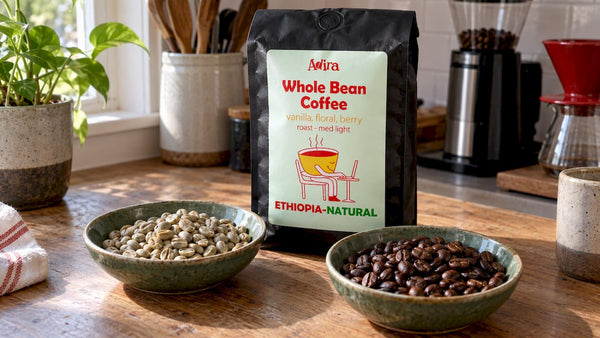
Bag size should track how long beans stay good, not how good a bulk discount looks. A 5 pound bag might save a few dollars per ounce, but if it takes you six weeks to work through it, the back half of that bag is brewing well past its best days. Seasonal, single‑origin lots deserve smaller orders, too. Something like an Ethiopia natural is meant to be experienced near its peak, not stretched across two months to justify the purchase. Save the larger bags for reliable everyday blends you’ll cycle through fast.
Pro Tip: Before you reorder, check the roast date on your current bag, not the calendar. If you’re still drinking coffee roasted three weeks ago, order now so the new bag arrives close to when the old one runs out.
Why Roast Date and Degassing Set the Ordering Rhythm
Coffee beans release carbon dioxide for weeks after roasting, and that process, called degassing, is what actually dictates when a bag tastes its best. The Specialty Coffee Association notes that CO2 release happens rapidly during the first several weeks after roasting, making that initial period the most volatile stretch for flavor. Ground coffee moves even faster, losing most of its CO2 and aromatic compounds within minutes to hours of grinding.
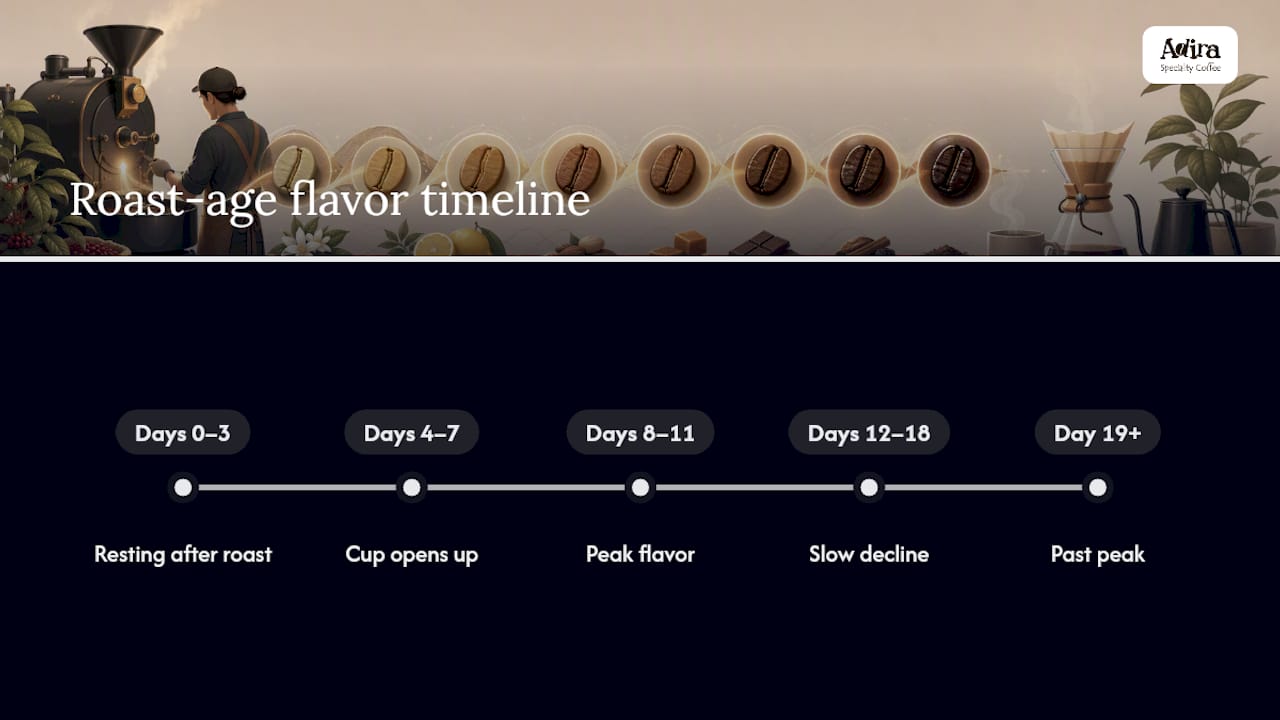
Field data from coffee reviewers at Day9 breaks the timeline into rough stages: days 0 to 3 are a resting period right after roast, days 4 to 7 open the cup up, days 8 to 11 hit peak flavor, days 12 to 18 bring a slow decline, and by day 19 you’re past peak.
Processing method and roast level shift that timeline. Washed coffees, which have less fruit sugar clinging to the bean during drying, tend to open up and peak earlier. Naturals, dried with the fruit still on, often need a few extra days to hit their stride. Darker roasts also tend to degas faster than lighter roasts, since more of the bean’s structure has broken down in the roaster.
This is exactly why “best by” dates printed on mass‑market bags are close to useless for timing a purchase. A best‑by date might sit a year out; it tells you nothing about where the bag falls on the degassing curve. The roast date is the number that actually matters when you’re deciding whether to order this week or wait.
Does Grinding Ahead of Time Change How Often You Should Buy?
Yes, significantly. Whole beans hold onto CO2 and aromatic oils for weeks, acting almost like a slow‑release container for flavor. Grind those same beans, and you expose far more surface area to oxygen, releasing most of the volatile aromatics within minutes to hours.
That difference should change how you shop:
- If you buy whole bean and grind per cup, you can stretch reorder intervals to up to a few weeks.
- If you buy pre-ground coffee, plan on smaller bags and more frequent purchases, as freshness declines much faster once ground.
- For frequent espresso use, grinding to order or single‑dosing each shot beats loading a hopper with a week’s worth of ground coffee sitting exposed to air.
- If your machine needs a hopper, fill it with only a day or two of beans at a time rather than the whole bag.
The SCA’s guidance on grinding lines up with what most experienced home baristas already suspect: the single biggest lever for a better cup isn’t a fancier bean, it’s grinding closer to brew time. If you’re set on buying pre‑ground for convenience, treat that bag like a shorter‑lived product and reorder before you’d think to with whole bean.
What Storage Habits Let You Order Coffee Beans Less Often?
Good storage cannot prevent coffee aging but may extend the peak flavor phase by some additional time before decline. Poor storage does the opposite, cutting your window short even on a bag roasted days ago.
- Use an opaque, airtight container to protect beans from light and oxygen, which degrade aroma.
- Store coffee in a cool, dark, and dry place to slow staling.
- Freeze beans in small portions if stocking up, and thaw only what you’ll use soon.
- Avoid repeated freeze-thaw cycles, which accelerate flavor loss due to condensation.
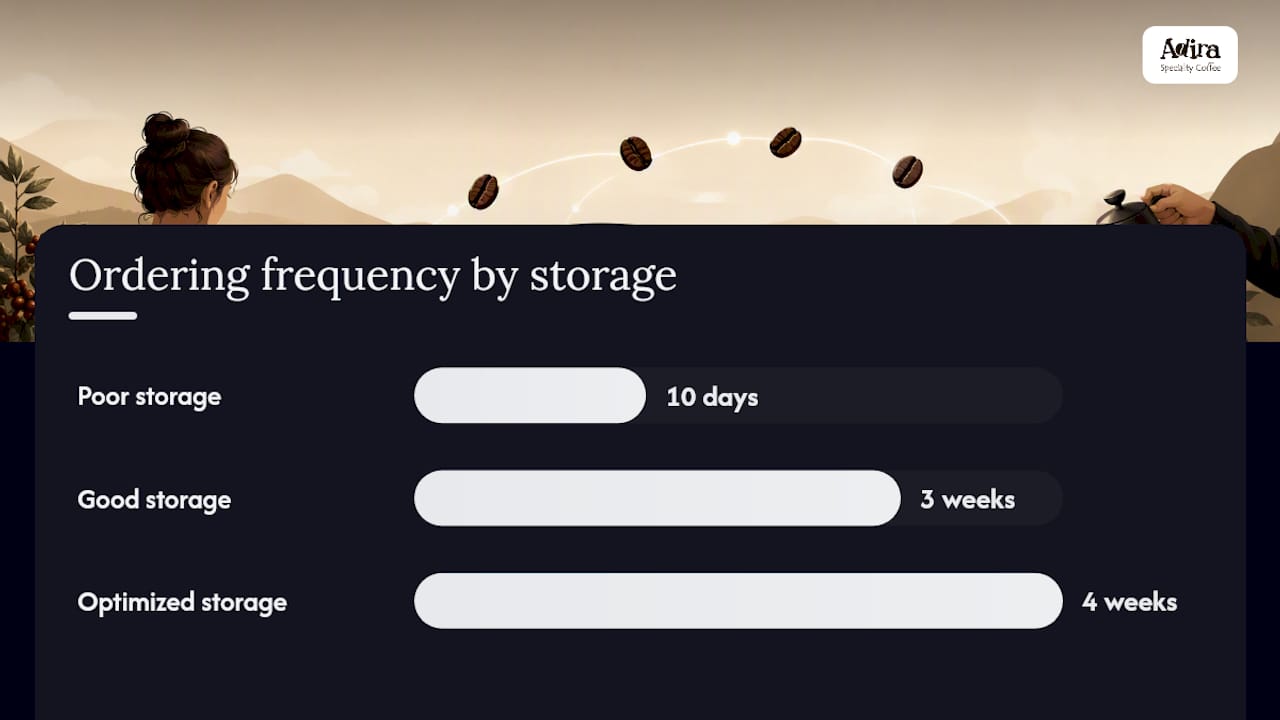
Dialing in storage this way is what separates someone who has to order every ten days from someone who can comfortably stretch to three or four weeks between deliveries. For the full walkthrough, the step-by-step storage guide covers container choices and placement in more detail, and the freezing instructions walk through portioning and thaw timing if you’re stocking up before a trip or a busy stretch.
Pro Tip: Buy a set of small, airtight jars sized to a week’s worth of coffee. Portioning a fresh bag the day it arrives keeps most of it sealed away from air while you work through one jar at a time.
Choosing Order Size and Whether a Subscription Makes Sense
Before locking in a cadence, run through a short checklist: how much you actually drink, how much you care about hitting peak flavor versus “still fine,” how good your storage setup is, and what you’re comfortable spending per month. Someone chasing peak flavor with mediocre storage should lean toward smaller, more frequent orders regardless of what the budget math says.
Subscription cadences map cleanly onto the consumption patterns from earlier in this guide:
- Weekly delivery suits heavy drinkers who consume moderate amounts frequently.
- Every 2 weeks fits average solo drinkers using a smaller bag.
- Every 3 weeks may work for small households with moderate storage.
- Every 4 weeks may be acceptable for light drinkers or when freezing to preserve freshness.
Before subscribing to any roaster, ask three questions: how often they actually roast (weekly batches versus large runs held in a warehouse), whether the roast date is printed on the bag, and how many days shipping typically takes. A roaster that can’t answer the last two clearly probably isn’t roasting to order.
How Adira Coffee Keeps Every Bag Inside Its Peak Window
Adira Coffee roasts in small batches in California and ships within days of roasting, so bags tend to arrive closer to the front of the peak window rather than after it’s already closing. Subscription cadences can be tailored around consumption patterns such as:
- 12 ounces every 2 weeks for a solo drinker
- 12 to 16 ounces every 2 to 3 weeks for a two‑person household
- Adjustable frequency for heavier drinkers or households that entertain often
Co‑founder Stefan Nedelchev built the roast‑to‑order model around a simple idea: a bag shouldn’t sit in a warehouse for weeks before it reaches your kitchen. Readers wanting a deeper look at how roast date interacts with flavor can check the peak timing breakdown for specialty brews.
The One Habit That Actually Moves the Needle
If you only change one thing, buy whole beans with a visible roast date and grind right before you brew. That single habit does more for aroma and taste than any storage container, because it keeps CO2 and volatile oils locked in until the moment you need them.
— Stefan
Ready to Match Your Order Schedule to a Fresh Bag?
A subscription service can take the guesswork out of timing by roasting to order, shipping quickly, and letting you pick a cadence, weekly, every two weeks, or monthly, that matches how much coffee your household actually drinks. Shipping may be offered on orders over a certain amount, so the convenience doesn’t come at a premium.
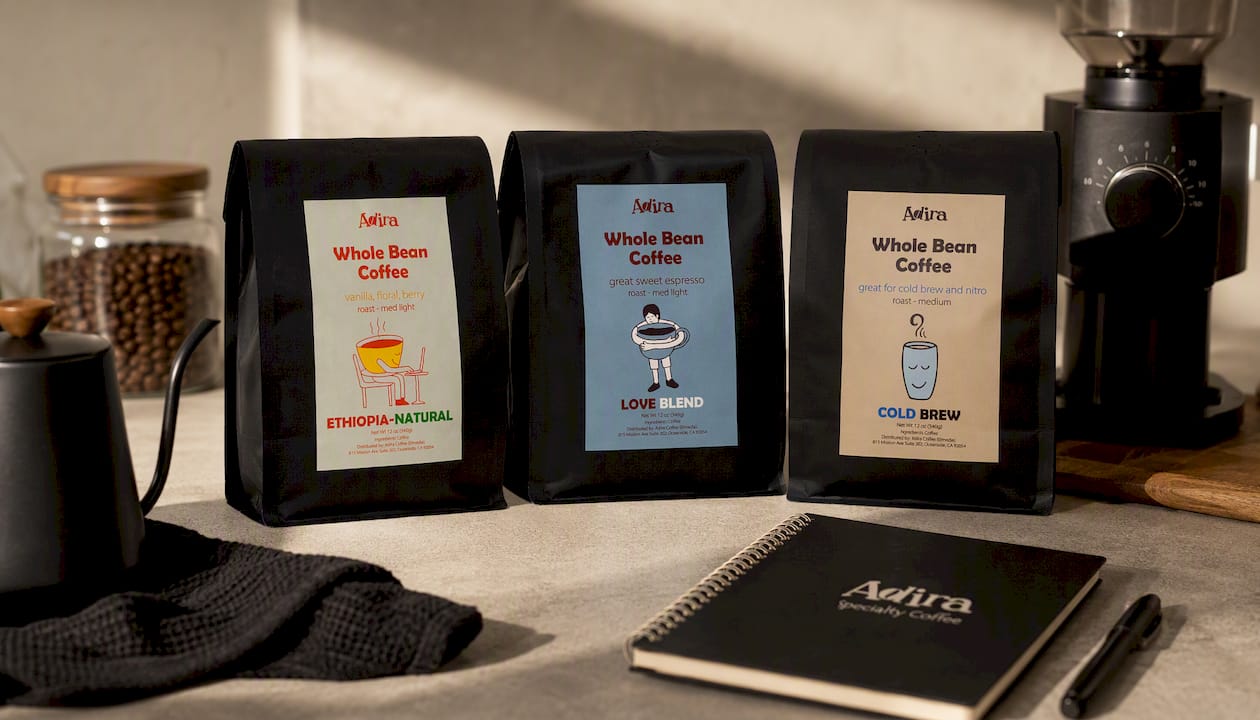
If you’re building out a rotation, the Ethiopia natural is worth ordering in smaller batches for its seasonal character, the Love Blend works well as your reliable everyday bag, and the Cold Brew offering is built for anyone brewing in batches rather than by the cup. Pick a bag size and delivery frequency that mirrors your own consumption from earlier in this guide, set up a subscription, and let the roast date do the scheduling for you from here on out.
Sources
For more on the science and storage side of this topic, see the SCA’s freshness guidance, day9’s peak window field notes, and Harvard’s caffeine guidance.
FAQ
What Is the 15-15-15 Rule for Coffee?
The 15-15-15 rule refers to a brewing ratio, not a freshness guideline. It’s a rough shorthand some home brewers use for balancing grind size, water temperature, and brew time, and it isn’t connected to how often you should reorder beans.
What Is the 80/20 Rule for Coffee?
There’s no single, widely agreed definition of an 80/20 rule specific to coffee freshness or purchasing. If you’ve seen it referenced, it’s typically describing a personal habit, like drinking one reliable everyday blend 80% of the time and rotating specialty bags the rest, rather than an industry standard.
What Is the Best-Selling Coffee in America?
Sales rankings shift and vary by measurement method, so no single brand holds a permanent, universally agreed top spot. What’s more useful for your own buying decisions is roast‑date transparency, which mass‑market brands often lack and which specialty roasters like Adira print directly on the bag.
Is Eating Coffee Beans Healthier Than Drinking Coffee?
No, and it’s not a freshness shortcut either. A single Arabica bean contains roughly 6 to 11 milligrams of caffeine, so eating a handful concentrates caffeine intake far faster than sipping a brewed cup, with no upside for flavor or nutrition.
How Long Does a Bag of Coffee Last Once Opened?
Most whole-bean coffee retains peak flavor for a few weeks after roasting, depending on processing, roast level, and storage. Ground coffee loses its peak aromatics much faster, often within minutes to hours after grinding.
Recommended
Brew it with the right coffee
The bag this guide was written around. Roasted after you order, shipped from California.
More to try
All coffee Medium-light roastLightDark
Love Blend
Milk chocolate, Caramel, Floral lift
Invests in young leaders in Bulgaria
$24.99
 Medium-dark roastLightDark
Ocean Blend
Cocoa, Soft caramel, Clean vanilla finish
Invests in young leaders in Bulgaria
$24.99
 Espresso roastLightDark
African Blend
Chocolate, Caramel, Fruit lift
Invests in young leaders in Bulgaria
$24.99
Never run out.
Never pay shipping.
Any Adira coffee with Monthly Sender: up to 15% off every delivery, free shipping every time, skip, pause or cancel whenever you like.
Set up Monthly Sender