Home Brewers: Beans Don’t Expire, They Peak 2–4 Weeks, Use Roast Date

Coffee beans don’t “expire” the way milk or meat does. They go stale, which means they lose aroma and flavor over time rather than becoming dangerous to drink. Sealed whole beans hold up for months past any printed date, opened whole beans peak for roughly two to four weeks, and ground coffee peaks for hours to a few days at most. The real safety concern isn’t time, it’s moisture. Mold from a wet bag is the one thing that should send your coffee straight to the trash.
TL;DR:
- Coffee beans remain safe to drink well past their flavor peak unless exposed to moisture that causes mold or spoilage.
- Whole beans are best within 2 to 4 weeks of roast date, and grinding accelerates staling to just hours or days.
- Proper storage in opaque, airtight containers in a cool, dark environment extends freshness, but purchase small batches more frequently.
- The best indicator of stale coffee is muted aroma and flavor, not the printed best-by date, and visual mold or dampness signals it should be discarded.
- Roasters should provide a roast date, as it more accurately predicts peak freshness than any printed expiration date.
In this guide
- How Long Do Coffee Beans Stay Fresh?
- Does “Expire” Even Apply to Coffee? Safety vs. Freshness
- How to Store Coffee Beans for the Longest Flavor
- How to Tell If Beans Are Stale or Actually Unsafe
- Adira Coffee’s Take: Why Roast Date Beats Any Printed Expiration Date
- What Coffee Drinkers Get Wrong About Freshness
- Get Fresh Beans Before They Ever Have a Chance to Go Stale
- Sources
How Long Do Coffee Beans Stay Fresh?
The clock starts ticking the moment beans leave the roaster, not when you open the bag. A sealed, unopened bag with a one-way valve can taste reasonably good for many months past its printed best-by date, but “reasonably good” and “at its peak” are different things. That peak window is narrow, and it starts closing the second you break the seal.
Roasted coffee releases carbon dioxide for weeks after roasting. Degassing happens fastest in the first 20 days, which is exactly why the Specialty Coffee Association points to a two to four week window as the sweet spot for whole beans. Grinding wrecks that timeline almost instantly. Grinding multiplies the surface area exposed to oxygen, so aroma and flavor compounds that would have taken weeks to fade now disappear in minutes to hours.
| Coffee state | Realistic freshness window | What happens after |
|---|---|---|
| Sealed, unopened bag | Several months (best-by dates often run long) | Flavor dulls gradually, no safety risk |
| Opened whole beans | 2 to 4 weeks at peak, drinkable for weeks beyond | Aroma fades, taste turns flat or woody |
| Ground coffee | Hours to a few days at peak | Rapid, noticeable staling within a day |
Packaging makes a real difference here. A few things actually extend the window:
- Nitrogen-flushed bags that push oxygen out before sealing
- One-way degassing valves that let CO₂ escape without letting air in
- Vacuum-sealed canisters for home storage after opening
- Foil-lined bags that block light and slow oxidation
Roast level matters too. Darker roasts have more surface oil and a more porous structure, so they tend to stale a bit faster than lighter roasts stored under the same conditions.
Does “Expire” Even Apply to Coffee? Safety vs. Freshness
The word “expire” implies risk, and that’s where a lot of confusion starts. Roasted coffee has very low water activity, which makes it a poor environment for mold or bacteria unless moisture gets in from outside. That’s why the National Coffee Association notes that most beans stay safe well past their peak flavor window, even as taste declines.
A “best-before” date on a coffee bag is a quality claim, not a safety cutoff. It tells you when the roaster expects flavor to have faded, not when the coffee turns harmful. Actual red flags look different:
- Visible mold, usually a white, green, or black fuzz on the beans
- Damp clumping, a sign water got into the bag
- A musty or sour smell that wasn’t there before
- A bag that got wet, torn, or stored somewhere humid for an extended period
If you see any of that, toss the bag. Otherwise, stale coffee is a flavor problem you can brew your way around, not a health problem.
How to Store Coffee Beans for the Longest Flavor
Freshness management comes down to blocking four things: air, moisture, heat, and light. Get those four under control and you’ll taste the difference in every cup.
- Move beans into an opaque, airtight container the moment you open the bag. Food & Wine’s storage guidance recommends keeping beans somewhere cool and dark, ideally between 50°F and 70°F, well away from the stove or a sunny counter.
- Skip the original bag once it’s been opened repeatedly, unless it has a working one-way valve. A dedicated vacuum canister or a solid ceramic container with a rubber seal outperforms a bag you keep rolling and unrolling.
- Buy smaller batches more often instead of stockpiling a big bag that sits half-full for a month. Two to four weeks of beans at a time keeps you inside the peak window described above.
- Grind right before brewing, not the night before. A guide to grinding for flavor can help you match grind size to your brew method, but the timing rule is simple: grind what you’re about to use.
- Use the freezer only for long-term backup, not daily storage. Portion beans into airtight, single-use packs before freezing. Pull a portion out and let it come to room temperature while still sealed, then open it. Never refreeze a thawed portion.
Pro Tip: Keep your everyday container in the pantry and a backup bag in the freezer. You get daily convenience without gambling your whole supply on one open container sitting out for weeks.
Refrigerating beans is a common mistake. The fridge exposes coffee to moisture and absorbs surrounding food odors every time the door opens, which does more harm than good.
How to Tell If Beans Are Stale or Actually Unsafe
Your nose is the best tool you have. Fresh beans smell bright and specific, whether that’s floral, chocolatey, or nutty depending on origin. Stale beans smell muted, flat, or vaguely papery, like the aroma got left out in the sun too long.
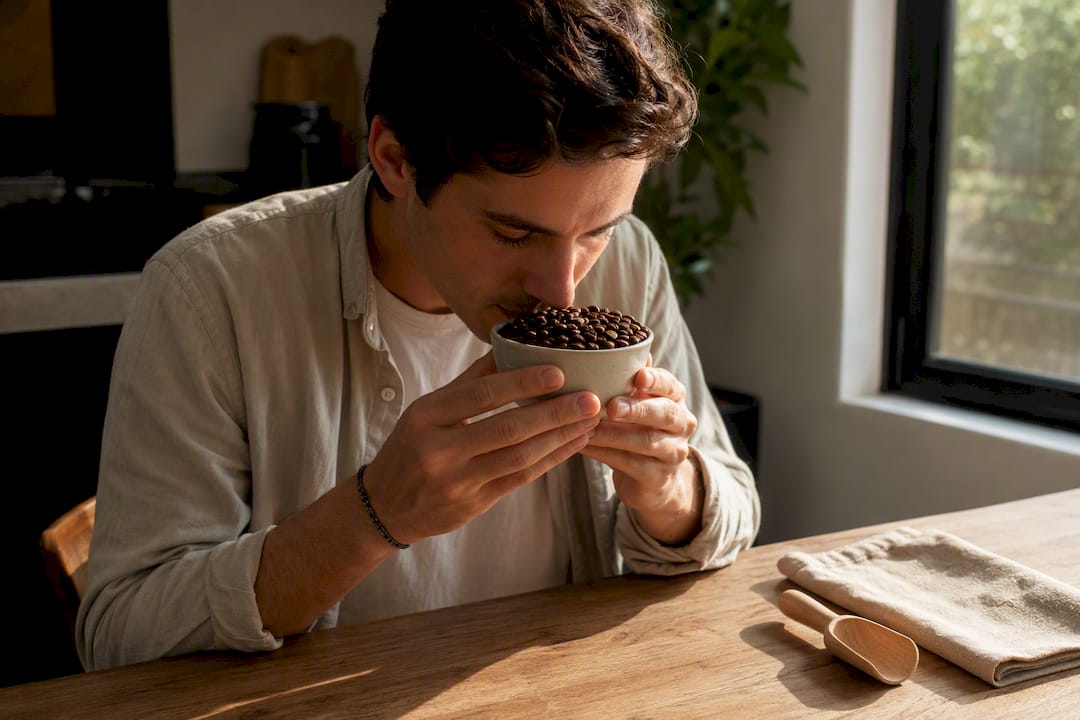
Grinding a small amount and smelling it immediately is a quick, reliable test. Weak aroma and no “bloom,” that puff of gas and foam you see when hot water first hits fresh grounds, are strong signs the beans are past peak. That’s a flavor problem, not a safety one.
Visual checks matter more than smell for actual danger. A sensory study on stored roasted coffee found noticeably reduced aroma and flavor after 9 months of storage, even in vacuum-packed beans, with pronounced rancid notes showing up by 18 months. That’s staling, not spoiling. What actually calls for the trash can:
- Mold spots on the beans themselves
- Clumping caused by dampness
- A sharp, sour, or chemical smell instead of a dull one
Run this 30 second check: open the bag, smell it, grind a pinch, smell that too. If it smells like cardboard, drink it anyway and expect a flat cup. If it smells like a damp basement, don’t.
Adira Coffee’s Take: Why Roast Date Beats Any Printed Expiration Date
We roast in small batches in California and ship within days, because roast date is the only number on a coffee bag that actually predicts flavor. A best-before date printed by a big roaster might be a year out. It tells you almost nothing about when those beans hit their peak.
Here’s how we think about it, and how we’d suggest you shop:
- Check for an actual roast date on the bag, not just a best-by date. If a bag doesn’t list one, that’s worth asking about.
- Treat whole beans as best within 2 to 4 weeks of that roast date for daily drinking.
- Order in amounts you’ll actually finish inside that window rather than buying in bulk for the pantry.
- A subscription smooths this out automatically, since fresh beans show up before your current bag goes flat.
Our roast date explainer and our freshness storage guide go deeper into both topics if you want to geek out on it.
What Coffee Drinkers Get Wrong About Freshness
Most people worry about the wrong end of the timeline. They check a best-by date stamped by a big roaster and assume that number means something precise, when it’s really just a conservative quality estimate. Meanwhile they ignore the date that actually matters, the roast date, and let an opened bag sit on the counter for six weeks before wondering why the coffee tastes dull.
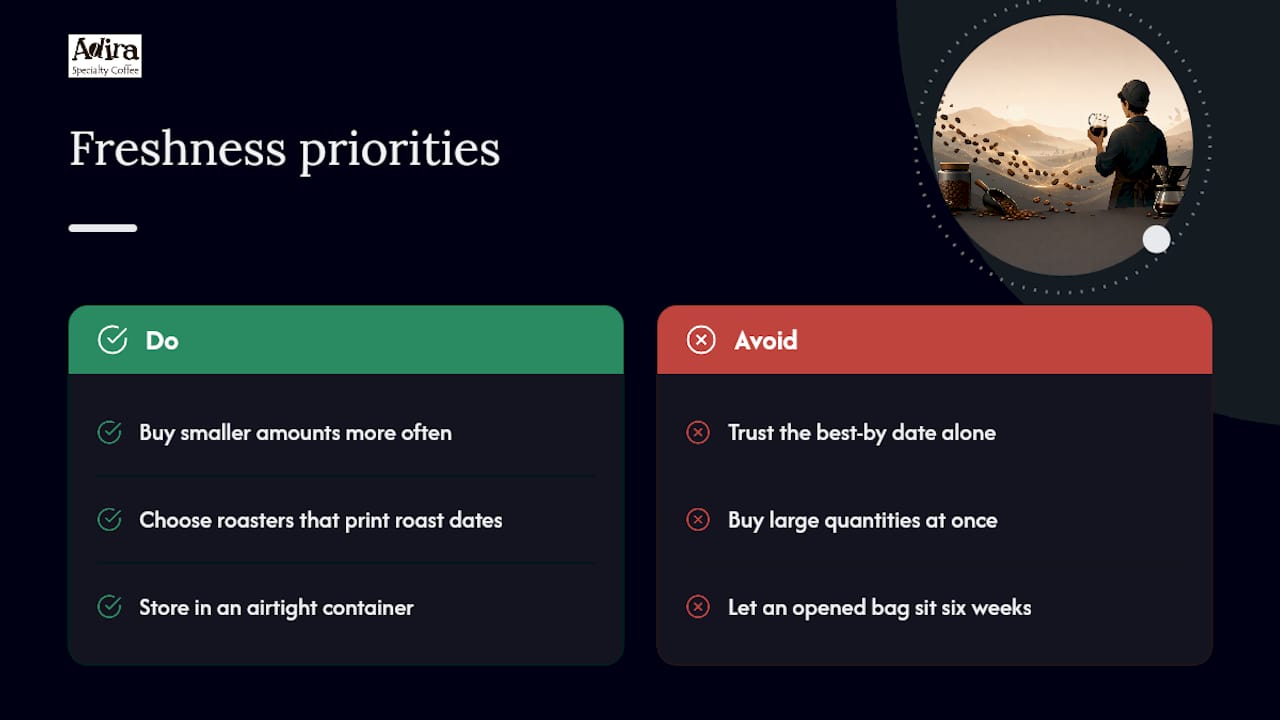
The conventional advice, “just keep it in an airtight container,” isn’t wrong, but it’s incomplete. Container quality matters far less than how much coffee you buy at once and how fast you go through it. A perfect vacuum canister holding a month-old bag of beans still won’t taste as good as a mediocre jar holding beans roasted last week.
If you take one thing from this: prioritize buying less, more often, from a roaster that actually prints a roast date. Storage technique is a second-order fix. Purchase timing is the first-order one, and it’s the one most people skip.
— Stefan
Get Fresh Beans Before They Ever Have a Chance to Go Stale
The easiest way to stop worrying about freshness windows is to shrink the gap between roasting and your first cup. Adiracoffee roasts to order in small batches in California and ships within days, so the beans in your bag are still inside that critical two to four week peak when they arrive, not somewhere near the end of it.
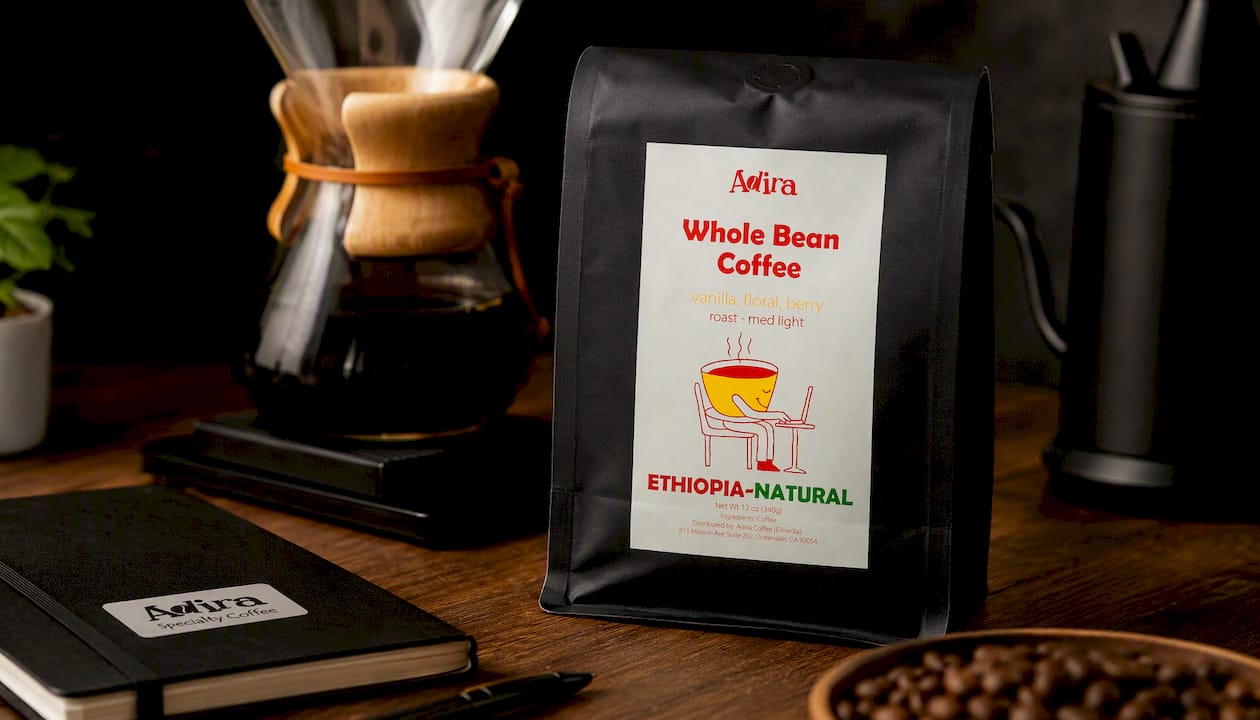
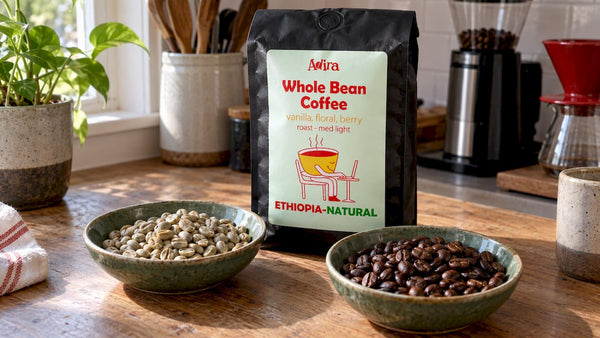
Our Ethiopia - Natural single-origin is a good place to start if you want to taste what a real peak window tastes like, bright, fruit-forward, and nothing like the flattened version of “Ethiopian coffee” you’d get off a supermarket shelf. Order a bag sized to what you’ll actually finish in a few weeks, and let the roast date do the work your pantry can’t.
Sources
- The Right Way to Store Coffee, According to a Professional Roaster — Food & Wine
- Coffee Decoded: What is “freshly roasted” coffee? — Specialty Coffee Association
- Storage and shelf life - Beans — National Coffee Association
- Storage effects on sensory qualities of roasted coffee — Food Science & Nutrition
Recommended
Brew it with the right coffee
The bag this guide was written around. Roasted after you order, shipped from California.
More to try
All coffee Dark roastLightDark
Adira Blend
Dark chocolate, Caramel, Roasted nuts
Invests in young leaders in Bulgaria
$24.99
 Medium-light roastLightDark
Love Blend
Milk chocolate, Caramel, Floral lift
Invests in young leaders in Bulgaria
$24.99
 Medium-dark roastLightDark
Ocean Blend
Cocoa, Soft caramel, Clean vanilla finish
Invests in young leaders in Bulgaria
$24.99
Never run out.
Never pay shipping.
Any Adira coffee with Monthly Sender: up to 15% off every delivery, free shipping every time, skip, pause or cancel whenever you like.
Set up Monthly Sender