
TL;DR:
- Roast-to-order coffee arrives at peak freshness, offering brighter aroma and clearer tasting notes.
- Checking the roast date, ship window, and whole-bean options on product pages ensures genuine freshness.
Roast-to-order coffee is whole-bean coffee roasted after you place your order, or immediately before it ships, so the beans arrive at peak freshness rather than sitting in a warehouse for weeks. The difference shows up in the cup: brighter aromatics, clearer tasting notes, and a flavor that actually matches what the bag describes. Before you buy, check for three things on any product page:
- A visible roast date (not just a “best by” date)
- A stated ship window (how many days after roasting the bag leaves the facility)
- A whole-bean option so you control when grinding happens
These three signals separate genuine roast-to-order from marketing copy.
Table of Contents
- What does “roast to order” actually mean for the seller?
- Why does a fresh roast actually change what’s in your cup?
- How do you use the 15-15-15 rule when ordering?
- How do roast levels interact with freshness and flavor?
- What should you check on a product page before buying?
- One-time order or subscription: which fits your habits?
- Why Adiracoffee checks every box on the freshness list
- Key Takeaways
- The part most roast-to-order buyers get wrong
- Fresh California-roasted beans, delivered to your door
What does “roast to order” actually mean for the seller?
Not every roaster uses the phrase the same way. True roast-to-order means your purchase triggers the roast: the roaster fires the drum after your order comes in, typically within 24–48 hours, then ships within a day or two of cooling. A second model, common among small-batch specialty roasters, runs scheduled micro-roasts every few days and ships the next available batch. Both are legitimate, but the fulfillment timeline differs.
What to look for on product pages: the phrase “roasted on [date]” printed on the bag, a stated roast-to-ship window (e.g., “ships within 3 days of roasting”), and notes on roast profile or origin. Sellers who use the term loosely often list only a “best by” date, which tells you nothing about when the beans were actually roasted.
Grind-on-demand is another signal. Roasters who offer to grind your order at the time of fulfillment are operationally set up for freshness. Pre-ground bags sitting in inventory are not roast-to-order in any meaningful sense, regardless of the label. Single-origin labeling, with a named farm or cooperative and a harvest season, also points to a roaster paying attention to the supply chain rather than blending commodity lots.
Pro Tip: Search the roaster’s FAQ or “about” page for the phrase “roast date” or “ship within X days of roasting.” If neither appears, ask before you buy. A roaster proud of their process will answer in one sentence.
Why does a fresh roast actually change what’s in your cup?
Coffee beans are chemically active after roasting. The heat drives off moisture and triggers hundreds of volatile aromatic compounds, most of which begin degrading the moment the beans cool. Oxygen exposure and CO2 loss are the two primary drivers of flavor decline: oxidation breaks down lipids and aromatic esters, while the slow release of CO2 (degassing) carries volatile compounds out of the bean over time.
Here is what that means in practice:
- Medium roasts — balance origin clarity with roast-developed caramel and nut notes. A fresh medium roast tastes noticeably cleaner than a stale one.
- Dark roasts — are more forgiving of age because the roast character itself is dominant, but fresh dark roasts still show more body and less bitterness than old ones.
One counterintuitive point: brewing on roast day is often suboptimal. CO2 escaping from very fresh beans repels water during extraction, producing uneven, sometimes sour results. Practitioners note that a short rest after roasting lets degassing stabilize before brewing begins.
How do you use the 15-15-15 rule when ordering?
The 15-15-15 rule is a practical freshness framework: green beans should be roasted within 15 months of harvest, roasted beans should be used within 15 days of roasting for peak flavor, and ground coffee should be brewed within 15 minutes of grinding. It is a sensory guideline, not a hard expiration, but it gives you a useful mental model for evaluating any roast-to-order offer.
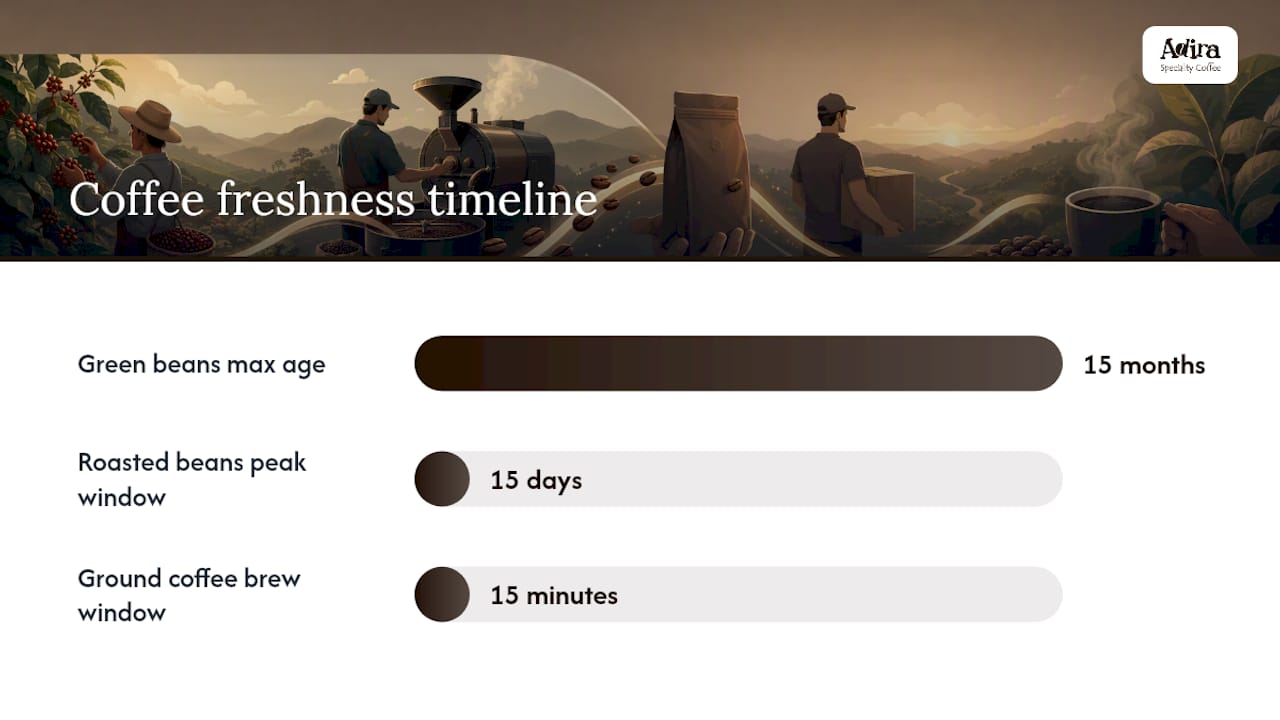
The “15 days roasted” figure is the one most relevant to buyers. Many baristas and roasters place the actual peak flavor window at 3–7 days post-roast for filter methods, with some espresso roasts peaking slightly later. The practical implication: if a roaster ships within 2–3 days of roasting and standard US transit takes 2–5 days, your beans arrive right at the start of their peak window.
Here is a numbered buying and brewing sequence to put this into practice:
- Grind immediately before brewing — ground coffee loses aromatic intensity within minutes, not hours.
Pro Tip: If you drink one or two cups a day, a 250g bag typically lasts about two weeks. Match your subscription frequency to that pace rather than defaulting to a monthly delivery.
Tank Coffee’s guide reinforces the same point: buying smaller quantities more often beats buying a large bag and letting it age on the shelf.
How do roast levels interact with freshness and flavor?
Roast level determines which flavor compounds dominate your cup, and freshness amplifies whichever set is present. Light roasts preserve origin clarity, medium roasts balance origin and roast character, and dark roasts emphasize body and roast-developed bitterness. Fresh beans make those distinctions sharper.
| Roast Level | Flavor Profile | Best Brewing Method | Freshness Sensitivity |
|---|---|---|---|
| Light | Bright, fruity, floral, high acidity | Pour-over, Chemex, AeroPress | Highest — aromatics fade fastest |
| Medium | Balanced, caramel, nuts, mild acidity | Drip, flat white, AeroPress | Moderate |
| Dark | Bold, chocolatey, low acidity, full body | Espresso, French press, cold brew | Lower, but still benefits from freshness |
Medium roast is the most popular choice among U.S. consumers, which makes it a sensible starting point if you are new to ordering specialty beans. If you already know you prefer a specific brewing method, let that drive the roast choice: pour-over rewards a light or medium-light roast; espresso tends to work best with medium to medium-dark; French press and cold brew suit darker profiles.
Pro Tip: Single-origin beans from Ethiopia or Colombia shine brightest at light to medium roast. If you want to taste what the farm actually grew, order light and give the bag 4–5 days to rest before brewing.
For a deeper look at how roasters dial in these profiles, Adiracoffee’s roast profile guide walks through the process in detail.
What should you check on a product page before buying?
A few minutes of due diligence prevents a disappointing bag. Work through this checklist before clicking “add to cart”:
Green lights (look for these):
- Roast date printed on the bag or listed in the product description
- Explicit ship window (“ships within 2–3 days of roasting”)
- Whole-bean option available
- Named origin: country, region, farm, or cooperative
- Tasting notes and roast profile description
- Grind customization at time of order
- Subscription option with flexible frequency
Red flags (walk away or ask questions):
- Only a “best by” date with no roast date
- “Freshly roasted” with no logistics detail
- Pre-ground as the only option
- No origin information beyond “100% Arabica”
- Shipping from a third-party fulfillment warehouse with no roast-date guarantee
Roaster transparency pages that show roast-date visibility and small-batch claims are a reliable signal. Cross-check those claims with customer reviews: look for mentions of the roast date on the bag and whether the coffee arrived smelling fresh.
One-time order or subscription: which fits your habits?
| One-Time Order | Subscription | |
|---|---|---|
| Freshness control | You choose timing | Automated, consistent cadence |
| Cost | Full price per bag | Typically 10–15% discount |
| Flexibility | Maximum | Varies by roaster |
| Waste risk | Low (buy what you need) | Can accumulate if frequency is off |
| Best for | Trying a new roaster or roast | Regular drinkers with predictable consumption |
For US specialty roasters, the typical fulfillment timeline runs roughly like this: roast day, then 1–3 days for cooling and packaging, then 2–5 days of transit. That puts most roast-to-order bags in your hands 4–8 days after roasting, which lands squarely in the peak flavor window for most brewing methods.
Pricing for specialty roast-to-order beans in the US generally falls in the $16–$22 range for a 250g bag, with single-origin lots from Ethiopia or Costa Rica sometimes running higher. Subscriptions with free shipping thresholds bring the effective per-bag cost down meaningfully for regular buyers.
Why Adiracoffee checks every box on the freshness list
Adiracoffee prints the roast date on every bag and ships within days of roasting from its California facility. Every order is roasted in small batches, and the roast-date visibility policy is explained directly on the brand’s site. Beans are sourced from cooperatives and small farms in Colombia, Ethiopia, Costa Rica, Mexico, and Sumatra, with origin and tasting notes listed for each product.
Key trust signals at a glance:
- Roast date on every bag
- Small-batch roasting in California
- Single-origin and signature blend options
- Grind customized to your equipment
- Personalized digital brewing recipes for espresso and filter machines
- Subscription with 10% savings and free US shipping on orders over $35
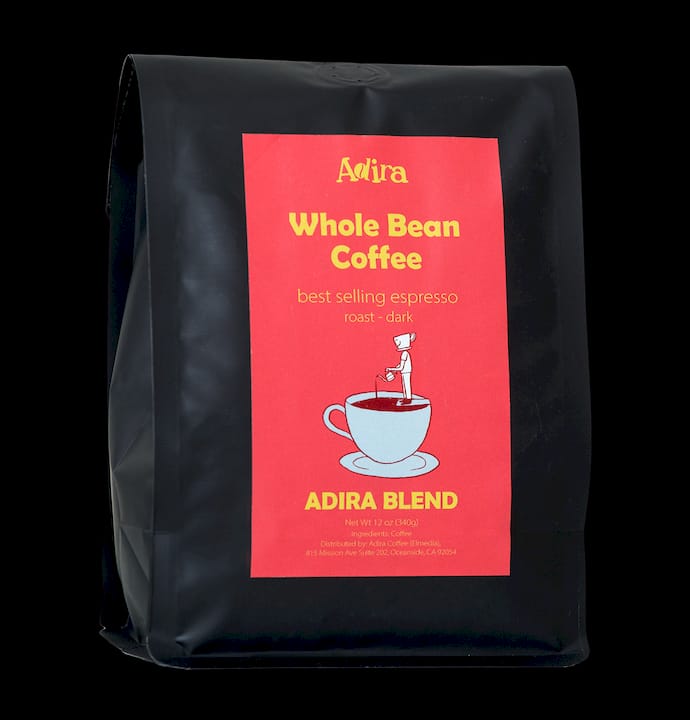
Two products worth calling out specifically: the Mushroom Coffee (Medium Roast) hits the sweet spot for US buyers who prefer a balanced, approachable cup. Medium roast is the top preference among American consumers, and this blend pairs that familiar profile with functional mushroom extracts. The Mushroom Coffee (Dark Roast) suits espresso drinkers and anyone who wants a bolder, fuller-bodied cup with the same functional benefits.
Founders Stefan and Ekaterina Nedelchev built Adiracoffee after arriving in the US and finding that supermarket shelves offered nothing worth a second cup. That frustration shaped the brand’s sourcing and roasting philosophy: every bag should taste like it was made for someone who actually cares about coffee.
Key Takeaways
Roast-to-order coffee delivers peak flavor because beans ship within days of roasting, and following the 15-15-15 rule keeps that freshness intact from bag to cup.
| Point | Details |
|---|---|
| Check roast date first | A visible roast date on the bag is the single most reliable freshness signal when ordering online. |
| Rest before brewing | Most beans peak at 3–7 days post-roast for filter; wait before brewing for the best cup. |
| Grind right before brewing | Ground coffee loses aroma within minutes, so grind only what you need immediately before use. |
| Match subscription frequency to consumption | Buy quantities you’ll finish within 2–3 weeks of the roast date to stay in the peak flavor window. |
| Adiracoffee ships fresh | Adiracoffee roasts in small batches in California, prints the roast date on every bag, and ships within days of roasting. |
The part most roast-to-order buyers get wrong
Most people who switch to roast-to-order coffee focus entirely on the roaster’s process and forget that half the freshness equation happens after the bag arrives. They order a beautifully fresh bag, leave it in the original packaging on the counter, grind a week’s worth on Sunday, and wonder why the cup tastes flat by Thursday.
The 15-15-15 rule is useful, but it is a ceiling, not a guarantee. Oxygen management after you open the bag matters as much as the roast date on the label. A bag roasted four days ago and left open on the counter will taste worse than a bag roasted ten days ago stored properly in an airtight canister.
There is also a real case for slowing down with the first bag from a new roaster. Brew it at day four, then again at day eight, and notice what changes. That is how you learn what a specific bean and roast level actually taste like at their best, and it makes every subsequent order more intentional. Roast-to-order coffee rewards that kind of attention in a way that a supermarket bag simply cannot.
Fresh California-roasted beans, delivered to your door
Adiracoffee roasts every order in small batches in California and ships within days of roasting, so the roast date on your bag reflects a real, recent event. Every product page lists origin, tasting notes, and roast profile. The subscription plan saves you 10% per order and ships free on orders over $35, with frequency you can adjust to match how fast you actually drink coffee.
Two immediate options: the Mushroom Coffee (Medium Roast) for a balanced, functional everyday cup, and the Mushroom Coffee (Dark Roast) for espresso drinkers who want more body. Not sure which roast fits your setup? Take Adiracoffee’s coffee quiz and get a recommendation matched to your brewing method and flavor preferences. Order once to try it, or set up a subscription and stop thinking about running out.