
Buy freshly roasted whole-bean coffee from a roast-to-order roaster, and size your order to how fast you actually drink it. That’s the whole strategy. A single person who drinks two cups a day should buy a 12-ounce bag sized to your consumption speed or set up a subscription on that schedule. A household of heavy drinkers might justify a bulk order. Almost nobody needs a five-pound bag sitting in the pantry for two months.
Here’s how the three main options break down:
- Single bag: best for trying a new origin or roaster, or if you drink coffee slowly.
- Subscription: best for regular drinkers who want roast-date freshness on autopilot without reordering every few weeks.
- Bulk purchase: best for high-volume households, offices, or anyone who burns through beans fast enough that a pound won’t go stale before it’s gone.
Before you check out anywhere, look for the roast date on the bag, confirm the seller actually roasts to order rather than shipping from a warehouse, and default to whole beans over pre-ground. If you want a real example of what a roast-to-order single-origin bag looks like on the label, Adira Coffee’s Ethiopia Natural shows the roast date, origin, and processing method right on the product page.
Key Takeaways
Freshness in coffee comes down to three timing windows: roast date, shipping speed, and grind-to-brew timing, and getting all three right matters more than brand reputation alone.
| Point | Details |
|---|---|
| Roast date beats best-by date | Always look for an actual roast date on the bag, not a vague expiration window. |
| Buy whole bean by default | Grind only at brew time; ground coffee loses aroma quickly. |
| Match order size to consumption | Undersize a bag or subscription rather than let coffee sit past its peak window. |
| Subscriptions reduce freshness risk | Scheduled smaller batches beat one large bulk order for most home drinkers. |
| Check roast-to-order claims before checkout | Confirm the shipping window, like Adira Coffee’s roast-and-ship-within-days model. |
Table of Contents
- Where to Buy Coffee Online and In Person
- How Do You Choose a Good Bag of Coffee?
- When Does Bulk Buying or a Subscription Make Sense?
- Why Roast Date and Storage Matter More Than the Label
- Where Adira Coffee Fits Into Your Buying Decision
- A Founder’s Note on Why Freshness Isn’t Negotiable
- Sources
Where to Buy Coffee Online and In Person
Five kinds of sellers compete for your coffee dollar, and each one optimizes for something different. Knowing which one matches your priority saves you from buying the wrong thing twice.
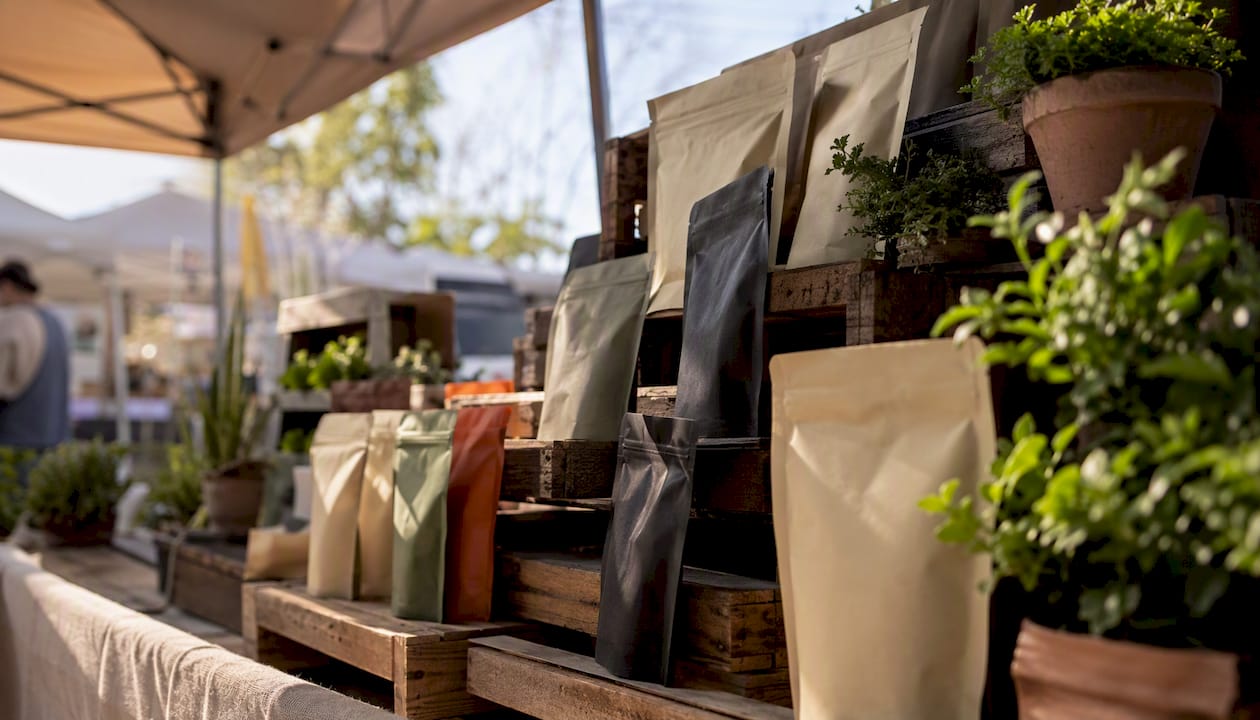
Direct roasters roast in small batches and ship soon after, often within a day or two. This is where freshness and traceability live. Roaster marketplaces aggregate multiple small roasters on one platform, which is great for discovery but means roast dates and shipping windows vary by vendor. Grocery and retail stores win on convenience and price, but bags often sit on a shelf for weeks or months before you grab one. Large online marketplaces offer massive selection with mixed quality control, since third-party sellers list wildly different roast ages under similar-looking packaging. Wholesale and bulk suppliers serve cafes and heavy home users who move a lot of coffee fast enough that a case discount actually pays off.
If freshness and origin transparency top your list, go direct to a roaster. If you want to sample five different regions before committing, a marketplace makes sense. If you just need coffee for the office tomorrow, grocery is fine, though don’t expect peak flavor.
A few signals tell you what you’re actually getting before you click “buy”:
- A roast date printed on the bag, not just a vague “best by” date.
- A roast-to-order or small-batch statement on the product page (if provided).
- A stated shipping window, ideally 24 to 72 hours from roast to shipment, which buying guides consistently flag as the mark of a serious specialty seller.
Pro Tip: If a product page doesn’t list a roast date, email or message the seller and ask directly. A roaster confident in their freshness will answer with an exact date. A vague reply (“we roast weekly”) is itself useful information.
How Do You Choose a Good Bag of Coffee?
Vetting a bag of coffee takes about thirty seconds once you know what to look for. Run through this checklist before you add anything to your cart:
- Is there a visible roast date, not a packaged-on or best-by date?
- Does the origin listing name a specific farm, region, or co-op, rather than just a country?
- Is the processing method stated (natural, washed, honey)?
- Is the roast level (light, medium, dark) clearly labeled?
- Does the bag use one-way valve packaging to let gas escape without letting oxygen in?
- Can you buy whole bean, or are you stuck with pre-ground only?
- Are grind options available if you need ground coffee for a specific brew method?
- What’s the shipping window from roast date to your door?
- Is there a return policy or freshness guarantee?
- Does checkout use a secure, recognizable payment processor?
If you’re unsure, ask the seller directly. Phrasing like “What date was this bag roasted, and when does it ship?” or “Is this a single-farm lot or a regional blend?” gets you real answers fast, and Consumer Reports’ buying guide treats roast date and labeling transparency as the two most reliable quality signals a shopper has.
Watch for red flags: no roast date anywhere on the bag or website, origin listed only as a broad country name with no farm or co-op detail, product descriptions that read identically across a dozen “different” coffees, or a seller who can’t tell you how long beans sat in a warehouse before shipping.
On the positive side, trust signals worth paying attention to include:
- Small-batch size disclosed (how many pounds or bags per roast run).
- An explicit roast-to-order or ship-within-X-days statement.
- Specific tasting notes tied to that particular lot, not generic marketing copy.
- Specialty-grade scoring or comparable quality certification.
- A subscription freshness guarantee that names the roast date and shipping window up front.
When Does Bulk Buying or a Subscription Make Sense?
Buying in bulk lowers your per-pound cost, and that math genuinely works out if you consume coffee quickly enough to use it while still fresh. The catch is that bulk only pays off when consumption keeps pace with the bag size. A pound of coffee that takes two months to finish isn’t a bargain. It’s a slow-motion freshness loss.
Subscriptions solve that math differently. Instead of one large order, you get smaller batches on a repeating schedule, timed to roast date rather than to your calendar guessing when you’ll run out. Most subscription programs let you set delivery frequency (weekly, every two weeks, monthly), choose whole bean or a specific grind, and skip or pause a shipment when travel or stockpiling throws off your rhythm.
| Household type | Typical consumption | Best buying approach |
|---|---|---|
| Single light drinker (1 cup/day) | About 8–12 oz every 3–4 weeks | Single bags, ordered as needed |
| Single moderate drinker (2–3 cups/day) | About 12 oz every 2 weeks | Biweekly subscription |
| Two-person household (heavy drinkers) | 1–2 lbs every 2–3 weeks | Subscription with adjustable frequency |
| Office or high-volume home | 5+ lbs monthly | Bulk order, sized to actual weekly draw-down |
If you’re between sizes, undersize rather than oversize. Running out a few days early and reordering beats letting three-quarters of a bag go flat in a cabinet.
Pro Tip: Always default to whole beans, even in a subscription. Only choose grind-in-service when you genuinely lack a grinder at home, since ground coffee starts losing aroma within minutes of grinding, not days.
Why Roast Date and Storage Matter More Than the Label
Roast-to-order isn’t a marketing phrase. It describes a specific operational choice: a roaster runs small batches and ships within days, sometimes hours, instead of roasting large runs that sit in warehouse inventory for weeks before reaching a shelf. That short window matters because coffee starts changing the moment it leaves the roaster.
The clearest framework for understanding this timing is the 15-15-15 rule. Green coffee is best roasted within roughly 15 months of harvest, roasted coffee tends to hit peak flavor within about 15 days of roasting, and ground coffee should ideally be brewed within about 15 minutes of grinding. It’s a rough guideline, not a hard science, but it captures a real pattern: freshness decays in stages, and each stage has its own clock.
Within that 15-day roasted window, timing shifts depending on brew method. Many specialty roasters recommend brewing filter coffee is often brewed a few days after roasting, espresso a bit later, since espresso needs a bit more CO2 off-gassing to avoid a bitter, overly foamy shot.
| Stage | Recommended window | Why it matters |
|---|---|---|
| Green coffee storage | Within ~15 months of harvest | Beans lose density and flavor potential the longer they sit unroasted |
| Roasted coffee (filter) | 1–3 days post-roast | Enough CO2 has escaped for clean extraction |
| Roasted coffee (espresso) | 3–7 days post-roast | Extra degassing time prevents overly bitter, foamy shots |
| Roasted coffee, general peak | Up to ~15 days post-roast | Aromatic compounds are near their fullest expression |
| Ground coffee | Within ~15 minutes of grinding | Volatile aromatics dissipate fast once surface area increases |
Storage and sensory tests show that many of coffee’s key aromatic compounds decline noticeably over a few weeks at room temperature, but keeping beans airtight and away from oxygen slows that decline substantially.
That’s the practical argument for a one-way valve bag, sealed and stored in a cool, dark cabinet rather than next to the stove or in direct sun. For most people who finish a bag within a few weeks, that’s genuinely enough. If you’re storing beans longer than that, freeze unopened coffee bags, and tape over the valve before freezing to prevent air intrusion. Never grind coffee ahead of time and let it sit; a batch of pre-ground coffee can lose much of its aroma before you’ve even had your first cup.
Where Adira Coffee Fits Into Your Buying Decision
Adira Coffee runs small batches through a California roastery and ships directly to customers within days of roasting. That’s the roast-to-order model in practice, not just on a label. Founders Stefan and Ekaterina Nedelchev built the company after moving to America and finding nothing on supermarket shelves worth a second cup, which shaped a sourcing approach built around cooperatives and small farms in Colombia, Ethiopia, Costa Rica, Mexico, and Sumatra.
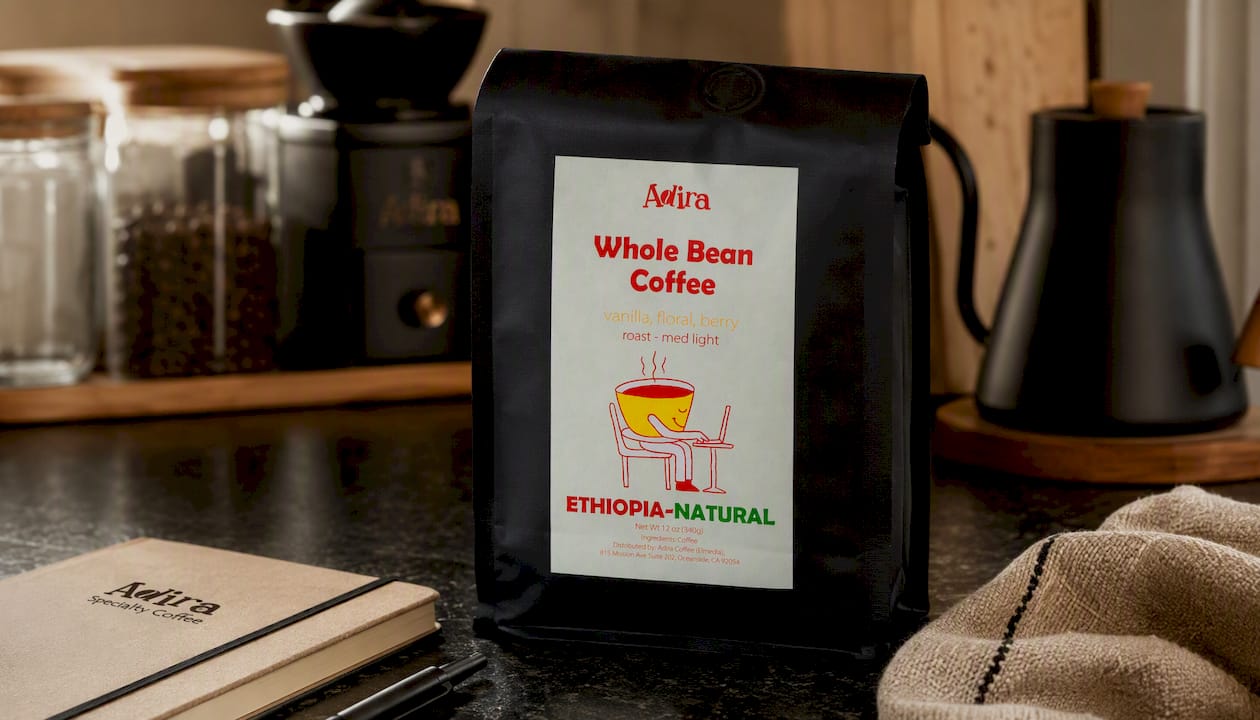
What that means for your bag:
- The roast date is printed and visible, not buried in a lot code.
- Beans ship within days of roasting, not weeks after sitting in a warehouse.
- Whole bean is the default, with grind options dialed to your specific brewing equipment.
- A subscription saves 10% and includes free US shipping over $35, with adjustable frequency so you’re not stuck guessing how much to reorder.
If you want to see a roast-to-order single-origin bag in action, the Ethiopia Natural page lists origin, processing method, and tasting notes exactly the way the checklist above recommends. Order a single bag to test it, or start a subscription sized to how much coffee your household actually drinks, and skip the guesswork of buying more than you’ll use before it goes flat.
A Founder’s Note on Why Freshness Isn’t Negotiable
I started Adira Coffee because I got tired of buying bags that had no roast date, no real origin story, and no way to tell if what I was drinking was three weeks old or three months old. That frustration is the whole reason our roasting runs are small and our shipping windows are short. We’re not trying to compete with warehouse-scale coffee on volume. We’re trying to get a bag from roaster to your cup while it still tastes like where it came from.
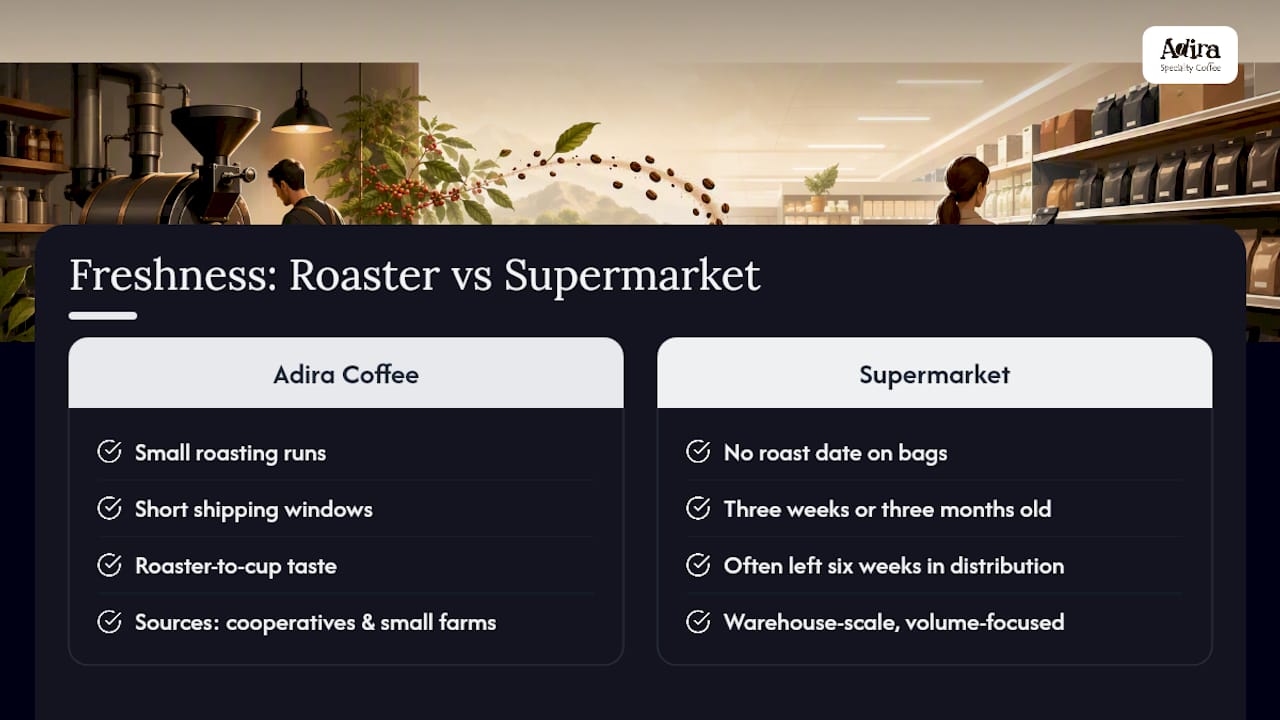
Sourcing from cooperatives and small farms in places like Ethiopia and Colombia only matters if what happens after harvest doesn’t undo the work those farmers put in. A great lot roasted well and then left sitting in a distribution center for six weeks isn’t a great cup anymore. That’s the gap most supermarket coffee never closes, and it’s the one thing we built the entire business around closing.
Sources
- 15-15-15 Coffee Rule - Roastopedia
- The 15-15-15 Rule You Need To Follow For The Freshest Coffee — Chowhound
- Best coffee buying guide — Consumer Reports
- 5 Reasons Why You Should Buy Your Coffee in Bulk — The Kitchn
Recommended
- Master the freshness workflow for coffee: ultimate home guide – Adira Coffee US
- How to identify fresh coffee for best flavor at home – Adira Coffee US
- Identifying quality coffee beans: a connoisseur’s guide – Adira Coffee US
- Coffee freshness tips: Keep your beans their flavorful best – Adira Coffee US