
TL;DR:
- Direct sourcing involves buying coffee directly from farmers, emphasizing traceability, transparency, and quality incentives.
- Hybrid models, combining direct relationships with importers, are common and practical for most roasters.
- Genuine direct relationships improve coffee flavor, support sustainability, and require long-term commitment and verification.
Most coffee lovers picture a simple chain when they hear “farm-to-cup”: a farmer grows beans, a roaster buys them, and the coffee lands in your mug. The reality of direct sourcing is considerably messier, more expensive, and more rewarding than that image suggests. Understanding how coffee actually moves from a hillside farm in Ethiopia or Colombia to your grinder helps you make smarter choices, recognize quality signals on a bag, and appreciate why some coffees taste dramatically more alive than others. This guide lays out the full picture.
Table of Contents
- What is direct sourcing in coffee?
- How direct sourcing works: Beyond the ideal
- Comparing direct sourcing, traditional, and hybrid models
- Why direct sourcing matters for flavor and ethics
- The real-world truth about direct sourcing: What most guides miss
- Experience ethically sourced coffee
- Frequently asked questions
Key Takeaways
| Point | Details |
|---|---|
| Direct sourcing defined | It means buying beans directly from producers, but often involves logistics partners. |
| Hybrid sourcing is common | Roasters frequently balance direct relationships with importers for practical reasons. |
| Flavor and ethics improved | Direct sourcing can deliver superior flavor and benefit farmers when verified and transparent. |
| Verification matters | True direct sourcing is backed up with farm visits and published pricing data. |
What is direct sourcing in coffee?
Direct sourcing means a roaster purchases green coffee beans directly from the producer or farming cooperative, ideally cutting out the traditional chain of exporters, brokers, and commodity traders that historically separated growers from buyers. The core goals are higher quality, better traceability, and a fairer economic relationship with the farmer.
That sounds straightforward, but the definition gets fuzzy fast. “Direct” exists on a spectrum. On one end, a roaster visits a farm in Guatemala, cups the harvest on-site, agrees to a price above commodity market rates, and ships the beans with full documentation. On the other end, a roaster calls their relationship “direct” because they buy through a specialty importer who happens to have visited that farm once. Both are marketed similarly to consumers, but the impact on quality and farmer welfare is very different.
Here is what a genuine direct sourcing relationship typically tries to accomplish:
- Traceability: Knowing the specific farm, region, altitude, and processing method for every lot
- Price transparency: Paying above the commodity price, often publishing what the farmer received per pound
- Quality incentive: Rewarding farmers financially for producing higher-scoring beans that meet specialty coffee standards
- Long-term commitment: Returning to the same farm year after year rather than chasing the cheapest available lot
- Shared feedback: Giving farmers detailed cupping notes so they can adjust processing and improve
The logistics, however, often make a fully intermediary-free model impractical. As noted in research on certifications vs. direct trade, direct sourcing is not always intermediary-free due to export regulations and compliance requirements. Hybrid models that blend direct relationships with the expertise of specialty importers are frequently the most realistic path for independent roasters.
How direct sourcing works: Beyond the ideal
After defining direct sourcing, let’s walk through how it actually operates in the real world, because the gap between theory and practice is where most misconceptions live.
Step 1: Building the relationship. A roaster either travels to origin or connects through a trusted importer contact, cooperative, or industry event. At Adira Coffee, Stefan Nedelchev works with around 50 farms across Colombia, Ethiopia, Costa Rica, Guatemala, Brazil, and Sumatra. That kind of network takes years of deliberate cultivation.
Step 2: Cupping and selection. The roaster cups multiple lots, scores them, and negotiates a price with the farmer or cooperative before harvest. This pre-commitment is a financial gamble because supply disruptions, weather, and crop disease can affect delivery.
Step 3: Export and logistics. This is where the “direct” story gets complicated. Every origin country has its own export regulations. Some require all coffee to move through a licensed national exporter. Ethiopia, for example, has strict export requirements that mean even the most committed roaster needs local partners. These aren’t shortcuts or compromises. They are legal necessities.
Step 4: Import and quality control. Specialty importers who handle green coffee storage, quality testing, and customs clearance often remain essential even in largely direct relationships. The certifications vs. direct trade research notes that higher costs and risks, including travel, supply disruptions, and compliance, mean hybrid models using importers for scale are commonly recommended.
Step 5: Roasting and feedback loop. After the coffee arrives, the roaster develops a roast profile tuned to that specific bean’s density and moisture. Notes are shared back with the farmer, creating a feedback loop that improves quality over time.
Pro Tip: When evaluating a roaster’s direct sourcing claims, ask whether they can tell you the altitude, processing method, and approximate price paid per pound for the lot. Roasters with real relationships can answer all three instantly.
“Direct sourcing is less a transaction and more a partnership. The coffee in your cup carries the combined decisions of the farmer, the processor, and the roaster. Knowing who made each decision is what traceability actually means.”
The best-tasting lots we have ever worked with came from hand-picked coffee beans, where selective harvesting at the farm level is the first quality decision in a long chain. When choosing coffee beans at home, understanding this chain helps you read bag labels critically. A quality coffee beans guide can further sharpen your eye for what transparency actually looks like on packaging.
Comparing direct sourcing, traditional, and hybrid models
With the operational realities in mind, let’s compare direct sourcing to other common ways coffee is sourced, because each model serves a different purpose and creates a different cup experience.
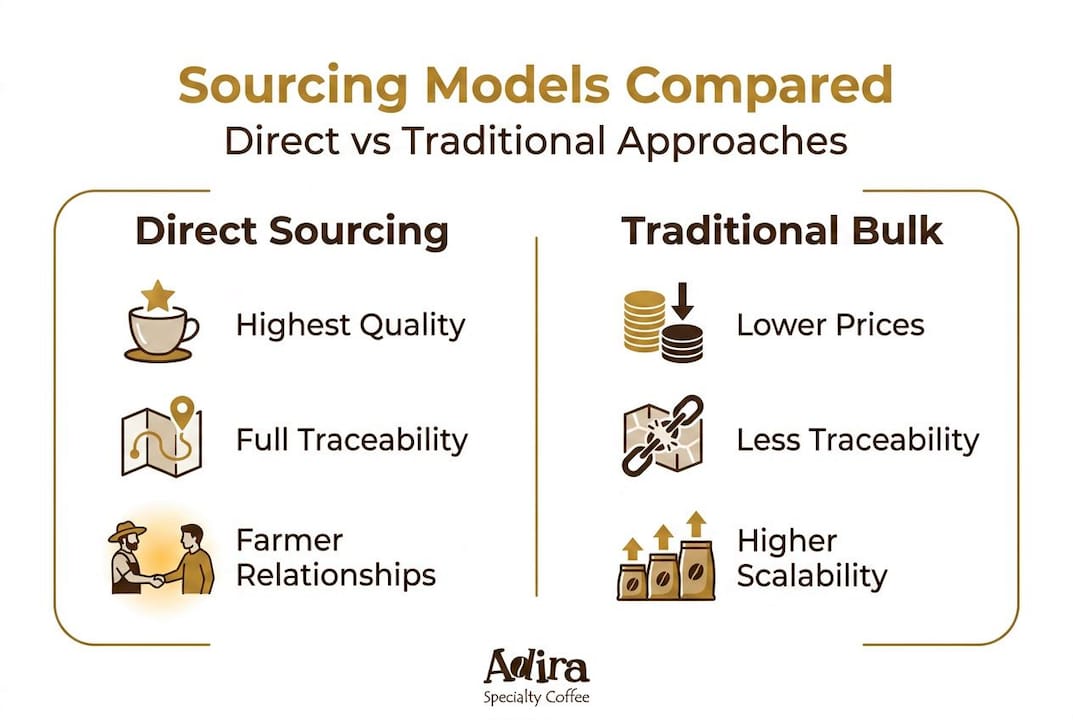
| Sourcing model | Quality potential | Traceability | Farmer impact | Cost to roaster | Scalability |
|---|---|---|---|---|---|
| Direct sourcing | Very high | Full lot-level | Strong, direct | High | Limited |
| Traditional bulk | Moderate | Low, blend-level | Minimal | Low | Very high |
| Hybrid model | High | Partial to full | Moderate to strong | Medium | Moderate |
Traditional bulk sourcing, which still dominates the commercial coffee industry, involves buying through commodity traders or large importers who aggregate coffee from many farms and countries into a single grade. The supply is reliable and the cost is low, but you lose traceability entirely. The farmer gets whatever the commodity market dictates, which has historically kept coffee-growing communities in poverty cycles.
Direct sourcing inverts most of those advantages and disadvantages. Quality ceiling goes up because the roaster selects specific lots rather than accepting a grade blend. The farmer benefits financially and gains a reason to invest in quality. But as certifications vs. direct trade points out, the roaster absorbs higher costs and risks, and scaling to high volume is genuinely difficult.
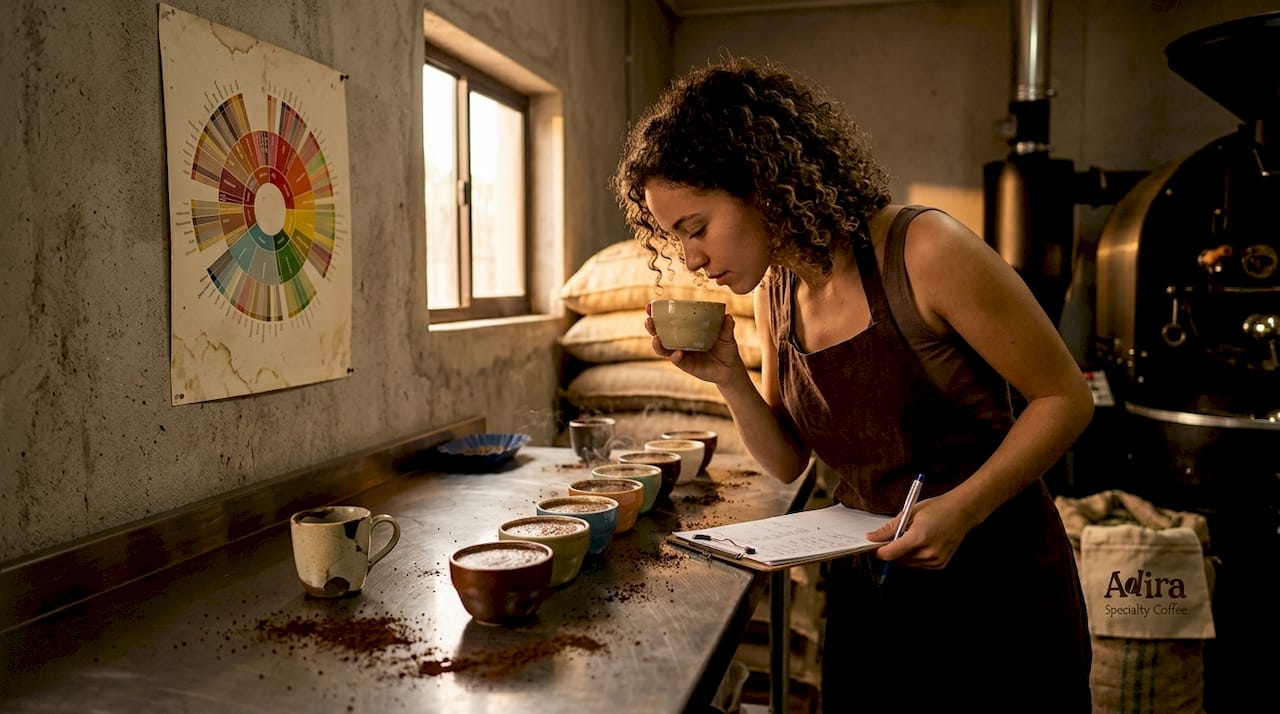
Hybrid models, used by many serious specialty roasters including us at Adira Coffee, blend direct farm relationships with the logistical muscle of specialty importers. A roaster might work directly with three farms in Colombia, buying those lots by name each year, while sourcing other origins through a trusted specialty importer who meets the roaster’s transparency standards. This approach lets smaller operations punch above their weight.
What makes this decision even more nuanced is that the best sourcing model depends on the origin. Some of the strongest flavor work happens at small farm coffee operations where individual farmers have enormous control over processing decisions. How a farm manages its land, fermentation, and drying directly shapes flavor, and understanding coffee farm practices reveals just how much happens before a roaster ever touches the bean.
Key takeaways from this comparison:
- Direct sourcing rewards adventurous palates and conscious buyers but carries real costs for roasters
- Traditional models prioritize consistency and volume over character and ethics
- Hybrid sourcing is the most realistic path for specialty roasters who want quality and scale
Why direct sourcing matters for flavor and ethics
Now that we see the difference between sourcing models, let’s explore how direct sourcing actually affects what ends up in your cup and the ethical weight of that morning brew.
Flavor clarity comes from farm-level decisions. When a roaster has a direct relationship with a farmer, they can request specific processing methods: natural, washed, or honey. They can ask for selective picking of only ripe cherries. They can specify a target moisture content for drying. Each of these micro-decisions stacks up into what you eventually taste as brightness, sweetness, or body. A coffee sourced with no feedback loop between roaster and farmer is essentially a mystery bag.
| Farm practice | Flavor impact |
|---|---|
| Shade-grown cultivation | Slower cherry development, more complex sugars |
| Selective hand-picking | Cleaner sweetness, reduced defects |
| Controlled fermentation | Enhanced fruit notes, reduced astringency |
| Precise drying temperatures | Preserved delicate aromatics |
Sustainability and biodiversity are real flavor factors. True direct relationships enhance sustainability through shade-grown farming and biodiversity practices, while also improving farmer stability. Shade trees slow cherry ripening, which concentrates sugars and produces more nuanced flavors. Farms that support biodiversity typically have healthier soil ecology, which affects nutrient uptake and, ultimately, bean density. Denser beans roast more evenly and express cleaner flavor.
Verification matters more than marketing claims. Any roaster can print “direct trade” on a bag. To verify the claim, look for published pricing (what did the farmer actually receive per pound?), documentation of farm visits, and lot-specific information on the bag. Roasters who publish this information are putting accountability in writing. Those who only use vague language about “partnerships” are not.
Pro Tip: If a bag lists only a country but no region, farm, or processing method, that coffee was almost certainly sourced through commodity channels regardless of how it is marketed.
Home baristas feel the difference in the cup. Cleaner sourcing tends to produce cleaner flavors. When defects from over-ripe or under-ripe cherries are minimized through careful farm management, the resulting cup is brighter, sweeter, and more distinct. Understanding coffee bean ethics gives you a framework for connecting your purchasing decision to the quality experience. And buying locally roasted coffee from a roaster who prioritizes these relationships shortens the time between roast and cup, preserving those volatile aromatics that make specialty coffee sing. Exploring espresso bean origins across different farms shows how dramatically sourcing decisions shape what ends up in your espresso shot.
The real-world truth about direct sourcing: What most guides miss
Most writing on direct sourcing presents it as an obviously superior choice that any ethical, quality-focused roaster should pursue. The reality is considerably more complicated, and understanding those complications makes you a smarter consumer.
First, the idealized version of direct sourcing, where a roaster hops a plane to Colombia, visits a farm, seals a deal over a handshake, and ships beans with zero intermediaries, is genuinely rare. It exists, but it typically requires substantial capital, fluency in origin-country languages and business customs, and the ability to absorb supply shocks. A roaster who commits to buying from a specific farm in Costa Rica and then loses that crop to a frost has a serious problem.
Second, farmer stability only comes from roasters who commit long-term. A roaster who visits a farm once for a photoshoot and then sources elsewhere the next year has extracted marketing value without delivering actual economic support. True direct relationships require roaster commitment sustained over years, not just a single transaction with great documentation.
Third, and most importantly for home baristas: you cannot tell from a bag alone whether a roaster’s sourcing claims are genuine. You have to dig. Ask questions. Look for published pricing. Check whether the roaster has visited the farms they feature. At Adira Coffee, transparency about origins and relationships is something we treat as a baseline, not a marketing flourish. Small business coffee brands that build their identity around sourcing integrity tend to have the most skin in the game when those claims are scrutinized.
The uncomfortable truth is that hybrid models are often more ethical in practice than pure direct sourcing attempts by roasters who lack the resources to do it well. A roaster who overpromises on direct relationships and then cuts corners is worse for farmers and consumers than a roaster who uses a reputable specialty importer with strong sourcing standards and is honest about the arrangement.
Experience ethically sourced coffee
If this article has shifted how you think about what “direct sourced” really means, the next step is tasting that difference for yourself. Adira Coffee works with farms across Ethiopia, Colombia, Costa Rica, Guatemala, Brazil, and Sumatra, prioritizing transparency, fair pricing, and small-batch roasting that locks in flavor at peak freshness.
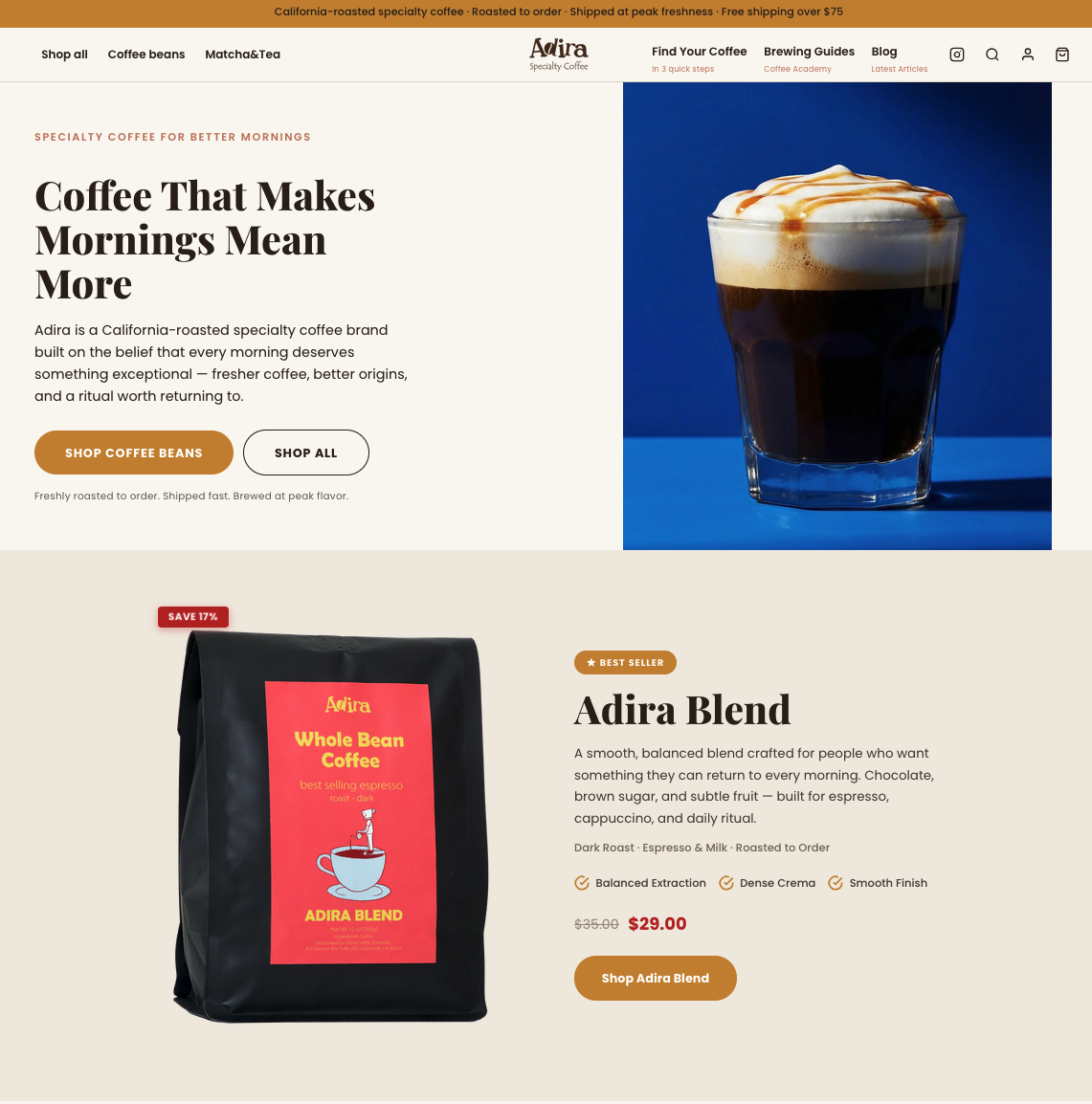
When you browse our coffee beans, each listing includes origin details, processing method, and tasting notes rooted in real farm relationships. If you want a concrete example of what direct sourcing tastes like in the cup, the Ethiopia natural is a vivid starting point. Its wild, fruit-forward intensity comes directly from the farm-level decisions we described in this article. Every bag ships within days of roasting so you get the freshest possible expression of those sourcing choices.
Frequently asked questions
Does direct sourcing always mean no intermediaries?
No, direct sourcing often requires importers or logistics partners, especially for export and compliance needs. As research on certifications vs. direct trade confirms, hybrid models using importers are commonly recommended even for serious direct-trade roasters.
How does direct sourcing impact coffee flavor?
Direct sourcing allows roasters to request specific farm practices and processing methods, which typically results in cleaner sweetness, brighter acidity, and more distinct origin character. True direct relationships also support shade-grown and biodiversity practices that slow cherry development and concentrate flavor complexity.
Can small roasters use direct sourcing?
Yes, but it often involves higher costs and risks, so many use hybrid models blending direct farm relationships with specialty importers. As noted in certifications vs. direct trade research, hybrid models are frequently the most practical approach for independent roasters who want transparency without absorbing all logistical risk themselves.
What should I look for to verify direct sourcing claims?
Look for published farm pricing, specific origin data (farm name, region, altitude, processing method), and evidence of actual farm visits by the roaster. Roasters who verify through documented farm visits and transparent pricing are far more credible than those who use vague “partnership” language without specifics.
Recommended
- How Coffee Farms Define Flavor: Practices That Impact Quality – Adira Coffee US
- Why Quality Coffee Beans Matter for Flavor and Ethics – Adira Coffee US
- Why buy local roasted coffee: fresh flavor and ethics – Adira Coffee US
- Why Small Business Coffee Brands Matter: Freshness & Ethics – Adira Coffee US