
TL;DR:
- High-quality specialty coffee beans score 80+ on the SCA scale with zero primary defects.
- Sourcing ethically and fresh beans is essential for superior flavor and sustainable farming practices.
- Starting with good beans is more impactful than investing in advanced brewing techniques or equipment.
Most home baristas spend hours perfecting their grind size, water temperature, and pour technique. That dedication is admirable, but it misses something fundamental. If the beans in your grinder are low-grade or stale, no amount of precision will save your cup. Specialty grade beans must score 80 or above on a 100-point cupping scale and carry zero primary defects to even qualify. Bean quality isn’t a detail you can work around. It’s the foundation everything else rests on. This guide breaks down what quality actually means, how it shapes flavor, and why the ethics behind your beans matter just as much as what’s in your cup.
Table of Contents
- What makes a coffee bean ‘high quality’?
- How quality beans transform your cup
- The science: How growing, processing, and freshness affect quality
- Ethics and sustainability: Why sourcing quality beans matters
- The hard truth: Why quality matters more than technique
- Take your next cup to the next level
- Frequently asked questions
Key Takeaways
| Point | Details |
|---|---|
| SCA scoring matters | Specialty beans are graded 80+ and have few defects for optimal quality. |
| Flavor starts with beans | High-quality beans reveal complex, clean flavors that technique alone can’t create. |
| Freshness is essential | Use beans roasted within the last several weeks for best results in home brewing. |
| Ethics and quality connect | Ethically sourced beans support farmers and yield superior, sustainable coffee. |
| Invest in quality first | Prioritize great beans over high-end gear for the biggest upgrade in your cup. |
What makes a coffee bean ‘high quality’?
The specialty coffee industry doesn’t leave quality up to personal opinion. The Specialty Coffee Association (SCA) has built a grading system that gives us clear, measurable standards for what separates exceptional beans from ordinary ones.
To earn the specialty label, a bean must score 80 or above on a 100-point cupping scale and show zero primary defects in a 350-gram green sample. Primary defects include things like full black beans (caused by overfermentation) and full sour beans (from poor processing or storage). Secondary defects, such as partial blacks or insect damage, are allowed up to five per sample. These numbers aren’t arbitrary. They reflect how defects directly translate into off-flavors in your cup.
Understanding specialty coffee standards helps you move beyond marketing language and ask better questions when you’re buying beans.
SCA grading at a glance:
| Grade | Score range | Primary defects allowed | What it means |
|---|---|---|---|
| Specialty | 80 to 100 | Zero | Exceptional quality, cupped and scored |
| Premium | 75 to 79.99 | Zero to 3 | Very good, not specialty certified |
| Exchange | 60 to 74.99 | Up to 8 | Commodity grade, mass market |
| Below standard | Under 60 | Numerous | Low quality, blended or discarded |
The gap between specialty and commodity is dramatic. Expert cupping benchmarks show specialty beans consistently outperform commodity lots across flavor clarity, sweetness, and aftertaste. That consistent gap isn’t luck. It reflects careful farming, selective harvesting, and meticulous processing from the start.
Here’s what sets specialty beans apart beyond the score:
- Harvesting method: Specialty lots are typically hand-picked at peak ripeness, not strip-harvested
- Processing care: Washed, natural, or honey methods are applied intentionally to enhance specific flavor traits
- Traceability: Most specialty beans come with farm-level or lot-level information
- Freshness: Specialty roasters roast to order, not months in advance
Knowing how farms impact quality gives you a clearer picture of why two bags labeled “Colombian coffee” can taste completely different. One came from a carefully managed farm at high altitude with controlled fermentation. The other came from a mixed-lot commodity shipment. The label alone tells you almost nothing.
How quality beans transform your cup
Grading standards are useful on paper, but the real proof is in what you taste. When you brew with high-quality specialty beans, the flavor difference isn’t subtle. It’s the difference between a cup that’s interesting and one that’s just drinkable.
Quality beans from well-known origins produce flavor profiles that can genuinely surprise you. An Ethiopian natural might carry notes of blueberry and jasmine. A Colombian washed lot might offer milk chocolate and caramel with a clean, bright finish. A Costa Rican honey-processed bean can hit somewhere in between, with stone fruit sweetness and a silky body. These flavors aren’t added. They’re locked into the bean by genetics, geography, and process. Superior flavor profiles in specialty coffee come from cleaner, sweeter, more complex notes that commodity beans simply can’t replicate.
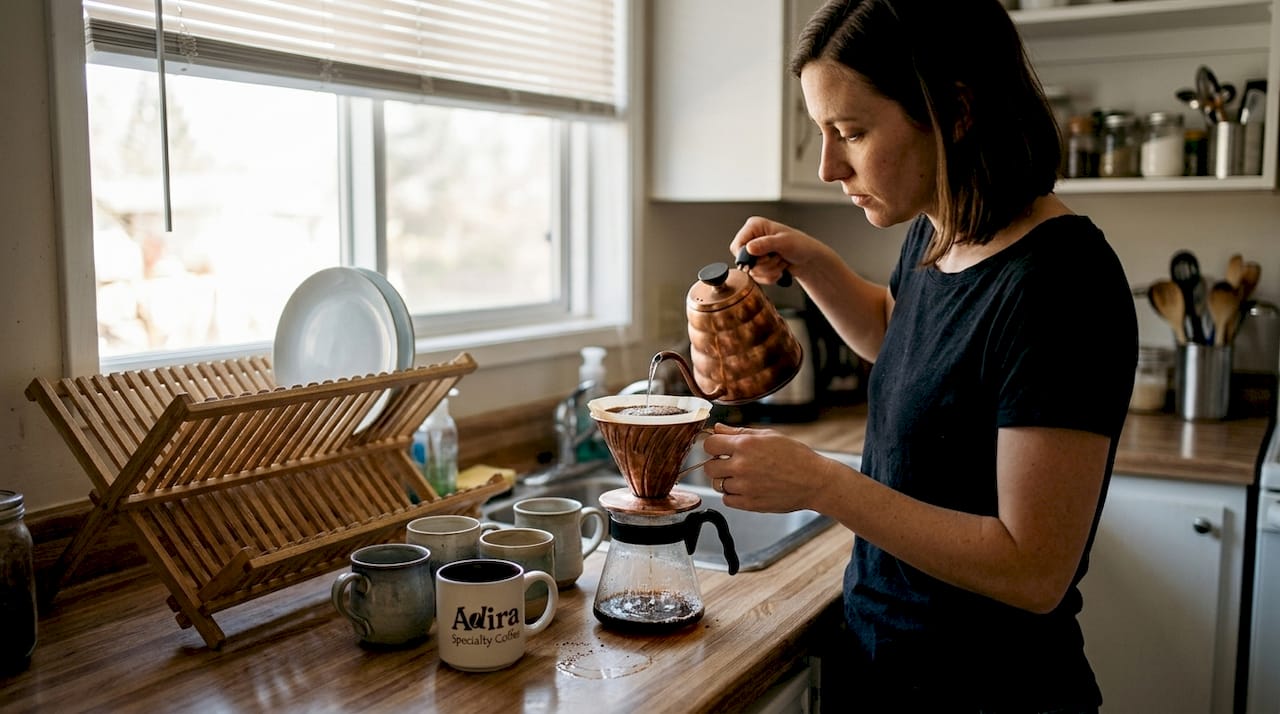
Now compare that to a defective or low-grade bean. Sour or fermented off-flavors come from over-ripe or damaged cherry that wasn’t sorted out during processing. Muddy or flat notes point to poor drying or storage conditions. Harsh, biting bitterness (not the pleasant, roasty kind) often signals old or stale beans past their flavor window. Specialty beans scoring 80+ consistently produce cleaner extractions, while commodity beans regularly fall short.
Flavor outcomes: quality vs. defective beans
| Brewing variable | Specialty beans | Defective or commodity beans |
|---|---|---|
| Aroma | Floral, fruity, or chocolatey | Flat, musty, or medicinal |
| Flavor | Complex, balanced, sweet | Bitter, sour, or hollow |
| Aftertaste | Clean and pleasant | Harsh or lingering off-notes |
| Body | Smooth, full, or silky | Thin, astringent, or watery |
One of the biggest myths in home brewing is that a dark roast masks low quality. It doesn’t. It just shifts the problem. Roasting darker can reduce sourness, but it amplifies bitterness and strips out the nuanced notes that make a great coffee worth drinking. The fix isn’t a darker roast. It’s starting with better beans.
Learning about identifying quality beans before you buy saves you from wasting time and money on beans that will disappoint you no matter how carefully you brew. And once you’ve experienced what freshness matters can do to a cup, going back feels impossible.
The science: How growing, processing, and freshness affect quality
Quality doesn’t begin at the roaster. It starts long before that, with decisions made at the farm level and carried forward through every step of the supply chain.
Terroir, varietal, processing, freshness, and roast all affect how a bean extracts and how it tastes in your cup. Here’s how each one plays its role:
- Terroir: Altitude, soil composition, and climate shape a bean’s density and acidity. High-altitude farms in Colombia or Ethiopia produce denser beans with more complex sugars, which translates directly into more interesting flavor during extraction.
- Varietal: Heirloom varietals like Ethiopian Heirloom or Bourbon carry genetic flavor potential that commercial varietals bred for yield simply don’t have. You can’t roast your way into those traits.
- Processing method: Washed (wet) processing produces cleaner, brighter cups. Natural (dry) processing adds fruit-forward sweetness and body. Honey processing sits in between. Each method shapes the final flavor before roasting even begins.
- Roast profile: A skilled roaster develops a bean’s potential without burning through its complexity. Over-roasting destroys the nuance that specialty beans carry from origin.
- Freshness: This one hits closest to home. The optimal freshness window for espresso is 3 to 21 days post-roast. For pour-over and filter methods, you can stretch that to about 5 or 6 weeks. After that, CO2 off-gassing is mostly done and oxidation has dulled the flavor significantly.
For California home baristas, freshness is where you have a real advantage. Sourcing from a local roaster means your beans can arrive within days of roasting, not weeks or months after sitting in a warehouse. That matters more than most people realize.
Pro Tip: Check the roast date on every bag you buy, not the “best by” date. A roast date tells you exactly where you are in the freshness window. No roast date usually means the roaster doesn’t want you to know.
Understanding why freshness matters is one thing, but knowing how to store beans after you bring them home is just as important. Even the best beans go stale quickly if stored improperly, especially in California’s warmer climates. For a deeper look at how defects develop and what causes them, the coffee defects guide is worth bookmarking.
Ethics and sustainability: Why sourcing quality beans matters
Flavor isn’t the only reason to care about where your beans come from. There’s a bigger story that starts at origin, and the choices you make as a consumer are part of it.
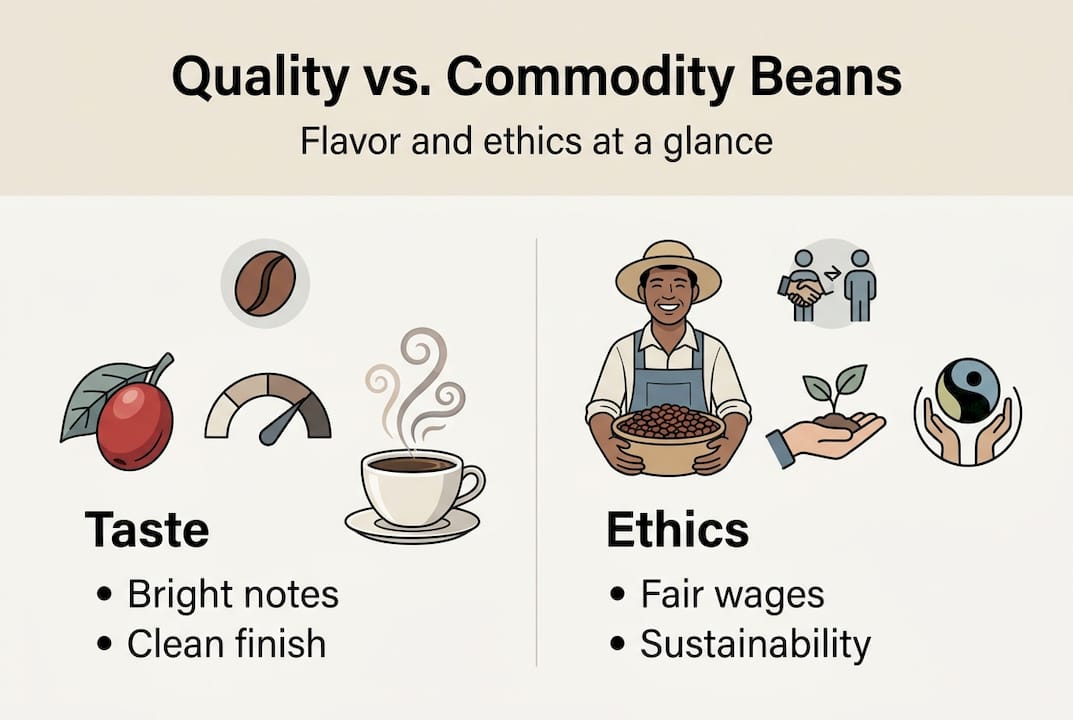
Ethically sourced beans support sustainable farming, fair wages, and traceability throughout the supply chain. That’s not just a feel-good statement. Farms that pay workers fairly and invest in soil health tend to produce better coffee. Better pay means more selective picking. Sustainable farming practices reduce disease and defects. The ethics and the quality are connected.
“Ethically sourced” can mean different things depending on who’s saying it. Here’s what the most recognized certifications actually signal:
- Fair Trade: Guarantees minimum price floors for farmers and requires democratic farming cooperatives. Focuses on economic fairness.
- Rainforest Alliance: Emphasizes environmental sustainability, biodiversity, and worker welfare. Focuses on ecological impact.
- Direct trade: Not a formal certification, but a practice where roasters buy directly from specific farms, often at prices well above Fair Trade minimums. Focuses on relationship and traceability.
- Organic certification: Confirms no synthetic pesticides or fertilizers, which benefits both the environment and farm workers.
Direct trade is increasingly the gold standard for specialty roasters because it removes middlemen and creates accountability. When a roaster can tell you the name of the farm, the altitude it sits at, and the name of the farmer who processed your lot, that’s traceability. That level of detail also means tighter quality control.
Your buying choices directly shape what practices get rewarded. When California coffee buyers consistently choose high-quality, ethically sourced beans over cheap commodity lots, it sends a market signal. Farmers who invest in quality and sustainability get paid for that effort. Those who cut corners don’t.
Pro Tip: Ask your roaster direct questions. Where exactly does this coffee come from? How was it purchased? A roaster who can’t answer those questions probably doesn’t know, and that’s worth knowing before you buy.
The hard truth: Why quality matters more than technique
Here’s what years of working with specialty coffee teaches you: most home baristas are solving the wrong problem. They spend money on a better grinder, a precision scale, a new espresso machine. Then they wonder why their cup still tastes flat or disappointing. The problem was never the equipment.
Extraction physics favor quality beans because their cellular structure, sugar content, and solubility are simply better. A dense, well-processed specialty bean extracts evenly and predictably. A defective or stale bean doesn’t, no matter how perfectly you dial in your parameters.
The most experienced California roasters and baristas we know all say the same thing: start with the best beans you can find, then work on technique. Not the other way around. Equipment upgrades are expensive and incremental. Upgrading your beans is immediate and often dramatic.
Local roasters matter more than trends, too. A California-based roaster working directly with farms in Ethiopia or Colombia, roasting in small batches and shipping fresh, gives you a quality ceiling that no gadget can replicate. When you explore specialty coffee brewing with genuinely exceptional beans under you, you’ll learn faster and enjoy the process a lot more. Technique builds on a quality foundation. It can’t replace one.
Take your next cup to the next level
Now that you understand what quality beans actually do for your cup, the logical move is finding a source you can trust consistently.
At Adira Coffee, we work with around 50 farms across Colombia, Ethiopia, Costa Rica, Guatemala, Brazil, and Sumatra, sourcing ethically and roasting in small batches to bring you beans at peak freshness. Every lot is traceable. Every roast is intentional. If you’re ready to taste what genuinely great beans feel like in a home brew, shop our specialty beans and explore single-origin options built for curious home baristas. Our Ethiopia Natural is a perfect starting point if you want to experience the full fruit-forward complexity that specialty coffee is capable of delivering.
Frequently asked questions
What SCA score defines a specialty coffee bean?
Beans must score 80 or above on the SCA cupping scale and have zero primary defects to qualify as specialty grade.
Can good brewing technique compensate for low-quality beans?
No. Extraction physics favor quality beans because defects and staleness will always show up in the cup regardless of how precisely you brew.
How does ethical sourcing improve coffee quality?
Ethically sourced beans often come from farms using selective harvesting and sustainable practices, which reduce defects and produce cleaner, more complex flavor.
How long are coffee beans fresh for optimal brewing?
For espresso, the optimal window is 3 to 21 days post-roast. For pour-over and filter methods, beans stay at their best for up to 5 to 6 weeks after roasting.
Recommended
- How Coffee Farms Define Flavor: Practices That Impact Quality – Adira Coffee US
- Why buy local roasted coffee: fresh flavor and ethics – Adira Coffee US
- Identifying quality coffee beans: a connoisseur’s guide – Adira Coffee US
- Why Hand-Picked Coffee Beans Deliver a Superior Brew – Adira Coffee US
- How to evaluate olive oil quality for health and flavor - Terra Centuria
- Organic Dark(ish) Roast Coffee – Granavitalis