
Yes, you can build a sustainable career in specialty coffee. The fastest paths for a home enthusiast are barista-to-trainer, small-batch roaster, and green coffee buyer — with equipment technician as a high-paying, underrated fourth option. The Specialty Coffee Association (SCA) and the Coffee Quality Institute’s Q‑Grader credential are the two certifications that actually move hiring decisions.
Four fastest-entry, highest-upside options for home enthusiasts:
- Barista → trainer/manager: Lowest barrier to entry; compounds quickly with SCA modules
- Roasting assistant → roaster: Home roast logs are a real portfolio asset
- Equipment technician: Scarce, well-paid, and trainable without a coffee background
- Green coffee buyer: Longest path (5–10 years, but the highest ceiling in specialty
Table of Contents
- What careers in coffee actually look like day to day
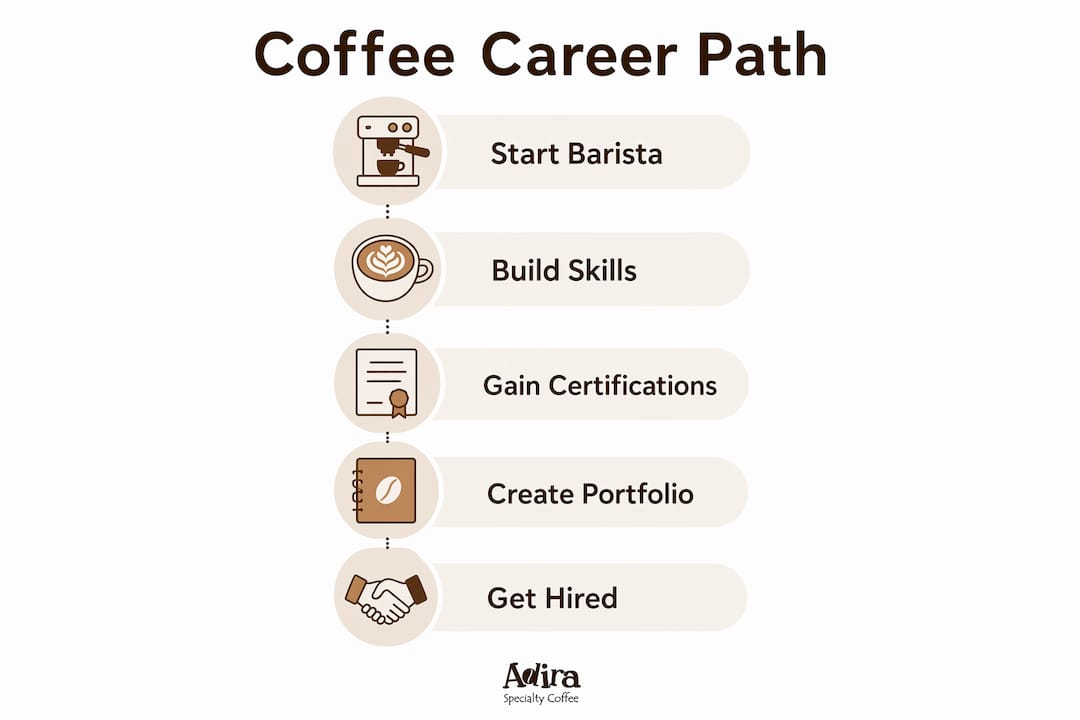
- How people actually start and progress
- Which certifications actually matter
- Skills employers want and what a typical shift looks like
- Realistic US pay ranges
- Where to find coffee jobs and how to get noticed
- Building a hire-ready portfolio in 3–6 months
- Why this guide comes from Adiracoffee
- Key Takeaways
- What actually gets people promoted
- Useful resources to go further
- Fresh coffee while you build your career
What careers in coffee actually look like day to day
The specialty coffee sector now spans more than 20 distinct roles, from the roastery floor to origin farms to media. Here are the core buckets:
- Barista: Espresso calibration, customer interaction, workflow management. Best for people who love hospitality and sensory work. Most accessible entry point.
- Café manager: Scheduling, inventory, staff training, P&L basics. Best for baristas who enjoy systems and people management.
- Roaster / head roaster: Roast profiling, batch documentation, quality consistency. Best for detail-oriented people with a technical mindset.
- Quality control / Q‑Grader: Cupping panels, defect analysis, scoring lots. Best for people with a strong, trainable palate.
- Green coffee buyer: Origin travel, contract negotiation, importer relationships, cupping samples. Best for organized, relationship-driven people willing to travel.
- Equipment technician: Espresso machine installation, maintenance, and repair. Equipment techs are scarce and command above-average rates because the role demands mechanical, electrical, and coffee-specific knowledge simultaneously.
- Trainer / educator: Curriculum design, SCA-accredited instruction, workshop facilitation. Best for baristas who love teaching.
- Operations / retail management: Multi-unit systems, finance, lease management. Scales with company size; senior roles resemble a small-business CFO.
- Coffee media / marketing: Content creation, brand storytelling, product education. Requires genuine craft knowledge plus communication skills.
Front-of-house roles are most accessible to a home enthusiast. Upstream roles (buying, QC, roasting) typically require 2–5 years of verifiable experience first.
How people actually start and progress
Most specialty careers follow a recognizable arc, even when the destination differs.
Common entry points:
- Part-time barista at a specialty café
- Roastery production floor (bagging, blending, shipping)
- Home cupping practice paired with volunteering at local cuppings
- Workshop or apprenticeship with a small-batch roaster
A realistic three-phase timeline:
- Years 0–2 (Foundation): Learn espresso and brew fundamentals, pass your first SCA module, build a cupping log. Employers at this stage want reliability and curiosity more than credentials.
- Years 2–5 (Specialization): Choose a lane. Pursue SCA Intermediate or a Q‑Grader prep course. Start keeping documented roast profiles or sensory notes. Take on training or assistant-roaster shifts.
- Years 5+ (Leadership): Head roaster, senior buyer, training manager, or operations lead. Certifications matter less here; verifiable results and relationships matter more.
Checkpoints employers look for:
- Cupping notes with consistent scoring methodology
- Roast logs showing before/after profile adjustments
- SCA certificates at the appropriate level
- References from a roaster, trainer, or café owner
Average barista pay runs around $14.03/hr at entry level, with many roles part-time. That is the honest starting point. The pay jumps come from specialization, not tenure.
Which certifications actually matter
SCA Coffee Skills Program structures training across five modules: Barista Skills, Brewing, Green Coffee, Roasting, and Sensory Skills. Each module runs Foundation → Intermediate → Professional. A Foundation-level Barista Skills certificate is worth getting in year one. Roasting and Sensory modules become valuable in years 2–3 when you are targeting upstream roles. The full SCA Coffee Skills diploma (all five modules at Professional level) is a meaningful credential for senior roles.
Q‑Grader is the gold standard for sensory and quality careers. Q‑Grader certification is rare worldwide, making it genuinely scarce. The exam is demanding: candidates must identify flavors, defects, and blend components under controlled conditions. Renewal is required every three years. Cost is significant, so pursue it after you have solid cupping experience, not before.
Statistic callout: With roughly 6,000 Q‑Graders globally, the credential is rare enough that holding one puts you in a very small pool for quality-control and buying roles.
When to pursue what:
- Year 1: SCA Barista Skills Foundation
- Year 2–3: SCA Roasting or Sensory Intermediate; begin Q‑Grader prep
- Year 3–5: Q‑Grader exam; SCA Professional modules
Pro Tip: Take SCA Sensory Skills before your Q‑Grader prep. The sensory module builds the exact vocabulary and methodology the Q‑Grader exam tests, so it functions as a paid study course.
For a deeper look at how professional coffee credentials are named and recognized in the industry, the naming conventions matter more than most newcomers realize.
Skills employers want and what a typical shift looks like
Cross-cutting skills that appear in nearly every specialty role:
- Sensory cupping with consistent methodology
- Brew control and recipe documentation
- Roast profiling basics (even for non-roasters)
- Inventory and logistics awareness
- Equipment troubleshooting
- Clear written and verbal communication
Role snapshots:
A barista shift starts with espresso calibration, dialing in grind and dose, then moves into service. Specialty baristas often handle training newer staff and content documentation alongside bar work.
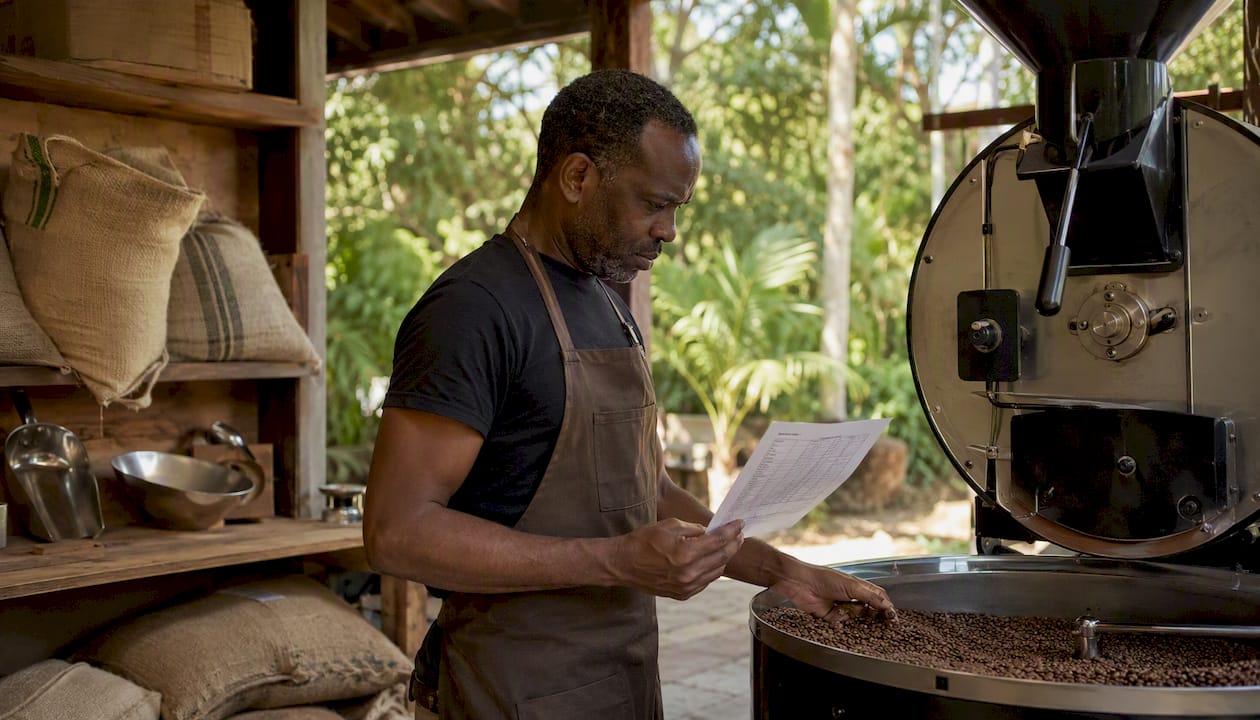
A roaster’s shift begins with reviewing the previous batch’s roast log, loading green coffee, running profiles, and cupping the results. Documentation is non-negotiable.
A buyer’s week mixes desk work (cupping importer samples, managing contracts) with relationship calls to farms and co-ops. Origin travel happens several times a year at mid-sized roasters.
An equipment tech’s day involves service calls, machine diagnostics, parts sourcing, and calibration. The role is largely independent and rewards methodical problem-solving.
Pro Tip: Keep a structured cupping journal at home using the SCA cupping form. After 50–100 documented sessions, you have a verifiable sensory record that employers can actually evaluate.
Home practice translates directly: your cupping technique and roast logs are the same artifacts employers ask for in interviews.
Realistic US pay ranges
| Role | Entry | Experienced | Senior |
|---|---|---|---|
| Barista | ~$14/hr | $14.03/hr | $20/hr |
| Green buyer | — | — | six figures |
Senior green buyers and head roasters regularly reach six figures. Equipment technicians follow a similar ceiling because the role is genuinely scarce.
Factors that raise pay quickly:
- Specialized upstream skills (origin sourcing, sensory QC)
- Technical service expertise (espresso machine repair)
- Management responsibility at multi-unit operations
- Q‑Grader or SCA Professional credentials
- Location (major specialty markets: New York, San Francisco, Portland, Chicago)
Where to find coffee jobs and how to get noticed
Job sources that work:
- Sprudge Jobs and Career.Coffee: Specialty-focused boards that list roasting, sourcing, quality, and training roles, not just barista openings
- SCA job board: Strong for upstream and education roles
- Roaster websites directly: Many small roasters post openings only on their own site or Instagram
- LinkedIn: Useful for operations, sales, and management roles; less so for production floor positions
- Walk-ins: Showing up at a local roastery during off-peak hours with a cupping note sample is still one of the most effective tactics in specialty coffee
Networking tactics that actually move the needle:
- Attend local cuppings and SCA chapter events
- Volunteer at roaster open days or competition judging
- Become a known regular at specialty cafés before you apply
- Engage genuinely with roastery social content (not just likes)
Pro Tip: When cold-emailing a roaster, attach two or three of your cupping notes and one roast log. Keep the email to four sentences. Roasters are busy; a specific, evidence-backed ask gets a response where a generic “I love coffee” email does not.
For application materials, include a short roast log or cupping record as an attachment. It signals you are already doing the work.
Building a hire-ready portfolio in 3–6 months
Home enthusiasts have more leverage here than they realize. Hiring preference in specialty cafés often favors demonstrated interest over a polished resume.
High-impact portfolio projects:
- 50+ structured cupping notes using SCA methodology
- 10–15 roast logs with before/after profile adjustments (even on a home roaster)
- Brew recipe packages for 2–3 common home machines (espresso, pour-over, French press)
- A short video demonstrating extraction calibration or cupping technique
- One volunteer shift or guest day at a local roastery
A 3–6 month checklist:
- Complete SCA Barista Skills Foundation (month 1–2)
- Run 20 structured cupping sessions; document every one (month 1–3)
- Produce 5 roast logs on a home roaster or during a workshop (month 2–4)
- Write one brew recipe package for your primary home setup (month 3)
- Volunteer at a local roastery or cupping event (month 4–5)
- Compile everything into a one-page portfolio PDF (month 5–6)
Pro Tip: Label every cupping note with date, coffee origin, processing method, and your scoring. An undated, unattributed note looks like a draft. A dated, sourced note looks like professional documentation.
The home barista skill set you have already built is closer to hire-ready than most people assume. The gap is documentation, not ability.
Why this guide comes from Adiracoffee
Stefan Nedelchev co-founded Adiracoffee with Ekaterina after arriving in the US and finding that supermarket coffee simply did not meet the standard they expected. Building Adiracoffee from scratch required learning direct sourcing, small-batch roasting workflow, sensory QC, and product development simultaneously. That hands-on experience across multiple specialty roles informs the practical framing throughout this guide.
Adiracoffee’s own product line makes excellent study material for aspiring professionals. The Love Blend illustrates blend design decisions. The Mushroom Coffee (Medium Roast) and Mushroom Coffee (Dark Roast) show how roast level affects both flavor and product positioning. The Cold Brew and Instant Coffee with Mushrooms demonstrate product diversification strategy.
Pro Tip: Order a bag from Adiracoffee and cup it formally using the SCA form. Write up your notes as if you were submitting them to an employer. It is free practice with a real, traceable coffee.
Key Takeaways
Specialty coffee careers are most sustainable when you specialize early and document everything from day one.
| Point | Details |
|---|---|
| Start as a barista | Entry-level barista roles are the most accessible on-ramp; average pay starts around $14.03/hr but compounds with specialization. |
| Prioritize SCA then Q‑Grader | Complete SCA Barista Skills Foundation first, then Sensory Intermediate, before investing in the Q‑Grader exam. |
| Upstream roles pay most | Green buyers, head roasters, and equipment techs reach six figures; these roles reward technical skills over tenure. |
| Documentation beats enthusiasm | Cupping logs, roast profiles, and dated sensory notes are the portfolio artifacts employers actually evaluate. |
| Adiracoffee products as study tools | Use Adiracoffee’s single-origin and blend offerings to practice formal cupping and build a verifiable sensory record. |
What actually gets people promoted
Most new hires underestimate how much documentation matters. A roaster who keeps clean, consistent logs gets promoted. One who relies on memory does not, no matter how good their palate is.
Curiosity about origin is the other underrated signal. Hires who ask where a coffee comes from, how it was processed, and why the roast profile was chosen that way stand out within the first month. That curiosity is visible, and it compounds.
Reliability is the baseline. Specialty coffee is a small industry. Word travels fast about who shows up on time, follows through, and communicates clearly. A single roastery relationship, built well, can open more doors than a year of cold applications.
Useful resources to go further
Industry bodies and job boards:
- SCA Education: Module descriptions, accredited trainers, and diploma pathways
- Career.Coffee / The Brew: In-depth career analysis and salary data for specialty roles
- Sprudge Jobs: Specialty-focused job listings across roasting, retail, and sourcing
- Perfect Daily Grind: Industry news and career features
Adira Coffee reading:
- What is specialty coffee: Standards and scoring explained
- Small-batch roasting workflow: Practical roasting guide for aspiring roasters
- Coffee cupping techniques: Sensory practice for portfolio building
For a broader look at technical coffee careers beyond the bar, including R&D and coffee science roles, the field is wider than most enthusiasts realize.
Fresh coffee while you build your career
Adiracoffee roasts every bag to order in small batches in California, ships within days of roasting, and dials in each bag for your specific grinder and brewing setup. That is the opposite of the stale supermarket bag that prompted Stefan and Ekaterina to start the company.
If you are building a sensory portfolio, you need coffee worth cupping. Adiracoffee’s single-origin offerings from Colombia, Ethiopia, Costa Rica, Mexico, and Sumatra give you traceable, high-quality lots to practice on. The subscription plan saves 10% and ships free over $35, so you can keep fresh coffee coming while you work through your cupping logs. Pick your first bag, cup it formally, and write it up. That is the first entry in your portfolio.