
TL;DR:
- Matching roast level to brewing method and adjusting grind size improves coffee flavor.
- Light roasts have origin character but are harder to extract; dark roasts are bolder and more soluble.
- Roast selection impacts flavor more than gear or techniques, emphasizing the importance of intentional choice.
Every home brewer has faced it: you buy a beautiful bag of specialty coffee, brew your usual cup, and it tastes flat, sour, or just wrong. The beans weren’t bad. Your gear wasn’t broken. The culprit is almost always a mismatch between roast level and your brewing setup. Roast level shapes everything from acidity and aroma to how fast your grounds release flavor into hot water. Get it right, and your home cup rivals your favorite café. This guide walks you through exactly how to identify, select, and fine-tune your roast level so every brew lands where it should.
Table of Contents
- Essential tools and requirements for selecting roast level
- Understanding coffee roast levels and their flavor impact
- How to match roast level to your brewing method
- Troubleshooting and refining your roast selection
- Why roast selection matters more than you think
- Explore specialty roasts and elevate your home brewing
- Frequently asked questions
Key Takeaways
| Point | Details |
|---|---|
| Roast level changes everything | Coffee roast level is the biggest factor in controlling flavor, extraction, and the satisfaction of your daily cup. |
| Match roast to brewing method | Choose a roast level that complements your brewing style; medium is the safest bet for most home gear. |
| Experiment and adjust | Start with a medium roast and tweak your brewing for best results, using taste and notes to refine over time. |
| Detect and correct extraction | Sour means under-extracted, bitter means over-extracted; adjust grind and brew time to dial in flavor. |
Essential tools and requirements for selecting roast level
Before you can make a smart roast choice, you need a clear picture of what roast levels actually are and what you need to evaluate them properly. Think of this as setting up your home lab before running any experiments.
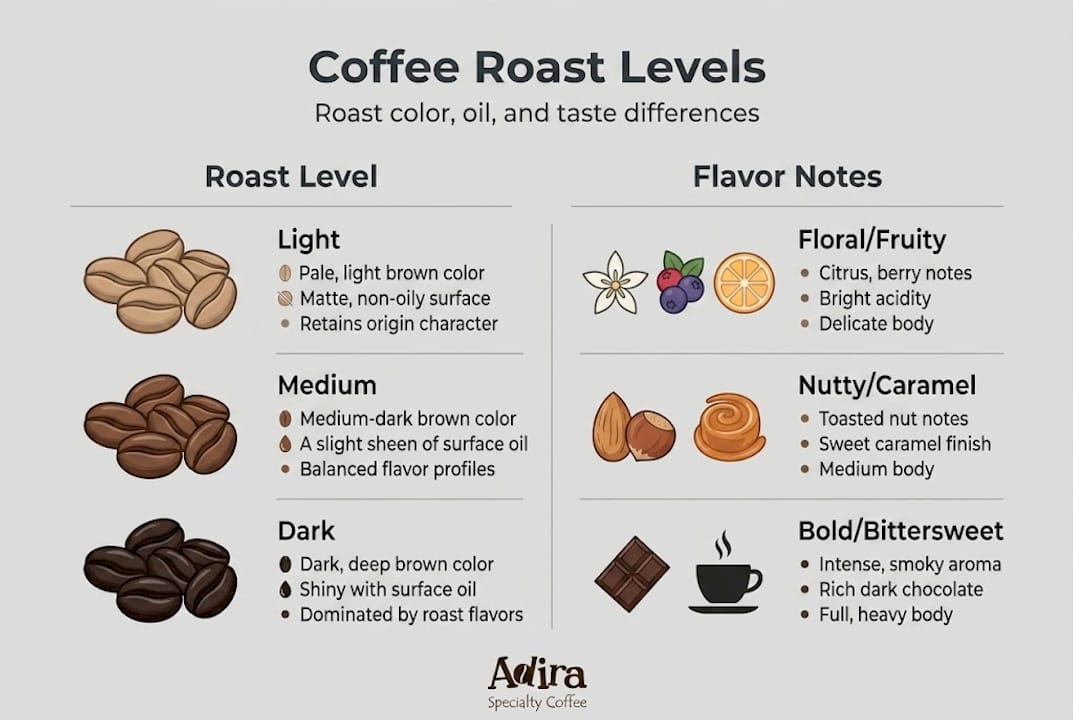
The three core roast classifications:
- Light roast: Pale tan to medium brown, dry surface, no oil. Bright, acidic, fruit-forward flavor. Dense beans that are harder to extract.
- Medium roast: Medium to dark brown, minimal surface oil. Balanced sweetness, caramel notes, and moderate acidity. The most forgiving range.
- Dark roast: Deep brown to near-black, oily surface. Bold, smoky, chocolatey flavors. More soluble beans that extract quickly.
To start evaluating roasts confidently, you need four things: fresh specialty beans (within two to four weeks of roast date), a burr grinder with adjustable settings, your preferred brewing setup, and a simple tasting journal. The journal is non-negotiable. Memory fades fast, but written notes build a real flavor map over time.
| Roast level | Bean color | Surface oil | Flavor profile |
|---|---|---|---|
| Light | Tan to medium brown | None | Fruity, floral, bright |
| Medium | Medium to dark brown | Minimal | Balanced, sweet, caramel |
| Dark | Dark brown to black | Heavy | Bold, smoky, bitter |
One of the most practically useful things to understand is that light roasts are denser and harder to extract, while dark roasts are more soluble and release flavor much faster. This isn’t just trivia. It directly changes your grind size, water temperature, and brew time. Getting a solid grip on understanding roast profiles before you brew will save you a lot of wasted cups.
Pro Tip: Always check the roast date printed on the bag. Fresh beans roasted within the last two to four weeks will behave predictably and taste their best. Avoid anything without a roast date.
If you are starting out and want a reliable middle ground, the medium roast guide is a great place to anchor your first experiments.
Understanding coffee roast levels and their flavor impact
Once your tools and knowledge are in place, it’s time to grasp how roast really shapes your coffee’s taste. This is where specialty coffee gets genuinely exciting.
Light roasts preserve the most origin character. A Colombian light roast might taste of peach and jasmine. An Ethiopian light roast can land like blueberry or bergamot tea. That’s the terroir (the natural flavor shaped by soil, altitude, and climate) coming through loud and clear. The catch is that light roasts are less soluble and tougher to extract, meaning a tiny mistake in grind or temperature produces a sour, underdeveloped cup.
Medium roasts hit a sweet spot. The origin character is still present, but the roasting process adds caramel and nutty complexity. The bean’s density falls in the middle, making extraction far more forgiving. It’s no surprise that most specialty cafes keep at least one medium roast on their menu as their flagship. Versatile across brew methods, medium roast is where most home brewers find their footing. Exploring roasting profiles and specialty coffee shows just how much intentional craft goes into landing that balance.
Dark roasts are bold and unapologetic. The roasting process breaks down most of the origin-specific compounds and replaces them with roast-driven notes: dark chocolate, toasted nuts, caramelized sugar, and sometimes smoke. The beans extract faster due to higher solubility, which is helpful for espresso machines with shorter extraction windows. The risk is bitterness if you push the grind too fine or the brew time too long.
Quick flavor reference:
- Light roast: Citrus, stone fruit, floral, tea-like body
- Medium roast: Caramel, nuts, chocolate, medium body
- Dark roast: Dark chocolate, smoke, low acidity, full body
Understanding how specialty coffee standards are applied during cupping (professional tasting) gives you a real framework for describing what you taste, which makes choosing future roasts much easier.
How to match roast level to your brewing method
With flavor profiles and extraction principles clear, the next step is matching roast levels to the way you brew.
Every brew method has its own extraction personality. A pour-over passes water slowly and evenly through the bed of coffee. An espresso machine forces pressurized water through a dense puck. An auto-drip machine automates timing and flow for you. Each one asks something different from your beans.
Step-by-step matching process:
- Identify your primary brew method (pour-over, espresso, auto-drip, French press, etc.).
- Match your roast level to the method’s extraction style using the guide below.
- Set your grind size based on the roast: slightly coarser for dark, slightly finer for light.
- Adjust water temperature: lighter roasts need higher heat (200 to 205°F), darker roasts are more tolerant.
- Brew, taste, and note the results before making any changes.
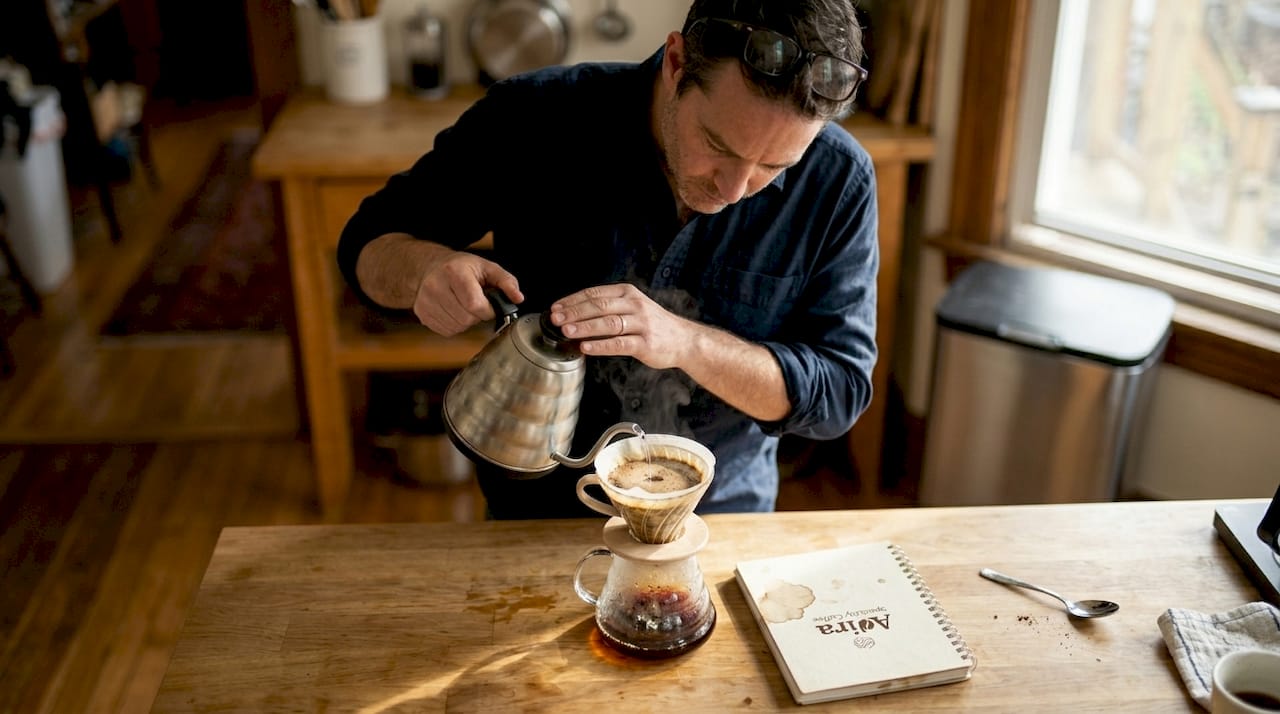
For pour-over, light to medium roasts shine. The slow, controlled pour highlights bright acidity and origin notes beautifully. That said, very light Nordic roasts are best reserved for experienced brewers using precise technique. A beginner attempting an ultra-light roast in a pour-over without temperature control will likely pull a sour, grassy cup.
For espresso, medium to medium-dark is your sweet spot at home. Light roast espresso is possible but requires a machine with good temperature stability and dialed-in pressure profiling. Most home setups simply don’t have that precision.
For auto-drip, medium is king. Machines in this category rarely allow fine temperature or flow control, which makes the forgiving extraction window of medium roast ideal.
“Medium roast is the most forgiving across methods. It’s where experimentation becomes enjoyable rather than frustrating.”
Pro Tip: If you are new to manual brewing, avoid very light roasts until you’ve brewed at least 20 to 30 cups with a medium. The skills transfer directly, but you’ll appreciate them much more with a forgiving roast first.
The best home brewing methods resource covers each technique in depth, and pairing it with knowledge of how roasting improves home brewing will give you a strong foundation.
Troubleshooting and refining your roast selection
Once you’ve picked a roast and brewed your first few cups, you might still run into unexpected flavors. Here’s how to refine your results.
Flavor problems after switching roast levels are incredibly common and almost always fixable. The key is knowing what the symptom is telling you.
Common sensory signals and what they mean:
- Sour or sharp: Likely under-extraction. Common with light roasts. Try a finer grind or higher water temperature.
- Hollow or watery: Grind too coarse or brew time too short. Add a few extra seconds or grind finer.
- Bitter or harsh: Over-extraction. Common with dark roasts. Try a coarser grind or shorter brew time.
- Flat or dull: Beans may be too old. Check the roast date and use fresher coffee.
- Ashy or smoky (unpleasant): Your dark roast may be going past its ideal extraction. Pull back on contact time.
Building a quick tasting log is the single most effective way to improve fast. For each brew, jot down: roast level, grind setting, water temperature, brew time, and four tasting notes covering acidity, sweetness, bitterness, and overall balance. After five to ten brews, patterns emerge clearly.
Home machines generally do best with medium or medium-dark roasts for consistency, especially for espresso. This doesn’t mean you’re locked in. It means you should build your baseline there before experimenting further.
Pro Tip: Medium roast is your safe zone. If you’re ever unsure where to start, default to medium and brew a few cups before chasing lighter or darker profiles.
The iterative loop is simple: taste, write notes, adjust one variable, brew again. Resist changing grind size and temperature at the same time. Isolate your variables. You’ll find your preferred roast range faster than you expect. For more specific guidance, the flavor unlocking tips resource and the choosing coffee beans guide are both worth bookmarking.
Why roast selection matters more than you think
Here’s something we see constantly: home brewers spending hundreds on a new grinder or a fancy kettle, then wondering why their coffee still disappoints. The gear matters, but it plays a supporting role. Roast selection is the lead actor.
A mediocre grinder with the right roast for your method will almost always outperform a top-tier grinder paired with the wrong one. The reason is simple: extraction difficulty is set by the roast. If your method and your beans are fighting each other, no grinder in the world fixes that.
The most meaningful jump in home brew quality we see comes from people who slow down, choose their roast intentionally, and start tasting with purpose. Not chasing gear, not following trends, just genuinely paying attention to what’s in their cup. Understanding how roast drives flavor is the foundation everything else sits on. Embrace the process. Your best cup is always the next experiment, not the next gadget.
Explore specialty roasts and elevate your home brewing
Ready to put this into practice? Adira Coffee’s lineup of freshly roasted, ethically sourced beans gives you the perfect starting point for your roast exploration.
We roast in small batches to lock in peak flavor from farms across Colombia, Ethiopia, Costa Rica, and beyond. Start with our smooth, balanced Colombia specialty beans if you want a trustworthy medium roast entry point. Craving something with complex fruitiness? Our Ethiopia Natural coffee is a standout in the lighter range. Every bag ships fresh with a roast date so you always know what you’re working with. Browse the full lineup and find the roast that fits your brew.
Frequently asked questions
How do I know if I prefer light, medium, or dark roast?
Sample all three side by side and pay attention to whether you prefer bright fruity flavors (light), a balanced sweet cup (medium), or bold bitter notes (dark). Your palate will tell you quickly.
Can I use light roast beans for espresso at home?
Yes, but it demands precise temperature control and technique. Most home machines favor medium to medium-dark roasts because the extraction window is wider and far more forgiving.
Why does my coffee taste sour or bitter after changing roast level?
Sour usually means under-extraction, a common issue with light roasts if under-extracted. Bitterness points to over-extraction, especially with dark roasts. Adjust your grind size or brew time by one small increment at a time.
What is a ‘Nordic’ roast and who should try it?
A Nordic roast is an ultra-light style that preserves maximum origin clarity. It’s best for advanced pour-over technique with precise temperature control and is not recommended for beginners or auto-drip machines.
Recommended
- Understand coffee roasting: improve your home brewing – Adira Coffee US
- Coffee roasting tips to unlock incredible flavor at home – Adira Coffee US
- How to choose coffee beans for the perfect brew in 2026 – Adira Coffee US
- Home coffee roasting guide: from first batch to great cup – Adira Coffee US
- Coffee roasting explained: boost hospitality success in 2026