
The best overall pick for most home setups is Adiracoffee’s Love Blend: roasted to order in small batches, shipped within days, and dialed in for your specific machine. For milk drinks, the Mushroom Coffee Dark Roast holds up beautifully under steamed milk. For a single-origin experience with real terroir, the Mushroom Coffee Medium Roast gives you brightness and balance without demanding a $2,000 grinder.
| Brand / Product | Best For | Roast Level | One-Line Reason |
|---|---|---|---|
| Love Blend | Balanced daily espresso | Medium-dark | Forgiving extraction, consistent body |
| Mushroom Coffee Dark Roast | Milk drinks, lattes | Dark | Bold, holds flavor through milk |
| Mushroom Coffee Medium Roast | Straight shots, ristretto | Medium | Bright, clean, origin-forward |
| Cold Brew | Cold brew, iced drinks | Medium-dark | Smooth, low-acid, ready to brew cold |
Freshness window: Specialty roasters and barista guides consistently point to a 3–14 day rest after roasting as the sweet spot for espresso. CO₂ degassing peaks shortly after roasting, so pulling shots immediately often produces uneven, gassy extractions. Waiting a few days typically yields the most stable crema and aromatic complexity.
Table of Contents
- How these espresso coffee brands compare: ranked profiles
- How we chose and ranked these brands
- How to choose the right espresso beans for your home setup
- Dialing in at home: practical steps from roasters and research
- Key Takeaways
- Why small-batch roasting changes what lands in your cup
- Fresh espresso beans, roasted for your machine and delivered to your door
- Sources and further reading
How these espresso coffee brands compare: ranked profiles
Roast-date transparency and roast profile are the two factors that separate a bag worth buying from one that looks good on a shelf. Every profile below is evaluated on those axes first, then on taste, usability, and price.
1. Adiracoffee Love Blend (editor pick)
Roast level: Medium-dark Tasting notes: Dark chocolate, caramel, toasted hazelnut, smooth finish Best for: Balanced daily espresso, flat whites, cappuccinos Form: Whole bean (ground to order for your equipment on request) Price range: Available on the Adiracoffee website; subscription saves 10% Availability: Online direct, subscription Roast-date transparency: Roasted to order, shipped within days
The Love Blend is built for the home barista who pulls shots every morning and wants a consistent, forgiving cup. Medium-dark roasts balance sugar development and acidity while tolerating the small extraction errors that are unavoidable on home machines. The chocolate-caramel profile works equally well as a straight double shot or under steamed oat milk.
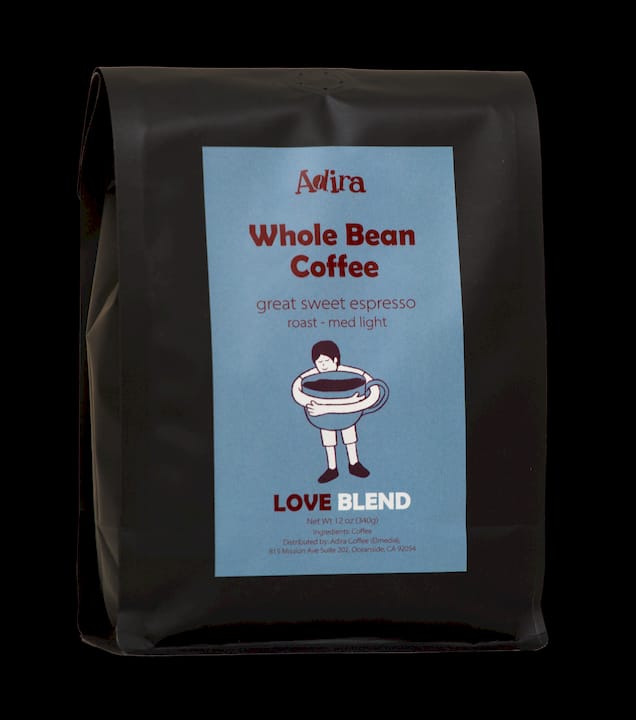
Pros: Roast-to-order freshness, dial-in forgiveness, subscription-ready, personalized grind option Cons: Only available online (not in grocery stores)
2. Adiracoffee Mushroom Coffee Medium Roast
Roast level: Medium Tasting notes: Bright citrus, mild earthiness from functional mushroom blend, clean finish Best for: Straight espresso shots, ristretto, pour-over crossover Form: Whole bean or ground Price range: Listed on the Mushroom Coffee Medium Roast product page Availability: Online direct, subscription Roast-date transparency: Roasted to order
Medium roasts are the safe default for most home espresso setups because they preserve volatile aromatics while staying manageable on entry-level grinders. The functional mushroom addition (lion’s mane, chaga, or similar adaptogens depending on the lot) adds an earthy undertone without masking the coffee’s origin character. If you want a morning shot that does more than caffeinate, this is the bag.
Pros: Functional ingredient benefit, bright and clean, works well as a ristretto Cons: The earthy mushroom note is not for everyone; lighter roast demands more precise grind calibration
3. Adiracoffee Mushroom Coffee Dark Roast
Roast level: Dark Tasting notes: Smoky cocoa, low acidity, full body, lingering bittersweet finish Best for: Milk-based drinks (lattes, cappuccinos, cortados), bold straight shots Form: Whole bean or ground Price range: Listed on the Mushroom Coffee Dark Roast product page Availability: Online direct, subscription Roast-date transparency: Roasted to order
Dark roasts are the natural choice when steamed milk is involved. The roast drives out most of the acidity and amplifies body, which means the espresso flavor punches through a 6-ounce latte without tasting thin or sour. The mushroom blend adds depth rather than competing with the roast character. One practical note: dark roasts extract faster, so you will likely need to coarsen your grind slightly compared to a medium bag.
Pros: Excellent milk compatibility, low acidity, full body, functional blend Cons: Less origin complexity; not ideal for black espresso drinkers who want brightness
4. Adiracoffee Cold Brew
Roast level: Medium-dark Tasting notes: Smooth chocolate, mild sweetness, low bitterness Best for: Cold brew, iced espresso, summer drinks Form: Coarse ground (optimized for cold extraction) Price range: Listed on the Cold Brew product page Availability: Online direct Roast-date transparency: Roasted to order
Cold brew is a different job than espresso, and Adiracoffee’s Cold Brew product is ground and profiled specifically for long, cold extraction. The medium-dark roast minimizes the harsh tannins that cold water struggles to dissolve, leaving a smooth, naturally sweet concentrate. Worth keeping on hand for summer or for anyone who alternates between hot espresso and iced drinks.
Pros: Purpose-built for cold extraction, smooth and low-acid, no bitterness Cons: Not designed for hot espresso; grind size is fixed for cold brew
5. Specialty grocery and retail options (context)
For readers who want to compare against what is available in stores: retail espresso bags from major roasters typically lack roast dates, use opaque origin labeling, and sit on shelves for weeks or months after roasting. Specialty roasters emphasize traceability, roast-date transparency, and roast-to-order precisely because mass-retail bags cannot match that freshness window. The flavor gap between a 3-week-old grocery bag and a 5-day-old roast-to-order bag is not subtle.
Comparison table
| Product | Roast Level | Best For | Form | Roast-Date Transparency | Where to Buy |
|---|---|---|---|---|---|
| Love Blend | Medium-dark | Daily espresso, milk drinks | Whole bean / ground | Roasted to order | Adiracoffee.com |
| Mushroom Coffee Medium Roast | Medium | Straight shots, ristretto | Whole bean / ground | Roasted to order | Adiracoffee.com |
| Mushroom Coffee Dark Roast | Dark | Lattes, cappuccinos | Whole bean / ground | Roasted to order | Adiracoffee.com |
| Cold Brew | Medium-dark | Cold brew, iced drinks | Coarse ground | Roasted to order | Adiracoffee.com |
| Typical retail espresso bag | Medium-dark to dark | General use | Preground or whole bean | Rarely listed | Grocery, Amazon |
How we chose and ranked these brands
Every brand in this guide was evaluated against five criteria, weighted in this order:
- Roast-date transparency — does the roaster tell you when the beans were roasted? Without this, freshness is a guess.
- Roast profile appropriateness — is the roast designed for espresso extraction under pressure, not just labeled “espresso roast”? A true espresso roast profile manages development to produce sweetness, body, and a clean finish under high-pressure extraction.
- Taste and balance — tasting notes drawn from barista reviews, roaster tasting sheets, and published flavor descriptors.
- Price and availability — is the bag accessible and reasonably priced for regular home use?
- Subscription and freshness options — can you get beans delivered consistently within days of roasting?
“The bean is the most important variable in a home espresso setup, and the choice gets second-guessed less than it deserves. A $1,500 espresso machine paired with a stale bag of grocery store beans produces worse shots than a $400 machine paired with a fresh bag.” — Pulled Journal, 2026
Tasting notes in each profile come from published roaster descriptions and barista review sources. What was not tested: long-term shelf stability in retail environments or blind panel scoring across dozens of bags. This guide focuses on the home-espresso job-to-be-done, not a lab comparison.
How to choose the right espresso beans for your home setup
Roast level is the single most consequential decision you will make when buying espresso beans. Everything else, including origin, processing, and price, matters less if the roast is wrong for your machine.
Core criteria to match beans to your setup:
- Roast date: Look for a printed roast date, not a “best by” date. Aim to brew between days 4 and 14 post-roast for espresso.
- Roast level vs machine capability: Medium roasts suit most home machines because they tolerate small extraction errors. Dark roasts work well for milk drinks. Light roasts demand higher extraction precision and are unforgiving on entry-level grinders.
- Single-origin vs blend: Blends prioritize consistency and forgiveness; single-origins offer terroir-driven complexity but require more dialing. For daily home use, a well-designed blend is the more practical choice.
- Whole bean vs preground: Always buy whole bean if you own a grinder. Preground loses volatile aromatics within hours of grinding.
- Origin flavor map: Brazilian origins deliver body and chocolate notes; Ethiopian origins add floral brightness; Colombian origins bring balanced caramel and citrus. Knowing this helps you predict what a bag will taste like before you open it.
Questions to ask before you buy:
- Is there a roast date printed on the bag?
- Is the roast level appropriate for how I drink espresso (black, with milk, iced)?
- Does the roaster explain the origin and processing method?
- Is whole bean available, and can I grind it fresh?
- Is there a subscription option so I can maintain a consistent freshness window?
Red flags when shopping:
- No roast date anywhere on the bag or product page
- “Espresso roast” label with no roast level, origin, or processing information
- Preground only, with no whole bean option
- Vague origin (“South American blend” with no country or farm)
- No return or satisfaction policy listed
Quick checklist for scanning a product page:
- [ ] Roast date or roast-to-order confirmation visible
- [ ] Roast level stated (light / medium / medium-dark / dark)
- [ ] Origin country and ideally farm or cooperative named
- [ ] Whole bean option available
- [ ] Subscription or freshness guarantee offered
For more on matching beans to your machine and espresso equipment essentials, grinder type matters as much as bean choice.
Dialing in at home: practical steps from roasters and research
Switching to a new bag of espresso beans is the most common reason shots go sideways. The roast level changed, the origin is different, or the bag is fresher than the last one. Here is how to reset quickly.
Pro Tip: When you open a new bag, pull your first shot without changing anything from your previous recipe. Taste it. Then adjust one variable at a time: grind first, then dose, then ratio. Changing two things at once makes it impossible to know what fixed the problem.
Step-by-step dialing checklist for medium and medium-dark bags:
- Set your dose. Start with a common dose for a standard double shot. Adjust by small increments if needed.
- Set your grind. Start at your baseline grind setting and adjust finer if the shot runs too fast, coarser if it runs too slow.
- Target your yield. Aim for a common extraction ratio as a starting point for medium-dark roasts. Ristretto lovers use a shorter ratio.
- Time the shot. A typical extraction window is targeted for most home espresso setups.
- Taste and log. Write down dose, grind setting, yield, time, and one tasting note. Recording each recipe improves reproducibility across lots and harvests.
- Adjust temperature. Medium roasts generally perform best at moderately high temperatures. Dark roasts may benefit from slightly lower temperatures to avoid bitterness.
Water quality matters more than most home baristas realize. Industry guidance recommends moderate total hardness and alkalinity to balance extraction and minimize scale buildup. Very soft water under-extracts and produces flat, sour shots. Very hard water over-extracts, tastes harsh, and scales your machine faster. A simple water filter or third-party water product designed for espresso machines keeps you in the right range. For a deeper look, water quality for home baristas covers the full picture.
For a complete walkthrough of home espresso technique, this step-by-step home espresso guide covers everything from tamping pressure to shot timing.
Freshness and degassing: Beans roasted within the past 3–14 days produce the most stable crema and aromatic complexity for espresso. The first 72 hours after roasting are the peak degassing window; pulling shots too early produces gassy, uneven extractions. Roast-to-order subscriptions are the most reliable way to stay inside that window consistently.
Key Takeaways
The most reliable path to better home espresso is combining a roast-to-order bean with a consistent dial-in routine and water that falls within the moderate hardness range.
| Point | Details |
|---|---|
| Roast date is non-negotiable | Buy only bags with a printed roast date; aim to brew between days 4 and 14 post-roast. |
| Medium roasts suit most home machines | They tolerate extraction errors and balance acidity with body for daily use. |
| Whole bean beats preground | Grind fresh every time; preground loses aromatics within hours of grinding. |
| Match roast level to your drink | Dark roasts for milk drinks; medium for straight shots; light only if your grinder is precise. |
| Adiracoffee Love Blend | Roasted to order in California, subscription-ready, and dialed in for your specific equipment. |
Why small-batch roasting changes what lands in your cup
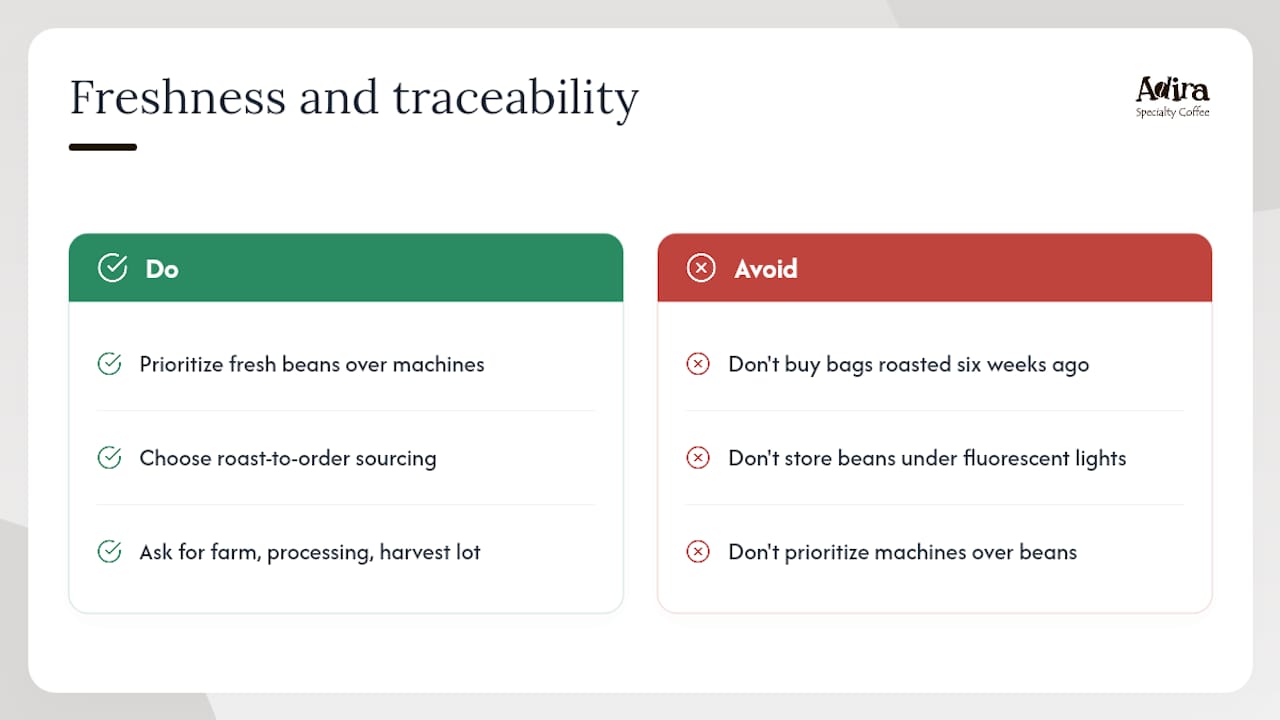
Most home baristas spend more time researching their espresso machine than their beans. That is the wrong priority. A bag roasted six weeks ago and sitting under fluorescent lights at a grocery store will not perform the way the roaster intended, no matter how good the machine is.
What changed my thinking on this was watching how differently the same origin behaves when it is three days off the roaster versus three weeks. The volatile aromatics that create the floral, fruity, or chocolatey notes in a tasting description are genuinely fragile. They do not survive long supply chains or warehouse storage. Roast-to-order is not a marketing phrase. It is the only model that reliably gets fresh beans to a home barista.
Traceability matters for the same reason. When a roaster can tell you the farm, the processing method, and the harvest lot, they are not just being transparent for its own sake. That information tells you what to expect in the cup and how to dial the shot. A washed Colombian from a high-altitude cooperative behaves differently under pressure than a natural-processed Sumatran. Knowing the origin lets you set your grinder and temperature with intention rather than guessing. Traceable sourcing is a quality signal, not just an ethical one.
For home baristas who want consistent results without chasing down a local roaster every week, a subscription from a roast-to-order brand is the most practical solution. You get beans at the right age, dialed-in recipe support, and no stale bags sitting in a cabinet. The 10% subscription savings at Adiracoffee is a bonus; the freshness is the actual reason to subscribe.
Fresh espresso beans, roasted for your machine and delivered to your door
Stale beans are the most common reason home espresso underperforms. Adiracoffee roasts every bag to order in small batches in California and ships within days of roasting, so you are always brewing in the optimal freshness window.
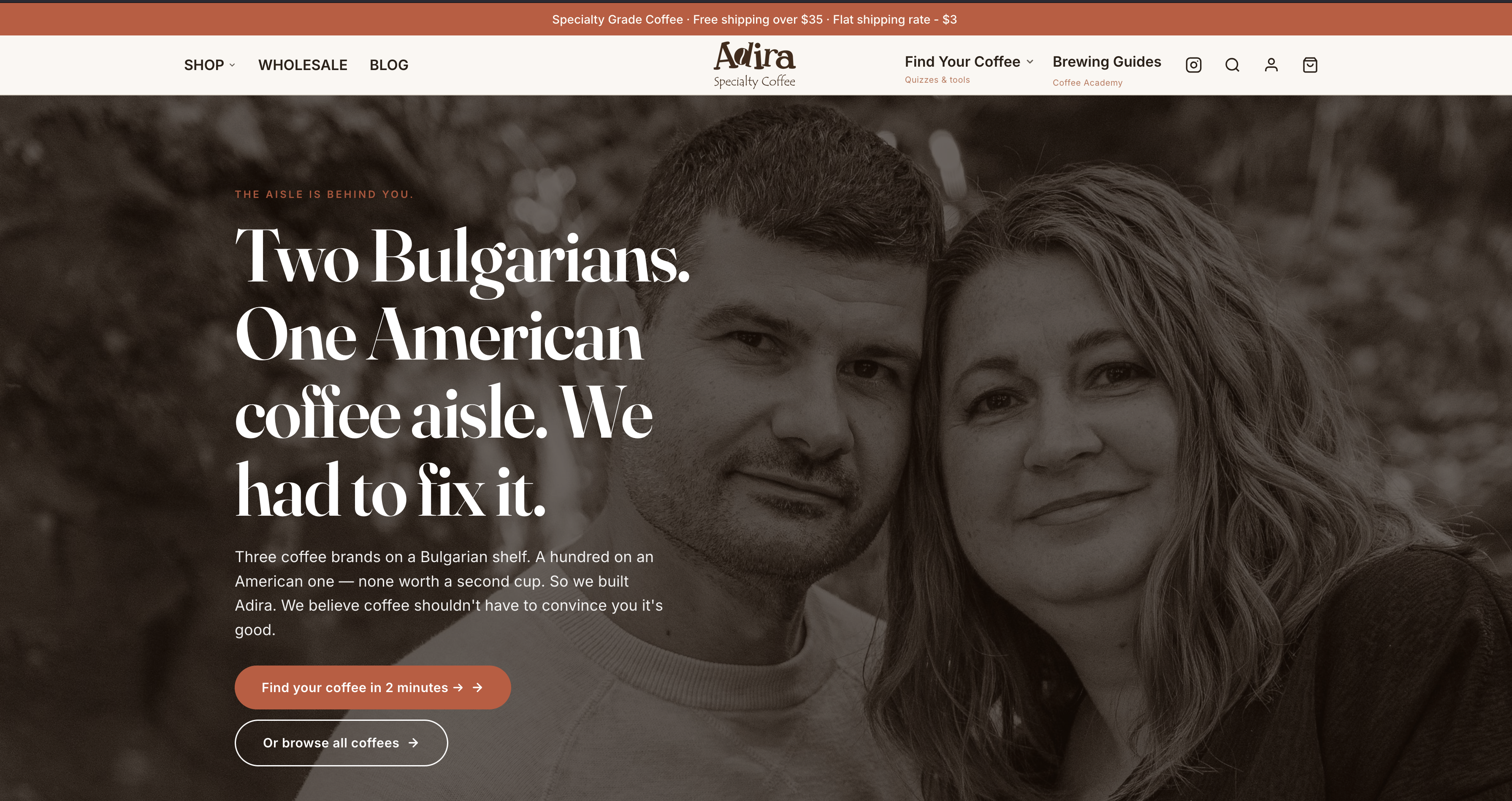
The Love Blend is the editor pick for balanced daily espresso and milk drinks. The Mushroom Coffee Dark Roast is built for lattes and cappuccinos. The Mushroom Coffee Medium Roast suits straight shots and ristretto. Every bag comes with a personalized digital brewing recipe for your specific machine and grinder.
The Adiracoffee Coffee Plan subscription saves 10% on every order and ships free on orders over $35 across the US. Beans arrive roasted to order, so your dial-in stays consistent from bag to bag. Not sure which roast fits your setup? Take the coffee quiz and get a tailored recommendation in under two minutes.
Sources and further reading
The claims and recommendations in this guide draw from the following sources. Each one covers a specific aspect of home espresso selection and dialing.
| Source | What You Will Find There | Why It Matters for Home Espresso |
|---|---|---|
| Espresso Advice: Best Coffee Beans for Espresso | Roast-level guidance, origin flavor maps, blend vs single-origin trade-offs | Core reference for roast and origin decisions |
| Wildkaffee GmbH: Specialty Espresso with Portafilter | Water quality, dialing recipes, extraction targets | Practical dialing and water guidance |
| Esperanto Coffee: Best Coffee Bean for Espresso | Traceability, roast-date transparency, quality standards | Why freshness and origin labeling predict cup quality |
| Black Pole Coffee: What Makes a Coffee Bean Good for Espresso | Espresso-specific roast profiling, pressure extraction behavior | Understanding why “espresso roast” labels vary so much |
| Coffee Gear Hub: Coffee Roast Levels | Light vs medium vs dark roast guide, temperature and grind adjustments | Matching roast level to machine and taste preference |
| Pulled Journal: Best Coffee Beans for Espresso | Bean selection framework, freshness argument, dialing guidance | Practical context for why bean choice outweighs machine cost |
| Keith Lyons: Coffee Roasting Profiles | Roast profile mechanics, how profiles are tailored to espresso | Background on why roast-to-order profiles differ from mass-retail |