
TL;DR:
- To land a coffee shop job quickly, prepare by knowing your availability, practicing core skills at home, and engaging in the interview as a conversational exchange. Reliability and a service mindset are more important than technical skills, which can be taught on the job. Effective home practice with measurable metrics and research-backed café visits demonstrate your genuine interest and coachability.
The fastest way to land a coffee shop job is to walk in prepared: know your availability cold, practice three core skills at home, and treat the interview as a two-way conversation. No formal certification required anywhere in the U.S. — most employers train you on the job.
Your 5-step checklist:
- Apply at two to three local specialty shops and one chain to widen your chances.
- Lock in your availability before the interview — openers and weekend shifts get hired first.
- Spend 30–60 minutes researching the café (Instagram, menu, reviews) and build three sharp questions to ask.
- Practice espresso dialing, milk steaming to 140–160°F, and a clean pour-over workflow at home before your demo.
- Reference real products you know — Adiracoffee’s Love Blend, Mushroom Coffee Medium Roast, Cold Brew, or Instant Coffee with Mushrooms — to show genuine product fluency.
Start with in-person inquiries at shops you already visit. Managers notice regulars.
Table of Contents
- What do coffee shop employers actually look for?
- What does the hiring process look like, step by step?
- How can you practice barista skills at home before applying?
- How do you present home experience on your résumé and in interviews?
- What should you expect in onboarding and the first 30–90 days?
- What pay and scheduling should you realistically expect?
- Do you need food safety certification for a coffee shop job?
- Key Takeaways
- What home baristas often get wrong about café hiring
- Adiracoffee: fresh-roasted beans for your home practice
- Useful sources and further reading
What do coffee shop employers actually look for?
Reliability beats craft every time at the hiring stage. A manager can teach you to dial espresso in a week. They cannot teach you to show up on time, communicate clearly, or stay calm during a Saturday rush. Those traits get you hired; the technical stuff gets you promoted.
The practical baseline employers expect from day one:
- Reliability and availability: Consistent shift coverage, especially openers and weekends, is the top hiring filter.
- Service mindset: Friendly, fast, and unflappable with customers.
- Coachability: Willingness to follow the shop’s recipes exactly, even if yours taste better.
- Station cleanliness: Wiping down between every drink, not just at close.
- Basic espresso awareness: Understanding dose, tamp, and extraction time, even if your technique needs polish.
Specialty shops go a layer deeper. As of Q2 2026, specialty cafés prefer candidates who can evaluate extraction by taste, hit consistent microfoam, and discuss grinder adjustments. The SCA Coffee Skills Program is the recognized credential for advancement, but it is optional at the entry level.
Pro Tip: Frame your home practice in commercial terms. “I dial espresso to a 1:2 ratio in 27–30 seconds” lands better than “I make good espresso at home.”
What does the hiring process look like, step by step?
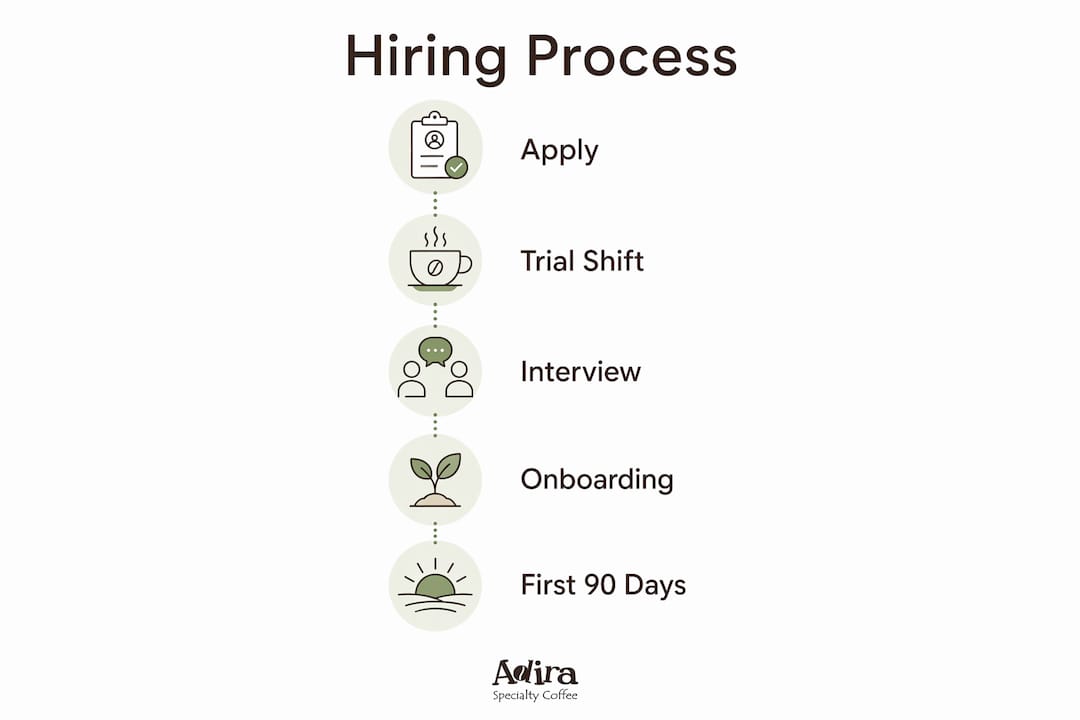
Most coffee shop hiring moves fast. Interviews typically run 30–45 minutes, often followed by a short practical check on milk steaming or bar flow. Here is what to expect at each stage.
Typical timeline:
- Application or walk-in inquiry (same day to 48 hours for a response at busy shops).
- Phone or quick in-person screen (15–30 minutes) focused on availability and attitude.
- In-person interview with a shift lead or manager.
- Short practical demo or a paid/unpaid trial shift at many specialty cafés.
What managers evaluate in the demo:
- Bar flow and sequencing, not latte art perfection.
- Communication: do you call drinks, ask clarifying questions, and confirm handoffs?
- Cleanliness: are you wiping down between tasks without being told?
- Speed and composure under mild pressure.
Common interview questions and concise answers:
- “What draws you to barista work?” — Lead with the craft-plus-hospitality angle: consistency, small details, and learning every day.
- “Tell me about your availability.” — State specific days and times; never say “flexible” without backing it up.
- “How do you handle a rush?” — Describe batching tasks, calling tickets, and keeping the station clear.
- “Why this café?” — Name something specific from their menu or reviews. Researching the café for 30–60 minutes beforehand gives you the material to answer this well.
During a trial shift, prioritize cleanliness and communication over showing off. Ask one good question at the end: “What does a strong first month look like here?”
How can you practice barista skills at home before applying?
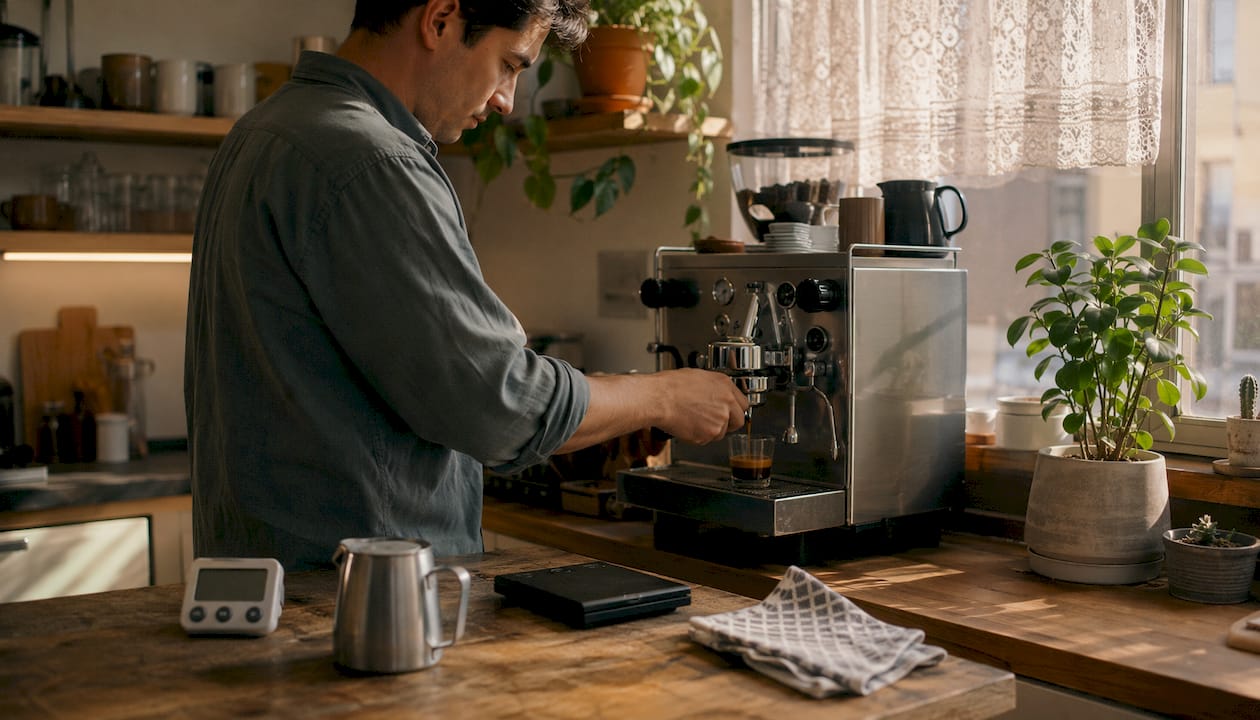
Home barista practice builds real competence, but you need to simulate café conditions, not just make good coffee for yourself. Timed drills and consistent logging are what close the gap.
Three core drills (15–30 minutes each):
- Espresso dialing routine: Set dose, tamp level, and target a 1:2 yield in 27–30 seconds. Log every shot: dose in, yield out, time, and a one-word taste note. Consistency across five shots matters more than one perfect pull.
- Milk steaming to temperature: Use a thermometer or the palm-touch method to hit 140–160°F every time. Practice the swirl-and-tap finishing step until the texture is uniform. Your latte art will follow naturally once the texture is right.
- Pour-over workflow: Pre-set your station, bloom on a timer, and practice handing off the finished cup within 30 seconds of the last pour. This simulates manual-brew bar service.
To mimic café pace, set a timer for 20 minutes and run back-to-back “orders.” Call each drink aloud, complete it, wipe down, and move to the next. A coffee grinding workflow guide can sharpen your dosing consistency before you ever touch a commercial grinder. You can also check out this kitchen equipment guide if you are building out your home practice setup on a budget.
Pro Tip: Bring a one-page practice log or a few photos of your espresso yields to the interview. It shows you track your own progress — exactly the habit managers want to see.
How do you present home experience on your résumé and in interviews?
The goal is translation, not exaggeration. Home practice is real experience; it just needs commercial framing to land with a hiring manager.
Résumé bullets that work:
- “Practiced consistent espresso extraction (1:2 ratio, 27–30 sec) using a home grinder and scale.”
- “Developed milk-steaming technique to 140–160°F target across multiple brew sessions.”
- “Familiar with single-origin origins and roast profiles including Colombian, Ethiopian, and Costa Rican beans.”
What counts as transferable experience: Server, retail, barback, or any customer-facing role. Mention speed, accuracy under pressure, and cash handling. These signal the service mindset cafés hire for.
What to avoid overstating: Do not claim commercial espresso machine experience if you only own a home machine. Say “home espresso practice” and let the demo speak for itself.
For your demo introduction: When asked to make a drink, say something like: “I’ll call out each step as I go — dose, tamp, extraction, then milk. Let me know if you want me to adjust anything.” That one sentence signals communication habits and coachability at once.
Short portfolios work well too: a few photos of consistent espresso yields or a clean milk-steaming video on your phone. Managers rarely ask for them, but they always notice when a candidate brings one.
What should you expect in onboarding and the first 30–90 days?
The first two weeks are almost entirely observation and repetition. Most shops hand you a recipe sheet, walk you through cleaning routines and POS basics, and put you on supervised shifts before you run the bar solo. Baristas typically learn drink prep, equipment operation, and food-safety procedures through on-the-job training.
Common first-month challenges and how to handle them:
- Multitasking under pressure: Coffee shop work involves simultaneous orders, brewing, cleaning, and equipment checks. Slow down your internal pace; speed up your physical sequencing.
- Bar flow and positioning: Watch where experienced baristas stand and move. Position yourself to avoid collisions and keep the handoff point clear.
- Time management during rushes: Batch simple tasks (lids, sleeves, syrups) before the rush hits, not during it.
Training checklist to request during your interview: Ask for the shop’s milk temp targets, shot yield ranges, cleaning schedule, and shift expectations. Managers who share this willingly run better-organized shops.
For career growth, the SCA Coffee Skills Program offers modules in barista skills, brewing, sensory, and roasting. It is the clearest credential path if you want to move toward lead barista, trainer, or roastery roles. Ask for feedback at the 30-day mark with a specific question: “What is the one thing I should focus on improving this month?”
What pay and scheduling should you realistically expect?
Urban specialty shops typically advertise starting wages within a certain range per hour, with tips adding additional earnings during busy shifts. Wages vary by market, shop type, and experience level.
| Role | Typical Base Wage | Tips (busy shifts) |
|---|---|---|
| Entry-level barista (chain) | $17–$22/hr | tips commonly add $5–$10/hr during busy shifts |
| Entry-level barista (specialty) | $17–$22/hr | tips commonly add $5–$10/hr during busy shifts |
| Lead barista / trainer | higher wage (varies by experience and shop) | tips category remains consistent |
Scheduling realities to know before you accept an offer:
- Opener shifts (4:30–6:00 AM start) are the hardest to fill and the fastest path to full-time hours.
- Weekend availability is often a hard requirement, not a preference.
- Shift-swap culture varies widely; ask about it directly.
Questions to ask about pay and scheduling:
- “How is tip pooling structured here?”
- “What does a typical week look like for a new hire?”
- “Is there a review period before a wage increase?”
Do you need food safety certification for a coffee shop job?
Most U.S. states do not require a food handler certification before your first day, but many shops prefer it or will ask you to complete one during onboarding. ServSafe Food Handler is the most widely recognized option — it takes about two hours online and costs under $20. Some states (California, for example) require at least one certified food handler per shift, so having the card before you apply is a genuine edge.
Beyond the card, managers expect basic hygiene habits from day one: handwashing between tasks, keeping dairy refrigerated, labeling and dating syrups, and knowing allergen protocols. These habits show up in your demo before anyone asks about your certification.
Key Takeaways
Landing a coffee shop job comes down to five things: clear availability, practiced core skills, a researched café visit, a clean demo, and a coachable attitude from day one.
| Point | Details |
|---|---|
| No certification required | U.S. employers provide on-the-job training; formal credentials are not needed to apply. |
| Availability wins interviews | Opener and weekend shifts are the hardest to fill; stating them clearly gets you hired faster. |
| Practice with metrics | Log espresso yields and milk temps at home so you can describe your process in commercial terms. |
| SCA for career growth | The SCA Coffee Skills Program is the recognized path to lead, trainer, and roastery roles. |
| Adiracoffee products as talking points | Reference the Love Blend, Mushroom Coffee, or Cold Brew to show real product knowledge in interviews. |
What home baristas often get wrong about café hiring
Most home coffee enthusiasts assume technical skill is the bottleneck. It rarely is. Managers at specialty shops will teach you their recipes, their grinder settings, and their milk temp targets. What they cannot teach in a week is the instinct to communicate clearly when the line is out the door, or the habit of wiping down the steam wand after every single drink without being reminded.
The candidates who stand out in 2026 are the ones who treat the demo as a service interaction, not a performance. They call their steps aloud, they ask one clarifying question before they start, and they clean up after themselves. That is it. The latte art can come later.
Home practice matters most as evidence of self-direction. A practice log, a few consistent espresso photos, or even a well-articulated description of how you dial in your grinder tells a manager you are the kind of person who improves on purpose. That is a much stronger signal than a perfect rosette.
Adiracoffee: fresh-roasted beans for your home practice
If you are building the skills to land a barista position, the coffee you practice with matters. Adiracoffee roasts single-origin and signature blends to order in small batches in California, shipping within days of roast so you are always working with fresh, traceable beans.
The Mushroom Coffee Medium Roast and Love Blend are practical starting points: both have clear flavor profiles you can describe confidently in an interview. The Cold Brew and Mushroom Coffee Dark Roast round out your product vocabulary for alternative service formats. Every bag ships with free U.S. shipping over $35, and a subscription saves you 10%. Take the coffee quiz to find the right roast for your setup, then start practicing with beans worth talking about.
Useful sources and further reading
Use these sources to verify claims, prep interview answers, and deepen your skills:
- BLS Occupational Requirements Survey — confirms no formal education is required for barista roles in the U.S.; useful for framing your application.
- SCA Coffee Skills Program — the authoritative source on credentialing, espresso fundamentals, and sensory training for career advancement.
- Instawork: Barista Interview Questions — practical sample questions and answers organized by category; use it to rehearse your responses.
- Indeed: Barista Job Description — current duty lists and employer expectations; good for tailoring your résumé bullets.
- Glassdoor: Barista Interview Patterns — real candidate accounts of what managers ask and how interviews flow.
- Adira Coffee: Home Barista Skills — how home practice maps to commercial readiness; read before your demo.
- Adira Coffee: Coffee Cupping Guide — builds the sensory vocabulary you need to discuss roast profiles and origins in interviews.
- Adira Coffee: Brewing Tips — practical filter and espresso guidance to sharpen your at-home drills.