

TL;DR:
- Honey processed coffee removes the cherry skin but retains mucilage, producing a sweet, full-bodied cup. Its flavor varies by mucilage level, ranging from bright and clean to intensely fruity and syrupy. Proper drying and fermentation control are crucial for quality, making it a favored method for consistent, intentional coffee.
Honey processed coffee is defined as coffee where the outer cherry skin is removed but the sticky, sugar-rich mucilage remains on the bean during drying. This method sits between washed and natural processing, producing a cup with more sweetness and body than a washed coffee but more clarity than a natural. The name has nothing to do with actual honey. It refers to the sticky, amber-colored mucilage that coats the bean and gives it a honey-like appearance on the drying bed. Understanding this process helps you choose beans with intention and predict what’s in your cup before you brew.
What is honey processed coffee, exactly?
Honey processing is the industry term for a method where producers remove the coffee cherry’s outer skin while leaving varying amounts of mucilage intact on the parchment layer. The mucilage is a dense, sugary pulp that clings to the bean. During drying, that mucilage ferments slowly in open air, transferring sugars and flavor compounds directly into the green coffee bean.
The amount of mucilage left on the bean determines the honey “color” category. Mucilage retention levels are classified as White (roughly 10%), Yellow (25–50%), Red (50–75%), and Black (75–100%). More mucilage means more fermentation exposure, more sweetness, and a heavier body in the final cup. White honey behaves closest to a washed coffee. Black honey pushes toward natural territory.
This classification system gives producers and buyers a shared language. When you see “Red Honey” on a bag from Costa Rica, you know the bean dried with more than half its mucilage intact. That detail tells you more about the cup than the roast level does.
How is honey processed coffee made?
The honey coffee process follows a clear sequence, but each step requires careful management to avoid defects.
- Selective harvesting. Only ripe, red cherries are picked. Underripe or overripe fruit introduces inconsistency in sugar content and fermentation behavior.
- Depulping. A mechanical depulper strips the outer cherry skin. Unlike the washed process, the beans are not soaked in water to remove mucilage. The mucilage stays on.
- Mucilage calibration. Producers adjust the depulper to control how much mucilage remains. This is where the White, Yellow, Red, and Black categories are set.
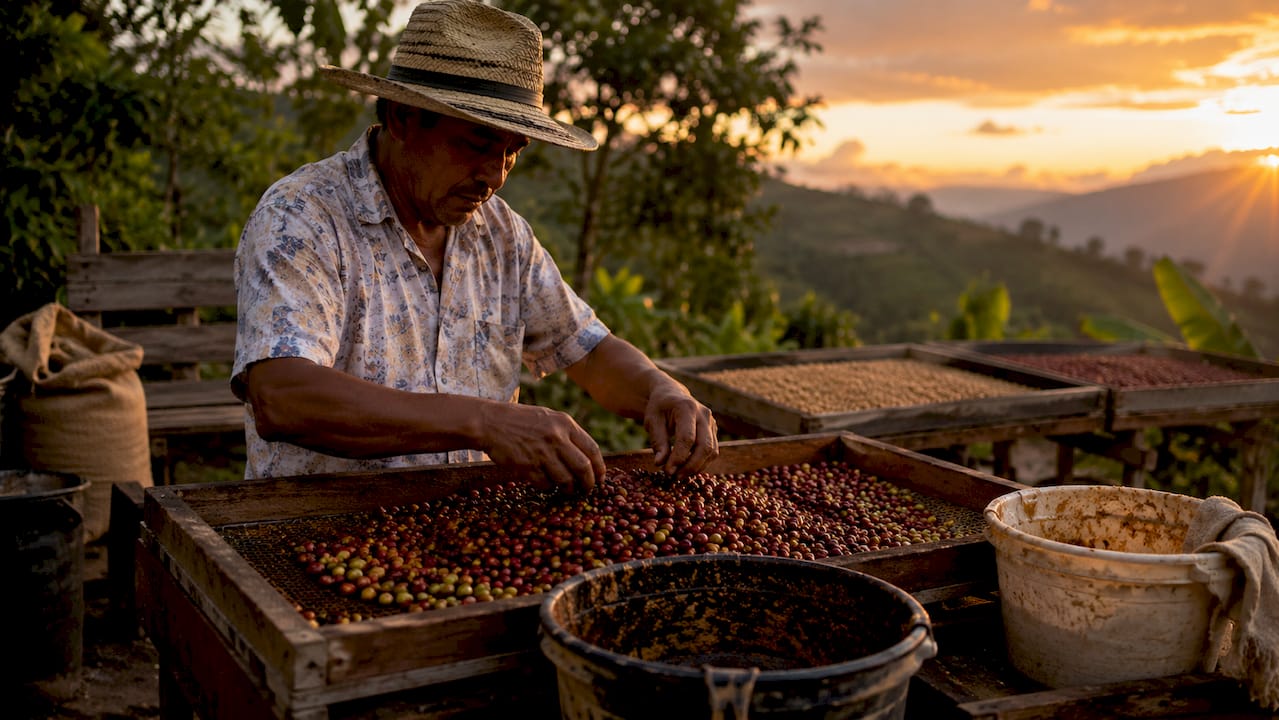
- Drying on raised beds or patios. Beans spread in thin layers and dry for 10 to 28 days, depending on mucilage level, humidity, and temperature. Black honey takes the longest.
- Turning and monitoring. Workers turn the beans multiple times per day to prevent clumping, mold, and uneven fermentation.
- Milling and grading. Once dried to the correct moisture level, the parchment is removed and beans are sorted by size and density.
The method originated in Costa Rica in the late 2000s, driven by government restrictions on water use in coffee processing. Producers needed a way to reduce water consumption without sacrificing cup quality. The honey process solved both problems. It uses far less water than wet processing and produces a distinct, marketable flavor profile.
Pro Tip: If you are buying honey processed coffee directly from a producer or importer, ask for the drying duration. Beans dried for fewer than 12 days often lack the sweetness development that makes honey processing worthwhile.
What does honey processed coffee taste like?
The honey coffee flavor profile is defined by sweetness, round body, and moderate acidity. World Coffee Research confirms that honey-processed green beans carry higher residual glucose and fructose than fully washed beans. Those sugars translate directly into the cup as a natural, clean sweetness without added ingredients.
Common tasting notes include:
- Stone fruit: peach, apricot, and nectarine, especially in Yellow and Red honey lots
- Caramel and brown sugar: from the slow Maillard-adjacent reactions during drying
- Molasses: more common in Black honey, where fermentation runs deeper
- Floral brightness: lighter in White honey, where less mucilage means less fermentation influence
- Chocolate and dried fruit: frequent in Red and Black honey from Ethiopia and Costa Rica
The mouthfeel is a defining characteristic. Honey processed coffees feel thicker and more coating than washed coffees. That texture comes from the higher sugar and soluble compound content transferred during drying. Compared to natural coffees, honey processed cups show more clarity and less overt fermentation. The fruit notes are present but controlled. You taste the coffee’s origin character more cleanly than in a natural.
The mucilage level drives flavor intensity. A White honey from Costa Rica might taste like a bright, slightly sweet washed coffee. A Black honey from the same farm can taste like a mild natural, with deep fruit and syrupy body. Same farm, same variety, very different cups.
How does honey processing compare to washed and natural?
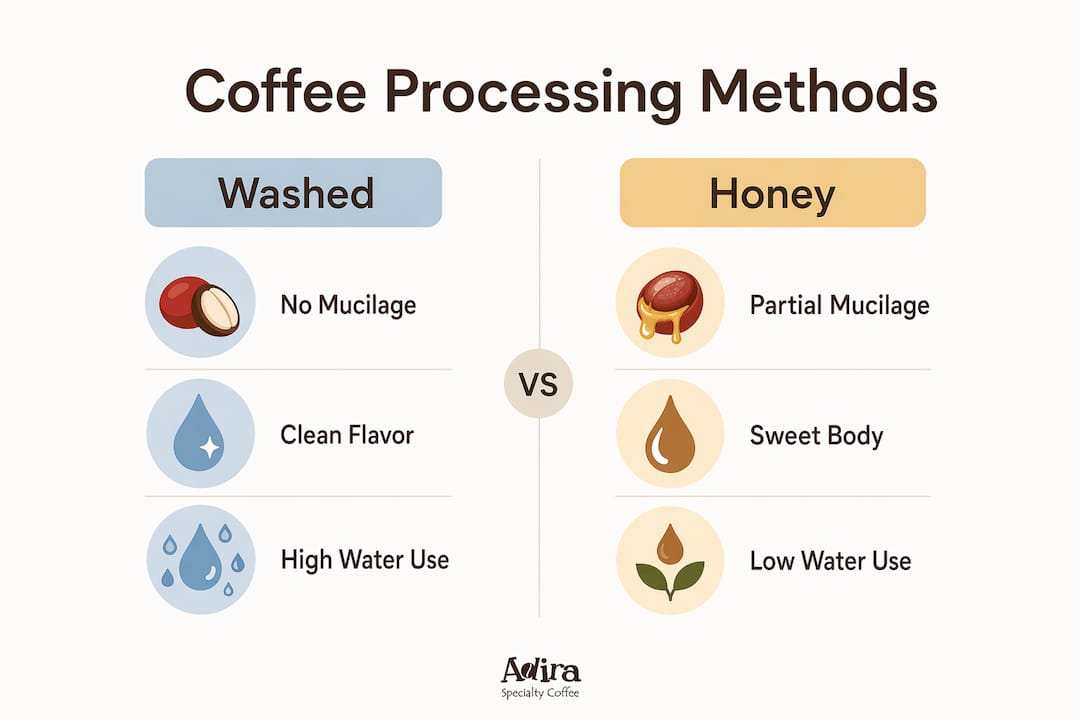
The three main coffee processing methods produce fundamentally different cups from the same cherry. The table below shows the key distinctions.
| Factor | Washed | Honey | Natural |
|---|---|---|---|
| Mucilage during drying | None | Partial to full | Full (fruit intact) |
| Water usage | High | Low to moderate | Very low |
| Fermentation exposure | Controlled, brief | Moderate, in-situ | High, extended |
| Sweetness | Lower | Medium to high | Highest |
| Acidity | Bright, clean | Balanced | Soft, wine-like |
| Flavor clarity | Highest | Medium | Lower |
| Drying time | 7–15 days | 10–28 days | 20–35 days |
| Defect risk | Lower | Moderate | Higher |
Washed processing removes all mucilage before drying, producing the cleanest expression of a bean’s origin. Natural processing dries the whole cherry intact, creating the most fermentation-forward and fruit-heavy cups. Honey sits between them, offering a middle path that many coffee drinkers find more approachable than naturals and more complex than washed.
The environmental angle matters too. Honey processing uses significantly less water than wet processing. That makes it a practical choice for farms in water-stressed regions, and it is one reason the method spread rapidly from Costa Rica to Colombia, Ethiopia, and beyond.
What factors determine quality in honey processed coffee?
Quality in honey processed coffee depends on how well producers manage fermentation during drying. The mucilage ferments naturally in open air, and humidity and temperature control are critical. If conditions are too warm and humid, acetic acid builds up in the mucilage. That produces a harsh vinegar note that ruins the cup. It is one of the most common defects in poorly managed honey lots.
Turning frequency is the main tool producers use to prevent this. Beans must be turned several times per day, especially in the first week when mucilage is still wet and fermentation is most active. Raised drying beds improve airflow under the beans, which reduces the risk of mold and uneven drying.
Honey processing gives producers more control over flavor outcomes than natural processing. Because the mucilage level is set mechanically at the depulper, producers can replicate results across harvests. Natural processing depends heavily on ambient conditions and is harder to standardize. That predictability is one reason roasters favor well-managed honey lots. Roasters appreciate honey processed coffees for their consistent roasting behavior when drying is well managed.
Selective picking also plays a major role. Only fully ripe cherries carry the sugar content needed for clean, sweet fermentation. Underripe cherries produce astringent, grassy notes that no amount of careful drying can fix. The quality of farm practices at harvest sets the ceiling for what honey processing can achieve.
Pro Tip: When evaluating a honey processed coffee, brew it as a pour-over or Chemex before trying it as espresso. The clarity of a filter brew reveals fermentation quality more honestly than espresso, which can mask defects under pressure and heat.
Key takeaways
Honey processed coffee delivers a flavor profile that no other method replicates: the sweetness of a natural with the clarity of a washed, shaped entirely by how much mucilage dries on the bean.
| Point | Details |
|---|---|
| Mucilage drives flavor | More mucilage retained means more sweetness, body, and fermentation character in the cup. |
| Four color categories | White, Yellow, Red, and Black honey indicate mucilage level and predict flavor intensity. |
| Costa Rica origin | The method was developed in Costa Rica to reduce water use and is now a global specialty standard. |
| Fermentation control is critical | Poor humidity and temperature management causes acetic acid buildup and vinegar-like defects. |
| Middle-ground profile | Honey processed coffee is sweeter and fuller than washed but cleaner and less funky than natural. |
My honest read on honey processed coffee
I have tasted honey processed coffees from Costa Rica, Colombia, and Ethiopia, and the range is wider than most people expect. A White honey from a Costa Rican farm can taste almost indistinguishable from a clean washed lot. A Black honey from Ethiopia can push so far into fruit territory that first-time drinkers assume it is a natural. That variability is the point, and it is also the trap.
The biggest mistake I see coffee drinkers make is treating “honey processed” as a single flavor category. It is not. It is a spectrum. If you buy a honey processed coffee and it does not match your expectations, the answer is not to write off the method. The answer is to try a different mucilage level or a different origin. A Red honey from Colombia will taste nothing like a Yellow honey from Costa Rica, even if both bags use the same label.
What I find most interesting about honey processing is the control it gives producers. Natural processing is beautiful but unpredictable. Washed processing is clean but can feel thin. Honey processing lets a skilled producer dial in sweetness and body without gambling on fermentation. When it is done well, it is the most intentional cup you can drink. When it is done poorly, the vinegar note is unmistakable. That gap between the best and worst honey lots is wider than in any other processing method, which makes sourcing from farms you trust non-negotiable.
My advice: start with a Yellow or Red honey from Costa Rica or Colombia. Those origins have the most experience with the method, and the flavor tends to be clean, sweet, and immediately likeable. Once you have that reference point, explore Black honey and Ethiopian lots for more complexity.
— Stefan
Specialty coffee worth exploring at Adiracoffee
Honey processing is one piece of a larger story about how origin, method, and roast combine to shape what ends up in your cup. At Adiracoffee, every bag is roasted to order in small batches in California and ships within days of roasting, so you taste the coffee at its best.

If you want to explore flavor-forward coffees with distinct profiles, the Love Blend and Ocean Blend are strong starting points. Both are built for drinkers who want something more than a generic supermarket bag. Adiracoffee sources from cooperatives and small farms in Colombia, Ethiopia, Costa Rica, Mexico, and Sumatra. Free US shipping on orders over $35, with a subscription option that saves you 10%.
FAQ
What is honey processed coffee in simple terms?
Honey processed coffee is coffee dried with the sticky fruit mucilage still on the bean after the outer skin is removed. That mucilage ferments during drying and adds sweetness and body to the final cup.
Does honey processed coffee taste like honey?
The name refers to the honey-like appearance of the sticky mucilage on the bean, not the flavor. Honey processed coffees taste sweet and fruity, with notes of stone fruit, caramel, or molasses depending on the mucilage level.
How does honey processing affect caffeine content?
Processing method does not significantly change caffeine content. The caffeine level in your cup depends on the coffee variety, roast level, and brew ratio, not whether the bean was honey, washed, or natural processed.
What is the difference between Red and Black honey coffee?
Red honey retains 50–75% of the mucilage during drying, producing a sweet, fruity cup with moderate body. Black honey retains 75–100%, resulting in deeper fermentation, heavier body, and more intense fruit and molasses notes.
Is honey processed coffee harder to brew at home?
Honey processed coffee brews like any other specialty coffee. A pour-over or drip method works well and highlights the sweetness and clarity. The processing happens at the farm level and does not require any special technique from the brewer.