
TL;DR:
- Washed process coffee involves removing the skin, pulp, and mucilage before drying, resulting in a clean, bright, and terroir-forward cup. It emphasizes origin and varietal character through controlled fermentation, washing, and drying, with lower spoilage risks, especially in humid climates. Starting with washed single-origin coffees helps build a precise palate and appreciation for the coffee’s true expression.
Washed process coffee is defined as coffee where the skin, pulp, and mucilage are fully removed from the cherry before the bean is dried, producing a clean, bright, and consistent cup. Also called the wet process, this method is the industry standard for evaluating origin character and varietal quality. Producers in Ethiopia, Colombia, and Costa Rica rely on it precisely because it strips away fruit influence and lets the bean speak for itself. If you’ve ever tasted a cup with sharp citrus acidity, floral notes, and a clean finish, you were almost certainly drinking a washed processing method coffee.
What is washed process coffee, step by step?
The washed coffee process follows a strict sequence. Each step controls what ends up in your cup.
-
Harvest ripe cherries. Only fully red or yellow cherries are picked. Unripe fruit introduces harsh, astringent flavors that no amount of roasting fixes. Hand-picked cherries deliver the consistent ripeness washed processing demands.
-
Depulp mechanically. A mechanical depulper strips the outer skin and most of the pulp within hours of picking. Speed matters here. Delay allows wild fermentation to begin on the cherry’s surface, introducing unpredictable flavors before the controlled process even starts.
-
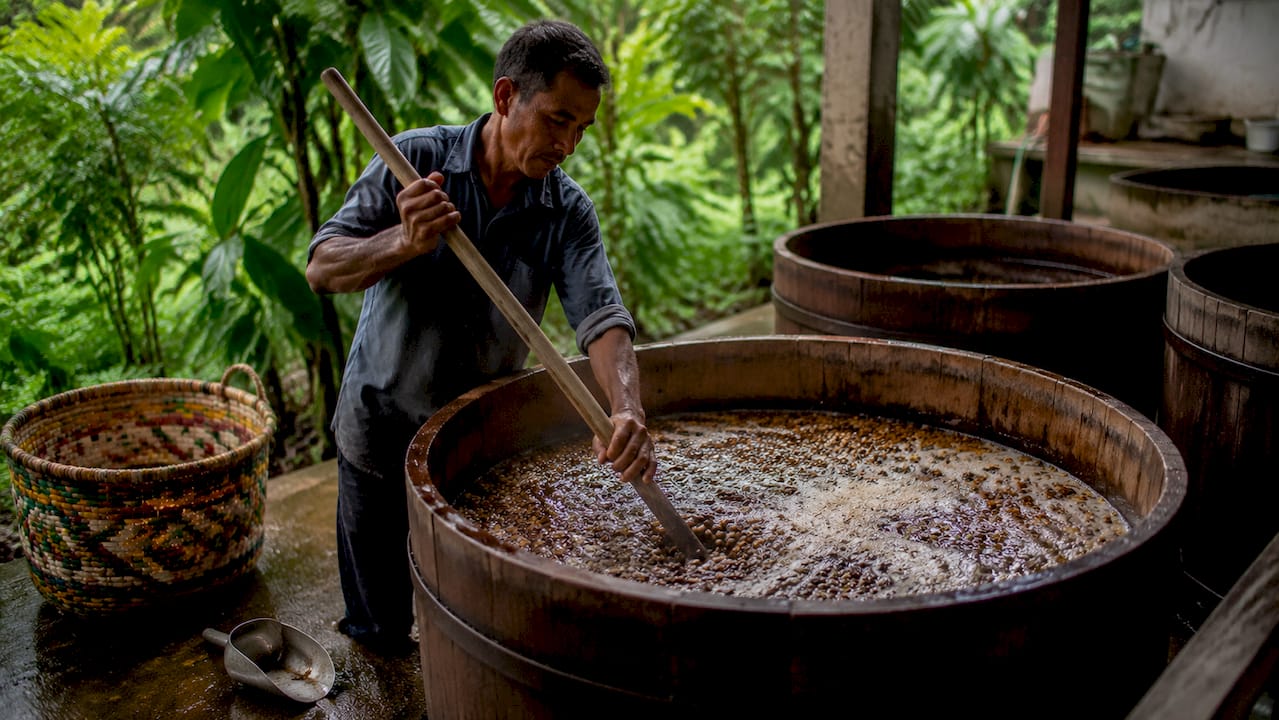
Ferment in tanks. The beans, still coated in a sticky layer called mucilage, go into fermentation tanks filled with water. Naturally occurring microbes break down the mucilage over 12–48 hours. The exact time depends on altitude, temperature, and the producer’s target flavor profile.
-
Wash with clean water. After fermentation, workers flush the beans with fresh water to remove all remaining mucilage. Water quality and volume matter. Contaminated water at this stage introduces off-flavors that show up clearly in the cup.
-
Dry to target moisture. Beans dry on raised beds, patios, or mechanical dryers until they reach 10–12% moisture content. Sun drying takes 7–15 days. Mechanical drying cuts that to 18–36 hours. Both methods require constant monitoring.
One detail most guides skip: fermentation does not stop when the beans leave the tank. Fermentation continues from the moment the cherry is picked until the bean reaches approximately 11% moisture. That means every hour of drying is still a fermentation variable the producer must control.
Pro Tip: Never rush the drying stage with excessive heat. Drying too fast causes case hardening, where the bean’s exterior hardens and traps moisture inside. That trapped moisture causes defects during roasting that no cupping score can recover from.
How does washed coffee flavor compare to other methods?
Washed coffee is the workhorse of specialty coffee because it removes what producers call “processing noise.” Fruit sugars and mucilage layers mask the bean’s true character in natural and honey processes. Washed processing removes those layers entirely, so what you taste is the soil, the altitude, and the variety itself.
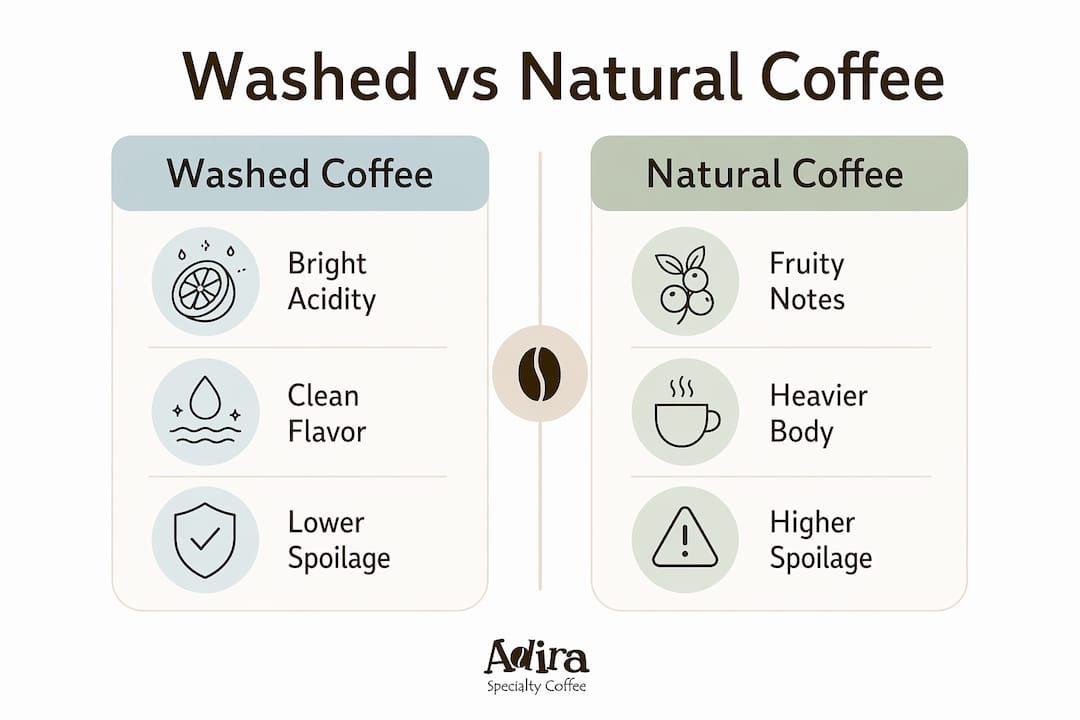
The flavor profile of a well-executed washed coffee reads like this: bright acidity, clarity, floral or citrus top notes, and a clean finish with no lingering sweetness. An Ethiopian Yirgacheffe processed this way tastes of bergamot and jasmine. The same bean processed naturally tastes of blueberry jam. Neither is wrong. They are just different conversations about the same origin.
Here is how the three main methods compare:
| Method | Flavor Profile | Spoilage Risk | Processing Complexity |
|---|---|---|---|
| Washed | Clean, bright, acidic, terroir-forward | Low | High (water, fermentation control) |
| Natural | Fruity, sweet, wine-like, heavy body | High | Low (sun-dry whole cherry) |
| Honey | Balanced, mild sweetness, medium body | Medium | Medium (partial mucilage left on) |
Washed coffees carry a lower spoilage risk than natural-processed beans, which is a major reason producers in humid climates favor the method. Lower spoilage risk translates to more consistent pricing and fewer rejected lots at export. The tradeoff is higher water usage and more infrastructure investment upfront.
Pro Tip: If you are building your coffee palate from scratch, start with washed single-origin coffees. The clarity of flavor makes it far easier to identify origin characteristics, which is the foundation of real coffee literacy.
What quality control challenges come with washed processing?
Washed processing exposes every flaw. Remove the fruit layers, and there is nowhere for defects to hide. That is exactly why washed processing serves as a diagnostic tool for producers and roasters. Any mishandling during fermentation or drying shows up immediately in the cup as sourness, mustiness, or flat, papery notes.
Specialty grading reflects this precision. Grade 1 washed coffee allows no more than 3 full defects per 300g sample. Grade 2 allows up to 8. Those numbers are tight. They exist because washed processing, done correctly, produces beans clean enough to meet them consistently.
The most common quality control challenges producers face include:
- Over-fermentation. Leaving beans in the tank too long produces a sour, vinegary flavor that cannot be roasted out. Temperature spikes in the tank accelerate microbial activity and shorten the safe fermentation window.
- Under-washing. Residual mucilage left on the bean after the wash stage ferments unevenly during drying, creating inconsistent flavor across a single lot.
- Case hardening. Drying too quickly at high heat hardens the bean’s surface while the interior stays wet. The result is spoilage during roasting.
- Water contamination. Reusing dirty wash water introduces bacteria that compete with the controlled fermentation process.
- Uneven drying. Beans piled too thick on drying beds dry unevenly, producing a mix of over-dried and under-dried beans in the same lot.
Water usage is the other major challenge. Traditional wet mills consume enormous volumes of fresh water. Modern wet mills now use water-recirculation systems and mechanical demucilagers that cut water consumption by up to 80%. That shift matters both environmentally and economically, especially in water-stressed growing regions like parts of Ethiopia and Central America.
Where is washed coffee produced and why does it matter to you?
Geography shapes which processing method a producer chooses. Washed processing dominates in regions with reliable access to clean water and predictable dry seasons for controlled drying. Ethiopia, Kenya, Colombia, Costa Rica, and Guatemala are the most prominent washed-coffee producing countries. Each brings a distinct terroir to the method.
Kenyan washed coffees are famous for their black currant acidity and full body, a result of the country’s double-fermentation technique where beans soak in clean water after the initial wash. Colombian washed coffees tend toward caramel sweetness with citrus brightness, shaped by the Andes’ altitude and two annual harvest cycles.
Producers choose the washed method for practical reasons beyond flavor. Competitive pricing is one of them. Consistent, defect-free lots command better prices at auction and from specialty buyers. Washed processing, despite its infrastructure costs, delivers that consistency more reliably than natural processing in humid climates.
For coffee lovers, this translates directly to what lands in your cup. Washed coffees are the best candidates for light to medium roast profiles because their clarity of flavor survives and rewards the gentler heat. Roasting a clean washed Ethiopian at light roast lets the floral and citrus notes fully express themselves. The same bean at dark roast loses those nuances to caramelization. Understanding how farms define flavor helps you make smarter choices about what to buy and how to brew it.
Washed coffees also work exceptionally well as single-origin offerings because the processing clarity makes origin character easy to identify. That is why specialty roasters like Adiracoffee source washed beans from cooperatives in Ethiopia and Colombia specifically for their single-origin lineup.
Key takeaways
Washed process coffee delivers the clearest expression of origin and variety because it removes all fruit layers before drying, leaving nothing between you and the bean’s true character.
| Point | Details |
|---|---|
| Core definition | Washed coffee has skin, pulp, and mucilage removed before drying for a clean, bright cup. |
| Fermentation window | Fermentation runs 12–48 hours in tanks, then continues through drying until beans reach 11% moisture. |
| Flavor clarity | Washed processing removes fruit “noise,” revealing terroir and varietal character more precisely than natural or honey methods. |
| Quality standard | Grade 1 washed coffee allows no more than 3 defects per 300g, reflecting the method’s precision demands. |
| Sustainability shift | Modern wet mills cut water use by up to 80% through recirculation systems and mechanical demucilagers. |
Why washed coffee changed how i think about coffee
I came to washed coffees the same way most people do: by accident. My first cup of a properly processed Ethiopian Yirgacheffe tasted like someone had dropped a jasmine flower into black tea. I thought the roaster had added something. They hadn’t. That was the bean.
What washed processing taught me is that coffee has a vocabulary, and fruit processing is not that vocabulary. It is an accent. A natural-processed coffee from the same farm as a washed lot will taste completely different, and neither version is telling you the truth about the bean alone. The washed version is. That is not a value judgment. It is a diagnostic fact.
For hobbyists building their palate, I always recommend starting with washed single-origin coffees from Ethiopia or Colombia. The flavor signals are clear and repeatable. You can taste the same origin across different roasters and start to understand what altitude, soil, and variety actually contribute. That kind of education is impossible with natural-processed coffees, where the fruit influence is so dominant it drowns out the subtler origin notes.
The producers who do this well are working incredibly hard. Fermentation control at altitude, in variable temperatures, with limited water infrastructure, is genuinely difficult. When you drink a clean, bright washed coffee, you are tasting that precision. It deserves recognition.
— Stefan
Try washed process coffees from Adiracoffee
If this article made you want to taste what washed processing actually does to a cup, Adiracoffee has exactly what you need. Every bean is roasted to order in small batches in California and shipped within days of roasting, so the clarity of a well-processed washed coffee comes through at its peak.

Adiracoffee sources washed beans from cooperatives in Ethiopia, Colombia, and Costa Rica. The single-origin collection is the best place to start if you want to taste origin character without distraction. For a balanced everyday cup built on clean, bright washed beans, the Love Blend delivers exactly that. Free US shipping on orders over $35, with a subscription option that saves you 10%.
FAQ
What does “washed process” mean in coffee?
Washed process means the coffee cherry’s skin, pulp, and mucilage are fully removed before the bean is dried. This produces a clean, bright cup that reflects the bean’s origin and variety without fruit influence.
How long does washed coffee fermentation take?
Fermentation in the tank runs 12–48 hours depending on temperature and altitude. Fermentation technically continues through the drying stage until the bean reaches approximately 11% moisture content.
Is washed coffee better than natural process coffee?
Neither method is objectively better. Washed coffee offers more clarity and lower spoilage risk, making it ideal for tasting origin character. Natural process coffee delivers more fruit sweetness and body, which many drinkers prefer.
Why is washed coffee used for specialty grading?
Washed processing removes fruit layers that can mask defects, making flavor assessment more precise. Grade 1 washed coffee must have 3 or fewer defects per 300g, a standard that reflects the method’s diagnostic clarity.
What regions produce the best washed coffees?
Ethiopia, Kenya, Colombia, and Costa Rica are the most recognized producers of high-quality washed coffees. Each region’s altitude, soil, and climate contribute distinct flavor characteristics that washed processing makes clearly identifiable in the cup.