
TL;DR:
- Altitude influences coffee taste by slowing bean maturation, resulting in denser beans with brighter acidity and complex flavors. Higher elevations promote organic acid development and aromatic precursors, which are best preserved through light roasting and proper processing. However, final cup quality depends on multiple factors like processing, roasting, and brewing, not altitude alone.
Altitude is the single most discussed variable in specialty coffee, and for good reason. The role of altitude in coffee taste is direct: higher elevations slow bean maturation, which forces the plant to build denser, more chemically complex seeds. Those seeds carry brighter acidity, more aromatic compounds, and greater flavor depth into your cup. Research from Coffea arabica studies in Minas Gerais, Brazil confirms that higher-altitude regions show measurably higher acidity levels tied to organic acid profiles shaped by elevation. Understanding this connection helps you choose better beans and brew them smarter.
How altitude shapes coffee bean development
Altitude works on coffee through two physical forces: lower temperatures and reduced atmospheric pressure. Both slow the coffee cherry’s ripening cycle. That slower maturation is not a flaw. It is the mechanism behind everything specialty roasters prize.
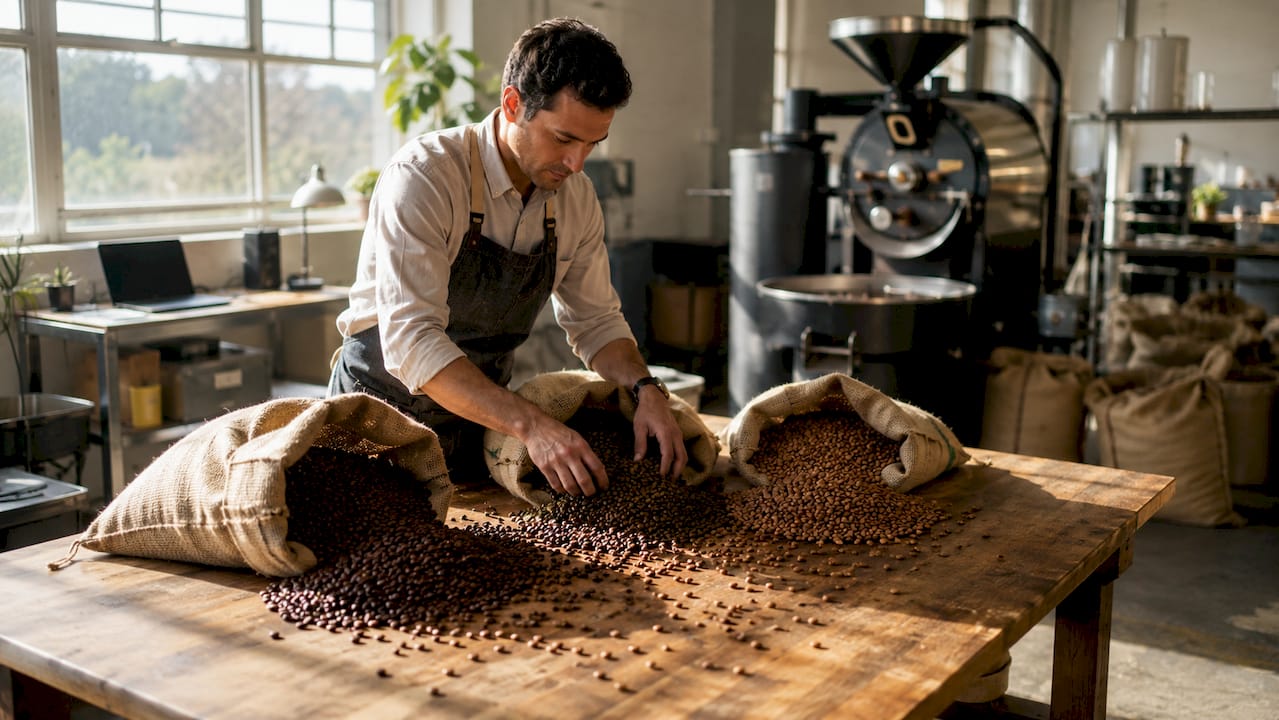
When a coffee cherry ripens slowly, the plant has more time to convert starches into complex sugars and to build the organic acid and aromatic precursor compounds that survive roasting. Cooler temperatures at high altitudes contribute to this slower biochemical development, producing beans with a denser physical structure. Density matters because it determines how much flavor a bean can hold and how evenly it roasts.
Here is a practical way to think about it. A coffee cherry grown at 1,800 meters above sea level in Colombia’s Huila region might take several weeks longer to ripen than one grown at 900 meters in a lower valley. That extra time translates directly into a more layered cup. The low-altitude bean, ripened quickly under heat and humidity, builds fewer of those complex precursors. Its flavor profile tends toward flat, earthy, or simply dull.
The role of altitude in coffee growth also affects bean hardness. Denser beans from slower maturation provide concentrated flavors and aromatic complexity that skilled roasters can work with. Soft, low-altitude beans are more prone to uneven roasting and scorching. This is why specialty roasters in California, including Adiracoffee, seek out beans from farms above 1,500 meters in Ethiopia, Colombia, and Costa Rica.
- Low altitude (below 900 m): Faster ripening, lower density, mild or flat flavor, earthy or woody notes.
- Medium altitude (900–1,500 m): Balanced sweetness and mild acidity, chocolate and nutty profiles common.
- High altitude (above 1,500 m): Slow maturation, high density, bright acidity, complex fruit and floral notes.
Pro Tip: When you see “SHB” (Strictly Hard Bean) or “SHG” (Strictly High Grown) on a coffee bag, that label refers directly to bean density achieved through high-altitude cultivation. It is a reliable shorthand for flavor potential.
What flavor notes does altitude actually produce?
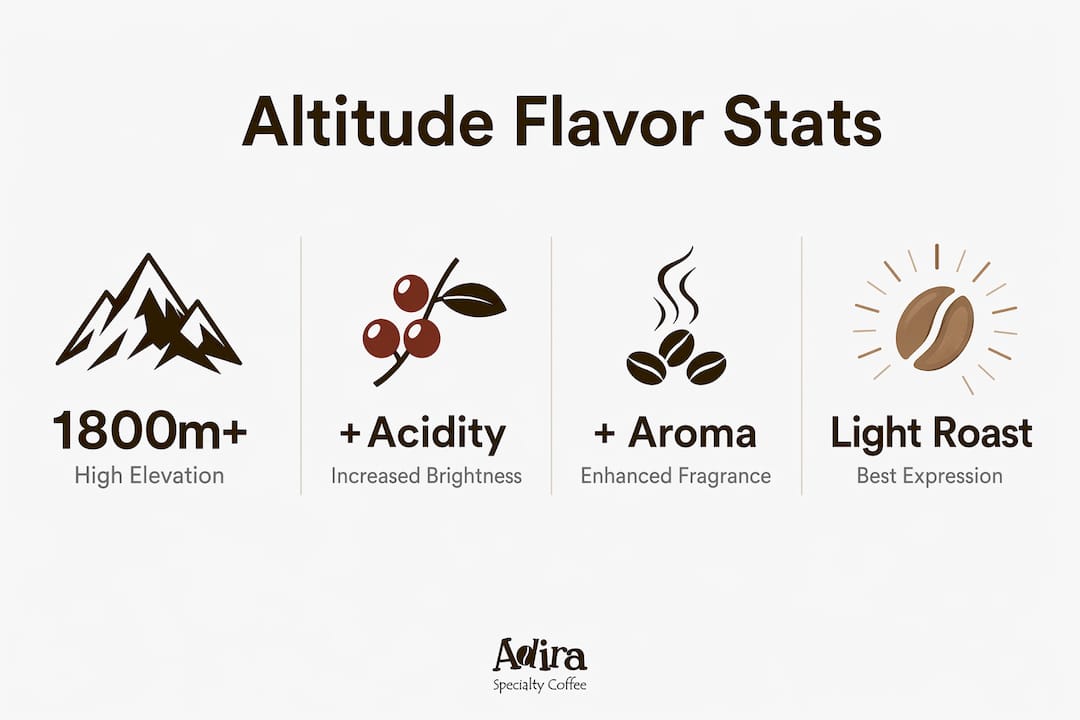
Altitude effects on coffee flavor are most visible in three sensory categories: acidity, aroma intensity, and flavor complexity. Each one traces back to the biochemical changes that happen during slow, high-altitude maturation.
Acidity in coffee is not a single compound. Organic acids such as citric, malic, and phosphoric acids vary with altitude and drive the bright, clean acidity that specialty drinkers describe as “lively” or “juicy.” Citric acid produces lemon and orange notes. Malic acid creates the green apple or stone fruit quality you find in Ethiopian naturals. Phosphoric acid adds a sharp, almost effervescent quality that shows up in some Kenyan coffees. Lower-altitude beans produce fewer of these acids, which is why they taste flatter.
Aroma intensity also climbs with elevation. The aromatic precursors built during slow maturation survive light roasting and release as volatile compounds in the cup. This is why a high-altitude Ethiopian Yirgacheffe smells like jasmine and bergamot before you even take a sip.
Here is what to expect across the altitude spectrum:
- High altitude (above 1,500 m): Bright citrus and stone fruit acidity, floral aromas, wine-like complexity, clean finish
- Medium altitude (900–1,500 m): Mild acidity, caramel sweetness, chocolate and hazelnut notes, smooth body
- Low altitude (below 900 m): Low acidity, heavy body, earthy or woody tones, simple flavor structure
Acidity perception in coffee is multifaceted and shaped by the full composition of these organic acids, not just one compound in isolation. That complexity is exactly what makes high-altitude coffees worth seeking out.
Does roasting level change how altitude flavors express?
Roasting is where altitude’s potential either gets preserved or buried. Light roasts preserve acidity and floral-fruity notes while dark roasts increase bitterness and reduce the altitude-related sweetness and acidity that make high-elevation beans distinctive. This is the most practical piece of knowledge a home brewer can carry into a coffee purchase.
| Roast level | Effect on altitude flavors | Best for |
|---|---|---|
| Light | Preserves citrus acidity, floral aromas, fruit complexity | High-altitude Ethiopia, Colombia, Costa Rica |
| Medium | Balances acidity with sweetness and body | Medium to high-altitude origins |
| Dark | Reduces acidity, increases bitterness and body | Lower-altitude origins or espresso blends |
Processing method adds another layer. Fermentation methods influence sweetness, bitterness, and overall sensory quality, demonstrating a direct interplay with altitude-driven flavor precursors. A washed process on a high-altitude Colombian bean will emphasize clean acidity and clarity. A natural process on the same bean will amplify fruit sweetness and body, sometimes at the expense of that bright acidity. Neither is wrong. They are different expressions of the same altitude potential. You can read more about this in Adiracoffee’s breakdown of processing method effects on flavor.
Pro Tip: If you want to taste altitude directly, buy a light-roasted single-origin from above 1,800 meters and brew it as a pour-over. That method preserves every aromatic compound the altitude built into the bean. A dark espresso roast of the same bean will taste almost unrecognizable.
The altitude-linked acidity and aroma are best perceived in lighter roasts. Choosing a dark roast for a high-altitude specialty bean is not wrong, but you are trading the elevation-driven complexity for roast-driven bitterness and body. Know the trade-off before you make it.
Why altitude alone doesn’t guarantee a great cup
Altitude sets the ceiling for flavor potential. It does not guarantee the cup reaches it. Altitude influences bean chemistry, but cup quality varies with roasting, grinding, storage, and brewing. Every step after harvest either builds on or erodes what the elevation created.
Several factors interact with altitude to shape the final result:
- Latitude and temperature: A farm at 1,500 meters near the equator in Ethiopia experiences different temperatures than one at the same elevation in Mexico. Temperature, not just altitude, drives maturation speed.
- Rainfall and soil: Adequate rainfall and mineral-rich volcanic soil amplify the flavor compounds altitude initiates. Drought stress at any elevation can flatten a bean’s profile.
- Selective harvesting: Picking only fully ripe cherries preserves the sugar and acid balance altitude built. Mixed-ripeness harvesting undermines it. Selective harvesting of ripe cherries is one of the clearest indicators of a farm’s commitment to quality.
- Storage and grinding: Even a perfect high-altitude bean loses its aromatic complexity within weeks of grinding. Whole-bean storage and grinding just before brewing are non-negotiable for tasting altitude’s full effect.
- Brewing method: A French press mutes acidity through immersion and sediment. A Chemex or V60 pour-over amplifies it. Your brewing choice shapes which altitude-driven notes reach your palate.
The broader concept here is terroir, the French wine term now used widely in specialty coffee to describe the full environmental and agricultural context of a bean’s origin. Altitude is the most cited terroir variable, but it works in combination with all the factors above. Adiracoffee’s guide to key factors affecting coffee flavor covers this full picture in detail.
Key takeaways
Altitude is the most reliable predictor of flavor potential in specialty coffee, but roast level and processing determine how much of that potential reaches your cup.
| Point | Details |
|---|---|
| Altitude slows maturation | Cooler, high-elevation conditions build denser beans with more complex sugars and organic acids. |
| Organic acids define acidity | Citric, malic, and phosphoric acids shaped by altitude create the bright, layered acidity in specialty coffee. |
| Light roasts reveal altitude | Choose light to medium roasts for high-altitude origins to preserve floral and fruit-forward notes. |
| Processing modifies the result | Washed and natural processing methods amplify or redirect altitude-driven flavor precursors differently. |
| Terroir is the full picture | Latitude, rainfall, harvesting, and brewing all interact with altitude to determine final cup quality. |
Altitude is a starting point, not the whole story
I have tasted coffees from 2,000-meter farms in Ethiopia that were flat and forgettable, and I have had medium-altitude Colombian beans that were extraordinary. The altitude was not wrong in the first case. The processing was. That experience changed how I think about buying and recommending coffee.
The most common mistake I see from home brewers is treating altitude as a quality stamp. They see “1,900 meters” on a bag and assume the cup will be bright and complex. But if that bean was over-fermented during processing, or roasted too dark to hit a commercial flavor profile, the elevation advantage is gone. Altitude creates the raw material. Everything downstream determines the outcome.
My practical advice: use altitude as a first filter, not a final judgment. If a bag lists an origin above 1,500 meters and a light to medium roast, you have a high probability of tasting something interesting. Then look at the processing method and the roaster’s track record. At Adiracoffee, Stefan and Ekaterina built the sourcing model around exactly this logic: find high-altitude farms with disciplined post-harvest practices, then roast light enough to let the origin speak.
One more thing worth saying clearly. The coffee industry uses altitude tiers on packaging, but those numbers are not standardized across countries. “High grown” in Guatemala starts at 1,350 meters. In Ethiopia, farms routinely exceed 2,000 meters. Compare altitude numbers only within the same origin country, not across them.
— Stefan
Taste altitude-driven coffee from Adiracoffee
If this article made you want to actually taste what altitude does to a cup, Adiracoffee sources directly from high-altitude farms in Ethiopia, Colombia, Costa Rica, and Sumatra. Every bag is roasted to order in small batches in California and ships within days of roasting.

The single-origin collection is the clearest way to taste altitude effects side by side. Each origin is labeled with farm details and roast level so you can match the bean to the brewing method. For something approachable and altitude-forward, the Love Blend brings together high-grown origins in a balanced, fruit-forward profile. Free US shipping on orders over $35, and subscriptions save 10%.
FAQ
What is the role of altitude in coffee taste?
Altitude slows coffee cherry maturation, which allows beans to develop denser structures, higher organic acid content, and more complex aromatic compounds. The result is brighter acidity, greater flavor complexity, and more pronounced floral and fruit notes in the cup.
Why does high-altitude coffee taste more acidic?
Higher-altitude growing conditions produce elevated concentrations of citric, malic, and phosphoric acids in the bean. These organic acids are the direct source of the bright, clean acidity that defines specialty coffee from regions like Ethiopia and Colombia.
Does roasting affect altitude-driven coffee flavors?
Yes. Light roasts preserve altitude-linked acidity and aromatic complexity, while dark roasts shift the sensory balance toward bitterness and body, effectively masking what the elevation built into the bean.
What altitude produces the best coffee flavor?
Most specialty coffee is grown between 1,200 and 2,200 meters above sea level. Beans above 1,500 meters consistently show the highest density and flavor complexity, though final cup quality also depends on processing, roasting, and brewing method.
Does processing method change how altitude flavors come through?
Fermentation and post-harvest processing directly modify the volatile and acid profiles that altitude creates. A washed process emphasizes clean acidity, while a natural process amplifies sweetness and body, redirecting rather than erasing the altitude-driven character.