
TL;DR:
- Many certifications exclude small farms and do not guarantee farmers a living income.
- True ethical sourcing relies on environmental, social, and economic pillars that must be balanced.
Buying coffee that’s genuinely good for farmers, ecosystems, and communities should be straightforward. It isn’t. Many well-intentioned coffee lovers reach for a bag stamped with a familiar certification logo and assume that’s enough. But coffee certifications can exclude small farms and don’t always guarantee a living income for growers. Understanding this gap is the first step toward making purchases that create real, lasting change. This guide walks you through every layer of ethical sourcing, from decoding labels to building the kind of knowledge that makes your next bag matter.
Table of Contents
- What does ethical coffee sourcing mean?
- What you need before you start: Key certifications and sourcing frameworks
- Step-by-step: How to source coffee ethically
- Challenges, trade-offs, and what to watch for
- The uncomfortable truth: Living income and layered sourcing beat labels
- Support ethical sourcing with every cup
- Frequently asked questions
Key Takeaways
| Point | Details |
|---|---|
| Labels alone aren’t enough | Ethical excellence comes from transparency, fair prices, and ongoing supplier relationships—not just certifications. |
| Know the certification pros and cons | Each label has strengths and gaps, especially for smallholder inclusion and price fairness. |
| Demand traceability and price transparency | Insist on detailed sourcing info and published farmgate prices for true accountability. |
| Blend multiple strategies | The best results use both certified and direct trade approaches to support farmers and the environment. |
| Stay critical and curious | Question claims, check for red flags like greenwashing, and always look deeper than the label. |
What does ethical coffee sourcing mean?
The term “ethical” gets thrown around a lot in specialty coffee. But genuine ethical sourcing isn’t a single checkbox. It sits on three interconnected pillars: environmental stewardship, social equity, and economic fairness. If any one of those pillars is weak, the whole structure tilts.
On the environmental side, truly ethical sourcing means caring about biodiversity and farming choices, carbon footprints, and whether farms use agroforestry to protect native habitats. On the social side, it means safe working conditions, fair wages, and respect for local communities. Economically, it means farmers receive prices that actually reflect the cost of production and support a dignified standard of living.
Here’s something worth knowing: ethical sourcing directly affects the taste and traceability of what ends up in your cup. Farms that practice shade-growing and careful soil management produce beans with more complex flavor profiles. When roasters know exactly which farm a lot came from, they can dial in the roast to honor those flavors. Understanding why coffee bean ethics matter reveals that quality and integrity aren’t competing goals. They reinforce each other.
| Approach | Pros | Cons | Typical cost to farmer |
|---|---|---|---|
| Fair Trade | Price floor, organized standards | Excludes smallest farms, premiums can be diluted | Certification fees reduce net benefit |
| Rainforest Alliance | Environmental and social standards | Lower price floors, complex audit system | Audit fees up to 5.5 cents/lb |
| Organic | No synthetic inputs, premiums available | Cost and transition time are significant | Expensive third-party audits |
| Bird-Friendly | Biodiversity protection, shade-grown | Very limited market penetration | Small premium, niche market |
| Direct Trade | Highest prices, personal relationships | No third-party verification, no audit trail | Varies widely by roaster |
Key certifications each focus on different values:
- Fair Trade: Guarantees a minimum price ($1.40 to $1.80 per pound depending on type, plus a social premium) per Fair Trade certification guidelines
- Rainforest Alliance: Prioritizes environmental and social standards without a strict price floor
- Organic: Prohibits synthetic inputs and adds roughly $0.40/lb in premium for certified organic Arabica
- Bird-Friendly: Developed by the Smithsonian; requires shade-grown practices that protect migratory bird habitats
- Direct Trade: A roaster-farmer relationship model, not a third-party certification, often paying 25 to 100% or more above Fair Trade minimums
What’s fascinating, and often overlooked, is how closely this mirrors the broader conversation happening in vineyard sustainability best practices, where producers have learned that combining environmental certifications with direct buyer relationships achieves outcomes neither approach manages alone.
Ethical sourcing is also a window into coffee transparency and ethics. Knowing where your coffee was grown, by whom, and under what conditions gives you the authority to make a genuinely informed choice.
What you need before you start: Key certifications and sourcing frameworks
Understanding what ethical sourcing means is the foundation. Now you need to get fluent in the tools that make it possible.
| Certification | Audit cost | Coverage | Strengths | Limitations |
|---|---|---|---|---|
| Fair Trade | Moderate | Price floor + social premium | Safety net for organized coops | Excludes micro-farms, min price often below living income |
| Rainforest Alliance | Moderate to high | Environmental and social | Broad standards, recognized globally | Not a price guarantee |
| Organic | High | Agricultural inputs | Health and environmental appeal | Expensive; limited direct farmer benefit |
| Bird-Friendly | Low to moderate | Shade canopy, biodiversity | Strongest biodiversity protection | Very niche, few certified farms |
| Direct Trade | None (self-governed) | Farm-to-roaster relationship | Highest prices, deepest transparency | No external audit; quality varies |
The most important thing to understand about this table: no single row is the answer. Fair Trade minimums start at $1.40/lb for conventional Arabica, with an organic premium of $0.40/lb on top. That’s meaningful protection, especially in volatile market years. But certification gaps mean Direct Trade, while unaudited, often pays 25 to 100% higher than Fair Trade minimums and builds the personal relationships that change long-term outcomes for farmers.
The origins of ethical coffee sourcing matter because geography, harvest season, processing method, and farm size all interact with how certifications apply and what premiums actually reach growers. A large cooperative in Colombia navigates certification differently than a family-run micro-lot farm in Sumatra.
Why small farm impact matters: Research consistently shows that smallholders are the backbone of global coffee production. Over 70% of the world’s coffee comes from farms under 10 hectares. Understanding small farm coffee impact reveals that the most flavorful, traceable lots often come from exactly the farms that certification systems struggle to serve.
Pro Tip: When evaluating any supplier, ask whether their certification fees are absorbed at the coop level or passed down to individual growers. Fees that consume 12 to 18% of the premium can erode the very benefit the certification is supposed to deliver.
Beyond labels, the most powerful signals of ethical sourcing include traceability to individual lots, documented farm visits, and full transparency on prices paid. These practices don’t have a logo. They require trust built over time.
Step-by-step: How to source coffee ethically
With background knowledge and frameworks in place, you’re ready to begin the actual sourcing process. Here’s how to do it right.
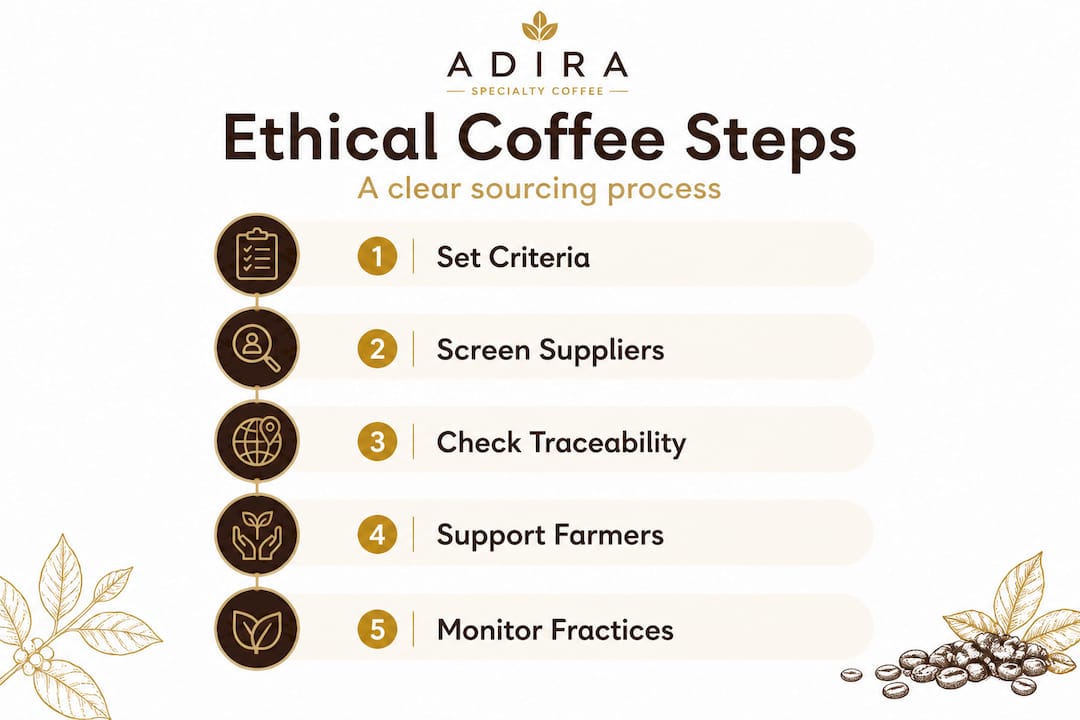
1. Define your sourcing criteria Before contacting a single supplier, get clear on your non-negotiables. Do you require a specific certification? A minimum price above Fair Trade floors? Documented shade-growing? Write these down as a checklist, not a wish list.
2. Screen potential suppliers Request sourcing documents from every candidate. Look for lot codes traceable to a specific farm, cooperative, or village. Ask for evidence of prices paid at the farmgate or FOB (free on board, meaning the price at the point of export). Suppliers who can’t or won’t provide this information are a red flag.
3. Verify traceability Best practices in sustainable coffee sourcing include supplier checklists, lot-level traceability, contracts with prepayment options, due diligence reviews, and benchmarking prices against actual production costs. Any sourcing relationship that can’t satisfy at least three of these criteria deserves serious scrutiny.
4. Negotiate contracts that support farmers Prepayment matters. Farmers who receive partial payment before harvest can invest in better processing equipment, cover seasonal labor costs, and avoid predatory local lending. A contract that includes even 20 to 30% prepayment signals a genuine partnership.
5. Make an informed choice about ethical coffee selection The most effective buying decisions combine certification as a baseline with verified traceability and published pricing. A roaster who publicly shares the farmgate price they paid is giving you real accountability.
6. Monitor ongoing practices Ethical sourcing isn’t a one-time audit. Schedule regular check-ins with suppliers, track whether premiums reach farmers, and stay current on labor and environmental conditions in producing regions.
One sobering statistic worth knowing: only 18 to 37% of some cooperatives’ certified output actually gets sold under Fair Trade terms. The rest enters the commodity market at lower prices. That means a Fair Trade label tells you the potential for ethical terms, not the guarantee.
Pro Tip: Publishing the FOB or farmgate price you paid is one of the most credible transparency signals available. It’s not yet standard practice, but it’s quickly becoming the benchmark that serious buyers expect.
Challenges, trade-offs, and what to watch for
Even the best strategies hit real-world hurdles. Being aware of these challenges helps you make smarter, more realistic choices.
- Certification costs act as barriers. As noted above, fees can consume 12 to 18% of premiums, and audit fees can reach 5.5 cents per pound. For the smallest farms, that math doesn’t work.
- Greenwashing is widespread. “Direct Trade” is a term with no legal definition and no external verification. Any roaster can print it on a bag. Without published prices or farm visit documentation, it’s a marketing claim, not a sourcing standard.
- Forced labor risks are real and recent. In 2026, US authorities blocked Mexican coffee imports linked to forced labor violations. This is not a distant supply chain problem. It’s an active enforcement issue that any serious ethical buyer needs to factor into supplier due diligence.
- Environmental impact is not uniform. A carbon footprint benchmark for specialty coffee from Yemen smallholders measured 3.14 kg CO2 equivalent per kilogram of green coffee, with 90% of that impact coming from cultivation practices. That number shifts dramatically based on whether farms use agroforestry, cover crops, or synthetic fertilizers.
“The pursuit of ethical sourcing requires ongoing vigilance, not just an annual certification renewal. The most dangerous phrase in supply chain management is ‘we checked that box last year.’”
Agroforestry is particularly worth understanding. Coffee grown under shade trees sequesters carbon, supports bird populations, and often produces more nuanced flavor. But it typically yields less per hectare than sun-grown coffee. That trade-off is real. Ethical sourcing means accepting some constraints on volume in exchange for genuine environmental value.
The uncomfortable truth: Living income and layered sourcing beat labels
Here’s the view we’ve developed working directly with farms across Colombia, Ethiopia, Guatemala, and beyond: the coffee industry’s obsession with certification logos is both understandable and insufficient.
Certifications are tools. They set floors. They create common standards and give buyers a shorthand for screening suppliers. That matters. But when a minimum Fair Trade price of $1.40/lb falls below the actual cost of sustainable production in many origins, the label provides comfort without delivering change.
Best practices consistently point to a layered approach: start with certifications as your baseline, then build direct relationships with farmers and cooperatives, and then go public with the prices you pay. That last piece is the hardest and the most transformative. Publishing farmgate or FOB prices opens a brand to accountability that no audit can replicate.
Living income, not certification status, is the actual goal. A living income means a farmer can cover production costs, support their family, invest in farm improvements, and weather a bad harvest year without going into debt. Reaching that threshold requires paying prices well above commodity floors. It often means paying above Fair Trade minimums too.
For consumers, this means looking deeper than the label. Ask which farms a roaster works with. Ask how long those relationships have lasted. Ask whether the roaster has visited. The answers to those questions tell you far more than any certification logo. Small business coffee brands that stake their identity on sourcing integrity tend to answer those questions willingly and specifically.
The most important shift in ethical sourcing thinking right now is moving from “does this bag have the right sticker” to “does this brand publish what they pay and why.” That’s the standard worth holding brands to.
Support ethical sourcing with every cup
You now have a clear framework for evaluating every coffee purchase you make. The next step is putting it into practice with coffees you can actually trust.
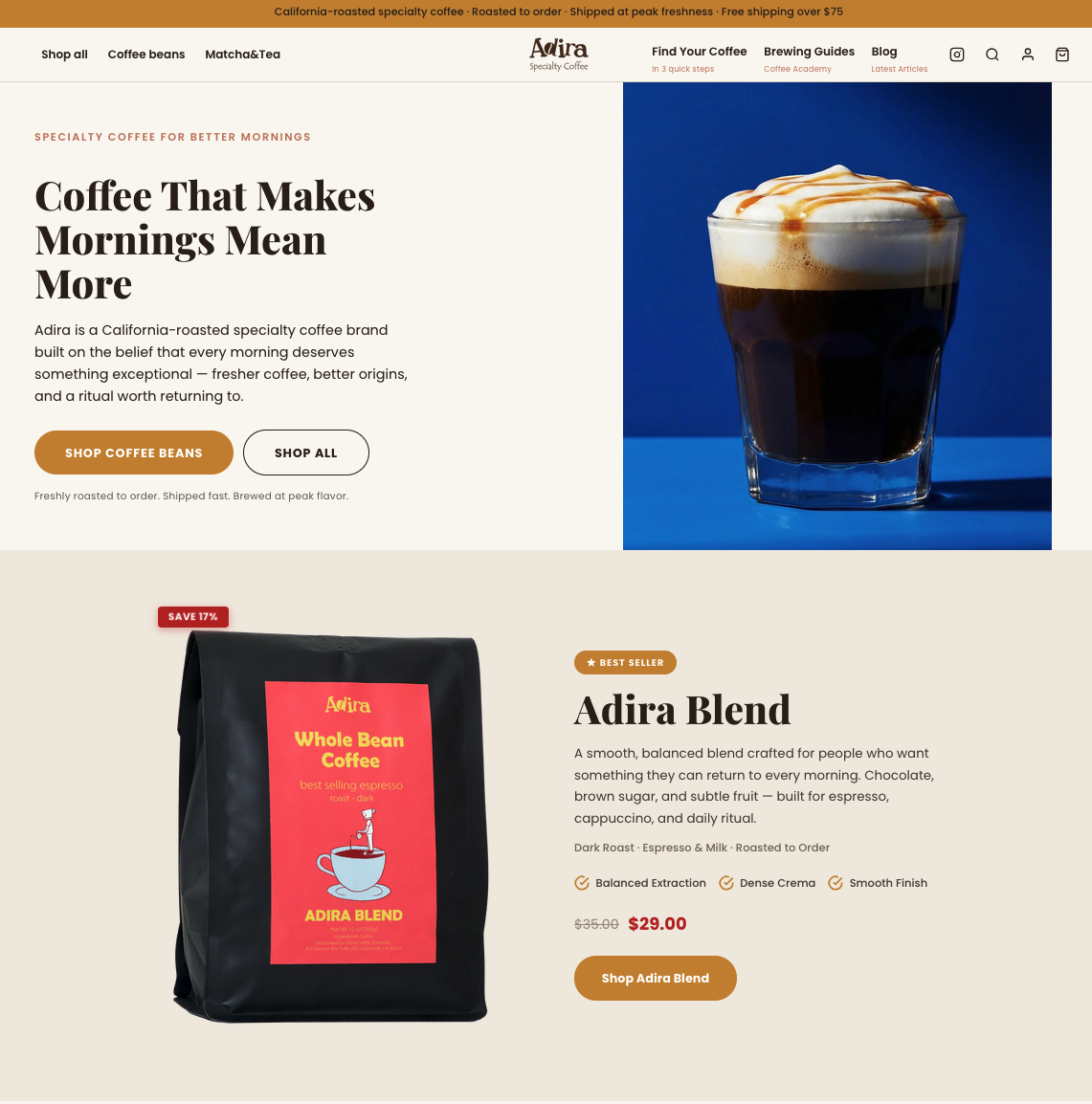
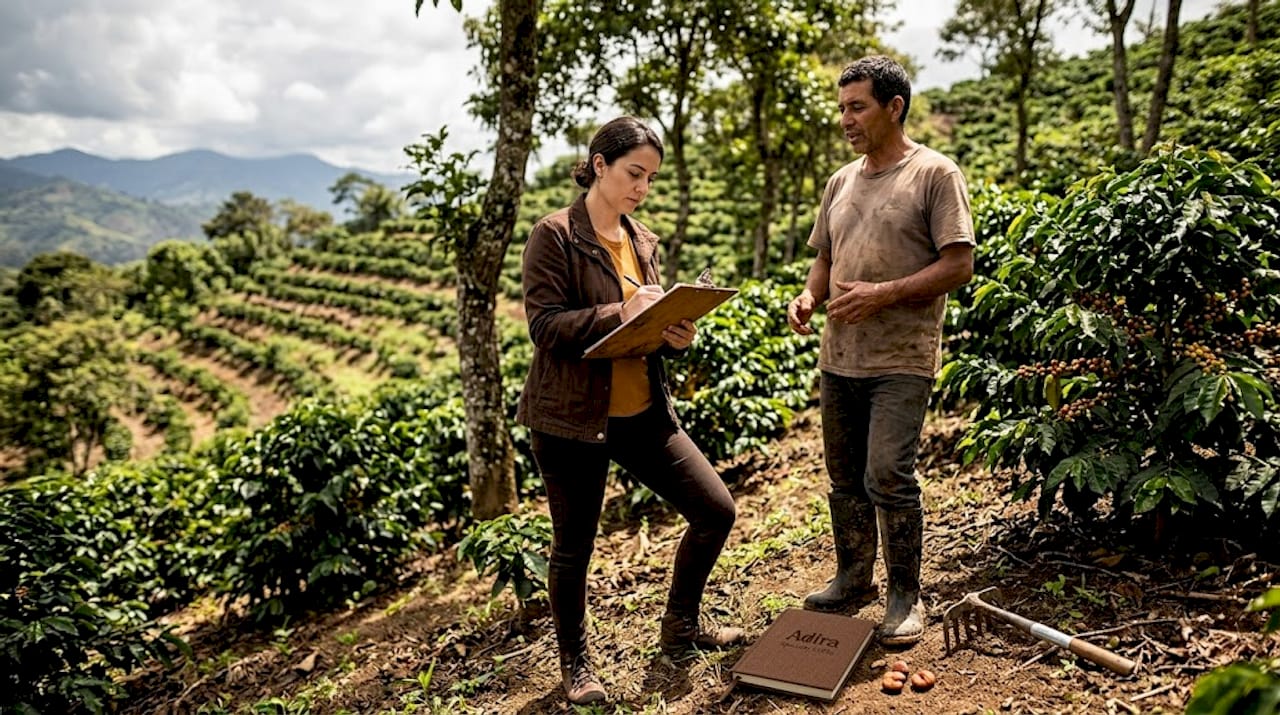
At Adira Coffee, we work with around 50 farms across Colombia, Ethiopia, Costa Rica, Guatemala, Brazil, and Sumatra, and we take the sourcing standards outlined in this guide seriously. Every lot we roast is selected for both flavor and integrity. If you want to explore ethical coffee that reflects genuine sourcing relationships, start with our full collection of responsibly sourced beans. If you’re looking for a single-origin example of what traceable, relationship-driven sourcing can taste like, our Colombian ethical coffee is a strong place to begin. Every bag you choose sends a signal about the standards the industry should meet.
Frequently asked questions
Is Fair Trade coffee always the most ethical option?
Fair Trade offers a meaningful price floor and safety net, but it often excludes small farms and may not deliver a living income, making it a starting point rather than a complete ethical standard.
How can I check if my coffee is truly traceable to the farm?
Look for batch and lot codes on the packaging, and check whether the roaster publishes farmgate or FOB prices and documents the specific exporter, cooperative, or farm the coffee came from.
What can I do if I want to support smallholder farmers?
Choose roasters who document direct relationships with small cooperatives, conduct regular farm visits, and practice transparent price reporting rather than relying solely on certification logos.
Do certifications always guarantee better environmental outcomes?
Certifications improve baseline standards, but actual environmental impact depends heavily on farm-level practices, with Yemen smallholder data showing 3.14 kg CO2 equivalent per kilogram of green coffee driven largely by cultivation methods.
What are hidden risks when buying ‘ethical’ coffee?
Beyond greenwashing and certification cost barriers that hurt small farms, recent enforcement actions including 2026 US import blocks for forced labor violations show that supply chain risks require active, ongoing due diligence.
Recommended
- Coffee transparency explained: how to choose ethical brews – Adira Coffee US
- Why Small Business Coffee Brands Matter: Freshness & Ethics – Adira Coffee US
- Why buy local roasted coffee: fresh flavor and ethics – Adira Coffee US
- Why Quality Coffee Beans Matter for Flavor and Ethics – Adira Coffee US
- Healthy alternatives to coffee: Natural energy boosts for focus – Lucent