
TL;DR:
- Coffee prices vary sharply from under $0.20 per cup for supermarket ground coffee to over $1.00 for specialty beans at home. Quality factors like origin, processing, and roast level influence prices, with specialty coffee costing more due to ethical sourcing and detailed evaluation. Home brewing significantly reduces costs compared to café visits, but freshness and equipment choices are essential for maximizing value.
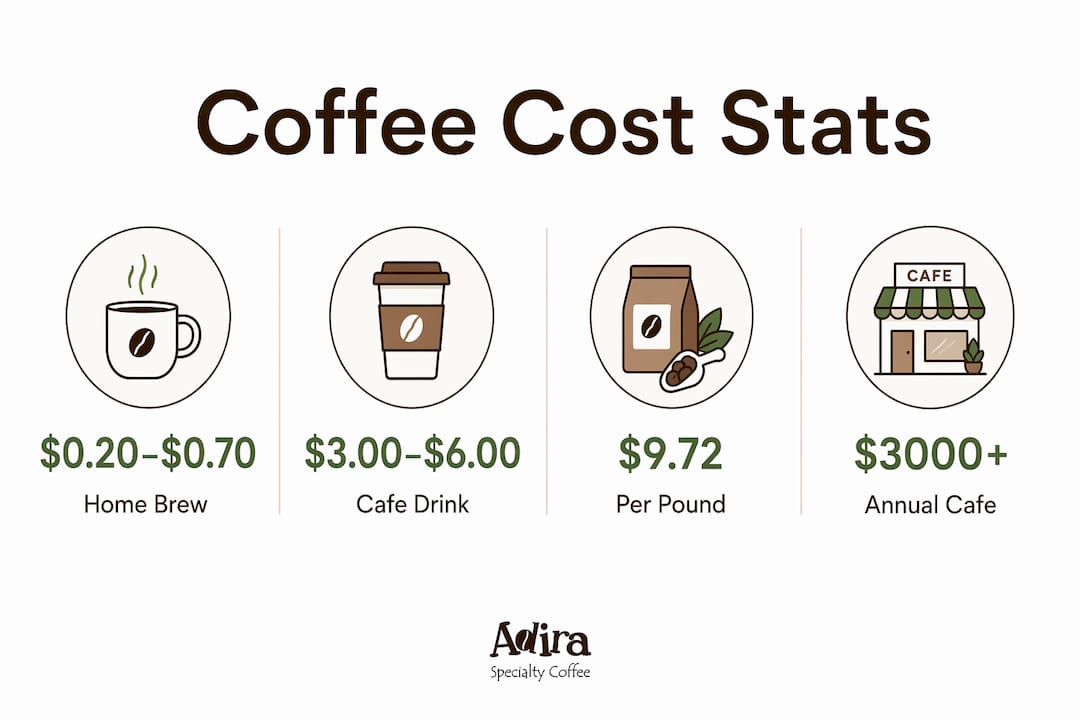
The cost of coffee ranges from under $0.20 per cup for supermarket ground coffee to well over $1.00 per cup for specialty single-origin beans brewed at home. At the grocery store, the average price hit $9.72 per pound in april 2026, a 39% increase since january 2025. Specialty coffee tells a different story: the average specialty price sits at $32.75 per pound, with median bags closer to $19.78. Understanding where your money actually goes, and how much coffee costs across different types and brewing methods, is the fastest way to spend less without drinking worse.
How much is coffee, and what drives the price?
Coffee price is determined by three factors: origin quality, processing method, and roast level. These three variables interact in ways that are not always obvious, and the relationship between price and quality is not linear.
Light roasts cost about 14% more than dark roasts on average. That premium exists because light roasting preserves more of the bean’s original character, which means the raw material has to be good enough to stand on its own. Dark roasting can mask defects, so roasters can use lower-grade beans and still produce a drinkable cup.
Specialty coffee carries a price premium for several concrete reasons:
- Hand-selective harvesting picks only ripe cherries, which increases labor costs significantly compared to strip harvesting.
- Small-batch roasting reduces throughput and raises per-pound roasting costs.
- Traceability requires documentation from farm to cup, adding administrative overhead.
- Quality scoring by certified Q Graders adds a professional evaluation cost before a coffee can be labeled specialty grade.
The premium paid for specialty coffee sourcing reflects ethical sourcing and superior quality traceability, not just commodity costs. That distinction matters when you are comparing a $10 supermarket bag to a $22 single-origin bag and wondering what you are actually paying for.
Pro Tip: When comparing coffee prices per pound, divide by the number of cups you get per bag. A 12-ounce bag of specialty coffee at $22 yields roughly 20 cups at standard brew ratios, putting the per-cup cost at about $1.10. That number is far more useful than the sticker price.
What does coffee cost per cup across brewing methods?
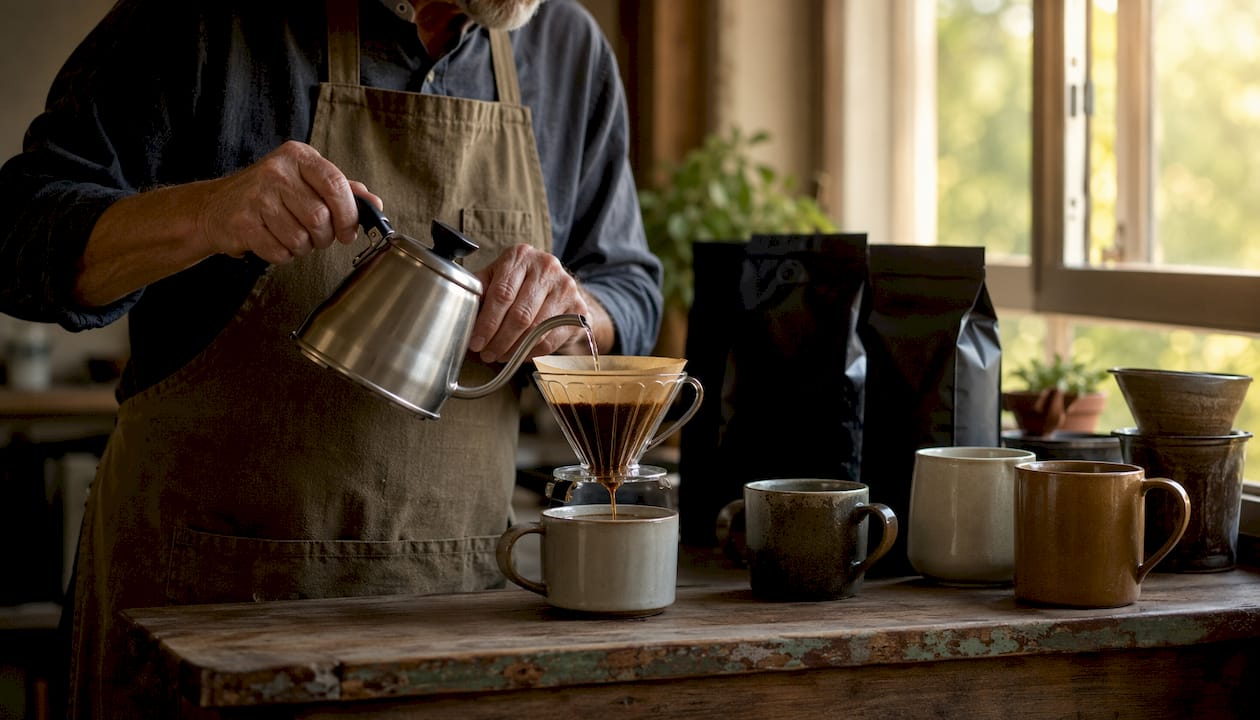
The price of coffee per cup varies more by where and how you brew it than by the beans themselves. The gap between home brewing and café visits is larger than most people realize.
| Brewing method | Estimated cost per cup | Annual cost (daily drinker) |
|---|---|---|
| Supermarket drip (home) | $0.20–$0.70 | Under $500 |
| Specialty coffee (home brew) | $0.75–$1.20 | $275–$440 |
| Coffee shop (standard drink) | $3.00–$6.00 | Over $3,000 |
Home brewing costs $0.20–$0.70 per cup, while café beverages average $3.00–$6.00. That gap compounds fast: daily café drinkers spend over $3,000 per year, while equivalent home brewing costs under $500 after equipment is factored in.
Equipment cost is the variable most buyers ignore. A basic drip machine runs $30–$80. A quality burr grinder, which makes a measurable difference in extraction consistency, costs $60–$150 for a reliable entry-level model. Spread over two years of daily use, that equipment investment adds less than $0.15 per cup. The math favors home brewing decisively.
Time is the other factor. Many people assume café visits are faster than brewing at home. Time value calculations show that a well-set-up home brewing station takes less total time per cup than driving to a café, ordering, and waiting. The convenience advantage of coffee shops is largely a perception, not a reality, for most daily drinkers.
Pro Tip: If you want café-quality results at home, invest in the grinder before the brewer. Grind consistency affects extraction more than the machine itself. A $100 burr grinder paired with a $40 drip machine outperforms the reverse combination.
How does bulk buying affect the real cost of coffee?
Buying coffee in bulk lowers the unit price but introduces a quality risk that can erase the savings. The economics only work if you consume the coffee while it is still fresh.
Bulk purchasing offers 15–40% discounts, but specialty coffee reaches peak freshness within 2–4 weeks of roasting. That window is the key constraint. Buy more than you can drink in a month and you are paying full price for a product that degrades before you finish it.
Here is how to make bulk buying work without wasting coffee:
- Calculate your weekly consumption first. If you drink two cups per day, you use roughly 3.5 ounces of ground coffee per week, or about 14 ounces per month.
- Buy in quantities that match your consumption. A 12-ounce bag suits a solo drinker. A 2-pound bag suits a household of two or three daily drinkers.
- Check the roast date, not the expiration date. Roast date tells you when freshness starts. Expiration dates on coffee are marketing, not quality indicators.
- Share bulk orders with a neighbor or coworker. Splitting a 5-pound bag at a bulk discount between two households gives both parties the price benefit without the staleness risk.
The roast date is the single most important number on a coffee bag. Adiracoffee ships every bag within days of roasting, which means the freshness window starts when the bag arrives, not weeks earlier at a warehouse.
How have coffee prices changed, and why?
Coffee prices at U.S. grocery stores have risen sharply. The 39% price increase since january 2025 reflects a combination of commodity market volatility, climate-driven supply disruptions, and currency fluctuations in major producing countries. That increase affects mass-market coffee far more than specialty coffee.
Specialty coffee prices are less affected by commodity market shifts because they are driven by direct trade and quality premiums, not spot market prices. When the commodity index spikes, specialty buyers who have locked in direct trade agreements with farms in Colombia, Ethiopia, or Costa Rica see smaller price swings than buyers purchasing on the open market.
Climate change is a structural factor, not a temporary one. Droughts and irregular rainfall in key growing regions have reduced yields and pushed up prices at the commodity level. Brazil and Vietnam, the two largest coffee producers globally, have both experienced significant weather disruptions in recent years. Those disruptions flow directly into the grocery store price you pay.
The practical implication for consumers: the price gap between mass-market and specialty coffee is narrowing. A $9.72 per pound grocery store average is no longer dramatically cheaper than a $19.78 median specialty bag when you account for quality, freshness, and per-cup yield. Specialty coffee now represents better value relative to mass-market coffee than it did three years ago.
For consumers who want to understand what makes coffee premium, the price signals are becoming clearer. You are not paying a luxury tax on specialty coffee. You are paying for a supply chain that produces a better, more consistent product.
Key Takeaways
Specialty coffee at $19–$33 per pound delivers better value than mass-market coffee at $9.72 per pound when freshness, per-cup yield, and quality are factored into the comparison.
| Point | Details |
|---|---|
| Grocery prices hit record highs | The average U.S. grocery coffee price reached $9.72 per pound in april 2026, up 39% since january 2025. |
| Home brewing saves thousands annually | Daily café drinkers spend over $3,000 per year; home brewing cuts that to under $500 after equipment costs. |
| Specialty value lies in the $20–$33 range | Specialty coffee averages $32.75 per pound but median bags cost $19.78, offering strong quality-to-price ratios. |
| Bulk buying requires freshness discipline | Bulk discounts of 15–40% only pay off if coffee is consumed within 2–4 weeks of the roast date. |
| Light roasts cost more for a reason | Light roasts carry a 14% price premium because they require higher-quality raw beans to taste good. |
What I’ve learned about coffee cost after years of sourcing it
The conventional wisdom says buy in bulk and brew at home to save money. That advice is correct but incomplete. The part nobody talks about is how much money people waste on coffee that is technically fresh but practically flavorless because it was roasted six weeks before it hit the shelf.
When Stefan and Ekaterina founded Adiracoffee, the frustration was not the price of coffee at American supermarkets. It was that the coffee was not worth drinking at any price. A $12 bag of stale, over-roasted commodity coffee is a worse value than a $22 bag of freshly roasted single-origin Ethiopian coffee, even though the number on the tag looks smaller.
The $25–$40 per pound range is where I tell people to focus their attention. Pricing above $40 per pound usually reflects scarcity or prestige rather than improved flavor. Below $15 per pound, you are almost certainly getting commodity-grade coffee with limited traceability and inconsistent quality. The middle range is where the real value lives.
The other thing I would push back on is the idea that café visits are purely wasteful. They are not. A café visit has social and atmospheric value that home brewing cannot replicate. The hybrid approach works best: brew at home four or five days a week with quality beans, and visit a café once or twice a week when the experience itself is the point. That combination keeps annual spending well under $1,000 while preserving the parts of café culture that are actually worth paying for.
Investing in a quality burr grinder is the single highest-return equipment decision for home brewers. It reduces waste from inconsistent extraction and makes a $20 bag of beans taste like it cost $30. Buy the grinder first.
— Stefan
Adiracoffee: specialty quality at a price that makes sense
Adiracoffee roasts single-origin and signature blend coffees in small batches in California and ships directly to customers within days of roasting. Every bean is sourced from cooperatives and small farms in Colombia, Ethiopia, Costa Rica, Mexico, and Sumatra, with full traceability from farm to bag.
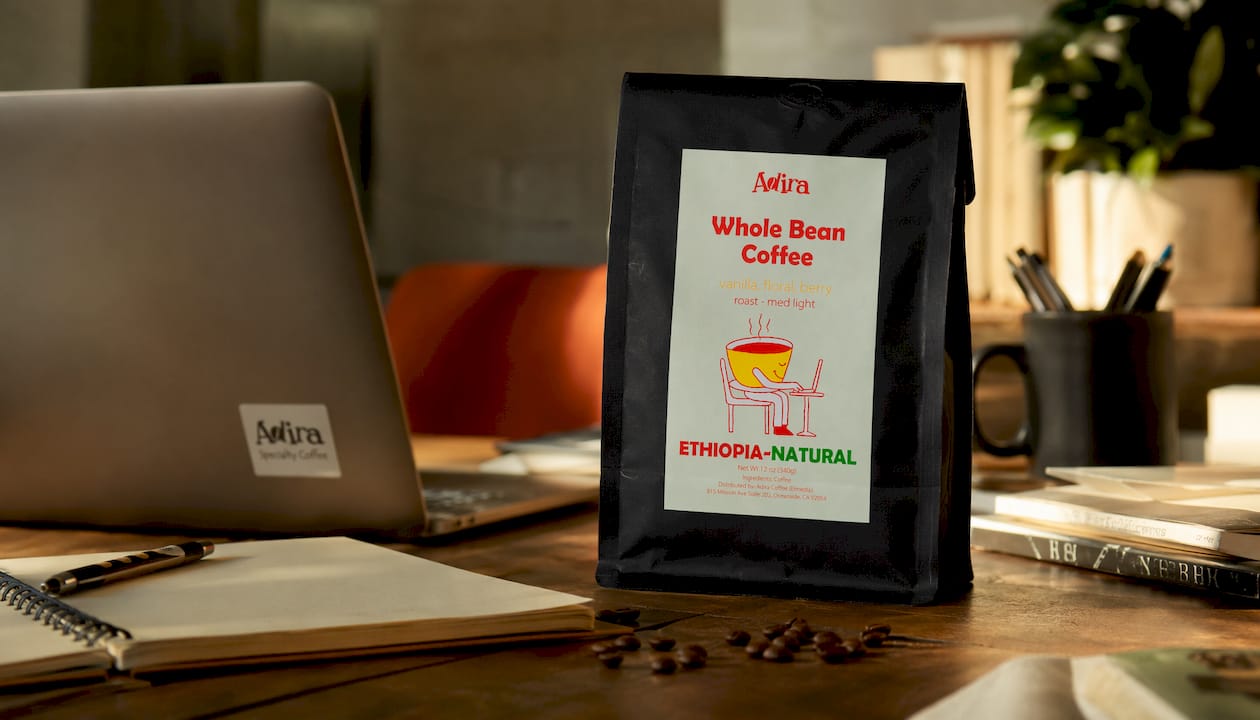
The Ethiopia Natural is a strong starting point for anyone moving from supermarket coffee to specialty. It sits in the value-rich price range discussed throughout this article, with the flavor complexity and freshness that mass-market bags cannot match. Subscribers save 10% on every order, and shipping is free on U.S. orders over $35. If you want to understand what the coffee growing region behind your cup actually contributes to flavor, Adiracoffee makes that connection easy to taste.
FAQ
What is the average price of coffee per pound in 2026?
The average price of roasted ground coffee at U.S. grocery stores reached $9.72 per pound in april 2026, a 39% increase since january 2025. Specialty coffee averages $32.75 per pound, with median bags priced closer to $19.78.
How much does a cup of coffee cost to brew at home?
Home-brewed drip coffee costs $0.20–$0.70 per cup using supermarket beans. Specialty coffee brewed at home runs approximately $0.75–$1.20 per cup, depending on the bean price and brew ratio.
Is specialty coffee worth the higher price?
Specialty coffee reflects hand-selective harvesting, small-batch roasting, and direct trade sourcing, all of which produce a measurably better cup. The best value in specialty coffee sits in the $20–$33 per pound range, where quality is high and pricing is not driven by scarcity or prestige.
How much do people spend on coffee per year?
Daily café drinkers spend over $3,000 per year on coffee shop visits. Switching to home brewing reduces that to under $500 annually after equipment costs, a saving of $1,400–$3,600 depending on café frequency and drink type.
Does buying coffee in bulk save money?
Bulk buying offers 15–40% discounts but only saves money if the coffee is consumed within 2–4 weeks of roasting. Buying more than you can drink during peak freshness means paying full price for a product that has already lost most of its flavor.