
What actually defines a boutique coffee shop?
A boutique coffee shop is a specialty retailer built around one thing: coffee worth paying attention to. Not a quick stop, not a commodity pour. According to Specialty Coffee Association guidelines, a specialty coffee shop derives at least 55% of its revenue from coffee beans, prepared drinks, and related accessories. That threshold separates shops genuinely organized around coffee from restaurants or bakeries that happen to have an espresso machine.
The defining criteria go beyond revenue:
- Single-origin beans with traceable farm, region, and harvest details
- Roast dates displayed on every bag, not vague “best by” windows
- Baristas trained to explain what they’re serving, not just pull shots
- Menus built around brewing method variety: espresso, filter, cold brew, AeroPress
- Ethical sourcing with transparent supply chains back to the producer
The SCA’s updated definition frames specialty coffee as a holistic commitment to quality, fairness, and transparency across the entire value chain, not just a cup score.
Table of Contents
- How boutique shops differ from commodity coffee sellers
- The boutique coffee experience goes beyond the cup
- Why freshness is the non-negotiable standard
- How boutique shops support communities and sustainability
- Where boutique coffee shops tend to show up
- What boutique coffee looks like across the U.S.
- What to expect to pay at a specialty coffee café
- Bring the boutique experience home with Adiracoffee
- Key Takeaways
How boutique shops differ from commodity coffee sellers
The gap between a boutique coffee shop and a commodity seller isn’t just about price. It’s about what the business is actually optimizing for.
Commodity sellers prioritize volume, speed, and margin. Boutique shops prioritize direct, transparent supply chains and long-term relationships with specific farms and cooperatives. A private-label model, where a roaster produces generic blends for whoever pays, is the opposite of what a boutique shop builds its identity around.
Quality evaluation at serious specialty shops increasingly uses the Coffee Value Assessment (CVA) framework developed by the SCA. The CVA rates coffee across four dimensions: physical attributes, sensory descriptors, affective impression, and extrinsic factors like certifications and origin traceability. That’s a far more complete picture than a single cupping score.
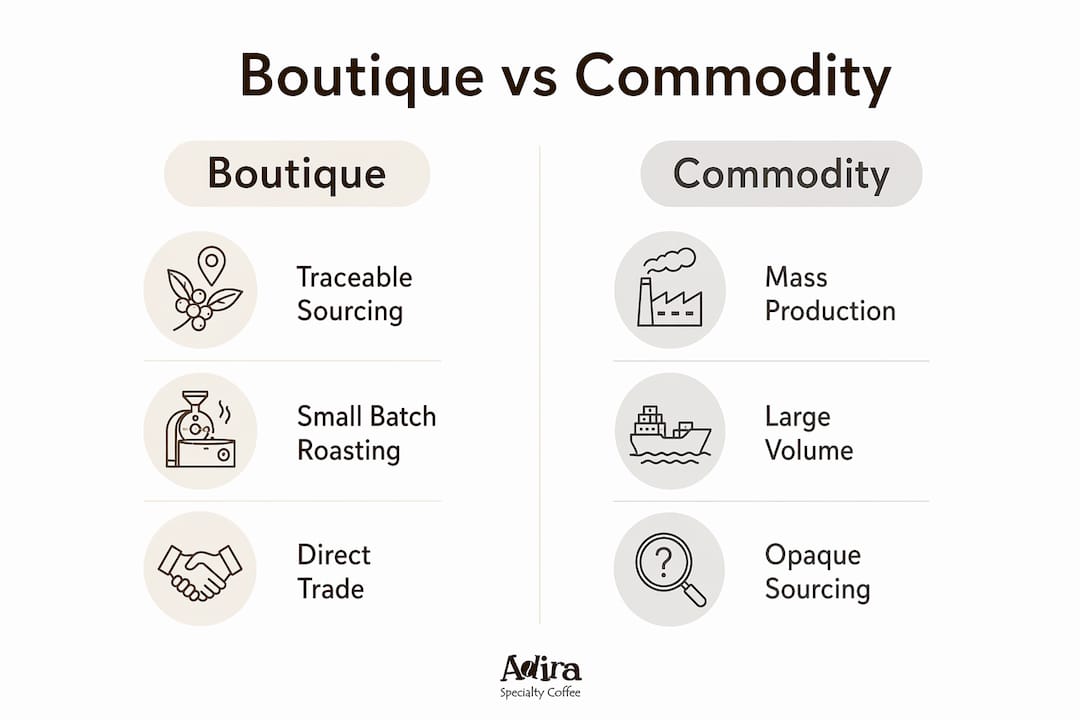
What you’ll see on the menu at a boutique shop reflects this: specific varietals, processing methods (washed, natural, honey), and roast dates. Generic blends with no origin information are a reliable sign you’re somewhere else.
The boutique coffee experience goes beyond the cup
Boutique shops succeed by turning a transaction into something closer to a conversation. Community and education are central to how these spaces operate, not afterthoughts.
- Workshops on brewing technique, origin tasting, and espresso calibration
- Baristas who can walk you through the difference between a washed Ethiopian and a natural one
- Coffee tasting events and cupping sessions open to the public
- Menus that invite comparison: two single-origins side by side, or filter versus espresso from the same bean
Small cafes see longer customer visits driven by personalized service, curated atmosphere, and genuine community connection. The physical space reinforces this: grinders on the counter, bags of coffee on display, equipment treated as something worth seeing rather than hiding.
Why freshness is the non-negotiable standard
Small-batch roasting isn’t a marketing phrase at a real artisan coffee shop. It’s the operational commitment that makes everything else possible. Specialty shops prioritize beans consumed within 7–14 days of roasting for optimal flavor and aroma.
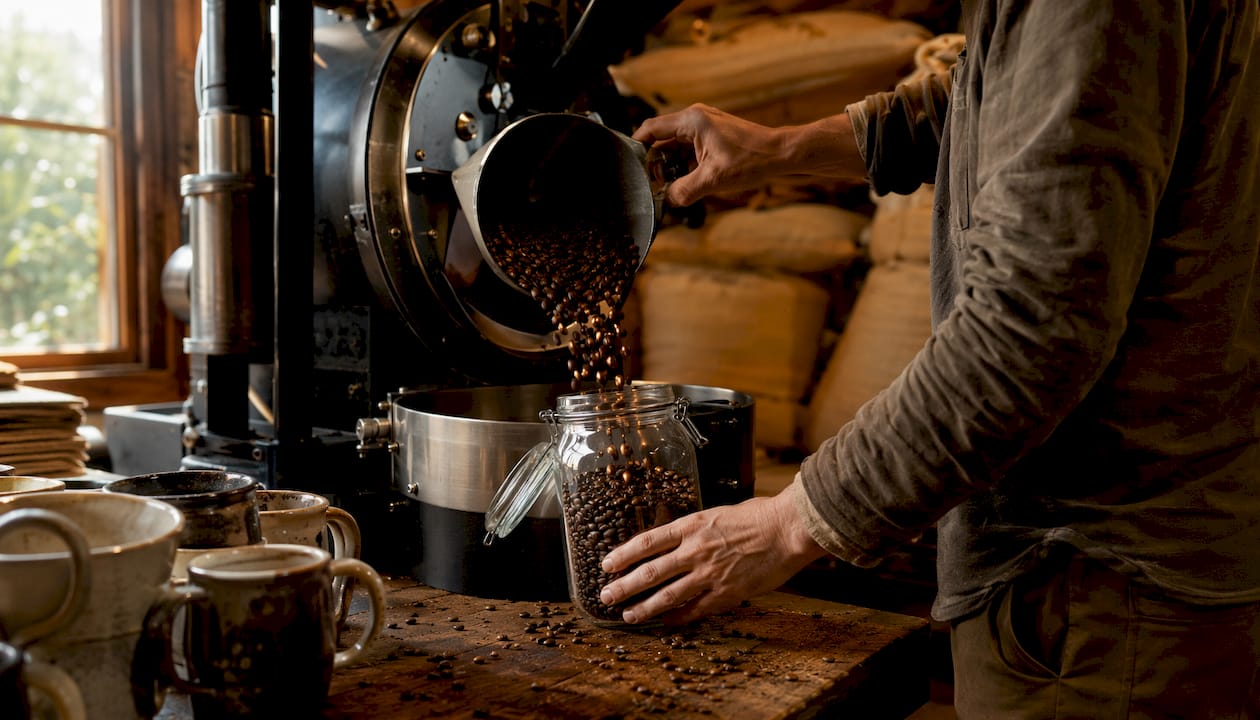
After roasting, beans degas carbon dioxide and shed volatile aromatics quickly. By day 14, the complexity that made a bean interesting starts to flatten. A roast date on the bag tells you more than any “best by” label ever could.
Pro Tip: When buying whole beans at a specialty shop, look for a roast date within the past two weeks. If the bag only shows a “best by” date with no roast date, ask. A shop that knows its coffee will always know when it was roasted.
Transparency about roasting process and bean profiles is a hallmark of shops that take quality coffee sourcing seriously.
How boutique shops support communities and sustainability
Independent coffee houses tend to invest locally in ways chains structurally cannot. Direct trade relationships mean farmers receive better prices and more consistent demand. Many boutique shops publish sourcing details, visit their farm partners, and share those stories with customers.
Sustainability shows up in purchasing decisions too: compostable packaging, relationships with farms that use shade-grown or regenerative practices, and support for cooperatives that reinvest in their communities. For the home brewer buying beans, this traceability matters. Knowing a bag came from a specific cooperative in Huila, Colombia, is different from knowing it came from “South America.”
Where boutique coffee shops tend to show up
Walkable urban neighborhoods are the natural habitat of the independent coffee house. Think converted storefronts in arts districts, ground-floor spaces in mixed-use buildings, or spots near university campuses where foot traffic is steady and customers linger.
The interior design is deliberate without being precious: natural light, exposed brick or wood, seating that encourages staying an hour rather than five minutes. The espresso machine sits at the center of the bar, not tucked against a wall. Bags of coffee are displayed like products worth examining, because they are.
What boutique coffee looks like across the U.S.
The specialty coffee movement has produced a recognizable type of shop in cities across the country. Portland, Brooklyn, Chicago’s Logan Square, and Los Angeles’s Silver Lake all have dense clusters of independent roasters and cafés operating at this level. Many of the best are attached to roasteries, so the coffee goes from roaster to cup within days.
What they share: single-origin offerings rotated by season, house-made syrups instead of commercial pumps, and staff who treat brewing as a craft rather than a task.
What to expect to pay at a specialty coffee café
A well-made pour-over or single-origin espresso at a boutique shop typically costs more than the equivalent at a standard coffee chain. That gap reflects real costs: higher-quality green coffee, smaller roasting batches, and more skilled labor. Transparent pricing and honest communication about cost increases actually strengthen customer loyalty at boutique shops.
Whole bean bags from a local roaster typically cost significantly more than commodity supermarket coffee, reflecting sourcing and roasting quality differences. For the home brewer, that price difference buys a known roast date, a traceable origin, and beans that haven’t been sitting in a warehouse for six months.
Bring the boutique experience home with Adiracoffee
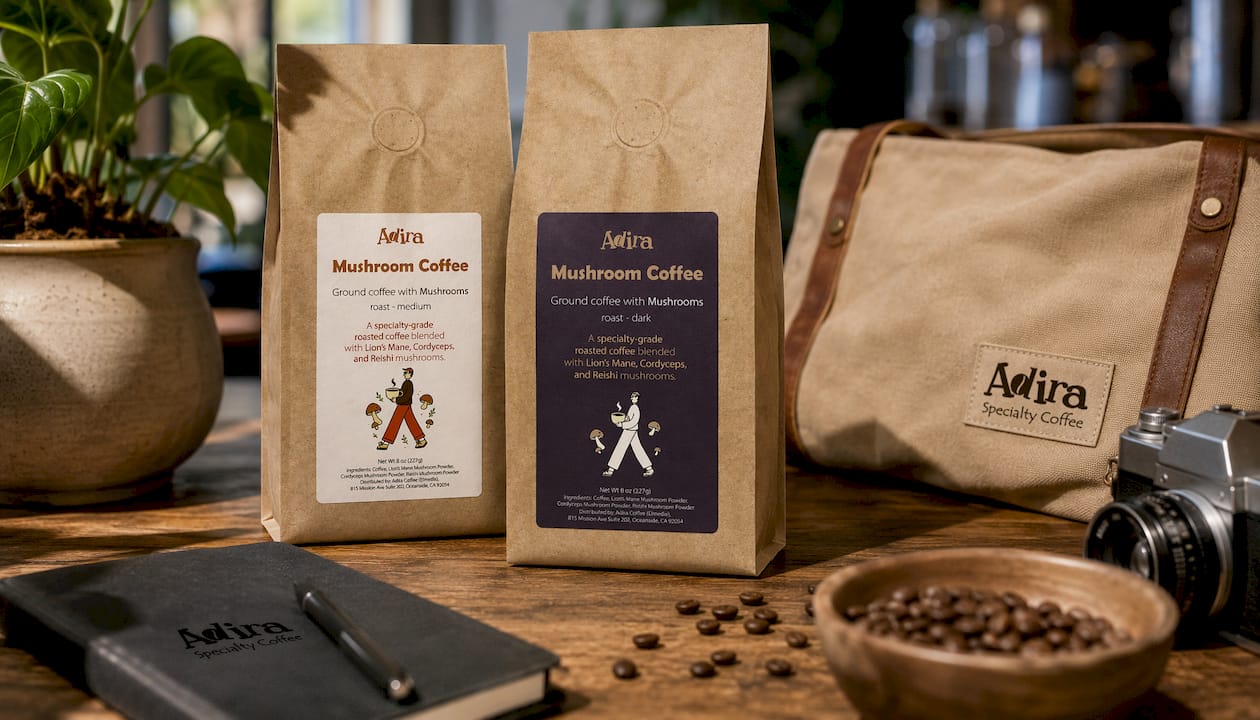
Adiracoffee was founded by Stefan and Ekaterina Nedelchev after they moved to America and couldn’t find a supermarket bag worth finishing. The solution was to build the thing they were looking for: a California-based roastery sourcing beans from cooperatives and small farms in Colombia, Ethiopia, Costa Rica, Mexico, and Sumatra, roasting in small batches, and shipping directly to customers within days of roasting.
The lineup includes Mushroom Coffee in Medium Roast and Dark Roast, signature blends, and single-origin selections with full traceability. A subscription saves 10%, and orders over $35 ship free across the U.S. If you want the boutique coffee shop standard at home, start with a bag roasted this week.
Key Takeaways
A boutique coffee shop earns its name through traceable sourcing, small-batch roasting, and a customer experience built around education rather than speed.
| Point | Details |
|---|---|
| Revenue threshold | Specialty coffee shops derive at least 55% of revenue from coffee beans, drinks, and accessories. |
| Freshness window | Beans consumed within 7–14 days of roasting deliver the best flavor and aroma. |
| Quality framework | The SCA’s Coffee Value Assessment (CVA) rates coffee across physical, sensory, affective, and extrinsic dimensions. |
| Pricing reality | Boutique whole bean bags typically cost more than commodity supermarket coffee, reflecting real sourcing and roasting costs. |
| Adiracoffee | Small-batch California roaster shipping single-origin and specialty blends within days of roasting, with subscription savings available. |