
Buy freshly roasted, whole-bean coffee from a small-batch California roaster with a visible roast date, and you will taste the difference in your first cup. The single best move right now: order a medium roast bag that lists its origin and roast date, then brew it within three weeks of that date.
Quick buying checklist:
- Roast date: Look for beans roasted within the last 30 days. The peak flavor window typically falls between 7 and 21 days post-roast.
- Roast level by method: Light or medium for pour-over; medium or medium-dark for espresso; medium-dark for French press and cold brew; medium for everyday drip.
- Whole beans, always: Grinding just before brewing preserves the volatile oils that preground coffee loses within minutes. Use a burr grinder.
- Price range: Quality specialty bags in the U.S. typically run $16–$22 for 12 oz. Paying more for a roast-dated, traceable bag beats a cheaper, undated one every time.
Table of Contents
- What does the bag actually tell you about quality?
- How long does specialty coffee actually stay fresh?
- Which California-roasted brands are worth buying?
- Single-origin vs. blends: which should you buy?
- How to judge bean quality before you buy
- Adiracoffee: California-roasted, shipped within days of roasting
- Key Takeaways
What does the bag actually tell you about quality?
The label is a quality report if you know what to read. Origin narrows flavor: Ethiopian beans tend toward floral and citrus notes; Colombian beans lean toward stone fruit and caramel; Sumatran beans bring earthy, full-body character. A named farm or cooperative signals traceability, which usually means the roaster paid attention to sourcing. Elevation matters because higher-grown beans develop denser, more complex sugars. Processing method shapes texture and sweetness: washed coffees taste cleaner and brighter; natural-process coffees carry more fruit and body; honey-process sits between the two. Tasting notes are a guide, not a guarantee, but they tell you whether the roaster expects brightness or richness from that particular lot.
How long does specialty coffee actually stay fresh?
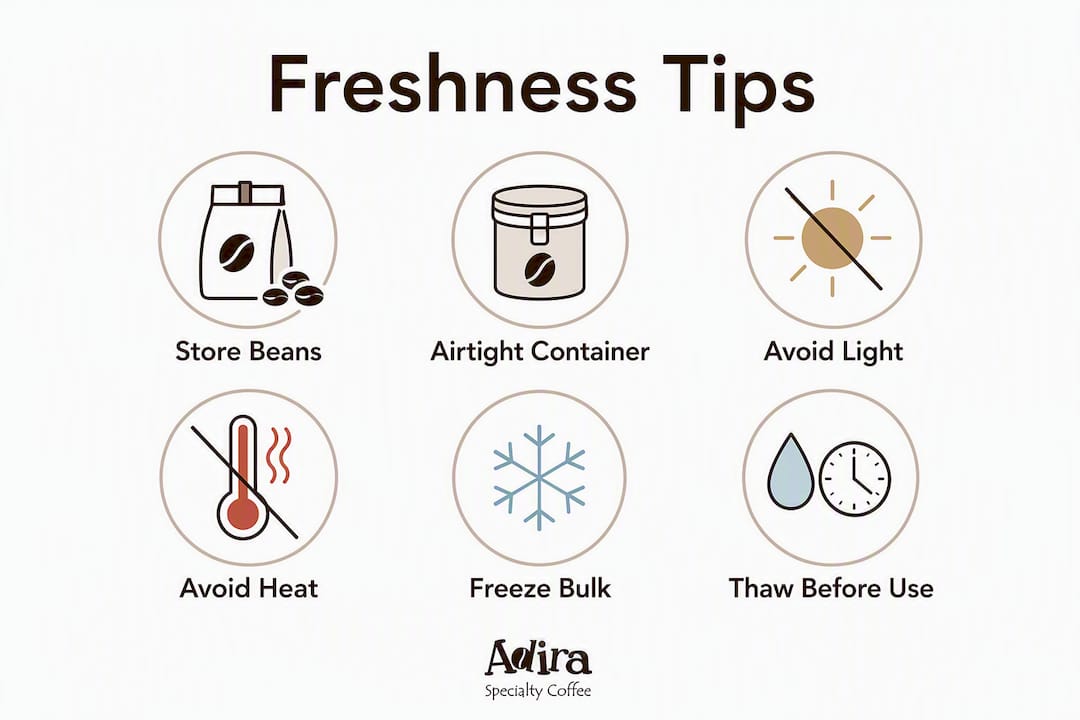
Store whole beans in an airtight container, away from light, heat, and moisture. A ceramic or opaque canister on the counter beats a clear jar on a sunny windowsill. Avoid the refrigerator; coffee absorbs odors fast. Freshly roasted specialty beans hold peak flavor for roughly 7 to 21 days after roast date, though they remain drinkable for up to around a month. Buy smaller bags more often rather than a large bag that sits open for a month.
Pro Tip: Freeze whole beans in sealed, portioned bags only if you bought in bulk. Thaw completely before opening to prevent condensation from hitting the beans.
Which California-roasted brands are worth buying?
For the best home brewing coffee in California, the strongest argument is for small-batch roasters who post roast dates and ship fast. Subscriptions from local roasters solve the freshness problem automatically: beans rotate through your door near peak window without you tracking dates manually. Look for roasters sourcing directly from cooperatives or named farms, publishing processing method and elevation, and offering whole-bean options across roast levels. Adiracoffee fits that profile precisely and is covered in the section below.
Single-origin vs. blends: which should you buy?
Single-origin coffees reward curiosity. A washed Ethiopian from Yirgacheffe or a Colombian lot from Huila tells you something specific about a place and a harvest. They suit pour-over and filter brewing, where clarity lets those individual notes come through. Blends are built for consistency. A well-designed blend holds its flavor profile bag to bag, making it the smarter choice for espresso or any household where multiple people brew differently. Medium roast blends work across drip, AeroPress, and French press without demanding precise dialing. The practical answer: keep a reliable blend as your daily driver and reach for a single-origin when you have time to brew carefully.
How to judge bean quality before you buy
Fresh beans smell like coffee, not cardboard. If you can smell the bag in a shop, look for sweetness, fruit, or chocolate in the aroma. Dull, papery, or musty smells signal age. Visually, quality whole beans are uniform in size and color with no visible cracks or excessive oiliness (heavy surface oil usually means over-roasted or very old beans). Read the tasting notes against the origin: a natural Ethiopian should suggest berry or stone fruit, not generic “dark roast.” When buying online, roast date and producer information do the sensory work for you.
Adiracoffee: California-roasted, shipped within days of roasting
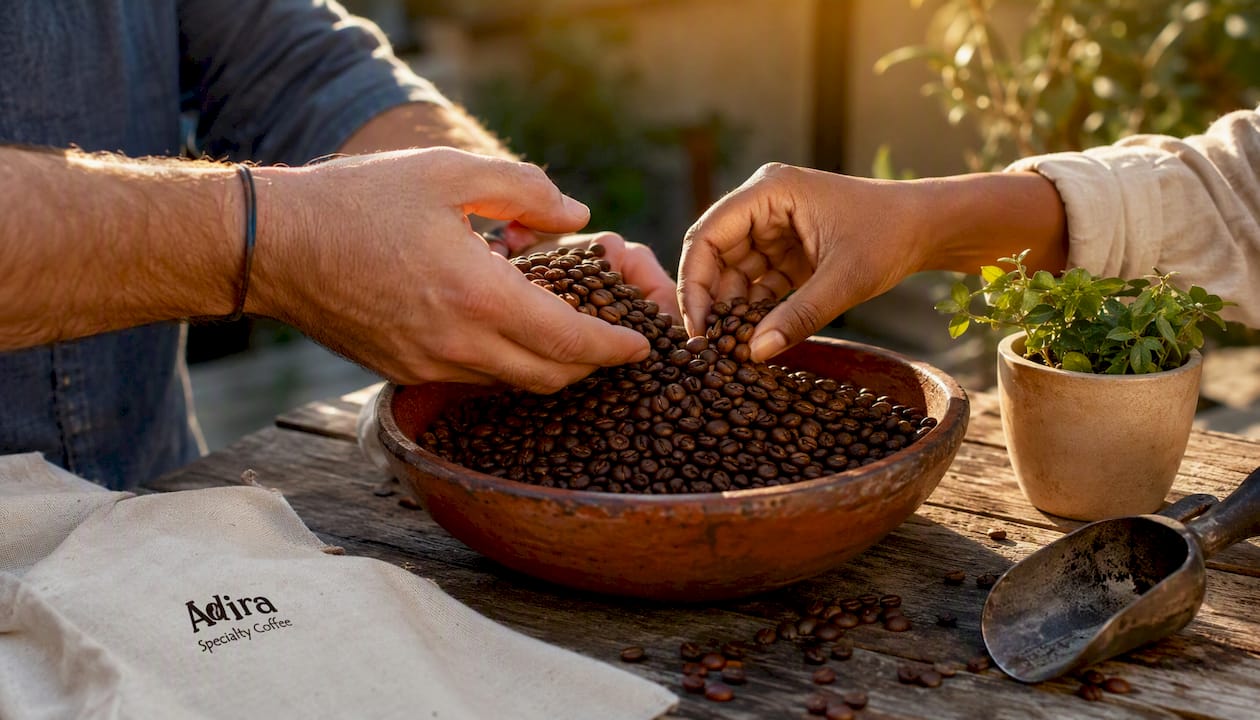
Skip the supermarket shelf and the undated bag. Adiracoffee roasts single-origin and signature blends to order in small batches in California, sourcing directly from cooperatives and farms in Colombia, Ethiopia, Costa Rica, Mexico, and Sumatra. Every bag ships within days of roasting, so the roast date you see is real.
For pour-over drinkers, the Ethiopian and Costa Rican single-origins deliver the floral brightness and clarity that filter brewing rewards. Espresso and drip drinkers tend to land on the Colombian and Mexican profiles, where sweetness and body hold up under pressure or in a basket. French press and cold brew fans get the most from the fuller-bodied Sumatran and darker blend options. Adiracoffee also dials in personalized brewing recipes for your specific machine, so you are not guessing at ratios. A subscription plan saves 10% and ships free on orders over $35, keeping fresh beans arriving before your current bag runs out. Start with the medium roast if you brew multiple ways, or take the quick quiz to match your taste profile to the right bag.
Key Takeaways
Fresh, roasted-to-order whole beans from a California small-batch roaster with a visible roast date are the single most reliable upgrade for home brewers in the state.
| Point | Details |
|---|---|
| Roast date is non-negotiable | Buy beans roasted within 30 days; peak flavor falls between 7 and 21 days post-roast. |
| Match roast level to your brewer | Light/medium for pour-over; medium-dark for French press and cold brew; medium for drip and espresso. |
| Whole beans, burr grinder | Grind immediately before brewing to preserve aromatic oils that preground coffee loses fast. |
| Store smart, buy small | Airtight container, away from light and heat; 7 to 21 days is the practical peak flavor window. |
| Adiracoffee | California-roasted, ships within days of roasting; subscription saves 10% with free US shipping over $35. |